
Reviewed · PORTO TUK-TUK TOURS
Explore Porto Aboard A Classic Tuk-Tuk tour 1h
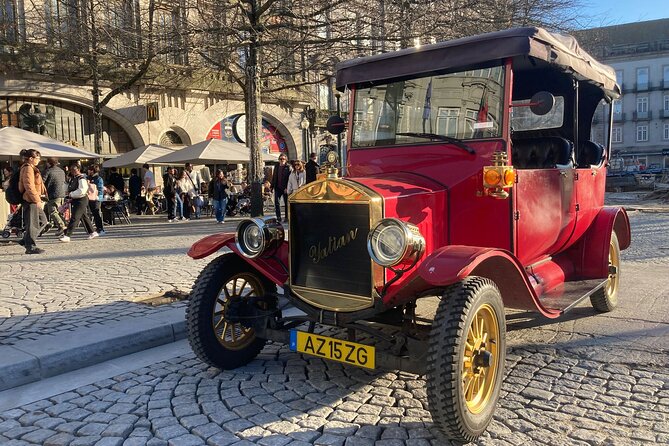
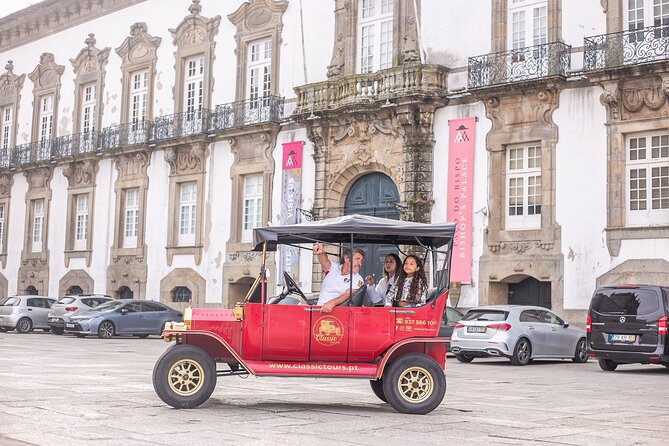
Porto on a classic tuk-tuk feels like shortcuts. In just about an hour, you get a guided sweep past Porto’s big-name sights without the stress of parking or slogging from one end of town to the other. It’s private (only your group), up to 4 people, and the ride style helps you reach spots that normal cars struggle with.
What I like most is the guide time: someone’s there to point out what matters, not just recite dates. Guides such as Pedro Melo, Tiago, Carlos Bonita, and Maria de Porto come up in the onboard story—consistently friendly, upbeat, and strong with English—so you can actually understand what you’re seeing.
One thing to consider: a 1-hour tour moves fast. Some stops are exterior photo passes, and at a few sights the ticket cost is not included (you’ll be shown the highlights, but you’d pay extra if you want to go inside).
In This Review
- Key highlights worth your attention
- A classic tuk-tuk loop that keeps Porto simple
- How the timing works: 1 hour, 9 stops, and what that means
- Catedral do Porto and the feel of 12th-century Gothic
- São Bento Railway Station: tiles, light, and instant atmosphere
- Avenida dos Aliados: Porto’s main street and its energy
- Igreja dos Carmelitas and Torre dos Clérigos: church corners and postcard views
- Livraria Lello from the outside: famous, fast, and still worth it
- Porto Judeu: a guided look at the Jewish quarter
- Dom Luís I Bridge: engineering story and photo momentum
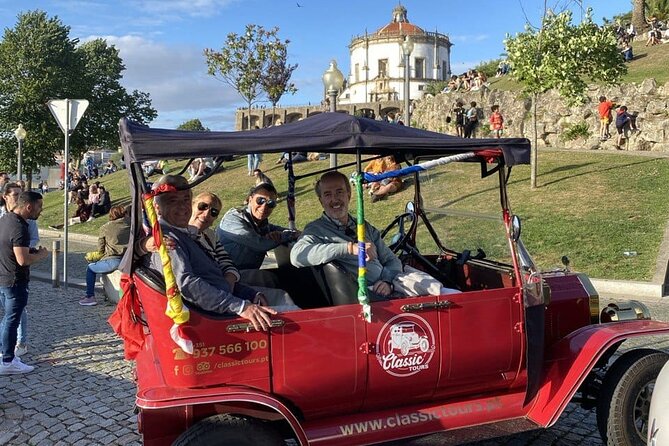
- Serra do Pilar viewpoint: the panoramic finish
- Price and value: what you’re really paying for
- Who this tuk-tuk tour suits best
- Practical tips for getting the most in your hour
- Should you book the Classic Tuk-Tuk tour in Porto?
- FAQ
- How long is the Classic Tuk-Tuk tour in Porto?
- What does the price include, and how many people can go?
- Is this tour private, and is it offered in English?
- Where do we meet for the tour?
- Are entrance tickets included for the sights?
- Do I get a mobile ticket?
- Can I cancel for free?
Key highlights worth your attention
- Classic tuk-tuk convenience in Porto: a short ride that still hits the city’s most photographed places.
- English-first guiding: clear explanations that make the landmarks click.
- São Bento Station stop: the chance to see the famous tile-covered interior from the outside flow of your route.
- Clérigos Tower and other church areas: postcard views plus easy context for what you’re looking at.
- Porto Judeu + Dom Luís I Bridge: a history-and-engineering mix, with great photo momentum.
- Serra do Pilar viewpoint payoff: the ride ends with a wide panoramic look toward Porto and Gaia.
Buzz the hills by tuk-tuk instead
- Porto: Guided Tour by Tuk-Tuk & Optional Douro River Cruise★ 4.5 · 5,980 reviews
- Discover Porto’s Highlights on a 2-Hour Private Electric Tuk Tuk★ 4.5 · 1,860 reviews
- Porto: Guided Tuk Tuk Tour★ 4.6 · 1,390 reviews
- Historic Porto by Private Electric Tuk Tuk to Top Landmarks★ 4.5 · 735 reviews
A classic tuk-tuk loop that keeps Porto simple
Porto can be a lot. Hills, winding streets, and landmarks spread out across neighborhoods. This 1-hour classic tuk-tuk tour is built for people who want a fast orientation: you’ll see the major landmarks, learn what they mean, and come away with a mental map you can use for the rest of your days.
The format is also practical. You meet at a named spot near the center (the statue of Vímara Peres on Calçada de Vandoma), ride as a group, and then the tour returns to the same place. That matters because Porto’s best moments often happen when you’re not exhausted by logistics.
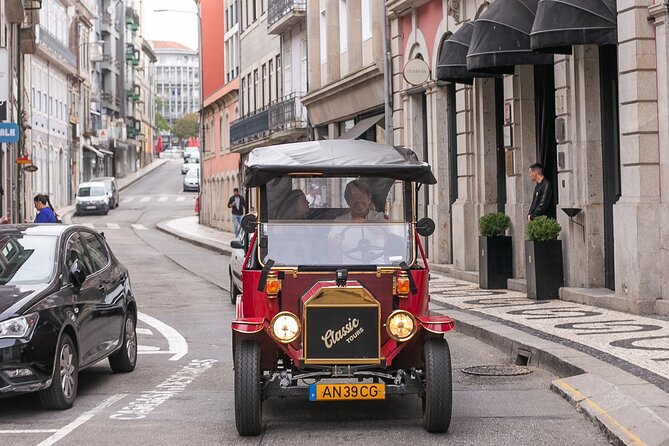
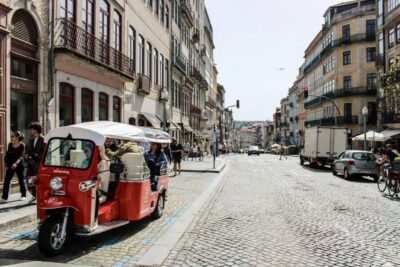
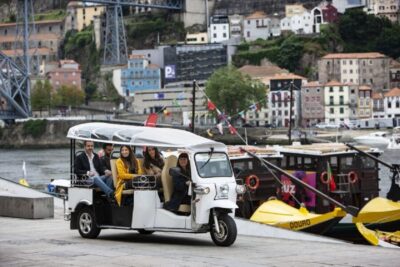
The tuk-tuk aspect isn’t just a novelty. It changes how you experience the city. Streets near the historic center can be narrow and slow, and a tuk-tuk makes it easier to keep moving—so you spend more time looking up at buildings and less time stuck in traffic.
How the timing works: 1 hour, 9 stops, and what that means
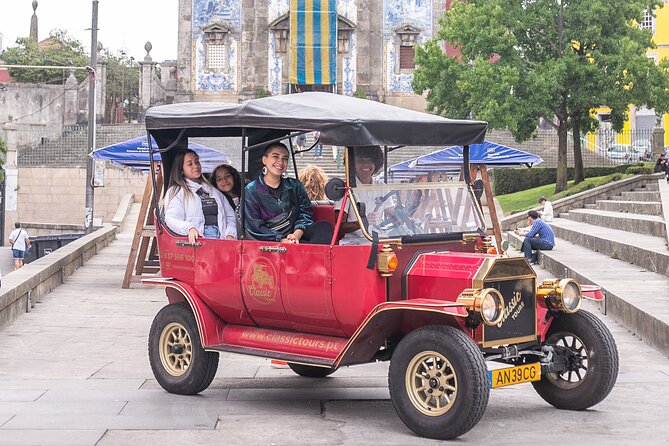
You’ll be moving stop to stop with short photo breaks, which is exactly what the schedule is aiming for. Think of it as a guided “best of Porto highlights” pass. You’ll get context as you go, but you won’t be lingering long inside every building.
Here’s the practical expectation I’d set: if you want a slow, ticketed, inside visit to major churches or towers, plan to do that separately later. This tour is about orientation, architecture recognition, and getting the best viewpoints into your pocket.
Also, the tour is offered in English, which is a big deal when you’re trying to understand church styles, neighborhood shifts, and the why behind the bridges and stations. If you’re traveling with limited time, an English guide who explains as you ride can be more valuable than a self-guided walking loop.
Catedral do Porto and the feel of 12th-century Gothic
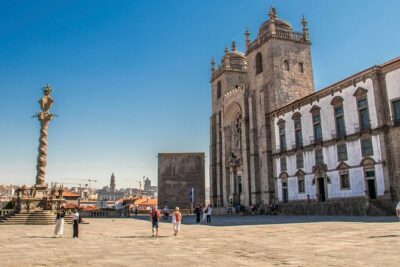
The route begins at Catedral do Porto, the main Catholic church in Porto with roots in the Gothic era. Even if you only spend around 10 minutes in the immediate area, it helps you connect the city’s religious and civic identity in one spot.
Why this stop matters: Porto’s story isn’t only riverside and wine cellars. The cathedral area gives you a sense of how long this city has been shaping itself—how far back its core identity goes. You’ll likely notice the cathedral’s serious presence compared with the brighter, more open squares you’ll see later.
If you’re the type who likes to read buildings like pages, this is a good warm-up. You’ll get the basic orientation first, then the rest of the tour starts making more sense when you see other religious structures nearby.
One practical note: admission is not included for the cathedral. If you want to go inside and take your time, budget for that separately.
São Bento Railway Station: tiles, light, and instant atmosphere
Next comes São Bento Railway Station, often praised as one of the most beautiful stations around. The magic here is the interior tilework—packed scenes that turn a normal transit space into something like a gallery. Even on a short stop, it’s the kind of place where your brain goes quiet for a second because it’s so visual.
This stop is listed as free, which is a big plus for value. It also fits perfectly into a short tour: you can get the key experience without needing extra ticket planning.
What I find especially useful is that the guide’s framing helps you look at the tiles instead of just snapping photos. When you know what you’re looking at—events, cultural cues, local storytelling—you stop treating it as decor and start seeing it as history you can actually read.
More Porto days out worth booking


Avenida dos Aliados: Porto’s main street and its energy
From the station area, you roll into Avenida dos Aliados, Porto’s main avenue and the center of city life. This is where Porto feels most “urban”—big facades, gathering energy, and an easy sense of direction.
For first-timers, the advantage is simple: Aliados gives you a visual backbone. Once you’ve oriented yourself with this avenue in view, the next bends and hills start to feel less random. It’s also a great street for quick photos because buildings form strong lines and you can capture the avenue’s grand feel.
This stop is free, and it’s also the kind of place where even a brief pause is helpful. If you later want to walk independently, you’ll recognize where you are.
Igreja dos Carmelitas and Torre dos Clérigos: church corners and postcard views
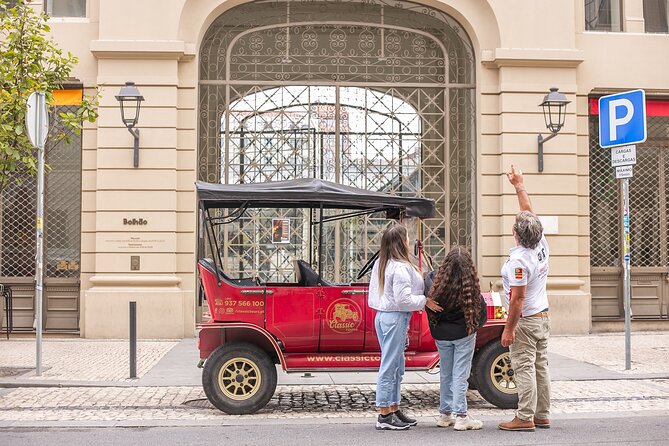
Porto gets steep in the best way, and your next stops reflect that. You’ll see Igreja dos Carmelitas, a church whose construction began in the 17th century. Short stops here work well because the guide can point out what you should notice first—what changes by style, what feels older, and what the neighborhood tells you.
Then comes Torre dos Clérigos—one of Porto’s signature architectural ensembles, often called the city’s postcard. Even if you don’t go inside, it’s a powerful visual anchor. The tower’s shape makes it easy to spot across different parts of town, which is why it’s such a helpful reference point for the rest of your trip.
Admission is not included for these two stops, so plan for potential extra costs if you want to enter or climb. Still, even outside, the guide context helps you understand why it’s so famous.
In a short tour like this, I like placing these stops here. They give you a “wow” level of architecture before the route shifts toward viewpoints and bridges.
Livraria Lello from the outside: famous, fast, and still worth it
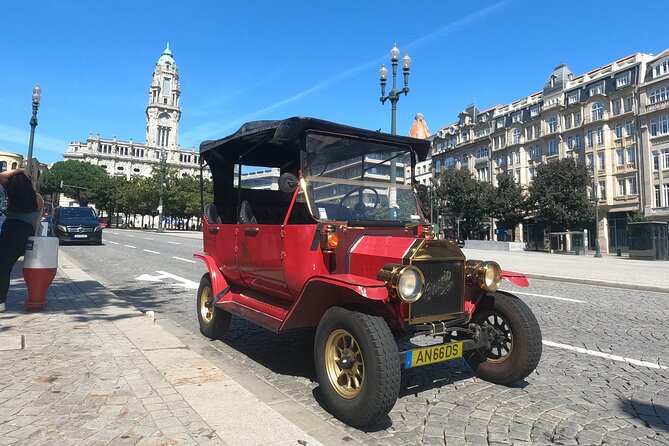
You’ll pass by Livraria Lello, which is widely known as one of the most beautiful bookstores in the world. The tour doesn’t build in a ticketed bookstore visit, since admission isn’t included—and that’s actually fine for the format.
What you get instead is a quick moment of recognition. Even from outside, the building’s vibe is distinctive, and it sets a creative tone for the tour. It also gives you a useful choice: if it’s a must for you, you can plan a separate visit later when you have time for entrances, crowds, and slower browsing.
This stop is short, so treat it as a “bookmark in your mind.” I think it works best for people who want the reference point now and decide later.
Porto Judeu: a guided look at the Jewish quarter
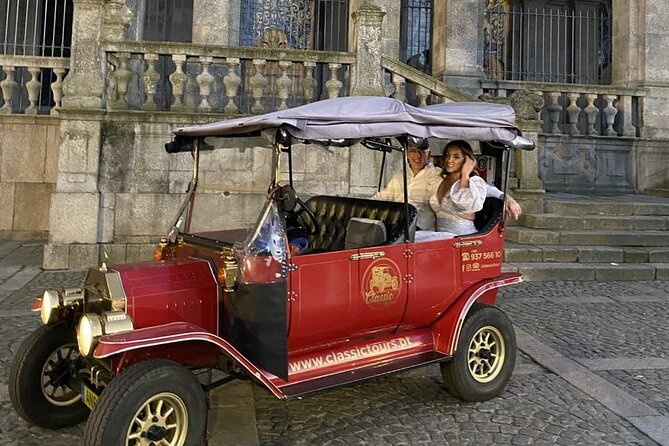
Next is Porto Judeu, a guided section with historical information about the Jewish quarter. In a tour like this, a history-focused segment can easily feel rushed—but it’s also one of the best ways to avoid turning Porto into only scenery.
This stop being listed as free helps the overall value. It also gives you something different from churches and stations. You see how neighborhoods overlap, and you start to understand why certain areas feel the way they do—through the people who lived there and the cultural layers over time.
If you like learning basics that you can later build on, this is a strong mid-tour anchor.
Dom Luís I Bridge: engineering story and photo momentum
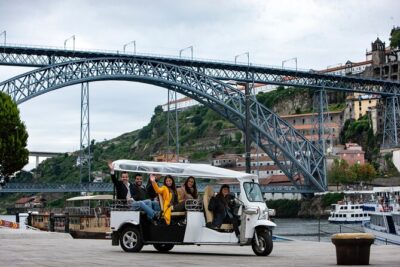
Then you pass over Dom Luís I Bridge, one of Porto’s best-known bridges. It’s designed by the same engineer as the Eiffel Tower, Gustave Eiffel, which gives the structure an extra layer of meaning beyond “it’s a bridge.”
This is a great moment to reset your camera. Bridges give you wide framing and movement, and in Porto you’re always near water and viewpoints. A guide’s explanation here helps you see the structure as design, not just a crossing.
Admission is free, and the passing moment makes it ideal for a short tour. You get the “key landmark hit” without needing a separate plan.
Serra do Pilar viewpoint: the panoramic finish
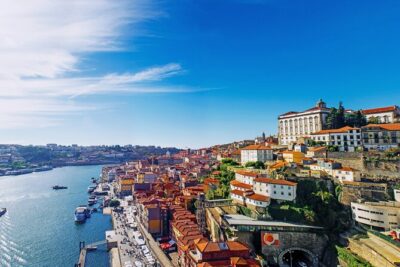
The last stop is Miradouro Serra Do Pilar, a viewpoint with panoramic views over Porto and Gaia. This is where the tour payoff lands. After a series of landmarks, you finally get space—wide angles, river views, and a sense of how everything connects.
The viewpoint stop is about 10 minutes, which is short but enough to take photos and get your bearings for the rest of your trip. If you’re doing Porto by foot later, you’ll benefit from seeing how the city layers stack—upper streets, lower riverside zones, and the bridge lines tying it together.
Since it’s free, it’s also a no-brainer stop for value. The only “cost” is weather. If the skies are clear, you’ll likely enjoy it more; if it’s rainy, you still get the city’s outlines, just with less visibility.
Price and value: what you’re really paying for
At $120.02 per group (up to 4) for about 1 hour, the price isn’t cheap in solo terms, but it can be a very good deal when split among friends or family. The math is simple: you’re buying private guiding plus transportation in a way that covers multiple major sights.
What justifies the cost is not the vehicle alone. It’s the time-sparing route, the guide’s explanations in English, and the fact that you get a compact “best of Porto” sequence without needing to coordinate public transit or park.
Also, the tour includes all fees and taxes, which reduces the chance of surprise extras during the experience. What isn’t included is admission where tickets apply, so you may pay a bit more if you want to go inside specific places like the cathedral or towers.
If you’re comparing options, I’d frame it like this: walking tours can be cheaper, but they don’t always replace fast orientation plus paid transportation plus guiding for a full-hour loop.
Who this tuk-tuk tour suits best
This tour fits well if:
- You have limited time in Porto and want a clear first impression.
- You prefer a guided visit but don’t want to commit to a long itinerary.
- You’re traveling with others (because the pricing is per group up to 4).
- You want photo stops at major landmarks without planning each stop separately.
It’s less ideal if you want deep indoor time at multiple sites. The schedule is designed for quick, guided recognition. If you want long museum-style pacing, you’ll need to pair this with separate visits.
Practical tips for getting the most in your hour
- Wear comfortable shoes, even with a tuk-tuk. Most stops involve short walks and photo angles.
- Bring a camera (or phone) you can handle quickly. Many highlights are exterior and designed for fast shots.
- If you care about entering the cathedral or towers, check your priorities beforehand. Admission isn’t included at those stops.
- If you’re sensitive to weather, keep an eye on the forecast. Some guides are still great in rain, but visibility at viewpoints can change.
And if you get a guide like Carlos Bonita or Tiago, lean into the explanations as you ride. The value comes from understanding what you’re seeing as you go.
Should you book the Classic Tuk-Tuk tour in Porto?
If you’re trying to decide between “see the highlights” and “slow down,” this tour is for the first goal. It’s a strong way to get oriented, catch the postcard landmarks, and end on a viewpoint that helps you place Porto in your mind. For groups up to 4, the private format and English guiding make the price feel more reasonable.
Skip it only if you already have a full afternoon mapped for multiple paid attractions and you’d rather walk those routes yourself. Otherwise, this is a smart, efficient way to start your Porto story with confidence.
FAQ
How long is the Classic Tuk-Tuk tour in Porto?
It’s about 1 hour.
What does the price include, and how many people can go?
The price is $120.02 per group, up to 4 people. All fees and taxes are included.
Is this tour private, and is it offered in English?
Yes, it’s private (only your group). It’s offered in English.
Where do we meet for the tour?
The tour starts at the statue of Vímara Peres on Calçada de Vandoma, 4000-013 Porto, Portugal, and it ends back at the meeting point.
Are entrance tickets included for the sights?
Not for all stops. Admission tickets are not included for Catedral do Porto, Igreja dos Carmelitas, Torre dos Clérigos. Some stops are free, including São Bento Railway Station, Avenida dos Aliados, Porto Judeu, Dom Luís I Bridge, and Miradouro Serra Do Pilar. Livraria Lello is passed by and not included.
Do I get a mobile ticket?
Yes, the tour includes a mobile ticket.
Can I cancel for free?
Yes. You can cancel for a full refund up to 24 hours before the experience starts. Free cancellation is available.
More Tours in Porto





More Tour Reviews in Porto

Tuk-Tuk Runs Through the Hills





Fresh in the Porto notebook


Porto Tuk-Tuk Tours, compared.
 ★ 4.5Guided Tour by Tuk-Tuk & Optional Douro River CruiseFrom $205,980 reviews
 ★ 4.5Discover Porto’s Highlights on a 2-Hour Private Electric Tuk TukFrom $481,860 reviews
 ★ 4.6Guided Tuk Tuk TourFrom $411,390 reviews
 ★ 4.5Historic Porto by Private Electric Tuk Tuk to Top LandmarksFrom $42735 reviews
 ★ 4.5Porto Guided Tour to the Historical Center on a Tuk TukFrom $42418 reviews
 ★ 4.8Private Sightseeing Tour by Electric Tuk TukFrom $47305 reviews
 ★ 4.7Oporto Tuk-Tuk Tour: Fast, Fun & Flexible – 1H to Full Day!From $88280 reviews
 ★ 4.5Porto Half Day Private Tuk Tuk TourFrom $83246 reviews
Browse the lists this tour appears in