
Reviewed · RIBEIRA & OLD TOWN
Historic Porto by Private Electric Tuk Tuk to Top Landmarks
Porto is all angles and surprise views. This private electric tuk-tuk tour helps you get your bearings fast while your guide points out the city’s biggest hits like São Bento Station and the Clérigos area. I like that it’s private, so you get real attention and can ask questions on the move. The main thing to consider: current rules can limit how close tuk-tuks can get to the historic center, so your route may shift toward Gaia and viewpoints.
You’ll cover more ground than a walking loop, but you’re still stopping often enough to see details—not just passing by. The ride is short (about 50 minutes), so it’s less about ticking every box and more about learning where everything is and what to do next.
One more practical note: sound can be hit-or-miss. A few people reported trouble hearing the guide when the vehicle audio wasn’t working well, so if you’re sensitive to audio, sit close to the driver/guide area and be ready to ask them to repeat.
In This Review
- Key things to know before you go
- How an electric tuk-tuk gets you oriented fast
- Meeting point, timing, and what 50 minutes really means
- São Bento Station: the “stop-and-stare” moment
- Aliados Avenue: Porto’s main boulevard and the city’s pulse
- Carmelitas Church facades: spotting 17th-century clues
- Clérigos Tower: Porto’s postcard and skyline marker
- Cobblestones, small restaurants, and Douro River viewpoints
- Route changes you should plan for (historic Porto vs Gaia)
- Guides who make the ride worth it
- Price and value: what $42.33 buys you
- The walking-tour bonuses you can stack after
- Who should book this tuk-tuk ride?
- Final call: should you book Historic Porto by Private Electric Tuk Tuk?
- FAQ
- How long is the Historic Porto by Private Electric Tuk Tuk tour?
- Is the tour private?
- What language is the tour offered in?
- What’s the price per person?
- Where do I meet and where does it end?
- What’s included in the price?
- What’s not included?
- How many people can fit in each tuk-tuk?
- Do I need to print anything, or is there a mobile ticket?
- Is there anything about free walking tours I should know?
Key things to know before you go
- Private small group (max 6 per tuk-tuk) keeps the pace friendly and question-friendly
- Top landmarks, in a tight loop: São Bento, Aliados Avenue, Carmelitas Church facades, and the Clérigos postcard area
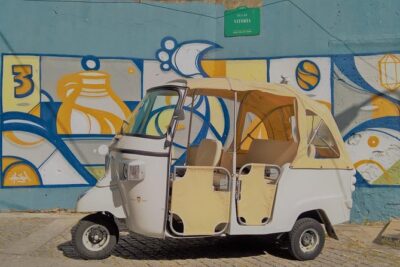
- Electric and easy for navigating Porto’s hills without arriving sweaty
- Douro River viewpoints plus cobbled streets with classic small-town-feel restaurant stops
- Route flexibility is real: city restrictions can push the ride away from the tightest historic core
- Walking-tour bonuses extend your day on foot after the tuk-tuk
Deeper into Ribeira, its arcades and riverfront
- The Unvanquished Tour in Porto City Center★ 5.0 · 26,497 reviews
- Porto: The highest-rated traditional fado concert (downtown)★ 4.8 · 1,557 reviews
- Porto: Historical Center Walking Tour★ 4.8 · 898 reviews
- Historic Porto by Private Electric Tuk Tuk to Top Landmarks★ 4.5 · 735 reviews
How an electric tuk-tuk gets you oriented fast
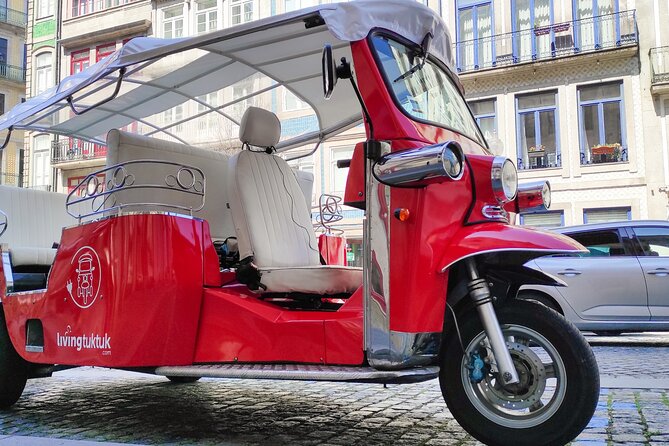
Porto’s great, but it can also feel like a maze—up one slope, down another, then suddenly you’re staring at the Douro. The biggest value of this tour is that you get a guided route map in motion. Instead of guessing which way to walk after you arrive, you leave with a mental picture of where the sights cluster.
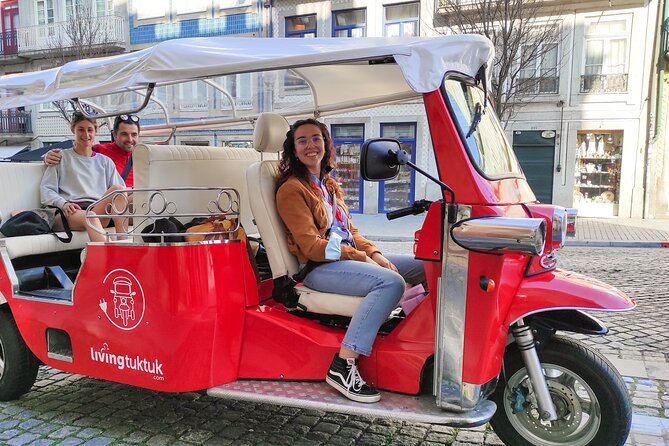
I especially like the contrast: you’re not stuck inside a bus, but you’re also not climbing every hill like it’s an endurance event. The tuk-tuk format makes it easy to pause your brain and really look. And because you’re in a private setup, your guide can tailor stops to what you care about—photo moments, viewpoints, or the kind of architecture you want to read like a story.
Meeting point, timing, and what 50 minutes really means
You meet at R. do Corpo da Guarda 18, 4000-069 Porto, and the tour ends back at the same spot. That round-trip simplicity matters. You’re not trying to find a second pick-up point while you’re already tired from stairs and cobbles.
The schedule is listed as about 50 minutes, and the operator warns that traffic can change the overall duration. Keep that in mind when you’re planning the rest of your day. Porto’s center can slow down, and tuk-tuks are still subject to local movement patterns.
Also: this is not a long, slow sightseeing crawl. It’s more like a concentrated first-draft tour of the city. If you expect museum time or deep inside-monument visits, you’ll be disappointed—most entries and attraction tickets aren’t included.
São Bento Station: the “stop-and-stare” moment
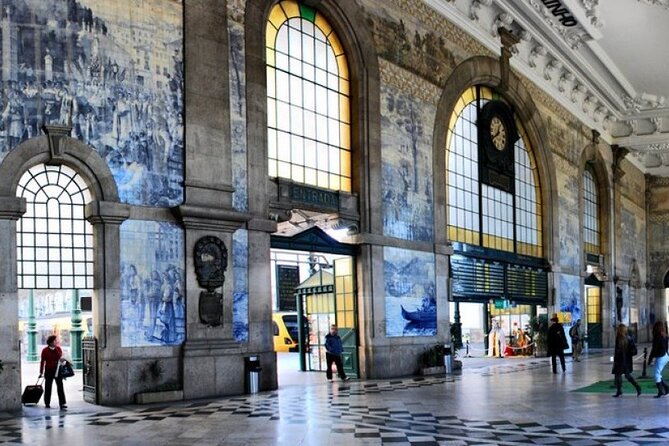
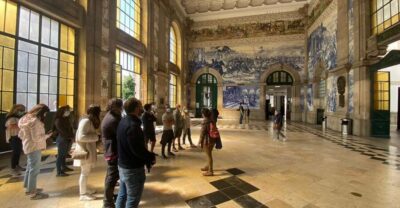
Heading toward São Bento Train Station is smart because it’s a visual anchor for Porto. The station is famous for being beautiful in a way that hits immediately—so even if you only get a brief stop, you’ll understand why it’s on almost every first-day itinerary.
What I like about this kind of stop early in the experience: it sets the tone. You start seeing Porto as a place with layers—transport, architecture, and art all tangled together. You also get an easy reference point for later. After the ride, you’ll know how that station connects to the rest of the center you’ll likely explore on foot.
Aliados Avenue: Porto’s main boulevard and the city’s pulse
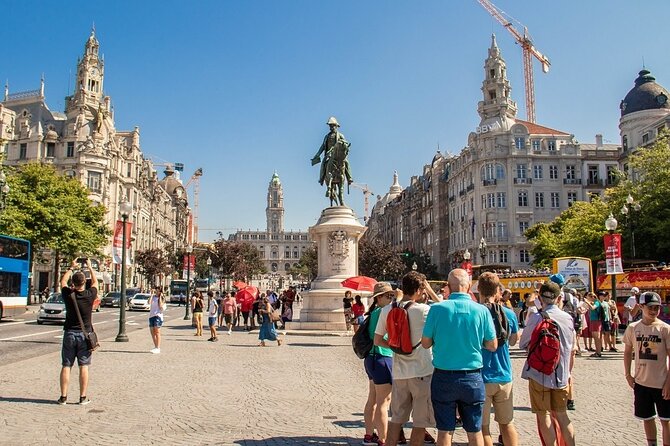
Next up is Aliados Avenue, the main avenue and the civic core of Porto. It’s a wide, dramatic “walk-the-straight-line” kind of street, which is exactly the opposite of Porto’s steep, twisty lanes.
This stop is useful because it gives you orientation. If you can picture where Aliados runs, you’ll find it much easier to navigate afterward—especially if you plan to walk to cafés, viewpoints, or the historic center. It’s also a good place to notice how Porto’s monumental feel shows up in everyday city life.
One practical caution: if you want photos, have your camera ready before the tuk-tuk pulls in. This isn’t a long photo shoot; it’s a quick introduction.
Buzz the hills by tuk-tuk instead





Carmelitas Church facades: spotting 17th-century clues
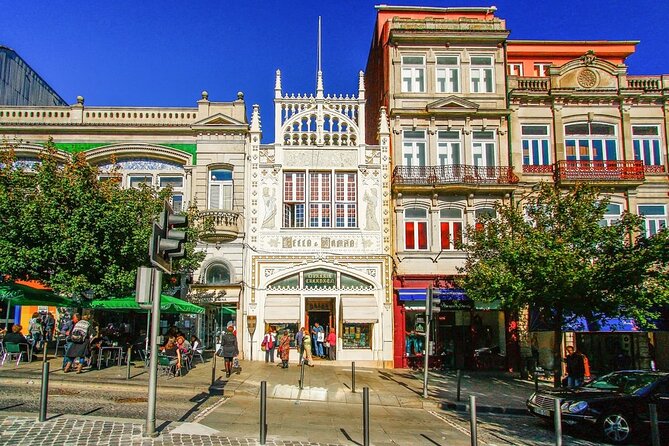
At Carmelitas Church, you’re guided to look at the facades while learning the curious story behind it, including that it started being built in the 17th century. This is one of those moments where the best payoff comes from your guide’s focus.
Why this stop works in a short tour: you don’t need a ticket or a long interior visit to enjoy it. The architecture is visible from the outside, and the explanation turns what could be a quick glance into a real “oh, I see what they mean” moment.
Drawback to consider: because you’re observing from the street, your experience will depend on how much time the driver can give you on that particular stop. If the area is busy or movement is restricted, it may feel more rushed.
Clérigos Tower: Porto’s postcard and skyline marker
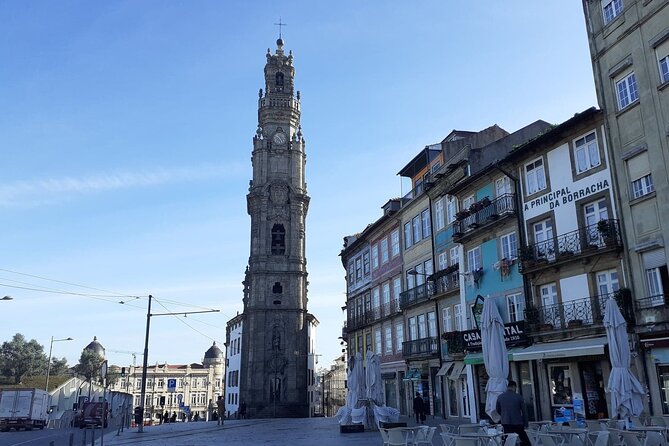
Then you reach the Tower of Clérigos, described as Porto’s postcard. Even if you’re not a hard-core architecture fan, this is the kind of landmark that makes a city feel like a place with identity.
This stop is valuable for a simple reason: it becomes a landmark you can recognize from multiple angles later. Porto’s skyline changes as you move around, but Clérigos is one of the easiest points to keep in your head while walking.
If you’re planning your next steps after the tour, this is where you’ll start thinking: okay, I know where I am now. That’s the difference between a first day where you just wander and one where you wander with direction.
Cobblestones, small restaurants, and Douro River viewpoints
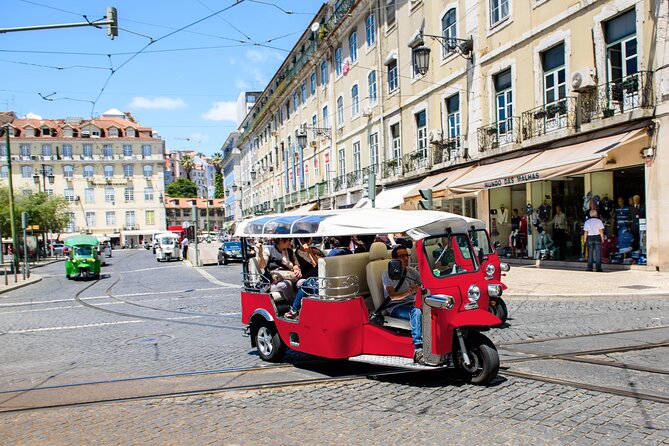
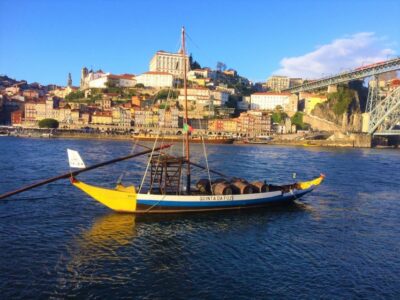
The last stretch leans into the kind of Porto you’ll want to revisit: cobbled streets lined with houses and small restaurants, plus views of the Douro River from higher points.
This is where the tuk-tuk earns its keep. Those viewpoints are hard work on foot, and Porto’s steep geometry can drain your energy early. From the tuk-tuk, you get the payoff—panoramic perspective—without spending the whole day fighting gravity.
A balanced expectation: you might not get long enough at each spot to do a full meal or linger like you would on a walking-only day. But you’ll get enough sensory context that you’ll know where you want to slow down afterward.
Route changes you should plan for (historic Porto vs Gaia)
Here’s the big reality check. Some experiences describe getting blocked from going into the tightest areas of Porto’s historic core due to tuk-tuk restrictions. When that happens, the tour may shift to Gaia and other river-view areas instead of getting as close to certain inner-city landmarks.
Why this matters for your decision:
- If your priority is seeing the historic center up close, you’ll want to be mentally flexible.
- If you mainly want skyline views, orientation, and the feeling of where the river and hills sit, a Gaia-leaning route can still deliver.
The best way to handle this is simple: treat the tour as an orientation ride with top-sight targets, not a guaranteed, step-by-step ticket to every exact doorstep. You’re still likely to leave with a clear sense of where the “must-walk” neighborhoods are.
Guides who make the ride worth it
Even the best route only works if the guide can turn it into a story. In the feedback you’ll see a pattern: specific guides are remembered for being friendly, for answering questions, and for making the architecture and streets feel connected.
Names that come up often include Miguel, Andreas, Diego, Nicole, Beatriz, Helena, Johanna, and Ana. Many people singled out the mix of storytelling and practical suggestions, including where to go afterward and how to navigate on foot with more confidence.
If you’re the type who likes to ask questions—about what you’re seeing, why certain buildings look the way they do, or how neighborhoods connect—private format is what makes those conversations possible.
One caution from feedback: a few people found it hard to hear if the audio wasn’t clear. If you care about details, sit where you can hear best and don’t be shy about asking for repeat explanations.
Price and value: what $42.33 buys you
At $42.33 per person, this isn’t a bargain bus ride, so you should judge it by outcome. Here’s the value math I’d use:
You’re paying for:
- a private ride (not a shared experience)
- electric transport that saves hill-climbing time
- guided stops at high-recognition sights
- a short orientation that helps you plan your remaining days
You’re not paying for:
- monument tickets or museum entries
- extended time at each site
So it’s best value if you have limited time in Porto or you’re arriving on day one and want a fast way to understand what’s where. If you already know Porto well, or if you want slow, detailed museum-style sightseeing, you may feel like the short timing doesn’t match your expectations.
The walking-tour bonuses you can stack after
A nice twist here is that the experience comes with walking-tour add-ons. You get a Porto City Walking Tour available from the day after your experience (as part of what’s included). That’s helpful because the tuk-tuk gives you bearings, and then your feet can do the detailed exploring once you know the shape of the city.
There’s also a Free Walking Tour (shared) available daily through Living Tours, departing from Rua Mouzinho da Silveira 352, 4050-418 Porto at 9:30 a.m. and 4:30 p.m. That’s a good way to fill in whatever the tuk-tuk couldn’t reach due to restrictions or timing.
If you plan your days like I do, this pairing works: ride first for orientation, then walk for depth.
Who should book this tuk-tuk ride?
This is a strong fit if:
- it’s your first day in Porto and you want an easy intro
- you want to see several top sights without spending hours steep-walking
- you like guides who explain what you’re looking at and then give practical next steps
- you’re traveling with a small group (and want a private setup)
It may be less ideal if:
- you need guaranteed access to the tightest historic-center streets by tuk-tuk
- you expect long stops or entry tickets for monuments
- you’re very audio-sensitive and plan to rely on the vehicle speaker system
Final call: should you book Historic Porto by Private Electric Tuk Tuk?
If you’re choosing between wandering on your own and paying for guidance, I’d lean toward booking—especially for day one. The strongest reason is simple: a short, private electric ride can save you time and confusion, and you’ll likely leave with a clear map of where to spend your next hours.
But I’d book with flexibility in mind. Local restrictions can change how close the tuk-tuk gets to the historic center, so this tour is best seen as an orientation plan built around top-sight targets, not a guaranteed route that hits every inner street exactly.
If that flexibility sounds fine, and you want Porto explained while you glide over its hills, this is a smart, efficient way to start.
FAQ
How long is the Historic Porto by Private Electric Tuk Tuk tour?
It runs for about 50 minutes, but overall timing can be affected by traffic conditions.
Is the tour private?
Yes. It’s a private tour/activity for only your group.
What language is the tour offered in?
The tour is offered in English.
What’s the price per person?
The price is listed as $42.33 per person.
Where do I meet and where does it end?
Meet at R. do Corpo da Guarda 18, 4000-069 Porto, Portugal, and the activity ends back at the meeting point.
What’s included in the price?
A private 100% electric tuk-tuk, a tour expert/driver, Porto City Walking Tour (available from the day after your experience), and company liability and personal injury insurance.
What’s not included?
Stops, tickets to other activities, and entries to museums and monuments are not included.
How many people can fit in each tuk-tuk?
Maximum group size is 6 people per tuk-tuk.
Do I need to print anything, or is there a mobile ticket?
The tour uses a mobile ticket.
Is there anything about free walking tours I should know?
There’s also a Free Walking Tour (shared) with Living Tours available daily in English and Spanish at 9:30 a.m. and 4:30 p.m., departing from Rua Mouzinho da Silveira 352, 4050-418 Porto.
Private Porto Tours to Compare





Tuk-Tuk Runs Through the Hills


More of Ribeira and the Old Town






Fresh in the Porto notebook




Ribeira & Old Town, compared.
 ★ 5.0The Unvanquished Tour in Porto City CenterFrom $326,497 reviews
 ★ 4.8The highest-rated traditional fado concert (downtown)From $241,557 reviews
 ★ 4.7Historic City Center Walking TourFrom $331,172 reviews
 ★ 4.8Historical Center Walking TourFrom $41898 reviews
 ★ 4.9Tile Painting and Cocktails in Downtown PortoFrom $41484 reviews
 ★ 5.03-Hour Old Town & Riverside Bike Tour – Guided ExperienceFrom $47481 reviews
 ★ 5.0Pastel de Nata | Workshop from scratch | Porto’s city centerFrom $48449 reviews
 ★ 4.5Porto Guided Tour to the Historical Center on a Tuk TukFrom $42418 reviews
Browse the lists this tour appears in