
Reviewed · PORTO TUK-TUK TOURS
Tours in the Port DE Tuk Tuk
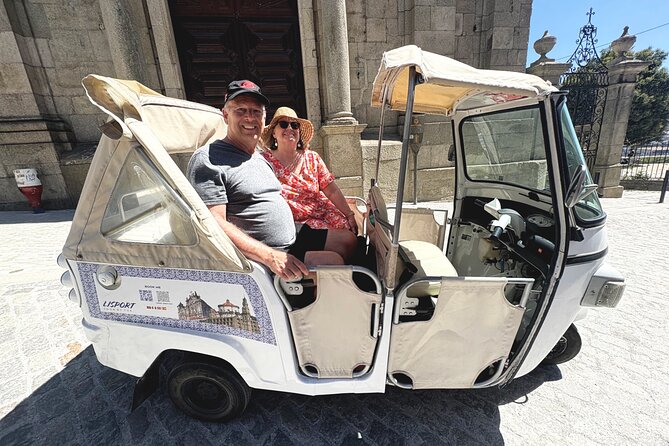
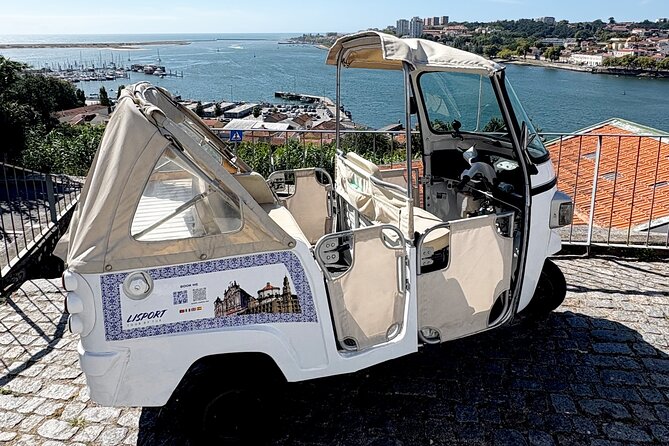
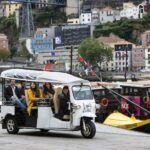
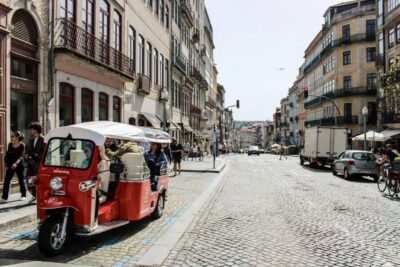
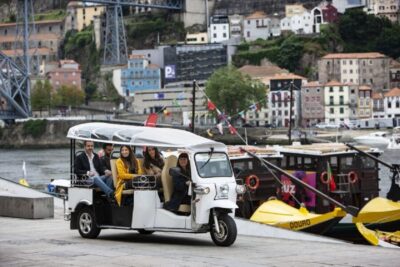
Porto on a tuk-tuk is the fastest way to get your bearings, and this private circuit links major landmarks in about an hour. I like the flexible, tailored stops with an easygoing guide (Bruno is a common name you’ll see), and I also like that you get big-photo exteriors like the tile-covered stations and viewpoints without spending your whole day walking uphill.
One thing to keep in mind: this tour needs good weather, so if the sky doesn’t cooperate you may be moved to a different date or get a refund.
In This Review
- Key things I’d watch for before you ride
- One Hour, Big Porto Energy: Where the Tour Starts and What It’s Best For
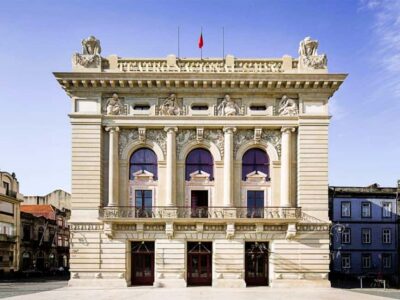
- Teatro Nacional de São João: A Royal Theatre’s Upside-Down Timeline
- São Bento Station Tiles: The 20,000-Plus Story Wall
- Porto Cathedral and Fernandina Walls: Fortified Porto in Layers
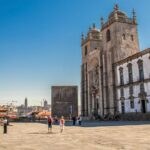
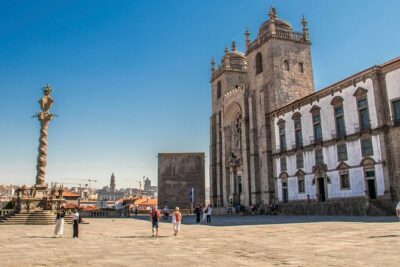
- Sé Cathedral (Porto’s Religious Power Center)
- Fernandina Walls (Medieval Protection, Modern Photos)
- Dom Luís I Bridge: The View Shortcut Between Porto and Gaia
- St. Ildefonso and Rua de Santa Catarina: Tiles, Shopping, and a Few Big Name Detours
- Igreja de Santo Ildefonso: The Staircase + 11,000 Blue Tiles
- Rua de Santa Catarina: A Walk Through the Present and the Classic
- Avenida dos Aliados, City Hall Area, and Praça de los Leones: Porto’s Student-Meets-Office Center
- Avenida dos Aliados and the Municipal Building
- Praça de los Leones: The Lions Fountain Moment
- Carmo and Carmelites + the 1-Meter House Detail: Baroque Next to a Funny Canon Rule
- Church of the Carmelites
- Church of Carmo
- The Narrow House Moment
- Misericórdia Hospital, Jardim da Cordoaria, and the Portuguese Photography Center
- Hospital da Misericórdia (English Neoclassical in Portugal)
- Jardim da Cordoaria: Rope-Makers to Peaceful Garden
- Centro Português de Fotografia: Former Prison Now Free Entry
- Clérigos Tower: 225 Steps for a 360° View
- Price and Logistics You Should Actually Think About
- Should you book the Porto tuk-tuk circuit?
- FAQ
- How long is the tuk-tuk tour?
- What’s the price for the tour?
- Is the tour offered in English?
- Is this a private tour?
- Do I get a mobile ticket?
- Where do we meet for the tour?
- Is the tour dependent on weather?
- Are service animals allowed?
- Is admission free at any stops?
- Is Clérigos Tower included in the tour, and is it paid?
Key things I’d watch for before you ride
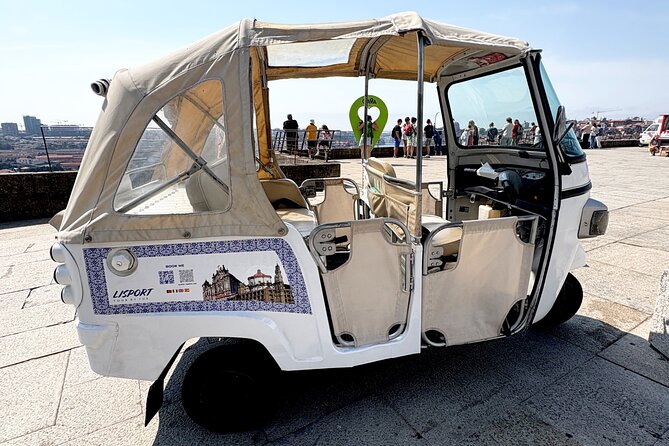
- Private group feel: it’s just your group, not a packed bus crowd.
- Mobile ticket: handy when you’re bouncing between streets.
- English-speaking guide: clear storytelling as you hop between neighborhoods.
- A tight, highlight-first route: great for orientation, not long museum marathons.
- Photo-friendly stops: São Bento’s tiles, Dom Luís I Bridge, and Clérigos Tower viewpoints are built for pictures.
Buzz the hills by tuk-tuk instead
- Porto: Guided Tour by Tuk-Tuk & Optional Douro River Cruise★ 4.5 · 5,980 reviews
- Discover Porto’s Highlights on a 2-Hour Private Electric Tuk Tuk★ 4.5 · 1,860 reviews
- Porto: Guided Tuk Tuk Tour★ 4.6 · 1,390 reviews
- Historic Porto by Private Electric Tuk Tuk to Top Landmarks★ 4.5 · 735 reviews
One Hour, Big Porto Energy: Where the Tour Starts and What It’s Best For
Most first-time Porto plans get stuck on a simple problem: the city is hilly, and the highlights are spread out. This tour attacks that head-on with a tuk-tuk route that strings together the historic center, river crossing views, and cultural anchors. The timing is short on purpose—about 1 hour to 1 hour 10 minutes—so it’s ideal when you want a smart overview and a short list of what to do next.
The meet-up point is Monumento ao Rei D. Pedro V, Praça da Batalha 66 (4000-101 Porto). From there, the ride ends back at the same spot. That matters more than you’d think: you don’t spend your limited time figuring out how to backtrack across the center.
Because it’s private and priced per group (up to 1 in the group setup), I’d treat this as a “spotlight” experience. You’ll see a lot of iconic architecture and city textures quickly, and you’ll leave with a sense of where everything sits—especially around São Bento, the Ribeira river area, and the Clérigos side of town.
Teatro Nacional de São João: A Royal Theatre’s Upside-Down Timeline
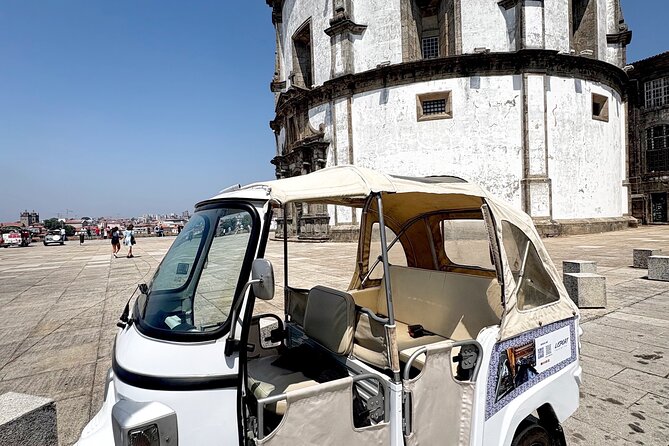
One of the first cultural stops is the Plaza da Batalha area, right near major landmarks like São Bento Station and the National Theatre of São João. The theatre itself (built in the late 1700s) is a story in architecture and survival.
Here’s what makes it memorable:
- It began in 1798 as the Royal Theatre of São João, the first theatre built from scratch in Porto.
- A big fire destroyed it in 1908, and it reopened in 1920 with a redesign by architect José Marques da Silva—the same architect tied to São Bento Station.
- In 1992, it reached national theatre status.
- The style is neoclassical with Beaux-Arts influence, with an imposing facade and a richly decorated interior.
The catch for timing: whether you get a full interior experience can depend on schedules. The good news is that even an exterior “quick look” already tells you why it’s a real performing-arts center in Portugal—classical pieces, contemporary work, festivals, debates, and workshops.
If you like places that feel like they’ve been through real history (fires, rebuilding, upgrades), this is a strong start.
São Bento Station Tiles: The 20,000-Plus Story Wall
Then you hit one of Porto’s signature moments: São Bento Railway Station. The station building opened in 1916, and the design traces back to José Marques da Silva with Beaux-Arts and French influence.
The headline attraction is the interior—more than 20,000 historic tiles (azulejos) painted by Jorge Colaço between 1905 and 1908. The scenes cover Portuguese history, rural life, transport, and key historical moments. You’ll also see inscriptions high in the atrium like Douro and Minho, calling out two major rivers that shaped the region.
Two practical notes:
- It’s one of the best stops for a slow-looking moment even if you’re on a tight timeline, because the tiles reward you for standing still and scanning.
- Admission is free, so you can treat it like a no-stress “must-see” even if the day is tight.
A small drawback: the station can be busy with commuters. If you want the cleanest experience, aim for a calmer moment when you’re able to step aside and take in the tile scenes.
Porto Cathedral and Fernandina Walls: Fortified Porto in Layers
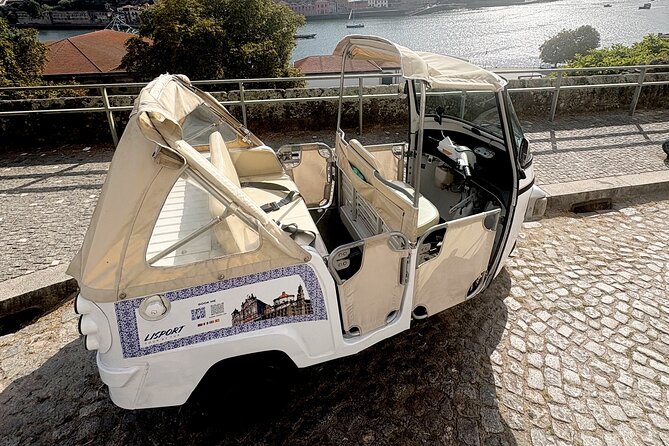
Next comes the area tied to the city’s older defenses: Porto’s cathedral (Sé) and nearby remnants of the Fernandina Walls.
Sé Cathedral (Porto’s Religious Power Center)
The Sé dates back to the 12th century in Romanesque style, then got major upgrades in later eras:
- Big changes in the 14th and 17th centuries, adding Gothic and Baroque elements.
- A Gothic cloister with tiles from the 18th century.
- A Baroque altar-mor.
- The facade includes a Romanesque rosacea, plus distinctive bell towers.
One detail that helps you picture it historically: it was part of the backdrop when Dom Pedro IV (D. Pedro I of Brazil) celebrated Mass before the siege of Porto during the Liberal Wars. It was also a site connected to weddings, which makes it feel less like a “museum piece” and more like a living landmark.
Fernandina Walls (Medieval Protection, Modern Photos)
The Fernandina Wall was built in the 14th century, during the reign of D. Fernando I, replacing and enlarging older Romanesque defenses. It was made of granite and served to:
- protect the city from invasions,
- control commercial entrances and exits,
- connect to strategic river points.
Many parts were demolished in the 19th century, but some sections remain and are restored, including medieval-door remnants like Postigo do Carvão. If you care about photos and “how the city grew,” the wall segments give you texture the Ribeira area doesn’t.
Time consideration: these are perfect for quick stops and good viewpoints, but if you want an hours-long architectural deep dive, you’ll want to come back later on foot.
Dom Luís I Bridge: The View Shortcut Between Porto and Gaia
Crossing the river is where this tour turns into a “how did they build that?” moment: Dom Luís I Bridge.
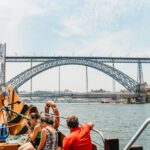
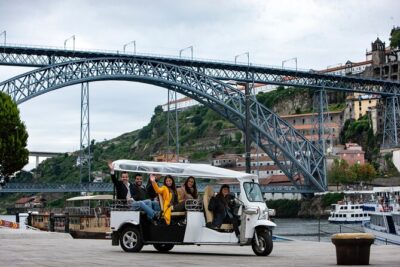
It was inaugurated in 1886, designed by engineer Théophile Seyrig, who partnered with Gustave Eiffel. It replaced an earlier wooden and iron bridge (the Pênsil Bridge). At the time, it was among the largest metal-bound bridges in the world.
Two-level design details help you understand what you’re seeing:
- Upper deck: used by the Port Metro (Line D) and pedestrians.
- Lower deck: for cars and pedestrians.
- There’s a central iron arch about 172 meters long, and the bridge sits roughly 45 meters above the river.
This bridge is a national symbol (classified as a National Monument since 1982), and it’s also a strategic passage between north and south banks—Porto and Vila Nova de Gaia.
As a practical travel move, this stop is smart because it gives you instant orientation: you can see the wine warehouse area and start connecting neighborhoods to river geography.
If you’re chasing sunset views, this is one of the routes that can help you pick your best angle fast.
St. Ildefonso and Rua de Santa Catarina: Tiles, Shopping, and a Few Big Name Detours
Around the city center, the tour hits Igreja de Santo Ildefonso, then slides you into the rhythm of Rua de Santa Catarina.
Igreja de Santo Ildefonso: The Staircase + 11,000 Blue Tiles
This church sits near Plaza da Batalha and close to major centers like São Bento Station and Rua de Santa Catarina. Built between 1709 and 1739, it replaces an older chapel and follows Baroque style with proto-rococo influence.
The facade is covered with about 11,000 blue and white tiles, created in 1932 by Jorge Colaço. Inside, it’s known for baroque gold work and a large carved wood retable from the 18th century.
The thing that makes it feel so dramatic in person is the combination of:
- the tile facade,
- the staircase in front,
- and lighting at night that highlights details.
In a short tuk-tuk schedule, this is a great “stop and camera up” moment.
Rua de Santa Catarina: A Walk Through the Present and the Classic
Rua de Santa Catarina is a main shopping street, mostly pedestrian, with a mix of international brands and older-style shops. This is also where you’ll pass near or connect to:
- Café Majestic, a famous Belle Époque café,
- Chapel of Souls, known for a blue-tile facade,
- and Bolhão Market, just a few steps away, always lively with street art, live music, and photo-taking.
If you want a break that feels like Porto today (not just monuments), this section is your landing pad. The drawback is simple: shopping streets tempt you to wander, and your tour time is tight—so treat it as a taste, not a full day of browsing.
Avenida dos Aliados, City Hall Area, and Praça de los Leones: Porto’s Student-Meets-Office Center
Then you move into Porto’s more civic and youthful zones, starting near Avenida dos Aliados and the city’s monumental squares.
Avenida dos Aliados and the Municipal Building
At the top of Avenida dos Aliados is the city’s famous municipal landmark: the Porto city hall building. It has a neoclassical look with heavy monumental influence from the 20th century.
Key facts to keep in mind:
- Construction started in 1920 and finished in 1957.
- There’s a central clock tower about 70 meters high.
- The building has a granite facade with sculptures and decorative details, plus an interior with marble stairs and artistic glazing.
- It’s the headquarters for the municipal executive and hosts official events and temporary exhibitions.
- Interior visits may be possible on guided visits when scheduled (or free during special public days).
Praça de los Leones: The Lions Fountain Moment
Nearby you’ll find Praça de los Leones, named for a fountain with four bronze-winged lions that pour water from their mouths. The square also sits close to the Rectorate of the University of Porto, the churches of Carmo and Carmelites, and Lello Bookstore.
This stop is especially useful if you want that Porto feel that mixes:
- students and everyday life,
- photography angles,
- and easy café access.
Night is a great time to see the energy, but even daytime has its own charm because the square is photogenic and easy to navigate.
Carmo and Carmelites + the 1-Meter House Detail: Baroque Next to a Funny Canon Rule
Just beside Praça de los Leones, the tour makes time for the twin church pair: Church of Carmo and Church of the Carmelites.
Church of the Carmelites
Built between 1616 and 1628, it’s described as classical baroque, with a more discreet facade than its neighbor. The inside features golden retables typical of Portuguese baroque.
Church of Carmo
Built between 1756 and 1768, it’s baroque and rococo, with a richly decorated facade. One particularly striking detail: the side has blue-and-white tiles added in 1912, showing the imposition of the escapulary to St. Simon Stock.
The Narrow House Moment
Between the churches is a structure known as the narrowest house in Porto, about 1 meter wide. It helped enforce an old canonical rule that prohibited direct contact between nuns and monks.
This is the kind of detail you remember later because it’s both practical and human. For a short tour, that’s valuable.
If you’re the type who enjoys small facts that make big buildings feel real, this segment is a keeper.
Misericórdia Hospital, Jardim da Cordoaria, and the Portuguese Photography Center
This tour also reaches beyond the obvious scenic spots, using Porto’s “culture in calmer corners” style.
Hospital da Misericórdia (English Neoclassical in Portugal)
Founded in 1799 by the Misericordia do Porto, this hospital building was designed by English architect John Carr. It’s neoclassical English, which is rare in Portugal. The structure is in granite, shaped in a U with inner courtyards.
It’s recognized as one of the most important hospital buildings in the country in historical and architectural terms and is classified as a National Monument since 1910. It still operates today, with modernized wings, and it’s integrated into the University Hospital system.
In a one-hour tour, this stop works because it gives you contrast: Porto isn’t only churches and stations. It also has serious institutional architecture.
Jardim da Cordoaria: Rope-Makers to Peaceful Garden
Near the area where string manufacturers (corders) worked, the space was transformed into a garden in the 19th century. The garden designer tied to the Crystal Palace (Émile David) is credited for the layout.
Today you get:
- walking routes,
- centuries-old trees,
- shaded benches and a quiet environment,
- and a sculpture spot with bronze human figures by Juan Muñoz.
This is a breath-of-air stop. It’s also useful if you’re traveling with kids or you just want a moment to sit before the taller viewpoints later.
Centro Português de Fotografia: Former Prison Now Free Entry
The tour includes the Centro Português de Fotografia, housed in a historic prison and courthouse building. It was built in the 18th century (1767) as the Port Relation Chain, and later served as prison. It became a photography center after rehabilitation in the 1990s, with public opening tied to 1997.
What you can expect here:
- preservation of national and international photography collections,
- emphasis on ancient cameras and negatives,
- temporary and permanent exhibitions,
- and a national photographic archive.
- Entry is free, and it’s open on extended hours (except holidays).
Also, you can visit the historic prison rooms with grids and cells, which adds a strong “place history” layer without needing a long museum commitment.
Clérigos Tower: 225 Steps for a 360° View
The grand finish is typically Igreja dos Clérigos and the climb of the tower.
- The church was built between 1732 and 1750.
- The tower was completed in 1763.
- The architect was Nicolau Nasoni, a major Baroque figure in northern Portugal.
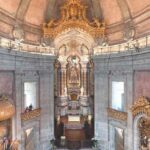
- The church has an oval layout, with baroque organs and a golden theme.
- The tower is 76 meters high and involves 225 steps.
The big payoff is the panoramic 360° view over Porto and the Douro. It’s also a visual symbol you’ll notice from other spots in the old town, which helps you understand where you are on the map.
Important timing note: entry is paid to climb the tower and visit the museum, and the ticket includes the panoramic tower experience plus museum access and access to the church. The tour will help you get there, but you’ll still want to decide if the climb fits your energy level.
If your legs are short on patience, this is still a great place to photograph even if you don’t climb—but the tower is where the payoff really hits.
Price and Logistics You Should Actually Think About
The tour costs $42.05 per group (up to 1) and runs about 1 hour to 1 hour 10 minutes. For many visitors, that price is less about “doing a lot” and more about getting a smart route in minimal time.
Here’s why it can be good value:
- You’re paying for efficient movement across hills and between distant-looking landmarks.
- It’s private, so you don’t have to fight for attention or deal with a fixed group pace.
- It’s in English and uses a guide who can recommend what to do after you get your orientation.
Also, you get a mobile ticket, and there’s a security belt for the ride. Service animals are allowed, and the start point is near public transport, which can simplify your day if you’re juggling train and tram plans.
The trade-off is also clear: with a short duration, you won’t be doing long entry-by-entry museum sessions at every stop. This is a highlights-and-context tour, not a slow “spend the day in one building” plan.
Should you book the Porto tuk-tuk circuit?
Book it if:
- you’re in Porto for a short time and want to map the city fast,
- you like architecture and tile work and want the big names covered in one go,
- you want a guide who can shape the day around what you care about (Bruno-style tailoring shows up a lot in how this tour is described),
- or you’re traveling as a smaller group and want something that feels personal.
Skip or rethink it if:
- you’re hoping for long interior visits everywhere, or
- you’re traveling during the kind of weather that breaks plans, since this tour requires good weather.
My practical advice: treat the tuk-tuk ride as your “first draft.” Afterward, pick one or two stops that mattered most to you—like São Bento tiles or Clérigos—and then plan a deeper return on foot when you have time.
FAQ
How long is the tuk-tuk tour?
It runs about 1 hour to 1 hour 10 minutes.
What’s the price for the tour?
It’s $42.05 per group (up to 1).
Is the tour offered in English?
Yes, it’s offered in English.
Is this a private tour?
Yes. It’s a private tour/activity, and only your group will participate.
Do I get a mobile ticket?
Yes. The tour uses a mobile ticket.
Where do we meet for the tour?
The meeting point is Monumento ao Rei D. Pedro V, Praça da Batalha 66, 4000-101 Porto, Portugal.
Is the tour dependent on weather?
Yes. This experience requires good weather.
Are service animals allowed?
Yes, service animals are allowed.
Is admission free at any stops?
São Bento Railway Station has admission ticket free. Centro Português de Fotografia also has free entry.
Is Clérigos Tower included in the tour, and is it paid?
Entry is paid to climb the tower and visit the museum, and it includes the panoramic tower and museum, plus access to the church.
More Tours in Porto


More Tour Reviews in Porto

Tuk-Tuk Runs Through the Hills



Fresh in the Porto notebook


Porto Tuk-Tuk Tours, compared.
 ★ 4.5Guided Tour by Tuk-Tuk & Optional Douro River CruiseFrom $205,980 reviews
 ★ 4.5Discover Porto’s Highlights on a 2-Hour Private Electric Tuk TukFrom $481,860 reviews
 ★ 4.6Guided Tuk Tuk TourFrom $411,390 reviews
 ★ 4.5Historic Porto by Private Electric Tuk Tuk to Top LandmarksFrom $42735 reviews
 ★ 4.5Porto Guided Tour to the Historical Center on a Tuk TukFrom $42418 reviews
 ★ 4.8Private Sightseeing Tour by Electric Tuk TukFrom $47305 reviews
 ★ 4.7Oporto Tuk-Tuk Tour: Fast, Fun & Flexible – 1H to Full Day!From $88280 reviews
 ★ 4.5Porto Half Day Private Tuk Tuk TourFrom $83246 reviews
Browse the lists this tour appears in