
Reviewed · HISTORICAL TOURS
Porto Region Museum: a Thousand Years Of History
Porto’s past plays like live cinema. I love the video mapping and the life-size tram replica selfie, which turn a history stop into something you can feel right away. The story covers roughly 1,000 years of Porto, from early beginnings to Portuguese influence and global reach, but plan for some on-screen reading and the occasional snag when you’re hunting translation info via QR prompts.
You’ll typically spend about 90 minutes here (sometimes a bit longer if you linger), and it’s straightforward to visit: you show your ticket directly at Porto Region Across The Ages and go in during opening hours. The audio guide is included, and you can switch languages as needed—handy when you’re traveling as a mixed group.
In This Review
- Key highlights to know before you go
- What Porto Region Across the Ages is (and why it’s a smart first stop)
- A practical walk-through of the museum experience
- Start with the story-building setup
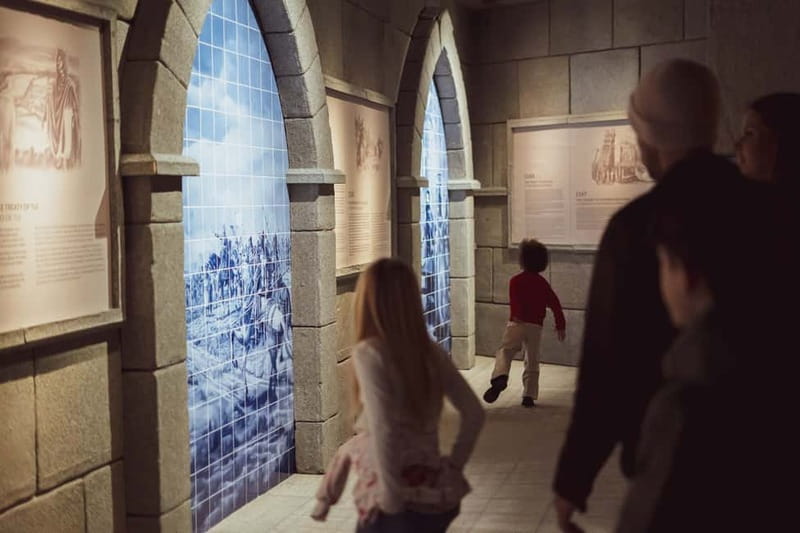
- Move through video-mapped scenes
- Catch the cinematic theatre segment
- Finish with the Porto photo moment: the tram replica
- Video mapping and the cinematic theatre: the tech that actually helps learning
- The tram replica selfie: a small stop that makes the whole visit feel real
- Audio guide languages and what to do if translation info feels hard to find
- Architecture and setting: the Porto feel beyond the screens
- Price and time: is $18 good value for what you get?
- Who should book this museum (and who might not love it)
- The kind of experience it delivers in real life
- Should you book Porto Region Across the Ages?
- FAQ
- FAQ
- How long does the Porto Region Across The Ages experience take?
- How much is the ticket for Porto Region Across The Ages?
- Where do I show my ticket to enter?
- What are the opening hours?
- What languages is the audio guide available in?
- Is the museum wheelchair accessible?
- Do I get pick-up or drop-off with the ticket?
- Can I cancel for a full refund?
- Can I reserve now and pay later?
- When can I use my ticket?
Key highlights to know before you go
- 1,000 years of Porto’s story told with a modern audio-visual format
- Video mapping that makes historical scenes feel cinematic
- Cinematic theatre moments that keep the pacing moving
- Life-size tram replica for an easy, satisfying photo stop
- Audio guide in multiple languages, including English and French (plus more)
- Warehouse-style architecture that feels tied to Porto’s waterfront vibe
More Porto days out worth booking
- Douro Valley: Historical Sites, Wine Experience, Lunch & Cruise★ 5.0 · 5,133 reviews
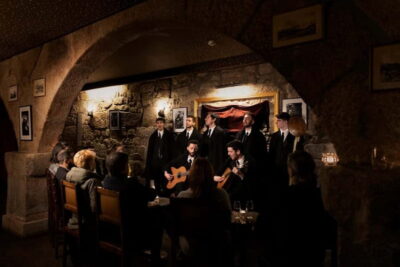
- Porto: An Intimate Fado Show in a Historical Tavern★ 4.8 · 2,055 reviews
- Porto: Historic City Center Walking Tour★ 4.7 · 1,172 reviews
- Porto: Private Tour of the Historic City in a Ford T Car★ 4.8 · 932 reviews
What Porto Region Across the Ages is (and why it’s a smart first stop)
Porto Region Across The Ages is not a quiet, room-of-objects museum. It’s built around storytelling you can watch, listen to, and follow with an audio guide. The main promise is simple: you’ll walk through about a thousand years of Porto’s history and see how the city’s ideas and people shaped Portugal—and how Porto’s influence traveled beyond it.
What I like about this approach is the pace. Instead of forcing you to read every label in order, you get a guided-feeling experience. You still learn a lot, but the building does the heavy lifting: scenes change, key moments are framed, and the audio guide helps connect what you’re seeing to the bigger timeline.
The experience is provided by The World of Wine (WOW), which helps explain the production style. This is history presented like an attraction: clear structure, strong visuals, and a theatrical sense of timing. If you want something memorable on a first day in Porto—especially if you’re still figuring out neighborhoods and geography—this kind of orientation can be a big win.
A practical walk-through of the museum experience
You enter with your ticket and follow the flow through the exhibition spaces. The experience is set up so you can move at your own pace, but it’s still designed to land key beats as you progress.
Start with the story-building setup
Early on, expect a mix of audio-visual storytelling and contextual moments that frame Porto’s role over the centuries. This is where you get your bearings: who mattered, what connections grew, and how the city kept reinventing itself.
You’ll notice the exhibition includes a fair amount of printed or displayed information. That’s not automatically bad—just don’t assume it’s purely “press play and drift.” If you’re the type who likes to take in visuals and then skim text, you’ll be in your element.
Move through video-mapped scenes
A big part of the show is the dynamic video mapping displays. This is the feature that turns history into motion. Instead of static panels, you watch scenes transform and reshape as new eras come in. It’s also one of the best ways to make sense of long timelines quickly, since the visuals do some of the explaining for you.
More Porto days out worth booking




Catch the cinematic theatre segment
Midway through (and depending on how you move through the rooms), you’ll reach a cinematic theatre portion. The theatre part matters because it resets your attention. When you’re learning centuries of change, your brain needs a rhythm. The show gives you a clear break so the next sections land with more impact.
If you like film-style storytelling—sound, pacing, and a guided flow—you’ll probably enjoy this section more than you expect.
Finish with the Porto photo moment: the tram replica
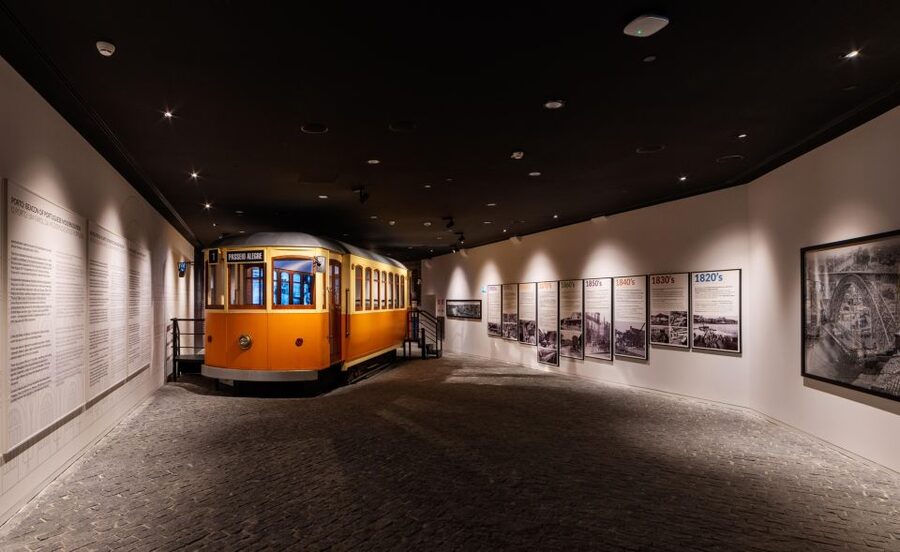
One of the most fun, low-effort stops is the life-size replica of Porto’s iconic tram. You can take a selfie here, and it works as a “yes, I’m really in Porto” reality check after all that historical context.
This part doesn’t feel like an afterthought. It’s a practical end marker: you’ve followed the timeline, you’ve learned the background, and now you’re reminded of the city’s everyday icons.
Video mapping and the cinematic theatre: the tech that actually helps learning
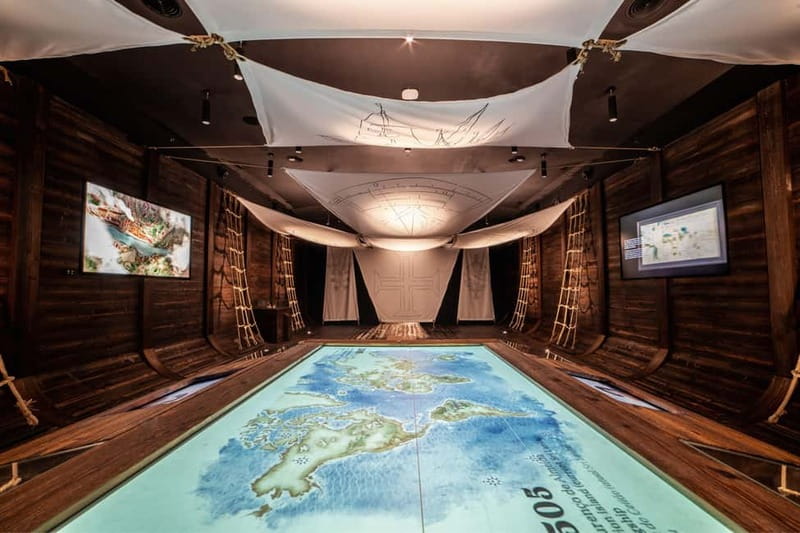
Video mapping gets used in a lot of places. Here, it works because it supports the story instead of just showing off. The visuals are designed to connect eras and themes—think: changes over time, major turning points, and Porto’s links outward to the wider world.
Why this matters for you: you’ll likely leave with a clearer mental timeline than you would after reading separate museum panels. The show gives you cause-and-effect cues through pacing. When the theatre segment plays, it also gives your attention a clear structure—so the experience doesn’t feel like you’re bouncing from one random topic to another.
One thing to keep in mind: the experience blends audiovisual moments with written information. So if you’re sensitive to environments where you have to read while you’re also watching, plan to take breaks when you need them. It’s still enjoyable, but it’s not purely passive.
The tram replica selfie: a small stop that makes the whole visit feel real

A lot of museums have photo points. This one earns its place because it’s directly tied to Porto’s identity—the iconic tram is the kind of symbol you’ll recognize during your walking days in the city.
I like that the replica is life-size and meant for a quick photo. It gives you something concrete to do with your hands and phone while your brain is processing all the history. That matters because after 90 minutes of centuries of change, it’s nice to land on something present-day.
If you care about photos, arrive with your battery topped up and your camera ready. Nothing complicated, just treat it like a real city stop, not a quick hallway snapshot.
Audio guide languages and what to do if translation info feels hard to find
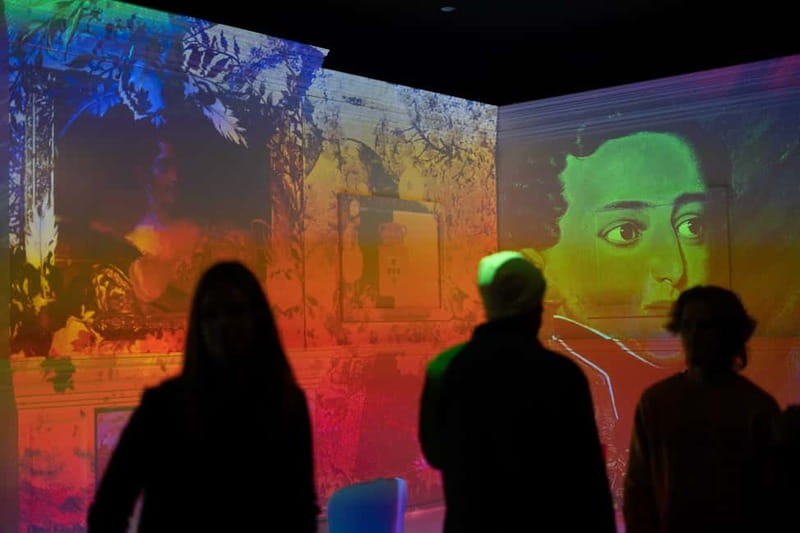
The audio guide is included, and it’s available in Portuguese, English, Spanish, French, Korean, and German. That’s a strong range, especially if you’re traveling with friends or family who don’t share a single language.
Here’s the practical tip: if you notice translation prompts are confusing—or if QR-based navigation doesn’t immediately lead you to the right language—don’t wait too long. Use the audio guide through the main experience and ask for help early rather than mid-way. One caution from experience: when an attraction includes QR systems, there’s always the chance the device flow won’t match what you expect.
If you rely on the audio guide first and use on-screen text as backup, you’ll have a smoother visit.
Architecture and setting: the Porto feel beyond the screens
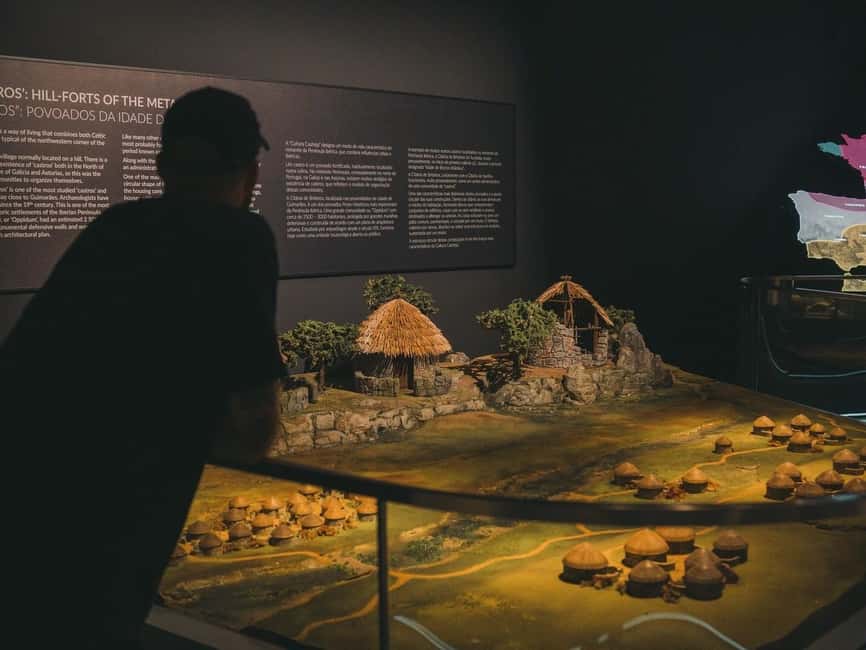
A detail worth mentioning: the museum’s architecture has a warehouse/port-quay style that feels connected to Porto’s older industrial bones. That visual mood matters because it sets expectations. You’re not in a polished, generic box. You’re in a space that visually echoes Porto’s working history, which makes the story feel more grounded.
This kind of setting also helps the museum fit into your overall Porto day. After you spend time in the exhibition, walking around the city’s historic areas feels less like you’re switching topics. The textures line up.
Price and time: is $18 good value for what you get?
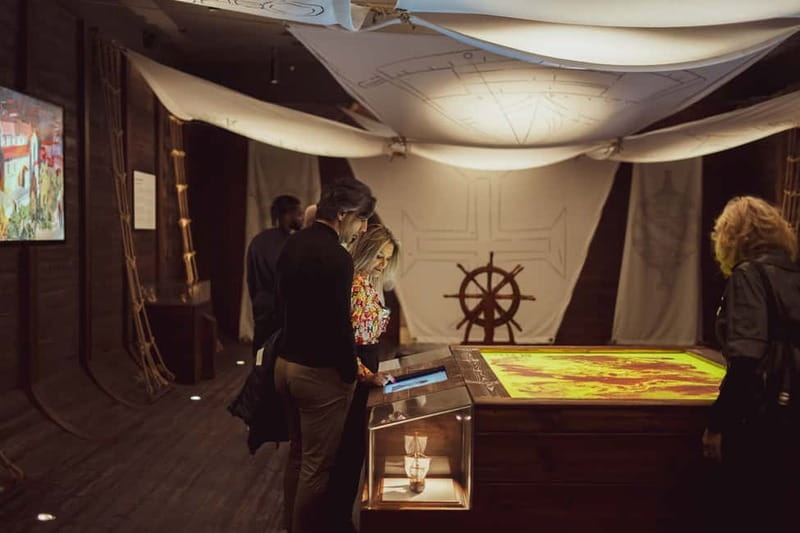
At about $18 per person, Porto Region Across The Ages sits in the “reasonable paid attraction” zone. The value comes from the mix of things you get in one ticket:
- An entry into a production-heavy, audio-visual exhibition
- A built-in audio guide (so you’re not paying extra per language)
- Video mapping plus a cinematic theatre segment
- A life-size tram photo moment
The duration is listed as 90 minutes (with availability across the day). That’s a solid block for a museum-leaning activity where the content is designed to keep you moving. If you’re short on time in Porto, this works as a condensed orientation to the city’s story, not just an isolated exhibit.
What it’s not: it’s not a bargain if you’re expecting a quiet, artifact-only museum where you can wander slowly for hours. Think of it as “history as a guided show.”
Also note what’s not included: there’s no pick-up and drop-off. So you’ll want to plan your own arrival time, show up, and go in during opening hours.
Who should book this museum (and who might not love it)
This museum suits you if:
- You like history when it’s told through film-like pacing and big visuals
- You want a first-hit understanding of Porto’s long story
- You’re traveling with a group that might enjoy different learning styles (audio, visuals, and some reading)
It might be less satisfying if:
- You strongly prefer classic museums filled mostly with objects and long-term reading
- You’re the kind of visitor who gets frustrated by QR-based navigation or translation screens
- You want zero pressure and zero moving parts—this is designed as an attraction with multiple media elements
The kind of experience it delivers in real life
Based on how the experience has landed for many people, the standout strengths are consistent: it’s informative, the multimedia parts do their job, and the film/theatre style storytelling keeps the museum from feeling like a chore. The history focus on Porto and its connection to Portugal also lands well for visitors who want context before they start exploring on foot.
There’s also a practical curiosity factor. One detail that’s worth checking: the venue can be treated like a private rental in certain setups. If you’re traveling with a group and want a more controlled experience, it’s worth asking whether a full or partial rental is possible for your dates.
Should you book Porto Region Across the Ages?
If you’re looking for a history experience that feels made for modern visitors—clear structure, audio guide support, and real production value—yes, book it. The price is fair for what you get, and the tram selfie is a fun, simple payoff.
I’d skip or reconsider only if you’re chasing a classic museum format with lots of objects and minimal media. Otherwise, this is a strong “get oriented and learn fast” stop in Porto.
FAQ
FAQ
How long does the Porto Region Across The Ages experience take?
It’s typically listed at about 90 minutes, though the activity description also notes it as 90 minutes to 1 day depending on available starting times.
How much is the ticket for Porto Region Across The Ages?
The price is listed as $18 per person.
Where do I show my ticket to enter?
Show your ticket directly at Porto Region Across The Ages.
What are the opening hours?
It’s open daily from 10:00 AM until 07:00 PM, with the last entrance at 07:00 PM.
What languages is the audio guide available in?
The audio guide is included and available in Portuguese, English, Spanish, French, Korean, and German.
Is the museum wheelchair accessible?
Yes, it is listed as wheelchair accessible.
Do I get pick-up or drop-off with the ticket?
No. Pick-up and drop-off are not included.
Can I cancel for a full refund?
Yes. Free cancellation is available up to 24 hours in advance for a full refund.
Can I reserve now and pay later?
Yes. There is a reserve now & pay later option listed, so you can book and pay nothing today.
When can I use my ticket?
You can use your ticket anytime on the selected date during museum opening hours.
More Museums in Porto

More Historical Tours in Porto





More Tour Reviews in Porto






Fresh in the Porto notebook



Historical Tours, compared.
 ★ 5.0Douro Valley: Historical Sites, Wine Experience, Lunch & CruiseFrom $1075,133 reviews
 ★ 4.8An Intimate Fado Show in a Historical TavernFrom $182,055 reviews
 ★ 4.7Historic City Center Walking TourFrom $331,172 reviews
 ★ 4.8Private Tour of the Historic City in a Ford T CarFrom $32932 reviews
 ★ 4.8Historical Center Walking TourFrom $41898 reviews
 ★ 4.5Historic Porto by Private Electric Tuk Tuk to Top LandmarksFrom $42735 reviews
 ★ 4.6Douro Valley History & Wine Tour with Cruise & LunchFrom $104433 reviews
 ★ 4.5Porto Guided Tour to the Historical Center on a Tuk TukFrom $42418 reviews
Browse the lists this tour appears in