
Reviewed · RIBEIRA & OLD TOWN
Porto: Historical Center Walking Tour
Porto’s old streets make sense fast. This Historical Center walking tour lays out Porto’s UNESCO core with a clear route—from Sé Cathedral down to Ribeira, then up through hilltop neighborhoods—so you understand how the city grew. I especially like the way the guide connects religious influence, trade, and defense walls to what you’re seeing on the pavement.
I also like the pacing and site mix: Palacio da Bolsa, Clérigos Church, Livraria Lello & Irmao, Avenida dos Aliados, and São Bento Station are all on the menu, with time for questions as you go. One drawback to plan around: this is a walking tour with uneven historic streets and it’s not suitable for mobility impairments, so comfortable, grippy shoes matter.
In This Review
- Key things to know before you go
- Starting at Sé Cathedral: the easy win near Estátua de Vímara Peres
- Porto Cathedral (Sé) and Paço Episcopal: the religious spine of the city
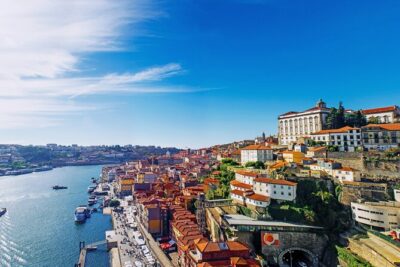
- Ribeira and the riverside lanes: where Porto’s port-city attitude shows
- Palacio da Bolsa, Vitória, and Cordoaria: power, justice, and monuments close together
- Clérigos Church and Clérigos Tower views: dramatic streets with a purpose
- Livraria Lello & Irmao: bookshops as cultural theater
- Avenida dos Aliados and São Bento Station: grand public spaces
- The climb toward Juderia do Olival: Jewish Quarter context on the route up
- St. Francis Church and the defensive-wall loop: why this route feels logical
- Price and value for a 2.5-hour guided walk in Porto
- Who this tour suits best (and who should skip it)
- Should you book this Porto Historical Center walking tour?
- FAQ
- Where does the tour start?
- How long is the walking tour?
- What languages are available?
- Is the tour suitable for people with mobility impairments?
- What should I bring?
- Can I cancel for a refund?
Key things to know before you go
- Start at the Sé area: meeting point is by the Estátua de Vímara Peres near Porto Cathedral
- UNESCO core on foot: the route is built to show how the old city fits together
- Ribeira + stair alleys: expect classic riverfront lanes and climbs
- A story-rich stop set: Sé Cathedral, Palacio da Bolsa, Clérigos, Livraria Lello, and São Bento
- Hilltop momentum: the walk includes the climb toward Juderia do Olival (Jewish Quarter)
- Local guide energy: Lucas-style guiding is described as adaptable and engaging
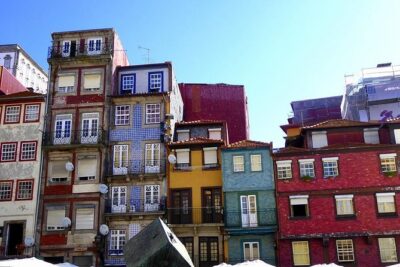
Deeper into Ribeira, its arcades and riverfront
- The Unvanquished Tour in Porto City Center★ 5.0 · 26,497 reviews
- Porto: The highest-rated traditional fado concert (downtown)★ 4.8 · 1,557 reviews
- Porto: Historical Center Walking Tour★ 4.8 · 898 reviews
- Historic Porto by Private Electric Tuk Tuk to Top Landmarks★ 4.5 · 735 reviews
Starting at Sé Cathedral: the easy win near Estátua de Vímara Peres
Your walk begins right where Porto’s story starts: by the Estátua de Vímara Peres near the Sé Cathedral of Porto. The area is a smart first anchor because from here you can picture the city’s “layers”—church power, river trade, and the neighborhoods that grew around both.
I like that this start point also helps you avoid the most common first-day mistake: wandering without a thread. With a guide setting the direction, you’re less likely to miss important connections between streets and landmarks.
Practical note: arrive a few minutes early and stand near the statue. One helpful bit of feedback is that it can be easier to spot the guide if you keep your eyes open at the start point and don’t assume they’ll be obvious from far away.
Porto Cathedral (Sé) and Paço Episcopal: the religious spine of the city
You’ll get a focused guided visit at the Porto Cathedral (Sé), with a short, efficient intro that sets up why religious buildings shaped medieval Portugal. This matters because Porto isn’t just scenic—it’s political and social too. When you understand the role of the bishop and the church, the city’s street patterns start to click.
The tour also includes Paço Episcopal, which is a natural complement to Sé Cathedral. If you tend to enjoy architecture but also like context, this is one of the stops that turns “pretty walls” into a story about influence and authority.
How to make this part pay off:
- Look for details that show how the site relates to the surrounding streets.
- Ask your guide how the church shaped Porto’s identity as it grew.
Ribeira and the riverside lanes: where Porto’s port-city attitude shows
Next comes Ribeira, the riverside neighborhood tied to Porto’s history as a port city. This isn’t only about the river view. The guided time you spend here is designed to help you grasp how commerce and daily life clustered around the Douro.
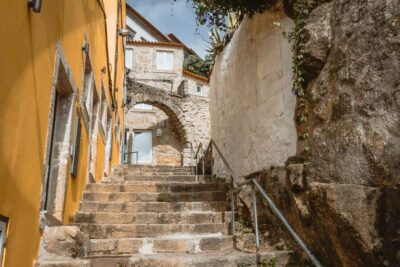
You’ll also move through alleys and stairways that connect the cathedral zone to the riverfront. That movement is the point. Porto’s old center isn’t flat, so you really do “feel” how neighborhoods relate to each other as you walk.
One consideration: Ribeira-style streets can be busy, and the walk includes turning corners and climbing small sections. If you’re prone to rushing, slow down a touch and enjoy the transitions—those stair streets are where the tour’s layout becomes obvious.
Palacio da Bolsa, Vitória, and Cordoaria: power, justice, and monuments close together
Palácio da Bolsa is one of the clearest “big moment” stops in the walk. It connects to Porto’s strength as a commercial hub, and it’s a strong reminder that the city’s architecture often served very practical goals—trade, governance, and public life.
After that, you’ll pass through Vitória, Porto. This helps widen the lens beyond the most famous postcard stops. Neighborhood-area time matters because it shows you what surrounds the major monuments, not just the monuments themselves.
The tour also points you toward the Cordoaria area with famous city monuments along the way. In practice, that means you’ll have several chances to spot major landmarks in a compact radius—exactly the kind of walking coverage that’s hard to replicate if you’re relying on your own route.
If you like a tour that gives you a mental map (not just photos), this section is where it starts working.
More routes on foot through Porto



Clérigos Church and Clérigos Tower views: dramatic streets with a purpose
Clérigos Church is a highlight for a reason: it’s built for presence. Even if you’re not an architecture specialist, you can feel how the church’s prominence fits into Porto’s skyline and street drama.
The walking route is designed so you don’t just stop and move on. You’ll be walking through the historic center as a connected story, which makes Clérigos feel less like an isolated sight and more like a landmark that ties neighborhoods together.
Pair this with your own strategy:
- Pause at street angles where you can see the monument from a distance.
- Let your guide explain what you’re likely looking at, so the stop becomes more than a quick snapshot.
Livraria Lello & Irmao: bookshops as cultural theater
Livraria Lello & Irmao is included as a guided stop, and it’s one of the most distinctive “modern fame meets historic streets” moments on this route. Even if you’re not hunting for rare books, you’re visiting a place that has become part of Porto’s identity.
I like having it on a guided walk because your time isn’t spent trying to figure out where it fits. With the guide’s context, the stop becomes about how Porto turned cultural landmarks into lasting symbols.
A small practical thought: this kind of famous stop can draw crowds. So if you want calmer moments, keep your expectation flexible and focus on the experience rather than squeezing in a perfect photo sequence.
Avenida dos Aliados and São Bento Station: grand public spaces
Avenida dos Aliados is one of those streets that tells you Porto wants to be seen. It’s wide, formal, and instantly readable compared to the narrow historic lanes. On a walking tour, that contrast is a feature. It helps you understand how the city’s center expands into more public, civic-facing space.
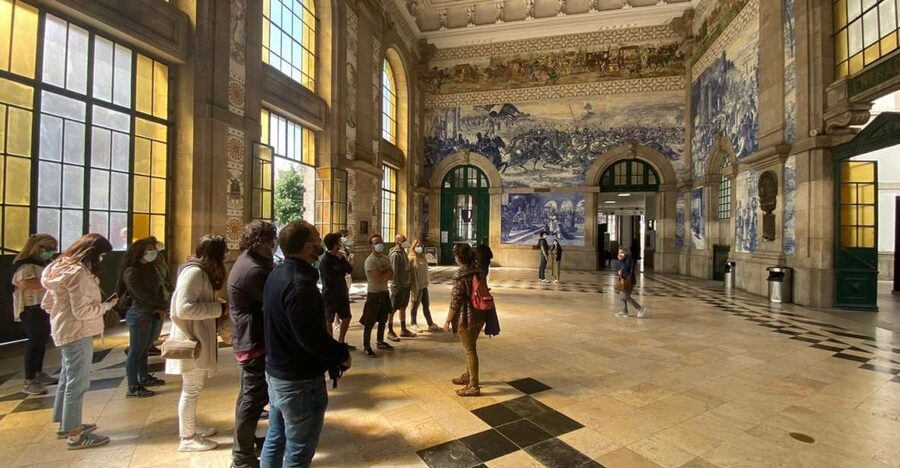
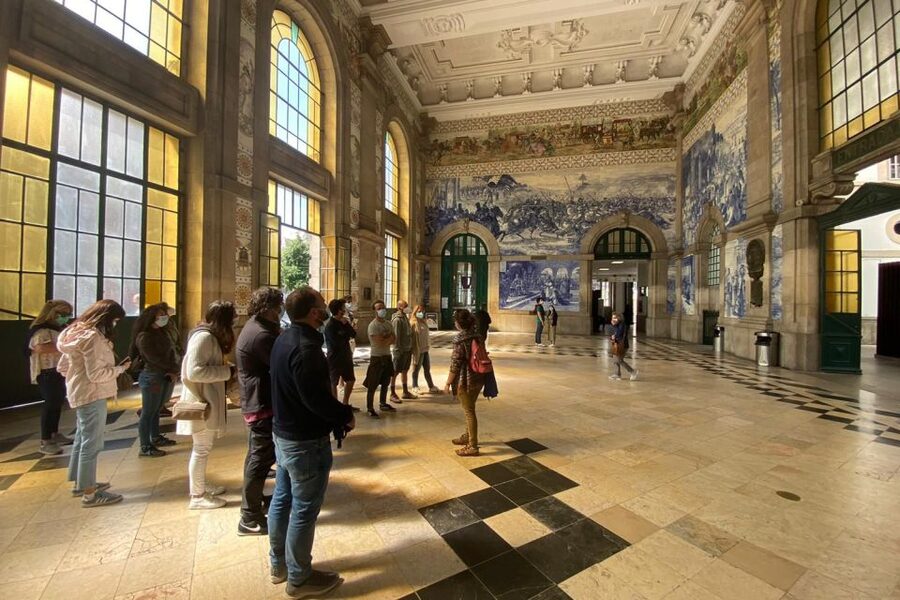
Then you’ll head to São Bento Station for a longer guided stop. São Bento works well as a payoff because it’s both functional and beautiful. You’re not just “touring”; you’re learning how public spaces become part of daily rhythm.
If you’re the type who forgets facts after a quick sightseeing stop, use this moment to ask one or two follow-up questions. The guide’s strong points—steady pace and answering questions—matter a lot here, since São Bento rewards curiosity.
The climb toward Juderia do Olival: Jewish Quarter context on the route up
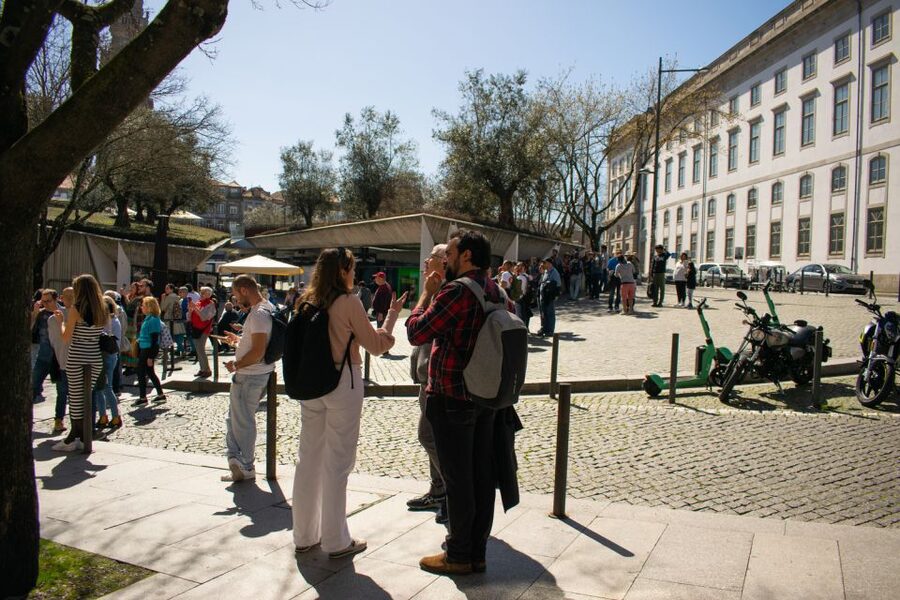
One highlight is the walk up to the Jewish Quarter of Juderia do Olival. This is where the tour adds depth beyond the usual highlights. You’re not just climbing for views—you’re moving through the layers of Porto’s communities and the long timeline that shaped the city.
I like that the tour includes this as part of the flow rather than treating it as a separate side trip. You end up with a better sense of how the old center connects religious and cultural neighborhoods in real walking terms.
What to watch for:
- Notice how the streets change as you climb.
- Treat it like a “transition stop,” not just another checkpoint. It’s the bridge between the riverfront story and the higher, older quarters.
St. Francis Church and the defensive-wall loop: why this route feels logical
The tour route is built around looping along the XIV century defensive wall, which is a smart way to structure a walking day. Instead of bouncing around, you follow a historical outline. That gives you a route logic you can reuse later when you plan independent exploring.
Along the way, you may encounter landmarks like St. Francis Church, plus other major monuments that help fill out the city’s puzzle. This loop structure is great for your brain: it reduces the “what did I just see?” feeling and replaces it with “I get where we are and why.”
And yes, it adds movement. But the movement is what makes the loop educational. You’re literally tracing history with your feet.
Price and value for a 2.5-hour guided walk in Porto
At $32 per person for a 2.5-hour walk, the value comes from the guide plus the density of stops. You’re not paying for a museum ticket schedule here; you’re paying to have a local connect the dots between monuments, neighborhoods, and the city’s growth from port to power.
You get several high-recognition sites packed into one outing: Sé Cathedral, Ribeira, Palácio da Bolsa, Clérigos Church, Livraria Lello & Irmao, Avenida dos Aliados, and São Bento Station. That kind of concentration is exactly what makes guided walking tours worth it on a first or second day—especially if your goal is orientation.
If you’re the type who loves history but also wants a practical route, the $32 price feels fair for what you get: guidance, pacing, and a coherent arc from cathedral to riverside to civic spaces.
Who this tour suits best (and who should skip it)
This tour is a strong match if you:
- Want a clear plan for the historical center without heavy mapping
- Enjoy monuments with context (not just photo stops)
- Like walking tours that include both major landmarks and neighborhood texture
It’s not a good match if you need mobility support. The route includes stairways and uneven historic streets, and it’s specifically noted as not suitable for people with mobility impairments.
One more fit note: if you’re easily distracted by wandering, a guided structure helps. If you’re super detail-heavy and want to linger at every doorway, you may feel the pressure of time. The upside is that guides like Lucas are described as adaptable to interests and keep a steady pace.
Should you book this Porto Historical Center walking tour?
I think it’s a great booking for anyone who wants Porto’s core to make sense quickly. The route is built to connect the key anchors—Sé Cathedral, Ribeira, Bolsa, Clérigos, Livraria Lello, Avenida dos Aliados, and São Bento—while also adding the important climb toward Juderia do Olival and the defensive-wall loop. That mix gives you orientation plus story.
Book it if you want a guided mental map and you’re comfortable with a real walking pace on historic streets. Skip it if mobility is an issue, or if you prefer to roam without structure and don’t care about guided context.
If you do book it, come with one question you genuinely care about—port history, church influence, or how neighborhoods connect—and you’ll get more out of the time.
FAQ
Where does the tour start?
It meets next to the Vimara Peres statue near the Sé Cathedral of Porto.
How long is the walking tour?
The duration is 2.5 hours.
What languages are available?
The live tour guide is available in English and Spanish.
Is the tour suitable for people with mobility impairments?
No, it is not suitable for people with mobility impairments.
What should I bring?
Bring comfortable shoes and comfortable clothes.
Can I cancel for a refund?
Yes. Free cancellation is available up to 24 hours in advance for a full refund.
More Tour Reviews in Porto




More of Porto on Foot

More of Ribeira and the Old Town



Fresh in the Porto notebook



Ribeira & Old Town, compared.
 ★ 5.0The Unvanquished Tour in Porto City CenterFrom $326,497 reviews
 ★ 4.8The highest-rated traditional fado concert (downtown)From $241,557 reviews
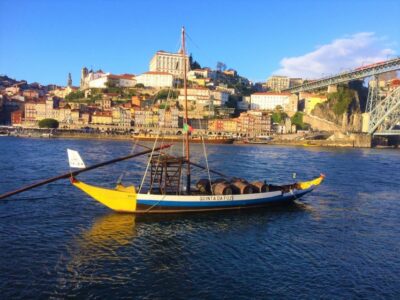 ★ 4.7Historic City Center Walking TourFrom $331,172 reviews
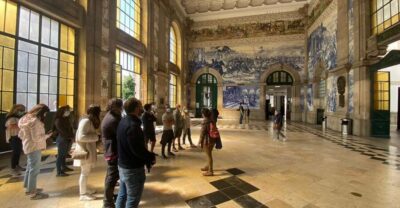 ★ 4.8Historical Center Walking TourFrom $41898 reviews
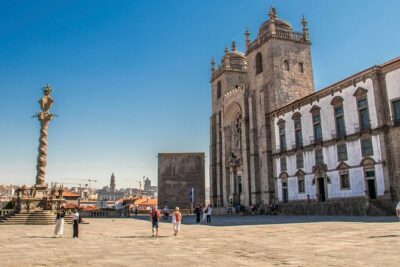 ★ 4.5Historic Porto by Private Electric Tuk Tuk to Top LandmarksFrom $42735 reviews
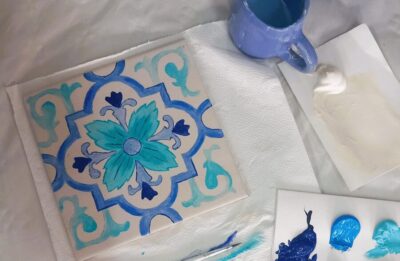 ★ 4.9Tile Painting and Cocktails in Downtown PortoFrom $41484 reviews
 ★ 5.03-Hour Old Town & Riverside Bike Tour – Guided ExperienceFrom $47481 reviews
 ★ 5.0Pastel de Nata | Workshop from scratch | Porto’s city centerFrom $48449 reviews
Browse the lists this tour appears in