
Reviewed · RIBEIRA & OLD TOWN
Porto Historic Center: Small Group Walking Tour & Cathedral
Porto hits different when you walk it. This 3-hour small-group tour strings together the Clérigos skyline, São Bento tiles, and the Porto Cathedral you came for, with a guide who keeps the story moving. I love the mix of big monuments and street-level details, especially the shift into Ribeira’s medieval lanes. The one thing to plan for is that Porto is steep, so comfortable shoes and a moderate fitness level matter.
You’ll also get a guide-led pace that feels human, not rushed, and you’ll leave with practical tips on what to do next in the city. I especially like how the route links landmarks into themes, like religious rivalry with the Carmo and Carmelitas churches and Portugal’s trading era with the Casa do Infante. The possible drawback: the Cathedral of Porto can be closed on Christmas and on Easter Days, so check dates before you count on that stop.
In This Review
- Key Highlights You’ll Feel on This Walk
- Meeting at Câmara Municipal do Porto: The Easy Start That Sets the Tone
- Livraria Lello & Clérigos Tower: Porto’s Skyline in One Go
- Clérigos Church and the Carmo vs. Carmelitas Twin-Church Story
- São Bento Train Station: Azulejos That Read Like a Timeline
- Dom Luís Bridge Top Walk: Panoramas Over Walls, Boats, and the River
- Serra do Pilar to Porto Cathedral: From Wide Views to Romanesque Calm
- Inside Porto Cathedral: The Gilded Woodwork Altarpiece Up Close
- Ribeira Descent to Cais da Ribeira: The Postcard Part That Still Feels Real
- Casa do Infante, Palácio da Bolsa, and Igreja de São Francisco
- Price, Group Size, and Who This Walk Is For
- Final Thoughts: Should You Book It?
- FAQ
- Where does the tour meet?
- How long is the walk?
- What’s included in the price?
- Which sites do we visit?
- Is the Cathedral of Porto guaranteed on every date?
- Do I need skip-the-line access?
- What languages are offered?
- Is this tour suitable for wheelchair users or mobility impairments?
Key Highlights You’ll Feel on This Walk
- Small group up to 10 people, so you can ask questions and keep the pace comfortable
- Clérigos Tower and Church for Porto’s dramatic vertical focus, plus local religious stories
- São Bento Station azulejos that explain town and country history in tile form
- Dom Luís Bridge top level panoramas over Serra do Pilar, Fernandine walls, and the Rabelo boats
- Gilded woodwork inside Porto Cathedral, framed by Romanesque stone and atmosphere
Deeper into Ribeira, its arcades and riverfront
- The Unvanquished Tour in Porto City Center★ 5.0 · 26,497 reviews
- Porto: The highest-rated traditional fado concert (downtown)★ 4.8 · 1,557 reviews
- Porto: Historical Center Walking Tour★ 4.8 · 898 reviews
- Historic Porto by Private Electric Tuk Tuk to Top Landmarks★ 4.5 · 735 reviews
Meeting at Câmara Municipal do Porto: The Easy Start That Sets the Tone
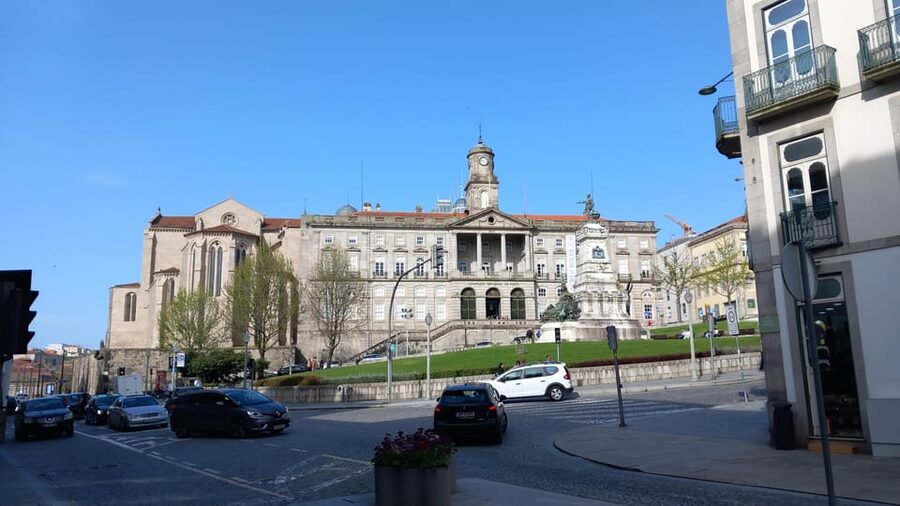
The tour meets at the Câmara Municipal do Porto (Porto Town Hall), right in front and beside the statue of Almeida Garrett. The guide is identified with a green card, so you can spot them fast and get moving without the awkward wait.
I like this meeting spot because you start right where Porto’s center feels walkable and layered. From the beginning, the guide frames the day with the themes you’ll keep noticing as you go—church power, old trade routes, and why the riverfront still feels like the heart.
One practical note: no large luggage or bags, and the route involves a real walking loop through steep streets. If you show up with comfortable shoes and a light pack, you’ll enjoy the pace instead of fighting it.
Livraria Lello & Clérigos Tower: Porto’s Skyline in One Go
The walk quickly pulls you into the area around Livraria Lello & Irmão. You’ll get a guided look instead of just a passing glance, which helps you understand why this bookshop is treated as a landmark in its own right.
Then comes Clérigos Tower. At 76 meters (249 feet), it’s one of those sights you feel in your neck before you even reach it. The guided visit gives the tower context, so it’s not just tall—it’s part of Porto’s identity and its built ambition.
If you’re the type who likes your photos matched with meaning, this stop delivers. You’ll also get a sense of how the church and tower were meant to be seen across the city, like a visual announcement that Porto mattered.
Clérigos Church and the Carmo vs. Carmelitas Twin-Church Story
After the tower, the Clérigos Church visit adds atmosphere. It’s the kind of stop where your eyes slow down and you start noticing details instead of just snapping pictures.
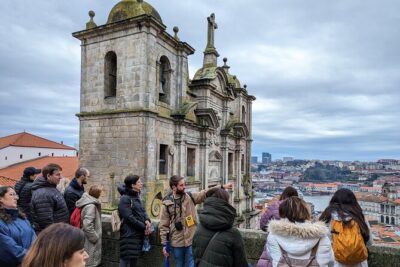
This is also where the tour leans into the story of Carmo and Carmelitas—often described as twin churches. The guide’s job is to connect those buildings to local history and belief, so you understand why Porto can feel full of religious architecture that’s both ornate and personal.
I like this part because it turns a cluster of churches into a narrative. You’re not just ticking off stops; you’re learning how religious life shaped what you see in the street.
São Bento Train Station: Azulejos That Read Like a Timeline
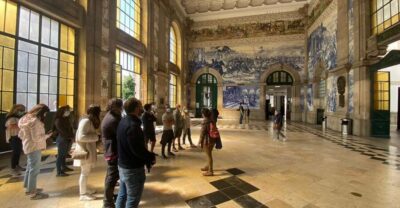
São Bento Station is the visual break you didn’t know you needed. You’ll visit the station and focus on the azulejos—the blue-and-white tile panels that tell stories of Porto and Portugal.
This is one of the best stops for your attention span. Tiles are visual, but a good guide makes them legible: battles, events, and the changing identity of the country, all packed into a wall you pass by at walking speed.
I also appreciate that this stop works even if you’re not a train person. You’re there for art that functions like a historical map, and the guide helps you look at what you’d otherwise miss.
When you leave, you’ll understand how Porto’s sense of self is built into everyday architecture—not locked away in museums.
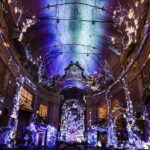
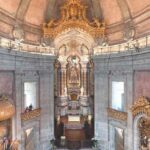
Lello, the Clerigos tower and Porto's grand rooms


Dom Luís Bridge Top Walk: Panoramas Over Walls, Boats, and the River
Next you take the scenic walk across the top level of the D. Luís Bridge. This is the segment where Porto spreads out under your feet, and the walk feels like a moving viewpoint.
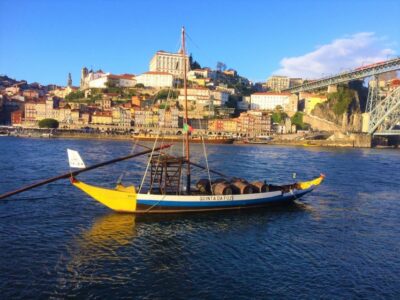
You’ll get panoramic views over Serra do Pilar monastery and the Fernandine city wall. You’ll also see the Rabelo boats—the kind of river craft that gives Porto its working-water rhythm rather than postcard stillness.
I like that the guide points out what you’re actually looking at, not just telling you it’s beautiful. That’s how you turn a pretty view into a better understanding of why the city developed where it did.
Do plan on standing still at a few points for photos and to catch the scale. Even in a “walking tour,” this section naturally slows down because the views demand it.
Serra do Pilar to Porto Cathedral: From Wide Views to Romanesque Calm
After the bridge, you’ll see Serra do Pilar monastery from the outside as part of the route. The scenery shift is satisfying: you go from open river panoramas to the heavier, older feeling of the historic center.
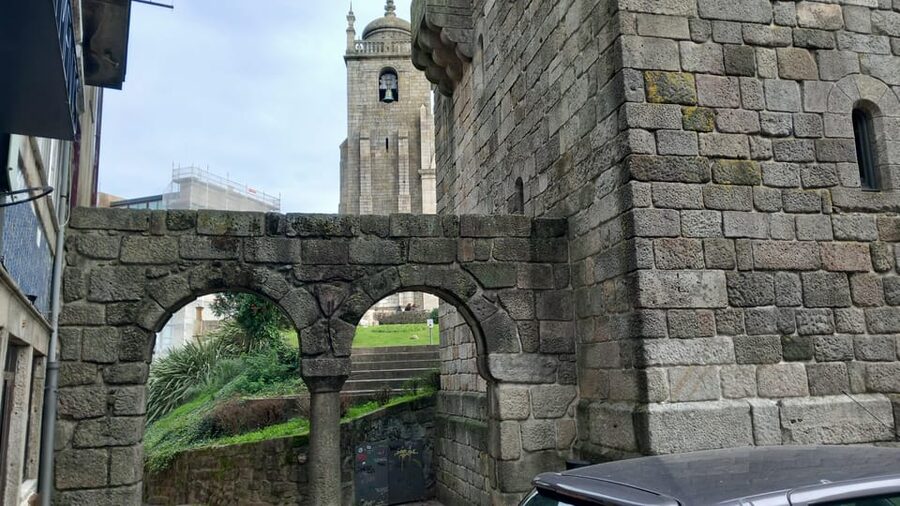
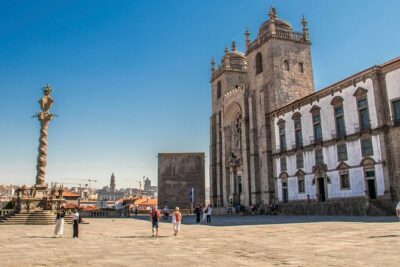
Then you reach the Porto Cathedral visit. The Cathedral is Romanesque in style, which means your eyes will feel grounded by the stone solidity before you even step into the interior.
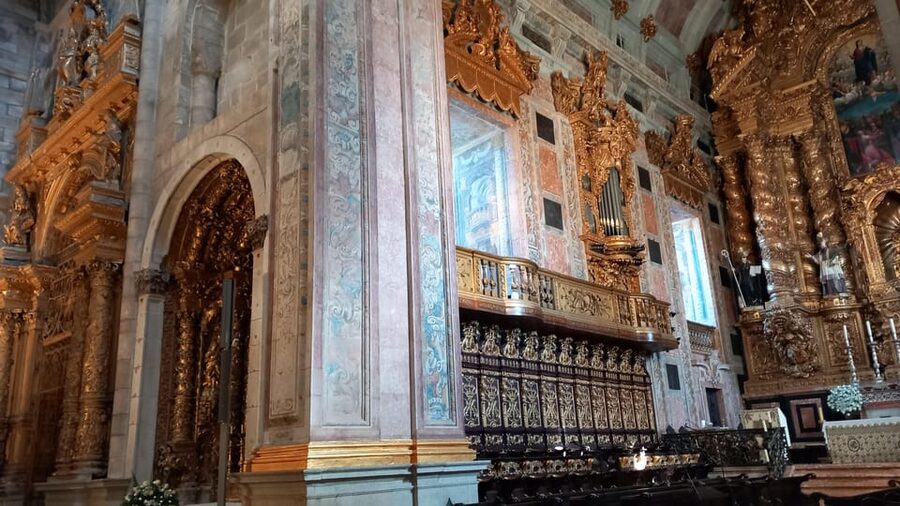
This stop is one of the main reasons the tour earns its price. You get a guided visit that prepares you to notice the details, especially the Cathedral’s exquisite gilded woodwork altarpiece. When you’re primed for it, the art lands harder.
One timing note: the Cathedral of Porto is closed on Christmas and on Easter Days, and on those dates this tour can’t take place. If your trip overlaps either holiday, you’ll want a backup plan.
Inside Porto Cathedral: The Gilded Woodwork Altarpiece Up Close
This is where the tour becomes more than sightseeing. The Cathedral’s interior has a sense of stillness that contrasts with the busy streets outside. Your guide’s focus on the gilded woodwork helps you appreciate what’s ornamental and what’s symbolic.
If you like architecture, you’ll enjoy how the Romanesque base makes the gold stand out even more. If you don’t, that’s okay too—the visual impact carries the experience.
Also, the tour includes entrance tickets to the Cathedral with a skip-the-line express security check. That matters in Porto because line time can eat up the energy you want to spend inside.
Ribeira Descent to Cais da Ribeira: The Postcard Part That Still Feels Real
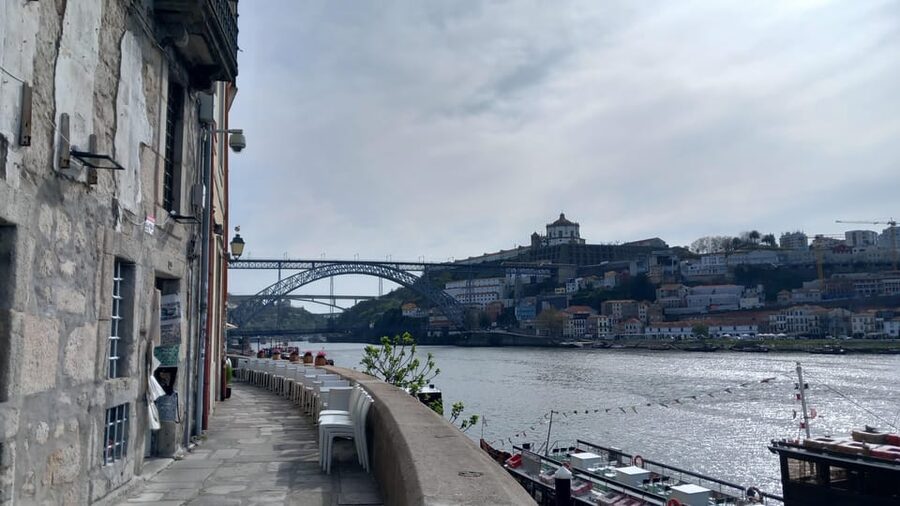
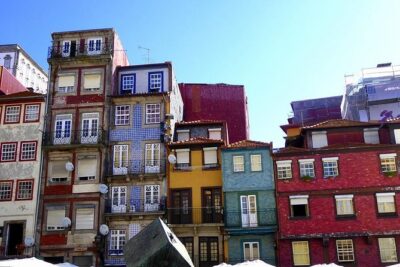
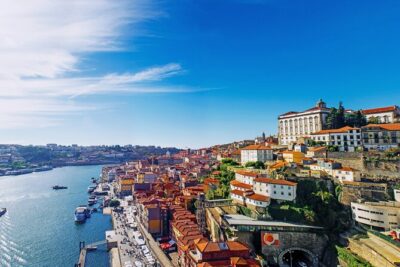
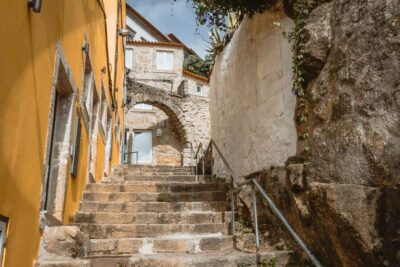
Then comes the slow-down you’ve been building toward: walking down into the Ribeira District. It’s a maze of medieval alleys and stairways, and that change in street texture is part of what makes Porto feel like Porto.
You’ll reach the riverfront at Cais da Ribeira, where the city opens into that classic riverside scene. This is the area you see on postcards, but the way you arrive—on foot, through the lanes—makes it feel earned.
As you go, the guide also connects sights from different periods so you don’t experience Ribeira as just scenery. You’ll pass major landmarks from the riverfront and squares, learning how the city’s layers overlap instead of replacing each other.
For food lovers: this is also a good moment to start thinking about where you’ll eat afterward, because you’ll understand the zones better.
Casa do Infante, Palácio da Bolsa, and Igreja de São Francisco
The route continues with major historic stops that tie Porto’s story together. Casa do Infante is a key one because it connects to the Age of Discoveries. You’ll hear the idea of the old Royal Customs House, and suddenly the riverfront isn’t just pretty—it’s functional history.
Then comes Palácio da Bolsa and the guided focus on what makes it important in the story of commerce and power. If you like seeing how trade shaped architecture, this part will make you look up from street level.
The tour ends with the Monument Church of St Francis and Infante D Henrique Square, with the guide bringing the loop together. This closing stretch is strong because it returns you to Porto’s public spaces—the places where people gather, celebrate, and remember.
Price, Group Size, and Who This Walk Is For
At $81 per person for about 3 hours, this isn’t a bargain-bus tour. But it also isn’t overpriced if you care about having a real guide, skip-the-line entry to the Cathedral, and the full set of major stops without scrambling for transit.
The value is in the structure: monuments plus the tile narratives plus river views plus guided storytelling that helps you connect the dots. Small group size (limited to 10) also matters. You’re not pushed into a noisy crowd where questions get swallowed.
This tour suits you best if:
- you want a first solid look at central Porto with meaning attached
- you like walking but don’t want a full-day hike
- you enjoy art stories as much as landmarks
It’s less suitable if you need mobility support. It’s described as not suitable for people with mobility impairments or wheelchair users, and the route includes a steep climb-and-descend reality. Also, electric wheelchairs aren’t allowed.
If you’re planning your day, think of this as your backbone walk. After it, you’ll know where you are, what zones to revisit, and what kinds of stops make sense next.
Final Thoughts: Should You Book It?
Yes—if you want a guided, story-driven Porto that mixes the big names with the details that make them click. The São Bento azulejos, the Dom Luís Bridge viewpoint, and the Porto Cathedral interior with its gilded altarpiece are strong anchor moments, and the small group pace helps everything feel manageable.
I’d book this sooner rather than later in your trip. You’ll walk away with a better sense of Porto’s layout and themes, which makes the rest of your time easier and more satisfying.
FAQ
Where does the tour meet?
The meeting point is in front of the Câmara Municipal do Porto (Porto Town Hall), beside the statue of writer Almeida Garrett.
How long is the walk?
The tour lasts about 3 hours.
What’s included in the price?
A local guide is included, along with entrance tickets (skip-the-line) to the Cathedral of Porto and visits to São Bento Train Station and the medieval neighborhood.
Which sites do we visit?
You’ll visit areas including Livraria Lello & Irmão, Clérigos Tower and Church, São Bento Train Station, Dom Luís Bridge (top level) with Serra do Pilar views, Porto Cathedral, Casa do Infante, Palácio da Bolsa, and the Monument Church of St Francis and Infante D Henrique Square.
Is the Cathedral of Porto guaranteed on every date?
No. The Cathedral is closed on Christmas and on Easter Days, so the tour cannot take place on those days.
Do I need skip-the-line access?
Yes. The tour includes skip-the-line entrance tickets for the Cathedral of Porto with an express security check.
What languages are offered?
The guide offers live commentary in Portuguese, French, and English.
Is this tour suitable for wheelchair users or mobility impairments?
No. The tour is not suitable for people with mobility impairments or wheelchair users.
More of Porto on Foot



Porto Landmarks Worth the Queue
More of Ribeira and the Old Town



Fresh in the Porto notebook

Ribeira & Old Town, compared.
 ★ 5.0The Unvanquished Tour in Porto City CenterFrom $326,497 reviews
 ★ 4.8The highest-rated traditional fado concert (downtown)From $241,557 reviews
 ★ 4.7Historic City Center Walking TourFrom $331,172 reviews
 ★ 4.8Historical Center Walking TourFrom $41898 reviews
 ★ 4.5Historic Porto by Private Electric Tuk Tuk to Top LandmarksFrom $42735 reviews
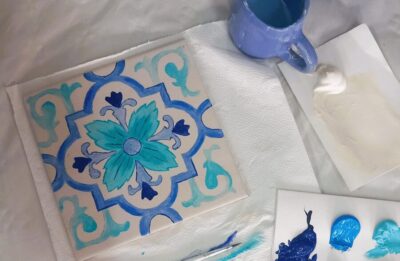 ★ 4.9Tile Painting and Cocktails in Downtown PortoFrom $41484 reviews
 ★ 5.03-Hour Old Town & Riverside Bike Tour – Guided ExperienceFrom $47481 reviews
 ★ 5.0Pastel de Nata | Workshop from scratch | Porto’s city centerFrom $48449 reviews
Browse the lists this tour appears in