

Reviewed · PORTO TUK-TUK TOURS
Porto: Fun Private Tuk Tuk Tour
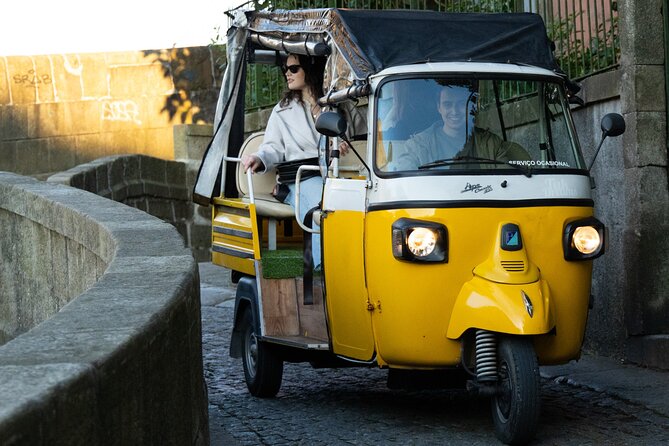
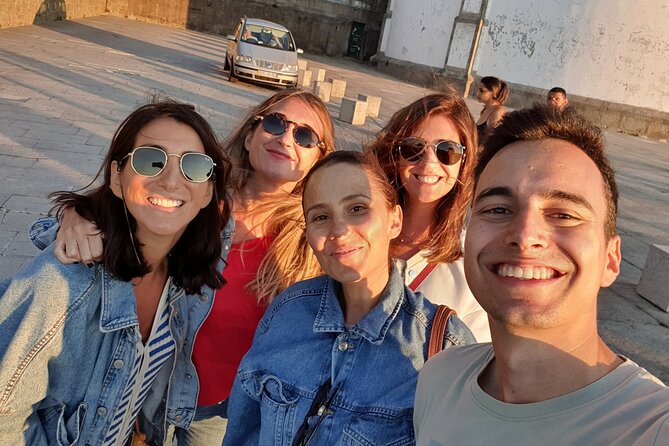
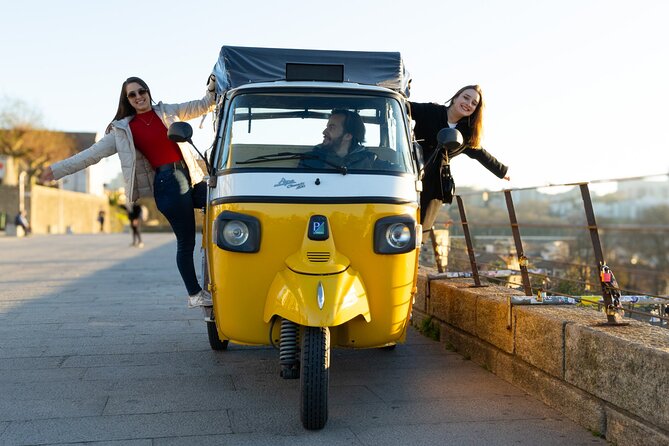
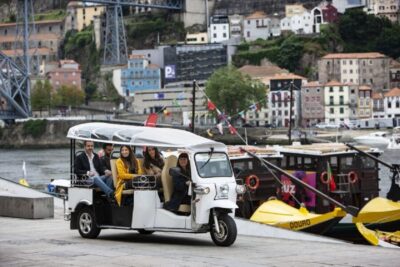
Porto is all hills and shortcuts, and this tour handles both. In about 1.5 hours, you glide from the historic core to the viewpoints and back, with a local guide calling out what matters and where to stand for photos. I like that it’s truly private, so you can move at your pace instead of being stuck with a big group shuffle.
I also love the mix: you get medieval walls, UNESCO-class monuments, and the Douro bridges in one tight loop. The drawback to plan for is weather—this experience expects good conditions, and you may still feel the drizzle during the short walks.
In This Review
- Key Points Worth Knowing Before You Go
- From São João Theatre to a Tuk-Tuk Viewpoint Loop
- Porto’s City Wall (Muralha Fernandina) and the Medieval Backbone
- Douro Bridges: From Iron Arches to Railway Connection
- Ribeira Garden Stops and the King Henry Statue Moment
- UNESCO-Grade Views at Serra do Pilar and Palácio da Bolsa
- São Francisco and the Carmo/Carmelitas Church Pair
- Clérigos Tower and Palacio de Cristal Gardens for Real Panoramas
- São Bento’s Azulejos and Sé Cathedral: Porto’s Art and Old Faith
- Rainy-Day Reality and How the Tuk-Tuk Helps
- Price and Value for a Private Tuk-Tuk in Porto
- Should You Book This Private Tuk-Tuk Tour?
- FAQ
- How long is the Porto Fun Private Tuk Tuk Tour?
- Is this tour private or shared?
- What price should I expect per person?
- What language is the tour offered in?
- Where does the tour start and end?
- What’s included in the price?
- Are entrance tickets included for the churches and monuments?
- Is there a mobile ticket?
- What happens if the weather is poor?
Key Points Worth Knowing Before You Go
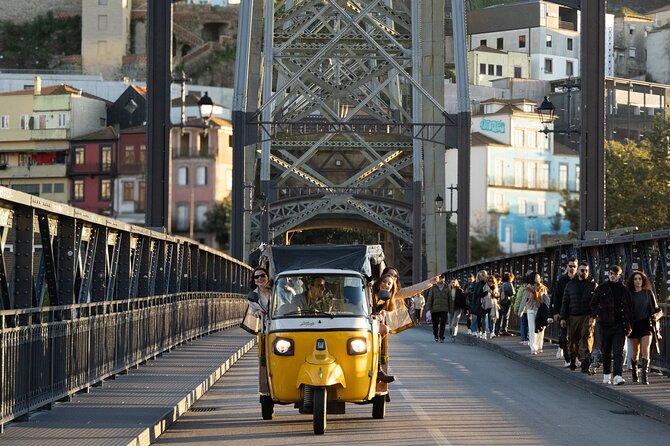
- Private tuk-tuk pace: built for Porto’s steep streets, so you see more without burning your legs.
- Douro bridges in sequence: Maria Pia, Dom Luís I, and Arrábida give you a clear sense of how the river city works.
- Short walks, big payoff: most stops are quick, letting you hit the highlights like São Bento’s azulejos and Sé Cathedral.
- Panoramas without a hike: gardens like Passeio das Virtudes and Palacio de Cristal are made for viewing.
- Church stop variety: Gothic exterior, Baroque interiors, and even a tile-covered façade—plus one church where admission applies.
- Guide energy matters: multiple guides you could get (like José, Ana, Tonya/Tania, Tiago, Leandro, Carlos, Bruno) are praised for adapting to your day.
Buzz the hills by tuk-tuk instead
- Porto: Guided Tour by Tuk-Tuk & Optional Douro River Cruise★ 4.5 · 5,980 reviews
- Discover Porto’s Highlights on a 2-Hour Private Electric Tuk Tuk★ 4.5 · 1,860 reviews
- Porto: Guided Tuk Tuk Tour★ 4.6 · 1,390 reviews
- Historic Porto by Private Electric Tuk Tuk to Top Landmarks★ 4.5 · 735 reviews
From São João Theatre to a Tuk-Tuk Viewpoint Loop
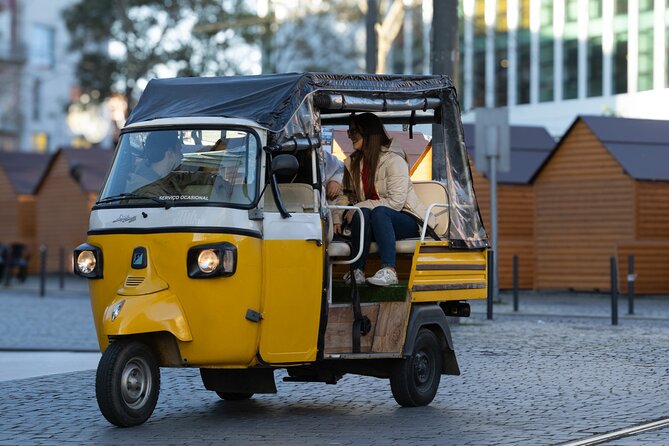
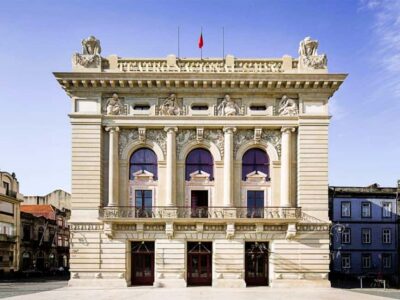
The tour starts at São João National Theatre near Praça da Batalha, where the city feels grand right away. The building is a cultural landmark with roots going back to 1798, then a rebuild in 1920 by architect José Marques da Silva. Even if you never step inside, it sets the tone: Porto takes the arts seriously.
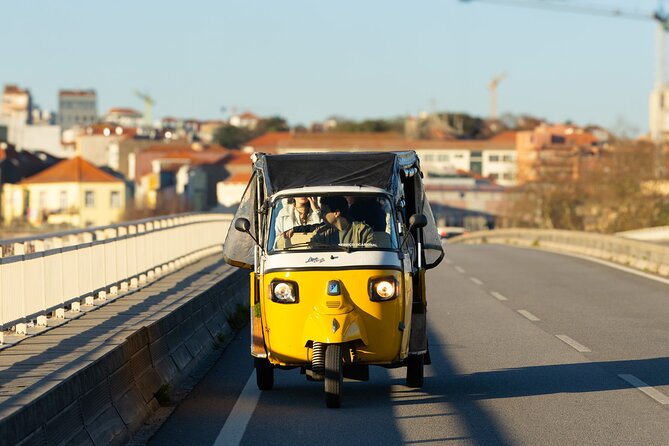
Once you hop into the tuk-tuk, the experience clicks. Porto’s historic center is beautiful, but it’s also vertical. This route is designed to get you onto the best streets and spots fast, then use short stops so you can look, take photos, and move on without losing time to long climbs.
Your timing is about 90 minutes (approx.), so think of it as a smart “get oriented and choose where to return” tour. You’ll still get plenty of moments to see details up close, but it’s not a sit-and-stare, museum-style day.
Porto’s City Wall (Muralha Fernandina) and the Medieval Backbone
One of the most interesting early stops is the Fernandine Wall. Built in the 14th century during the reign of King Fernando I, it was meant to protect Porto as the city expanded. Some sections were partially demolished in the 19th century, yet you can still find meaningful remnants in areas like Ribeira and Morro da Sé.
Why this matters: Porto doesn’t feel like a “planned” city. It feels like a city layered over itself. Seeing the wall early on helps you understand why the neighborhoods look the way they do—tight, old, and shaped by defense needs first, then by commerce and daily life.
The practical bit: this stop is short and close to the historic texture of Ribeira. So even if you’re not a wall-nerd, you’ll get that sense of how old Porto is without turning your afternoon into a history lecture.
Douro Bridges: From Iron Arches to Railway Connection
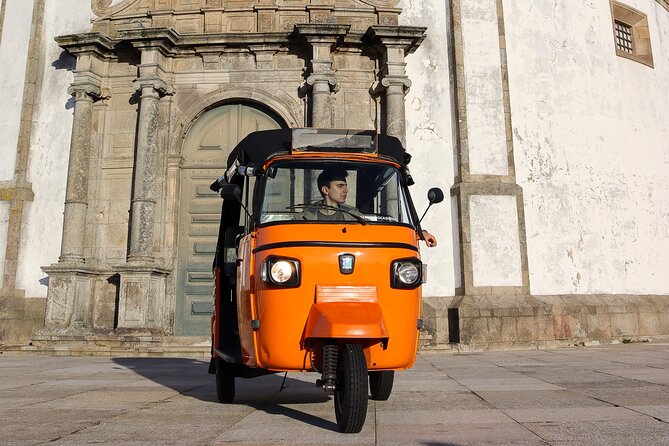
Porto is famous for its bridges, but this tour shows you the big ones in a way that actually makes sense. You start with the São João Bridge area, a railway bridge inaugurated in 1991 and designed by engineer Edgar Cardoso. It replaced the older Maria Pia Bridge, and that transition is part of the story you’ll hear as you go.
Next comes the Ponte D. Maria Pia, inaugurated in 1877. It’s designed by Gustave Eiffel and known for its iron arch elegance. It served as a major railway crossing until 1991, and today it’s still a landmark of engineering history—one of those “you can’t unsee it once you’ve noticed the shape” structures.
Then you cross the visual highlight everyone recognizes: the Dom Luís I Bridge. Inaugurated in 1886 and designed by Théophile Seyrig, it has two metal decks connecting Porto to Vila Nova de Gaia. You can see the logic of it right away: cars and pedestrians have their way across, and today the metro plays a role too.
Finally, there’s the Arrábida Bridge side of things. Inaugurated in 1963 and also designed by Edgar Cardoso, it’s a road bridge with a reinforced concrete arch that was once among the largest of its type worldwide. The point isn’t to measure engineering facts—it’s to see how Porto’s river crossings evolved from iron structures to modern concrete design.
If you like structure and city planning, this bridge sequence is one of the best parts of the whole tour.
Ribeira Garden Stops and the King Henry Statue Moment
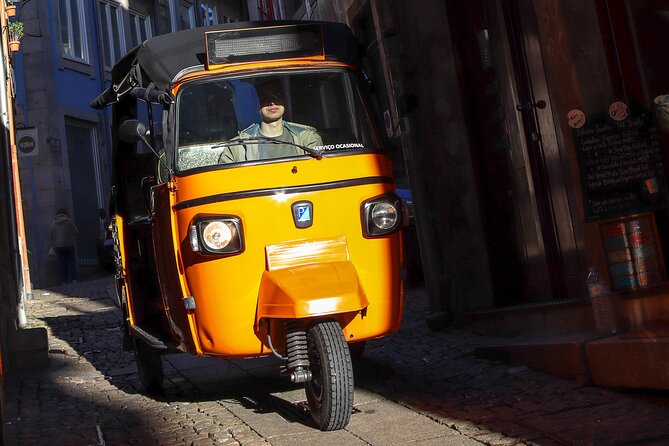
The tour keeps you moving but still gives you calm breaks. At the Jardim do Infante Dom Henrique, you’ll find a public garden in the Ribeira area created in the 19th century. At its center is a statue dedicated to Prince Henry the Navigator, a key figure connected to the Portuguese Age of Discoveries.
This stop is quick, but it’s not random. It gives you a mental “theme” for Porto: this city wasn’t just a port for cargo; it was part of a wider Portuguese maritime push that shaped the country’s identity.
Nearby, you’ll pass by the Ferreira Borges Market. It was inaugurated in 1885 and built with an imposing iron structure in a neoclassical style. The building no longer functions as a market, but it’s used today for cultural and leisure events, so the architecture still has a job.
In other words: you’re not only chasing big monuments. You’re seeing how Porto reuses its landmark shells.
Rather go at your own pace? More private guides


UNESCO-Grade Views at Serra do Pilar and Palácio da Bolsa
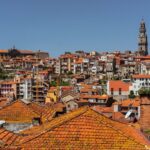
One of the most memorable viewpoint stops is the Monastery of Serra do Pilar in Vila Nova de Gaia. This 16th-century monument is known for its circular church design and Renaissance architecture. It’s also a UNESCO World Heritage Site, and it gives you panoramic views over Porto and the Douro River.
Why I like this stop: it turns Porto from a street-level city into a river-centered place. When you look across the water from Serra do Pilar, the hills, rooftops, and bridge lines start reading like a map, not just a pretty scene.
Back in Porto, the Palácio da Bolsa is another UNESCO World Heritage highlight. This 19th-century neoclassical building was once the headquarters of the Porto Commercial Association, and it’s famous for the Arab Room. Even if your main interest is architecture, it helps to know this was once tied to the city’s commercial power, not just its cultural side.
This is one of those stops where the tour’s short timing still works. You get enough context to understand the building’s importance, and then you’ll likely want to return later for a longer look if you’re the type who likes interiors.
São Francisco and the Carmo/Carmelitas Church Pair
Porto’s churches can look similar from the outside—until you pay attention. The Church of São Francisco is a key example. You’ll see Gothic architecture paired with a Baroque interior loaded with gilded woodwork, plus a standout sculpture known as the Jesse Tree.
Even if you only get a limited viewing window, this is the type of stop that makes you realize Porto’s religious art is also civic art. It’s not just worship; it’s skill, money, and local pride.
Then you’ll catch the Carmo and Carmelitas church sequence nearby. The Church of Carmo is 18th-century Baroque-Rococo, famous for a large tile panel on its side façade showing religious scenes. Admission for Carmo is not included on this tour.
Right by it is the Church of the Carmelites (built in the 17th century, also Baroque), with an elegant façade and a richly decorated interior with gilded woodwork. Admission here is included. They’re separated by a narrow house, and seeing the two close together makes the contrast easier to understand.
Quick planning note: if church interiors matter to you, prioritize the Carmelites since it’s included, and decide in the moment about Carmo based on time and interest.
Clérigos Tower and Palacio de Cristal Gardens for Real Panoramas
If your calves are already protesting, this part is your reward. The Clérigos Tower rises about 75 meters and offers panoramic views over Porto. It was built in the 18th century in a Baroque style by architect Nicolau Nasoni, and it’s one of Porto’s best-known landmarks for a reason.
After the tower, you head to the Jardins do Palacio de Cristal. This area became famous after the old Crystal Palace building was replaced by the Rosa Mota Pavilion, but the real draw is the garden setting and Douro views. You’ll find green space, sculptures, and a calmer pace than the riverfront rush.
The tour then adds the Passeio das Virtudes, a terraced viewpoint area with panoramic over-the-river scenery. It’s popular with locals for a reason: you can sit, breathe, and let Porto’s shapes sink in.
These garden stops are short, but they do something big. They give you perspective—how the city stacks up above the river—and they make the earlier bridges feel like chapters, not random photos.
São Bento’s Azulejos and Sé Cathedral: Porto’s Art and Old Faith
Two final “classic Porto” stops bring it home. First is São Bento Railway Station, inaugurated in 1916. It’s famous for Portuguese azulejos (painted tiles) that cover the walls with scenes from Portuguese history and culture. Even if you’re not taking a train, this is one of those places where you pause because the detail demands it.
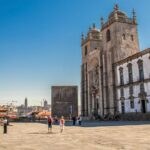
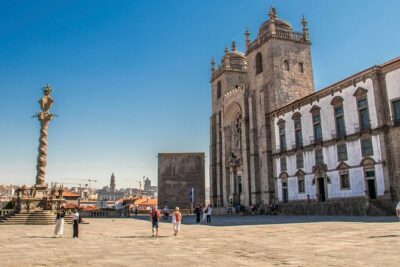
Then comes Porto Cathedral, also called Sé do Porto. It dates back to the 12th–13th centuries and is predominantly Romanesque, with later Gothic and Baroque influences due to renovations. The location gives you a privileged view across the city and toward the Douro River.
Why these two fit perfectly at the end: you’ve spent the tour moving between river crossings, gardens, and churches. Now you land in two iconic civic spaces—train station art and cathedral heritage—both tied to Porto’s identity.
Rainy-Day Reality and How the Tuk-Tuk Helps
Porto weather can be moody, and this tour is designed with that in mind by keeping most of your time on the tuk-tuk between quick look points. On rainy days, you can often feel safer than doing a long walking day, especially around the steeper streets and bridge areas.
One thing to consider: some stops include short walks, like the area around the Carmo/Carmelitas churches and the garden viewpoint walk portions. Bring an umbrella or a light rain layer, and don’t assume everything will be fully dry.
Also, keep an eye on your tuk-tuk setup. One reported issue involved seat comfort on a backup vehicle during a schedule rush. That’s not a reason to avoid the tour, but it is a reminder to check seat condition when you board and let your guide know if anything feels off so you can stay comfortable.
Price and Value for a Private Tuk-Tuk in Porto
At $57.45 per person for about 90 minutes, this tour prices itself as a time-saver and a comfort choice. You’re paying for private transportation plus a local guide, not just for “getting driven past things.” For Porto’s hills, that matters. A short tuk-tuk ride can replace a longer uphill walk, which means you see more without ending your afternoon exhausted.
It’s also value-friendly compared to doing the same mix of viewpoints and city-center landmarks on your own, because the route naturally connects major areas like Ribeira, the river crossings, and the panoramic gardens. The guide’s job isn’t just facts; it’s helping you understand what you’re seeing and where to stand for the best views.
You’ll also save time with ticket basics: many stops are marked as free, and only certain entrances have admission rules (for example, Carmo is not included while the Carmelites admission is included). So you can plan your “spend” with less guessing.
One more value angle: the tour is booked well in advance on average, so if you’re traveling during a busy window, it’s smart to lock it in early.
Should You Book This Private Tuk-Tuk Tour?
I’d book this if you want a fast, guided Porto orientation that actually covers the city’s best angles: bridges, river viewpoints, historic streets, and signature landmarks like São Bento and Sé Cathedral. It’s especially good if you’re tired of climbing or if your time is limited and you want a route that connects the highlights without feeling random.
I’d think twice if you’re the type who needs long, quiet museum time at each stop. This is short-stop sightseeing, not a slow deep walk through interiors everywhere. And if weather turns very bad, you may have a reschedule or refund option since the experience expects good weather.
If you’re on the fence, here’s the simple decision rule: if you want to get oriented and pick your follow-up stops, this tuk-tuk route is one of the easiest ways to do it right.
FAQ
How long is the Porto Fun Private Tuk Tuk Tour?
It’s listed as about 1 hour 30 minutes.
Is this tour private or shared?
It’s a private tour/activity, so only your group participates.
What price should I expect per person?
The price is listed at $57.45 per person.
What language is the tour offered in?
The tour is offered in English.
Where does the tour start and end?
It starts at São João National Theatre, Praça da Batalha, 4000-102 Porto, Portugal, and ends back at the meeting point.
What’s included in the price?
The tour includes private transportation and a local guide.
Are entrance tickets included for the churches and monuments?
Many stops are indicated as free. Igreja do Carmo admission is not included, while Igreja dos Carmelitas admission is included.
Is there a mobile ticket?
Yes, it includes a mobile ticket.
What happens if the weather is poor?
This experience requires good weather. If it’s canceled due to poor weather, you’ll be offered a different date or a full refund.
More Tour Reviews in Porto



Private Porto Tours to Compare

Tuk-Tuk Runs Through the Hills




Fresh in the Porto notebook


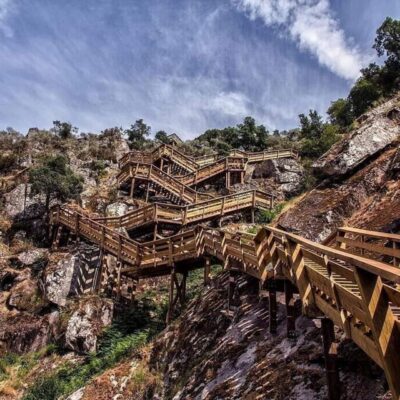
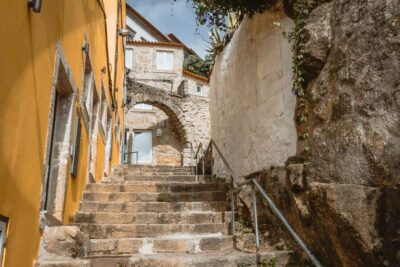
Porto Tuk-Tuk Tours, compared.
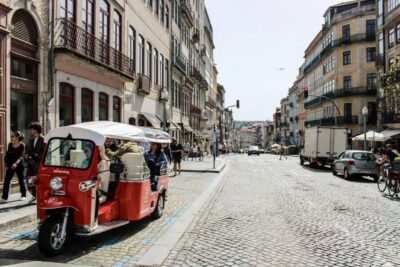 ★ 4.5Guided Tour by Tuk-Tuk & Optional Douro River CruiseFrom $205,980 reviews
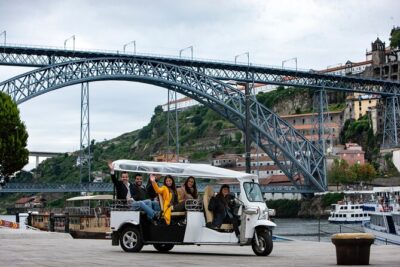 ★ 4.5Discover Porto’s Highlights on a 2-Hour Private Electric Tuk TukFrom $481,860 reviews
 ★ 4.6Guided Tuk Tuk TourFrom $411,390 reviews
 ★ 4.5Historic Porto by Private Electric Tuk Tuk to Top LandmarksFrom $42735 reviews
 ★ 4.5Porto Guided Tour to the Historical Center on a Tuk TukFrom $42418 reviews
 ★ 4.8Private Sightseeing Tour by Electric Tuk TukFrom $47305 reviews
 ★ 4.7Oporto Tuk-Tuk Tour: Fast, Fun & Flexible – 1H to Full Day!From $88280 reviews
 ★ 4.5Porto Half Day Private Tuk Tuk TourFrom $83246 reviews
Browse the lists this tour appears in