
Reviewed · HISTORICAL TOURS
Porto Experience: History, Culture and Tasting Tour
Porto’s story starts on a hill. This tour strings together the Sé do Porto area, the bishop’s palace, São Bento Station’s famous azulejos, and the MMIPO museum—then you get a guided tasting that ties the day together. I really like the tight walking plan and the way it mixes art and faith with everyday food.
I also like the human touch of the guides. Names that show up for recent runs include Rui and Arthur, and the theme is consistent: clear explanations, patience with questions, and a warm pace. Another big plus is the guided visits with tickets, so you’re not just passing buildings—you’re learning how they fit into Porto’s story.
One possible drawback: the schedule includes a museum block and that can feel a bit “structured,” especially on a hot day. If you prefer lighter street time, you may want to ask your guide for more street context around Rua das Flores and Rua de Sant’ Ana.
In This Review
- Key highlights to look for
- Starting at Terreiro da Sé: the fastest way to get your bearings
- Sé do Porto and Paço Episcopal: medieval Porto, close up
- Rua das Flores and Rua de Sant’ Ana: artisan streets with context
- São Bento Station azulejos: the quick stop that always pays off
- MMIPO Museu da Misericórdia do Porto: why charity is part of the art
- Tastings of local delicacies: the moment it all clicks
- The optional 4-hour add-on: Aliados, Clérigos, and viewpoints
- Portuguese Center of Photography and Miradouro da Vitória: end with a view
- Price and ticket value: why $53 can make sense
- Who this tour suits best (and who should be cautious)
- Practical tips for a smoother walk
- Should you book this Porto history and tasting tour?
- FAQ
- How long is the Porto Experience: History, Culture and Tasting Tour?
- Where does the tour meet?
- What’s included in the price?
- Is there a skip-the-line benefit?
- What languages are offered for the live guide?
- How does cancellation work?
- Are there any extra costs besides the tour price?
Key highlights to look for
- Sé do Porto + Paço Episcopal: start with Porto’s medieval power center
- São Bento Station azulejos: short stop, big visual payoff
- MMIPO Museu da Misericórdia: charity and art in one museum visit
- Typical delicacies tasting (with drinks): food stop is part of the learning, not an afterthought
- Optional extension: Avenida dos Aliados, Clérigos Church, old jail area, and Miradouro da Vitória views
- Skip-the-line express security check: you lose less time before interior visits
More Porto days out worth booking
- From Porto: Douro Valley w/ Boat Tour, Wine Tasting & Lunch★ 4.7 · 19,061 reviews
- Douro Valley Small-Group Tour with Wine Tasting, Lunch and Boat★ 5.0 · 3,642 reviews
- Porto: Cálem Cellar Tour, Fado Show & Wine Tasting★ 4.4 · 3,530 reviews
- Porto: Cockburn’s Port Lodge Tour and Tasting★ 4.8 · 3,360 reviews
Starting at Terreiro da Sé: the fastest way to get your bearings
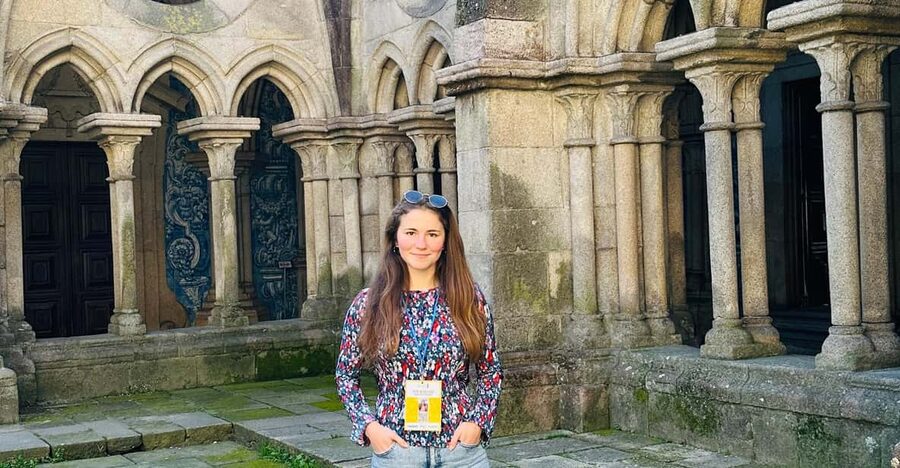
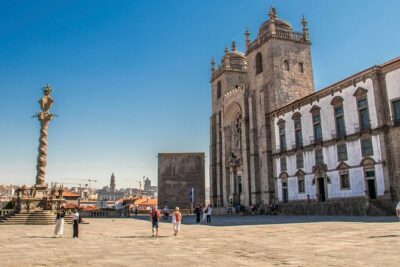
You begin at Terreiro da Sé, right by the Cathedral area. The meeting point is next to the pillar in front of Se do Porto, identifiable by the company tag and a guide holding a white umbrella. It’s an easy start point because you’re in the right neighborhood to understand Porto’s medieval layout.
This tour works well if you only have a short window. In three hours, you hit big anchors: cathedral history, a palace visit, a signature train-station moment, and a museum that explains a different side of Porto—charity, institutions, and art.
If you’re the type who likes to ask questions while you walk, the format helps. You’re moving between stops, not stuck in one long lecture.
Sé do Porto and Paço Episcopal: medieval Porto, close up
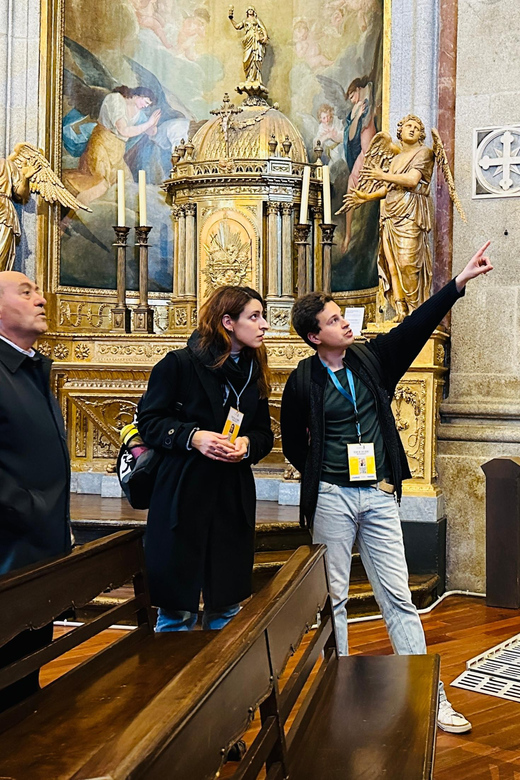
The first main visit is to Porto Cathedral (Sé do Porto), with a guided tour around 40 minutes. You’re not just looking at old stone here. The point is to understand why this site mattered in Porto’s early life: it set the tone for civic and religious authority.
Right after, you continue to Paço Episcopal (the bishop’s palace) for about 20 minutes. This matters because it connects the cathedral’s spiritual role to the real-world power behind it. You’ll see how the complex functioned as a center of influence, not only as an architectural backdrop.
A small practical note: Cathedral interiors can vary in temperature and lighting. Wear something comfortable and be ready to pause for photos when the guide calls it out.
Rua das Flores and Rua de Sant’ Ana: artisan streets with context
After the palace area, you stroll along Rua das Flores (about 15 minutes) and then Rua de Sant’ Ana (about 20 minutes). These are short walk segments, but they’re not filler. The guides use the streets to connect architecture and daily life—what these neighborhoods feel like and why they’re still important.
I like that this part is not rushed. You can actually look at shopfronts, small details, and the way the streets slope and bend. You also get a natural rhythm before the station stop.
If your legs tire easily, this is the segment where you’ll likely want breaks. Fortunately, it’s paced like a walk, not like a sprint.
São Bento Station azulejos: the quick stop that always pays off
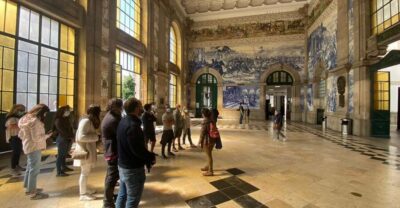
Next comes São Bento Station, with a guided look for roughly 15 minutes. The famous azulejos are the headline, but the value of this stop is the commentary. You don’t just admire tiles—you learn how the storytelling fits Porto and Portugal’s identity.
This is also where the tour becomes very “efficient.” Fifteen minutes is enough to appreciate the artwork without eating your whole schedule, and it gives you a strong emotional anchor before the museum.
If you’re traveling with camera gear, remember that stations can be busy. Keep moving when the guide moves and you’ll get your best photo angles without blocking anyone.
More Porto days out worth booking



MMIPO Museu da Misericórdia do Porto: why charity is part of the art
The biggest interior block is the visit to MMIPO Museu da Misericórdia do Porto, about 40 minutes. This museum is often overlooked, and that’s exactly why it’s good to have a guide here. You get a guided walkthrough of Porto’s legacy of charity and art, which adds a different layer to the usual cathedral-and-church narrative.
Think of it like this: Porto isn’t only surviving through legends and stonework. It also survives through institutions—helping people, funding culture, and preserving what communities valued.
One consideration: museum time can feel “more formal.” If you find long explanations draining, keep asking for quick takeaways. A good guide will translate the details into human stories.
Tastings of local delicacies: the moment it all clicks
Then you reach the part that feels like a reward but still has a purpose: the guided food tasting in a hidden tasting stop, about 30 minutes. This includes typical delicacies and drinks.
I like that this tasting isn’t tacked on at the end like a souvenir stop. It’s positioned as the natural payoff for the history and culture you just covered. Even if you don’t remember every architectural term, you remember flavors—and that helps the whole day stick.
Practical tip: eat something light before the tour if you can. Not because the tasting is huge, but because you’ll likely want room for everything you try and you won’t want a sugar spike to slow your walking pace.
The optional 4-hour add-on: Aliados, Clérigos, and viewpoints
You can choose an extension of about 4 hours to keep going through Porto’s best-known civic and religious landmarks. The highlights include Avenida dos Aliados and Porto City Hall, the legendary Clérigos Church, and the old jail area (along with the ancient city court theme). The tour is designed to keep building on the story: church authority, civic identity, and the spaces where power and control played out.
Avenida dos Aliados is the big “meet-in-the-middle” boulevard feel of Porto, and City Hall gives you the politics-in-stone angle. Clérigos Church adds the dramatic decorative side—again, not just sightseeing, but learning what you’re seeing and why it matters.
The old jail segment is the most intriguing for many people because it shifts the mood. You move from sacred and civic spaces into something more human and tense, and that contrast makes the history feel real.
Portuguese Center of Photography and Miradouro da Vitória: end with a view
In the extended route, you also get a stop at the Portuguese Center of Photography and then the big finish at Miradouro da Vitória. The viewing point is where Porto’s rooftops and the river area open up, and it’s also a good time to catch breath and take photos without sprinting to the next door.
Miradouro da Vitória is a strong finish for a history-and-tasting tour because it resets your brain. After interiors and streets, you get the scale of the city and the geography behind Porto’s reputation.
Photo tip: if the sun is harsh, try shooting from a slight angle. You’ll get rooftops and river detail without blowing out highlights.
Price and ticket value: why $53 can make sense
At $53 per person for a 3-hour guided experience, the value comes from the combination. You’re paying for guided entry and tickets to major sites—Porto Cathedral, Paço Episcopal, and MMIPO—plus the tasting with drinks. That’s a lot of guided access for one time block.
You’re also getting an express security check that helps you waste less time before interior visits. That matters in Porto, where waiting around can steal your best hours.
Is it cheap? No. Is it fair for what you get? Often, yes—especially if you’d otherwise have to figure out opening times, find entrances, and pay for each ticket separately.
If you’re the kind of person who enjoys food but also wants an explanation for what you’re eating, this structure is a good match.
Who this tour suits best (and who should be cautious)
This tour is ideal for:
- First-time visitors who want the “best of Porto basics” without a long self-guided puzzle
- People who like history explained through places, not just dates
- Food-minded visitors who want a tasting tied to the day’s theme
It might be less ideal if:
- You dislike museums or long indoor segments and you want only street time
- You tend to get restless when explanations go deep into details
If you’re in the cautious category, you can still do well. Just tell your guide early what you prefer: shorter explanations, more street cues, and extra time for photos on Rua das Flores.
Practical tips for a smoother walk
A few small things can make your experience more comfortable and more enjoyable.
Wear comfortable shoes. This is a walking tour with several stops and you’ll be on your feet through hilly old-city streets.
Bring a light layer. Cathedral and palace interiors can feel cooler, and the station can vary with temperature.
Ask one question early. Good guides adjust. If you’re not into technical detail, say so politely, and ask for a simpler version of the story.
Also, keep an open mind about the tasting. The tour includes typical delicacies and drinks, but the exact mix can vary by day and local supply.
Should you book this Porto history and tasting tour?
I’d book it if you want a straightforward, guided way to understand Porto in a short time. The Cathedral + bishop’s palace start is strong, the MMIPO museum gives you an angle most people skip, and the tasting with drinks is the right kind of payoff after the walking.
Choose the optional extension if you’re curious about how civic power and faith show up in different buildings, plus you want a classic finishing view from Miradouro da Vitória.
If you’re very sensitive to longer museum explanations, do one thing: communicate your preference early to your guide. A flexible guide can steer the pace and keep you engaged.
FAQ
How long is the Porto Experience: History, Culture and Tasting Tour?
The tour lasts 3 hours. There’s also an optional longer add-on available.
Where does the tour meet?
Meet your guide next to the pillar in front of Se do Porto (Porto Cathedral). Look for the company tag and a guide holding a white umbrella.
What’s included in the price?
Included are tickets and guided visits for Porto Cathedral, the Episcopal Palace, and MMIPO, plus typical delicacies, drinks, and professional guides.
Is there a skip-the-line benefit?
Yes. The tour includes an express security check to help you move through faster.
What languages are offered for the live guide?
The live guide is available in Portuguese, English, Spanish, Russian, Ukrainian, and Italian.
How does cancellation work?
You can cancel up to 24 hours in advance for a full refund.
Are there any extra costs besides the tour price?
The tour price covers the guided attractions and tasting basics. Souvenirs and personal expenses aren’t included, and there’s also no requirement for gratitude.
More Food & Drink in Porto






More Tours in Porto




More Tour Reviews in Porto


Fresh in the Porto notebook



Historical Tours, compared.
 ★ 5.0Douro Valley: Historical Sites, Wine Experience, Lunch & CruiseFrom $1075,133 reviews
 ★ 4.8An Intimate Fado Show in a Historical TavernFrom $182,055 reviews
 ★ 4.7Historic City Center Walking TourFrom $331,172 reviews
 ★ 4.8Private Tour of the Historic City in a Ford T CarFrom $32932 reviews
 ★ 4.8Historical Center Walking TourFrom $41898 reviews
 ★ 4.5Historic Porto by Private Electric Tuk Tuk to Top LandmarksFrom $42735 reviews
 ★ 4.6Douro Valley History & Wine Tour with Cruise & LunchFrom $104433 reviews
 ★ 4.5Porto Guided Tour to the Historical Center on a Tuk TukFrom $42418 reviews
Browse the lists this tour appears in