
Reviewed · HISTORICAL TOURS
Full-Day Portuguese Historical Villages Tour
Stone villages beat Porto on a good day. This full-day tour turns the drive into part of the story, with a private guide and serious time in Linhares da Beira. I love how it connects Portugal’s origin to what came before—Lusitanians, the mountains, and place names tied to real farming life. One catch: food and drinks aren’t included, so you’ll want to plan for lunch and water.
You’ll spend the day moving between mountain towns and standout religious architecture: the Church of Santa Maria and the castle and churches in Celorico da Beira. The itinerary is paced for walking (castle edges, narrow lanes), with admission tickets listed as free at the stops. It’s a great match if you like medieval details you can actually see up close.
In This Review
- Key things that make this tour worth your time
- A Full-Day Drive from Porto with a 9:00am Start
- Linhares da Beira: Lusitanian Roots and the Name Behind the Flax
- Castelo de Linhares da Beira and Celorico’s Church of Santa Maria
- Celorico da Beira Castle: Granite Streets and Real Gothic + Manueline Details
- Value Check: What You’re Paying for (and Why It Can Still Be a Smart Buy)
- What to Pack for the Castle-and-Church Walking Day
- Who Should Book This Portuguese Villages Tour (and Who Might Skip It)
- Should You Book Living Tours’ Full-Day Historical Villages Tour?
- FAQ
- What time does the tour start, and how long is it?
- Where do pickups happen in Porto and Vila Nova de Gaia?
- Is this tour private, or do I share with strangers?
- Is food and drinks included?
- What language is the tour offered in?
- What is the cancellation policy?
Key things that make this tour worth your time
- A private setup: it’s only your group, with a guide and private vehicle for the day
- Portugal’s origin in plain terms: Lusitanian links and the Serra da Estrela context
- Architecture with specific names: Joanine façade at Igreja da Misericórdia and paintings by Isidro Faria
- Celorico’s castle feel: irregular citadel layout and romantic-Gothic military architecture
- Bonus Porto walking tour: available the day after, in English and Spanish
- Wear proper shoes: expect climbing and walking on uneven ground
More Porto days out worth booking
- Douro Valley: Historical Sites, Wine Experience, Lunch & Cruise★ 5.0 · 5,133 reviews
- Porto: An Intimate Fado Show in a Historical Tavern★ 4.8 · 2,055 reviews
- Porto: Historic City Center Walking Tour★ 4.7 · 1,172 reviews
- Porto: Private Tour of the Historic City in a Ford T Car★ 4.8 · 932 reviews
A Full-Day Drive from Porto with a 9:00am Start
The day begins at 9:00am, and the tour is designed as a door-to-door style pickup from central Porto or Vila Nova de Gaia hotels. If you’re not staying in the city center, you can also use the alternative meeting point at Rua Mouzinho da Silveira, 350, Porto—near São Bento train station.
From there, you’re in a private vehicle with your guide and a planned route toward the historical villages. The big thing to know is that the tour’s duration is given as approximate (around 9–10 hours depending on local conditions). That matters because you’re not just popping out for a quick photo stop—you’re committing to a full day away from central Porto.
My practical advice: treat it like a proper day outing. Don’t stack right-after plans that require you to be on time. Also, plan to keep a little flexible mindset. With mountain roads and changing schedules, the day can run long or shift slightly, even though the tour’s stops are clearly mapped out.
Linhares da Beira: Lusitanian Roots and the Name Behind the Flax
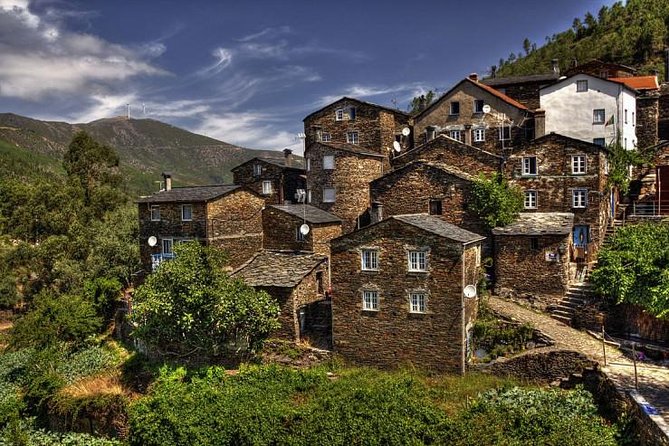
The first real stop is Linhares da Beira, set on the western slopes of the Serra da Estrela. This place matters because it wasn’t invented for tourism. The area ties back to Iberian tribes—specifically the Lusitanians—who used the mountains for protection, pastureland, and water.
The tour explains that the Serra da Estrela was called the Montes Hermínios in Lusitanian times. That one detail helps you feel the continuity: you’re not only looking at an old village, you’re standing in a region people depended on long before modern Portugal existed.
Then there’s the name logic. The name Linhares is linked to linho, flax—one of the region’s important crops. I love when a tour doesn’t just say, “This is old.” It gives you something practical to hold onto: the land shaped the economy, and the economy shaped the name.
This stop is about 2 hours, with admission listed as free. Expect scenic country roads, stone houses, and time to connect the geography (mountains, water, grazing land) with the culture of the area. If you’re the type who likes “why this place is here,” you’ll enjoy this section the most.
A small consideration: since it’s a mountain region, it’s wise to dress for uneven walking and changing conditions. Even when the itinerary looks smooth on paper, the ground and paths in older villages rarely behave like city sidewalks.
Castelo de Linhares da Beira and Celorico’s Church of Santa Maria
The next part of the day focuses on religious architecture and the layered story of occupation and reconquest. The tour takes you to see the Church of Santa Maria in the Celorico area.
Here are the facts the tour shares, and they’re exactly the kind that make old buildings interesting:
- The church’s foundation date is unknown
- Some authors believe it may have been a mosque during Islamic occupation in Iberia
- In the 13th century, during the Christian reconquest, it was donated to the bishop of Guarda by Afonso III of Portugal
Even if you’re not a “church architecture” person, this stop works because it gives you a narrative lens. You don’t just look at stones. You look for traces of changing rulers and changing faiths across centuries.
This stop is also listed as about 2 hours, with admission noted as free. The timing feels right: long enough to see the building and absorb the story, not so long that you’re exhausted before the bigger scenery and viewpoints later.
One thing to keep in mind: you might find the story presented as possibilities (like the mosque theory). That’s normal for older structures with unclear origins. If you enjoy history that’s careful and not overconfident, you’ll appreciate this approach.
Celorico da Beira Castle: Granite Streets and Real Gothic + Manueline Details
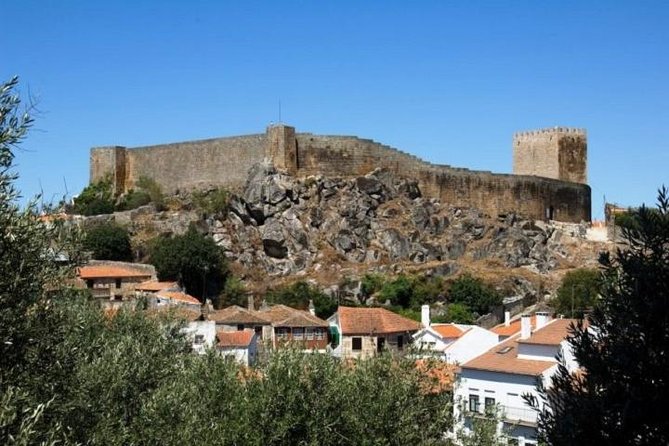
Celorico da Beira is the “main character” stop for many people. It’s set around 550 meters above sea level, at the foot of the Serra da Estrela, and it’s crossed by the Mondego River. Granite is the dominant material, and the tour frames it as a mountain environment shaped by streams and clear water.
The big physical attraction here is the Castle of Celorico da Beira. The tour describes it as a key example of military architecture in a romantic-Gothic style, dating to the 10th century, with an irregular layout that corresponds to a citadel. Even if you can’t map the whole fortress in your head, you can feel the design logic: this place wasn’t built for comfort. It was built for defense.
Then you shift to three church stops in the same area, each with a distinct style:
- Igreja da Misericórdia: the tour calls out its Joanine façade and notes a rich high altar, plus paintings by Isidro Faria
- Igreja Matriz de Santa Maria: described as having baroque “haughtiness,” built over the lower houses of the old quarter near the castle
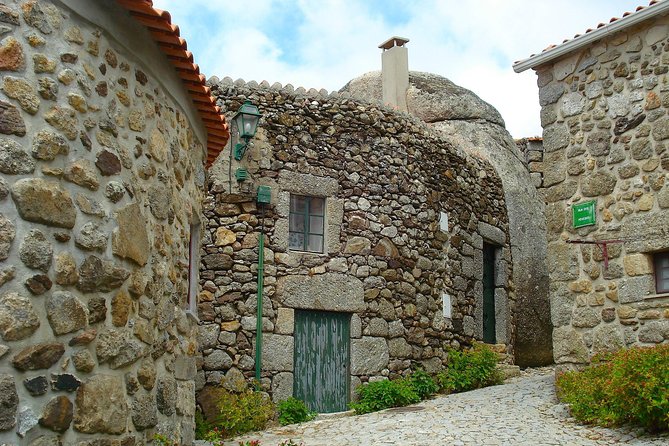
- The narrow streets: the tour highlights a rare combination of Gothic portals and Manueline windows
This is where the walking pays off. You’re not just waiting at a viewpoint. You’re moving through the town fabric—where architectural styles show up in doorways, window frames, and street-level corners.
Practical note: the tour’s described as 2 hours for this section, but older streets and uneven paths can make that feel like more. Bring good nonslip shoes. That one tip matters. If you’re thinking “I’ll be fine in normal sneakers,” you’ll probably regret it once you start climbing or stepping on worn stone.
Also, if you like to photograph details, this stop is a win. The tour’s list of architectural terms isn’t random. Gothic portals and Manueline windows are the kind of features you’ll recognize when you’re standing in front of them.
More Porto days out worth booking




Value Check: What You’re Paying for (and Why It Can Still Be a Smart Buy)
At $414.55 per person, this is not a budget day trip. The value comes from what’s included, and what’s not.
What you get:
- Private vehicle to the group
- Private guide for the day
- Admission tickets listed as free for the tour stops
- A Porto City Walking Tour offered from the day after your experience (available in English and Spanish, with times at 9:30am and 4:30pm)
What you don’t get:
- Food and drinks
So how does that shape value? It’s good value if you want a guided day outside Porto without the stress of buses, transfers, and hunting down parking. You’re paying for convenience plus interpretation—especially helpful when the story goes back through Lusitanian connections and reconquest timelines.
If you hate planning meals while traveling, it’s also a mild downside. Since food and drinks aren’t included, you’ll want a simple plan:
- Budget for lunch
- Bring water if you tend to get thirsty while walking
- Aim to use the guide’s timing rather than forcing an exact lunch hour
The bonus Porto walking tour is a nice add-on. It gives you a chance to rebalance after the mountain day, when you might be tired of stone and staircases. Since it’s available the day after (and listed as daily), it’s also flexible enough to fit most schedules.
What to Pack for the Castle-and-Church Walking Day
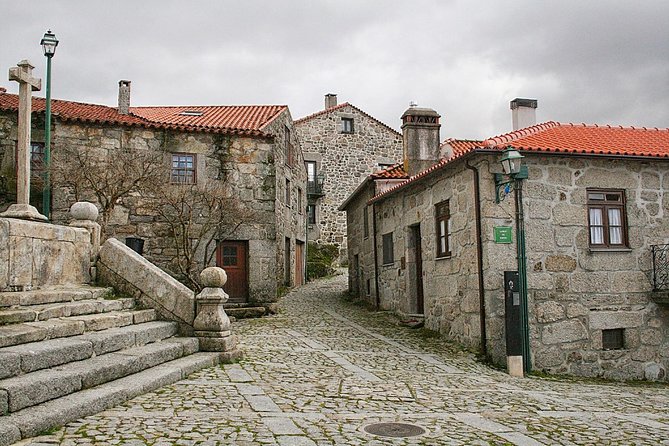
This tour is a full-day mix of driving and walking. The walking is where you’ll feel it most, especially around the castle area and the narrow streets.
Bring:
- Good nonslip shoes you trust on uneven surfaces (this is the standout tip)
- A jacket or layers for comfort in a mountain environment (the setting is clearly Serra da Estrela country)
- A small amount of cash or card for snacks or lunch, since food and drinks aren’t included
Also, don’t overbook your timeline. The tour notes that overall duration can be influenced by traffic and visit schedules. That’s a polite way of saying the day might run a bit later than you expect. Plan lighter in the hour after the tour finishes, so you’re not doing mental math while your legs are still loaded.
Finally, if you’re sensitive to steep terrain, take it slow. Even short sections of climbing can add up when you’re doing them across cobblestones and old stone.
Who Should Book This Portuguese Villages Tour (and Who Might Skip It)
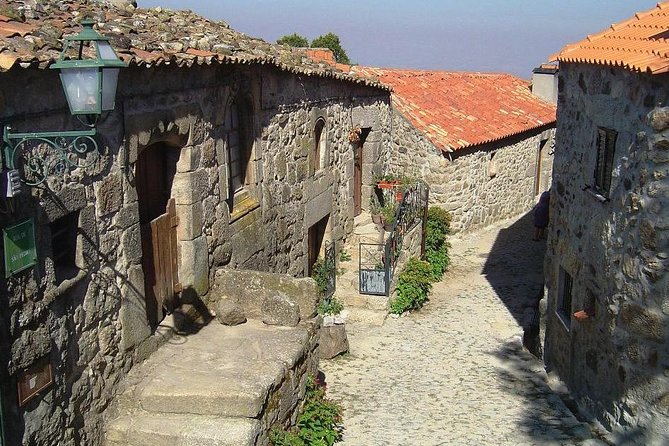
This tour fits best if you’re curious about how Portugal formed as a place, not just a city break.
I’d point you toward it if:
- You like medieval architecture and want to see it in context
- You enjoy place-name stories like flax fields and linho
- You want a guide who can connect geography (Serra da Estrela, rivers, water) to human settlement patterns
- You’re happy doing a full day that includes walking on old streets and castle terrain
I’d suggest skipping it if:
- You’re only interested in Porto itself and want minimal driving
- You want a day trip with meals and drinks handled for you
- You have limited tolerance for uneven, older village walking
It’s also a good option for people who like private tours. Since it’s only your group, you can usually match the pace to your comfort level more easily than in a large shared bus tour.
Should You Book Living Tours’ Full-Day Historical Villages Tour?
If your goal is a meaningful day beyond Porto—one that connects the mountains to the early layers of Iberian life and then lands in Celorico’s castle-and-church architecture—this tour is a solid choice. The special value for me is the way it ties names and stories to visible places: Linhares da Beira’s Lusitanian context and flax naming, then the Church of Santa Maria’s reconquest-era association with Afonso III, and finally the mix of Joanine, baroque, Gothic, and Manueline details in Celorico.
Book it if you’re ready for a long day and you’ll handle the walking with the right shoes. Don’t book it if you want a relaxed, food-included outing or if you hate being away from Porto for most of the day.
FAQ
What time does the tour start, and how long is it?
The start time is 9:00am. The duration is listed as approximately 9–10 hours, and it can change due to traffic and visit schedules.
Where do pickups happen in Porto and Vila Nova de Gaia?
Pickup is available from centre-located hotels in Porto or Vila Nova de Gaia. An alternative meeting point is Rua Mouzinho da Silveira, 350, Porto, next to Porto – São Bento train station.
Is this tour private, or do I share with strangers?
This is a private tour/activity, so only your group participates.
Is food and drinks included?
No. Food and drinks are not included.
What language is the tour offered in?
The tour is offered in English.
What is the cancellation policy?
You can cancel for a full refund if you cancel at least 24 hours before the experience start time. If you cancel less than 24 hours before the start time, the amount paid is not refunded.
More Historical Tours in Porto





More Tours in Porto






More Tour Reviews in Porto


Fresh in the Porto notebook




Historical Tours, compared.
 ★ 5.0Douro Valley: Historical Sites, Wine Experience, Lunch & CruiseFrom $1075,133 reviews
 ★ 4.8An Intimate Fado Show in a Historical TavernFrom $182,055 reviews
 ★ 4.7Historic City Center Walking TourFrom $331,172 reviews
 ★ 4.8Private Tour of the Historic City in a Ford T CarFrom $32932 reviews
 ★ 4.8Historical Center Walking TourFrom $41898 reviews
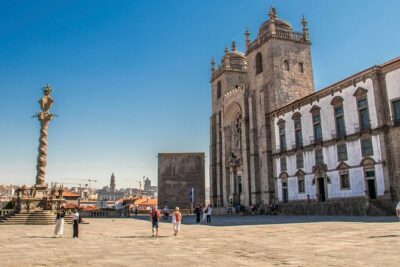 ★ 4.5Historic Porto by Private Electric Tuk Tuk to Top LandmarksFrom $42735 reviews
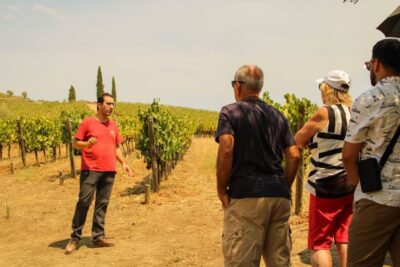 ★ 4.6Douro Valley History & Wine Tour with Cruise & LunchFrom $104433 reviews
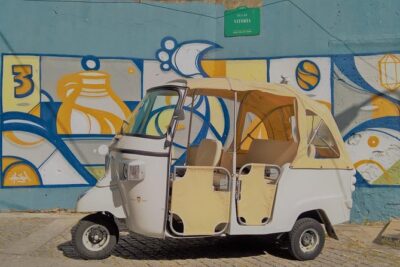 ★ 4.5Porto Guided Tour to the Historical Center on a Tuk TukFrom $42418 reviews
Browse the lists this tour appears in