
Reviewed · VILA NOVA DE GAIA
Tour of Vila Nova de Gaia
Porto’s right across the water, and Gaia shows the other side. This 2-hour walking tour strings together the places that shape Vila Nova de Gaia’s identity, from the famous bridge to wine-country landmarks. I love how fast it helps you get your bearings without feeling rushed.
I also love the guide-led storytelling, and it can be seriously funny and well paced in a way that makes the history easy to remember. The one thing to consider is simple: this is a good-weather tour, so if conditions are poor, plans may shift or you may be offered a different date or a refund.
In This Review
- Key highlights you’ll feel quickly
- Why Vila Nova de Gaia Needs a Dedicated Tour
- Price, Time, and Group Size: The Practical Setup
- Starting at the Statue of Vímara Peres (and ending near WOW Porto)
- Dom Luis I Bridge: The Fastest Way to Learn the Porto–Gaia Relationship
- Serra do Pilar Monastery: History You Can See and Not Just Hear
- Jardim do Morro Viewpoint: Wine, Families, and Why Gaia Looks Like It Does
- Cais de Gaia: Harbor Energy Without the Heavy Planning
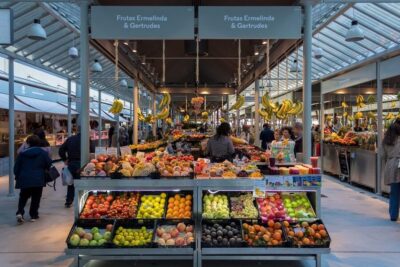
- Mercado Beira-Rio: A Market Stop That Feels Like Real Life
- Half Rabbit by Bordalo II: Street Art With a Local Attitude
- Igreja de Santa Marinha: Tradition, Not Wallpaper
- WOW Porto Finale: Conservas WOW Porto Store and World of Wine
- What the Included Admission Tickets Change About Your Day
- The Guide Quality Is a Big Part of the Value
- Who This Tour Fits Best
- Should You Book This Vila Nova de Gaia Tour?
- FAQ
- What is the duration of the Vila Nova de Gaia tour?
- How much does the tour cost?
- What language is the tour offered in?
- Where does the tour start and end?
- What time does the tour begin?
- Are admission tickets included?
- How many people are on the tour?
- Do I need to bring a physical ticket?
- Is there a cancellation option?
- Is the tour weather dependent?
Key highlights you’ll feel quickly
- Dom Luis I Bridge as the classic Porto–Gaia handshake, with context you can actually use
- Serra do Pilar Monastery stop that explains why this spot matters in the city’s story
- Jardim do Morro viewpoint where Gaia’s wine, families, and local pride come into focus
- Mercado Beira-Rio for a grounded look at what people buy and eat day to day
- Bordalo II’s Half Rabbit street art moment that adds modern Gaia character
- WOW Porto (Conservas + World of Wine) for an easy cultural finish near the end of your walk
Over the bridge to the Gaia waterfront
- From Porto with view to Gaia: Private Bike Tour #DuckSideOfPorto★ 5.0 · 124 reviews
- Vila Nova de Gaia: Winery Tour with 2 DOC Douro & 1 Port★ 4.8 · 101 reviews
- Douro and Port Wine Tasting in Vila Nova de Gaia★ 5.0 · 35 reviews
- Porto: Guided e-bike tours in Porto and Gaia★ 4.6 · 25 reviews
Why Vila Nova de Gaia Needs a Dedicated Tour
Gaia can feel like a side trip when you’re only thinking about Porto sights. That’s the mistake. Vila Nova de Gaia has its own rhythm—its own hilltop viewpoints, its own market life, and its own deep connection to wine and the port.
What I like most about this tour is that it doesn’t treat Gaia like a backdrop. It treats Gaia like the main character. You move through postcard-famous places, yes, but you also get the smaller moments that explain how the city works: the harbor area, the market, the church tradition, and even street art. By the time you reach the WOW Porto area, you understand why people return here.
You’ll also get a guide with an English-speaking approach that’s built for real understanding, not just reciting dates. Some past guides mentioned in reviews include Diogo and Natalia, and the style described is consistent: clear explanations, a sense of humor, and check-ins that make a group feel looked after.
Price, Time, and Group Size: The Practical Setup
At $3.60 per person for an about 2-hour experience, this is the kind of tour that feels like value more than a splurge—especially since multiple stops include admission tickets. For a short walk, you’re packing in several distinct neighborhoods and a couple of cultural destinations.
It’s also capped at a maximum of 28 travelers, which usually keeps the pace manageable and makes it easier to hear your guide. Tours like this are booked fairly ahead of time (about 20 days in advance on average), so if you’re aiming for your ideal date, I’d plan early.
One more practical note: you’re walking between Porto and Gaia. It’s not described as an all-day trek, but it’s still a city walk. Wear shoes you don’t mind using more than once.
Starting at the Statue of Vímara Peres (and ending near WOW Porto)
You start at the Statue of Vímara Peres, Calçada de Vandoma, 4000-013 Porto, and you finish at WOW Porto – The Cultural District, Rua do Choupelo 39, 4400-088 Vila Nova de Gaia.
That start/end setup is useful. You get a Porto meeting point that’s easy to reference, then you end in a concentrated cultural area where you can keep wandering on your own afterward. If you’re the type who likes to turn one guided block into a longer day of independent exploring, the ending location helps.
You’ll also get a mobile ticket, and the tour is offered in English. Service animals are allowed, and it’s described as suitable for most travelers.
Dom Luis I Bridge: The Fastest Way to Learn the Porto–Gaia Relationship
The tour begins with Dom Luis I Bridge, one of the most iconic structures in the region. This stop isn’t just about taking the obvious photos. You’ll get the bridge’s history and how it connects the city’s story to Gaia’s side of the river.
Why this matters: if you start with the bridge, you instantly understand why Gaia has the kind of port-and-wine identity it does. The bridge becomes a map lesson. Even if you’ve seen it from a distance, this helps you read what you’re looking at while you’re actually standing there.
Time here is short—about 10 minutes—so the goal is quick orientation. You’ll get enough context that you’ll recognize the role this structure plays as you move through Gaia.
Admission is included for the stop, so you’re not standing around wondering how much extra it would cost to access key viewpoints.

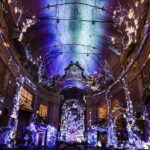
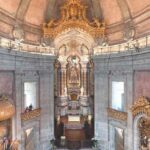

Serra do Pilar Monastery: History You Can See and Not Just Hear
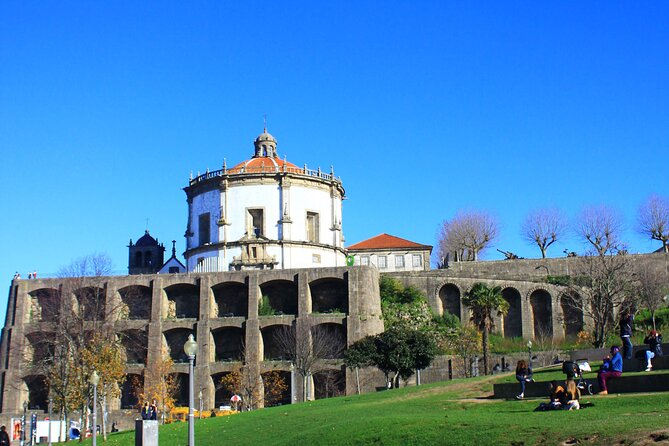
Next up is Mosteiro da Serra do Pilar. This is one of those places where the setting does some of the storytelling for you. You’ll hear about the monastery’s history and its importance in the city.
This stop tends to work well for two reasons:
- You get a sense of how religion and civic life shaped the area.
- You’re also in a location that naturally supports viewpoints and understanding the layout around it.
One caution: since each stop is around 10 minutes, plan for a “highlight visit” rather than a slow, sit-down museum experience. If you’re the type who wants to study every detail for an hour, this may feel quick—but for a 2-hour tour, it’s built to show you the essentials and keep momentum.
Jardim do Morro Viewpoint: Wine, Families, and Why Gaia Looks Like It Does
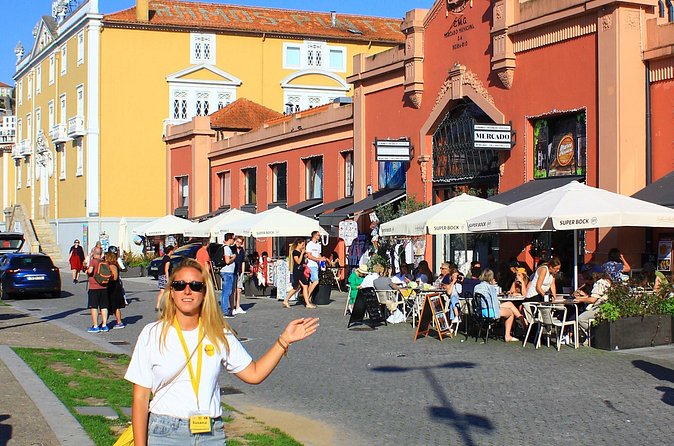
Then you head to Jardim do Morro, a viewpoint where the city’s character shows up fast. You’ll get history about Gaia tied to wine, families, and the way local life grew around the port and surrounding hills.
This is a key stop. Viewpoints can be just photos. Here, the tour connects the view to the story—so when you look out, it doesn’t feel like scenery without meaning.
What to expect: you’ll have a brief window to take in the surroundings while your guide explains the background. Since the visit is short, I recommend you arrive ready to look up and out, not stuck reading your phone for minutes at a time.
Admission is included here too, so this isn’t just a walk-by viewpoint.
Cais de Gaia: Harbor Energy Without the Heavy Planning
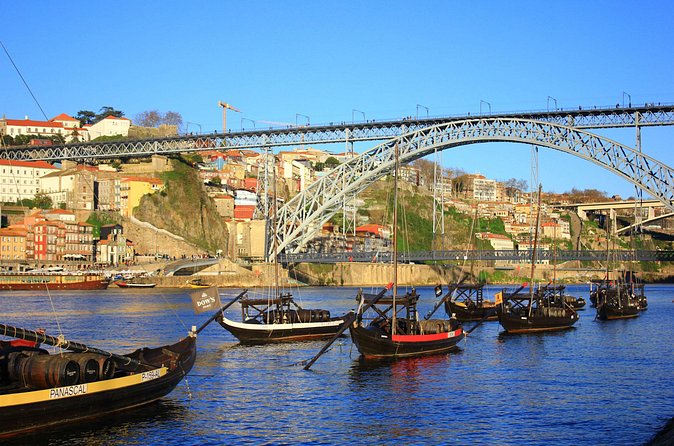
After the viewpoint, the tour moves to Cais de Gaia, describing the boats, the area, and what the former harbor looked like. This is where Gaia stops feeling like a hillside city and starts feeling like what it has always been: a working link between river traffic and trade.
Port areas are great for orientation because they show you how daily movement shaped the city. Even if you don’t know anything about shipping or wine logistics, the tour gives you a framework for understanding why certain areas developed the way they did.
Again, it’s about 10 minutes, so it’s a guided snapshot. If you want more time at the water afterward, you’ll already know where to go.
Mercado Beira-Rio: A Market Stop That Feels Like Real Life
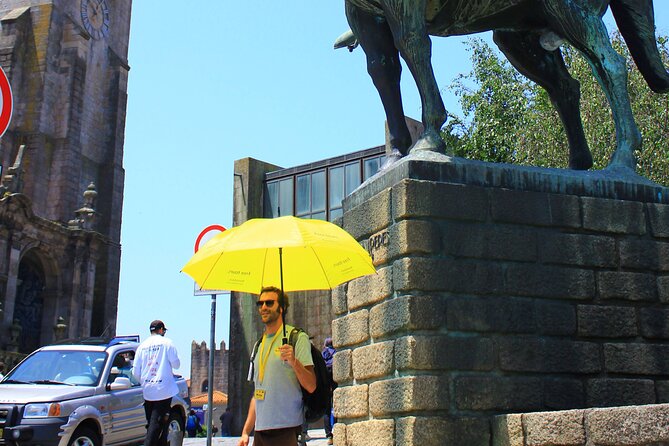
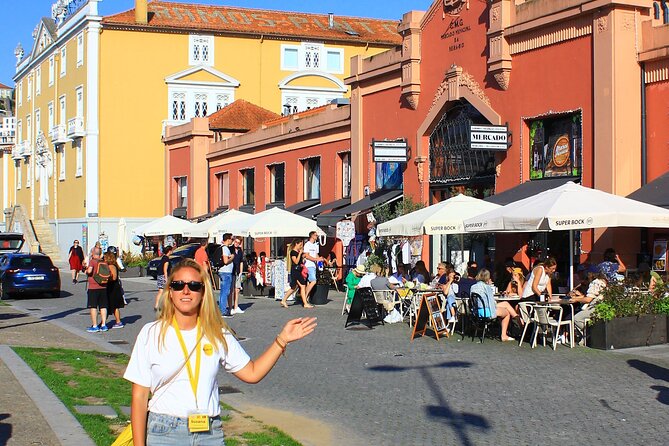
Next is Mercado Beira-Rio. Market stops can go two ways: either they’re just a quick photo wall, or they actually help you understand local food culture. Here, the tour focuses on the market’s history and what kinds of products you can expect.
This is one of the most practical stops for me. Even if you skip buying anything, you’ll leave with a better sense of what you’re seeing around you in Gaia. And markets help you understand a city beyond its monuments.
A short timing note: since it’s roughly 10 minutes, don’t expect a shopping marathon. Instead, use it like a briefing. If something looks interesting, you can always return later on your own.
Admission is included, which is a nice plus for a value-packed 2-hour format.
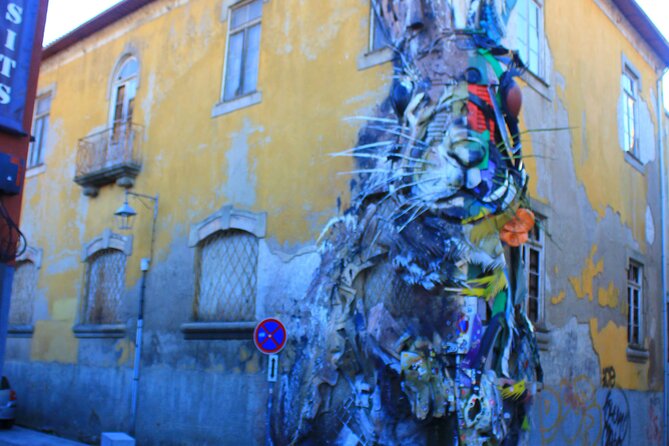
Half Rabbit by Bordalo II: Street Art With a Local Attitude
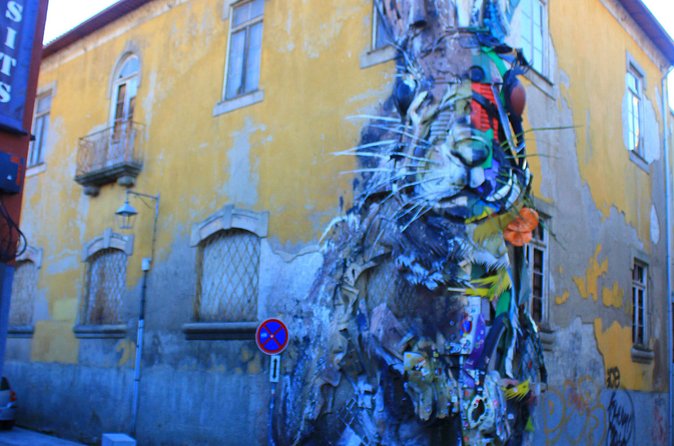
Then comes Half Rabbit by Bordalo II, a street art moment. This is where modern Gaia shows up in a way monuments can’t.
Why I think this stop works: it breaks the rhythm. You go from history-heavy sites to something playful and unmistakably contemporary. That makes it easier to remember the whole tour, not just the older landmarks.
Street art is also a reminder that cities keep changing. Gaia is not only about wine and the past. It’s also about what residents choose to put on their walls now.
This stop is also about 10 minutes, so treat it like a visual interlude. Take in the art, then move on while your eyes are fresh.
Igreja de Santa Marinha: Tradition, Not Wallpaper
Next you’ll visit Igreja de Santa Marinha, described as a stop focused on tradition in Gaia. This is another quick but meaningful entry in the tour’s story pattern: infrastructure (bridge/harbor), culture (market/street art), and community identity (monastery/church).
If you’ve visited only churches as architectural objects, this one may feel more personal. The goal is context—why this church matters for Gaia’s tradition.
As with other stops, time is limited. You’ll likely get the key points, then you’ll keep walking.
WOW Porto Finale: Conservas WOW Porto Store and World of Wine
The tour ends in the WOW Porto – The Cultural District area, with two included stops along the way:
- Companhia das Conservas WOW Porto – Store
- World of Wine – WOW
This finale matters because it ties Gaia’s identity to something visitors can also experience directly. The stores and cultural spaces are designed around food-and-wine related themes, and you’ll finish with a sense of where the stories you heard earlier lead in real life.
It’s a smart way to end a walking tour because you’re not only exiting the city; you’re stepping into a place where you can keep learning without needing to find your next bus stop or map the next attraction.
Admission tickets are included for these stops, so you’re not hit with surprise add-ons right at the end.
What the Included Admission Tickets Change About Your Day
This tour includes admission tickets for the featured stops. That’s a bigger deal than it sounds.
When admission is included, you can treat the tour like a bundle:
- You don’t have to estimate extra costs per location.
- You don’t lose time deciding whether each stop is worth paying for.
- You’re more likely to follow the full route, not skip something because it feels like extra friction.
In a short 2-hour window, that kind of simplicity is value. It’s also why this tour works especially well if you’re juggling limited time in Porto and want Gaia to feel like part of your core itinerary.
The Guide Quality Is a Big Part of the Value
Short tours rise or fall on the guide, and this one seems to deliver. Reviews highlight guides who are enthusiastic and very personable, with strong knowledge and good pacing.
Two names that show up in feedback are Diogo and Natalia. The style described includes:
- Well-paced storytelling that doesn’t feel like a lecture
- Humor that keeps things light
- Courtesy and a steady rhythm for the whole group
- Check-ins that make it easier to stay engaged
If you care about history but you also hate when history is delivered like homework, this tour’s guide approach is a strong selling point.
Who This Tour Fits Best
This is a good match if:
- You want a structured introduction to Gaia’s key sights without planning a full day
- You like a walking tour that blends viewpoints, markets, churches, and cultural venues
- You’re okay with a highlight format (about 10 minutes per stop)
It’s also a good choice for families, since it’s described as suitable for most travelers and the pacing is built around short, accessible segments.
If you’re the type who loves long museum time and deep reading at each stop, you might feel like you’re skimming. But if you want smart orientation plus cultural anchors, it hits the sweet spot.
Should You Book This Vila Nova de Gaia Tour?
Yes, I’d book it—if your goal is to understand Gaia quickly and accurately.
The big reasons:
- Strong value for the time, especially with admission included at multiple stops
- A route that covers the full Gaia picture: bridge, monastery, viewpoints, harbor area, market, street art, church tradition, and WOW Porto
- Guide quality that’s repeatedly praised, including Diogo and Natalia, with humor and good pacing
If you’re traveling at the kind of time when weather is unpredictable, keep in mind it requires good weather, and poor conditions can lead to date changes or refunds. Also, remember it’s designed for highlights, not slow wandering.
If you want Gaia to stop being a blur across the river and start feeling like a place with its own voice, this tour is a practical way to make that happen.
FAQ
What is the duration of the Vila Nova de Gaia tour?
It runs for about 2 hours.
How much does the tour cost?
The price is listed as $3.60 per person.
What language is the tour offered in?
It’s offered in English.
Where does the tour start and end?
It starts at the Statue of Vímara Peres on Calçada de Vandoma, Porto, and ends at WOW Porto – The Cultural District on Rua do Choupelo 39, Vila Nova de Gaia.
What time does the tour begin?
The start time is 10:00 am.
Are admission tickets included?
Admission tickets are included for the stops listed in the tour route.
How many people are on the tour?
The tour has a maximum of 28 travelers.
Do I need to bring a physical ticket?
You’ll use a mobile ticket.
Is there a cancellation option?
Yes. You can cancel up to 24 hours in advance for a full refund.
Is the tour weather dependent?
Yes. It requires good weather, and if canceled due to poor weather, you’ll be offered a different date or a full refund.
More Tours in Porto




More Tour Reviews in Porto

More to Do in Vila Nova de Gaia






Fresh in the Porto notebook


Vila Nova de Gaia, compared.
 ★ 4.8Vila Nova de Gaia: Port Wine Tasting with Cheese PairingFrom $301,074 reviews
 ★ 5.0From Porto with view to Gaia: Private Bike Tour #DuckSideOfPortoFrom $86124 reviews
 ★ 4.8Vila Nova de Gaia: Winery Tour with 2 DOC Douro & 1 PortFrom $27101 reviews
 ★ 5.0Douro and Port Wine Tasting in Vila Nova de GaiaFrom $2035 reviews
 ★ 4.6Guided e-bike tours in Porto and GaiaFrom $5125 reviews
 ★ 4.8Vila Nova de Gaia: Porto Discovery TastingFrom $2217 reviews
 ★ 4.8Porto to Gaia Sunset Walking Tour – Port Wine IncludedFrom $2615 reviews
 ★ 5.0Porto and Gaia: Walking Tour of Douro’s Two RiversidesFrom $3615 reviews
Browse the lists this tour appears in