
Reviewed · LIVRARIA LELLO & LANDMARKS
Private Tour to Santiago de Compostela and its stunning Cathedral
The first time you see Santiago de Compostela’s Cathedral square, it hits hard. On this private day trip from Porto, you get there in comfort and spend the day focused on the city’s real religious heart, not on traffic or navigation. I like that the driver-hosting can be as smooth as Carlos apparently made it for one recent group, with an easy, relaxed pace and hotel pickup to skip the hassle.
Two things I really like: the tour’s mix of major religious sights with smaller, more local stops, and the way you’re given time at each point to look closely rather than rush. You also get useful context for what you’re seeing, from the monastery’s Benedictine origins to the sculpted drama at the Portico de la Gloria.
One possible drawback: the price is per person, and while many stops are timed and simple to enjoy, key interior entries (including the Cathedral and museum) can mean extra ticket costs, plus you may want an official guide for a deeper Cathedral experience.
In This Review
- Key highlights worth your attention
- The easy ride from Porto at 8:00 sharp
- Mercado de Abastos de Santiago: the practical start that feels local
- San Martin Pinario: baroque drama you can actually stop and see
- Portico de la Gloria: Maestro Mateo’s sculpture with 200+ faces
- Santiago Cathedral and the pilgrimage story behind it
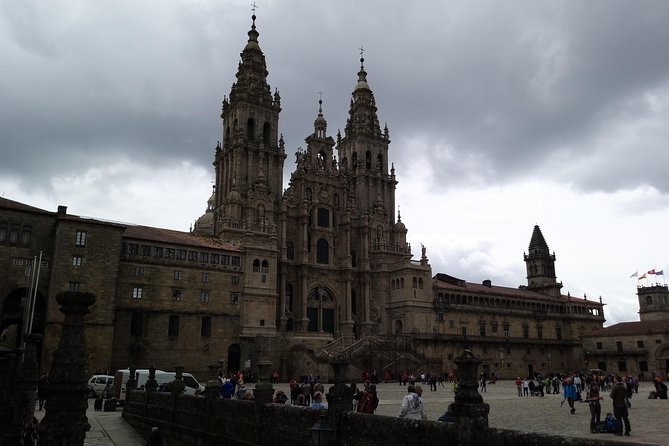
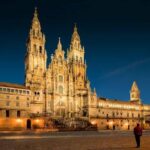
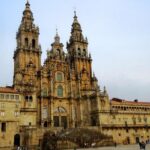
- Plaza del Obradoiro: the Cathedral’s front door and the city’s stage
- Royal Hospital turned 5-star hotel: Hostal de los Reyes Católicos
- Neoclassical boundaries and palace-lined streets
- Rúa do Vilar and the pilgrim certificate moment
- Museo del Pueblo Gallego: a useful optional add-on
- Food breaks and what costs extra (so you don’t get surprised)
- Price and value: what $337.39 per person buys you
- Who this private Santiago day trip suits best
- Should you book this tour from Porto?
- FAQ
- How long is the private tour from Porto to Santiago de Compostela?
- Where does the tour start in Porto?
- Is hotel pickup included?
- Is this tour private or shared?
- What language is the tour offered in?
- What’s included in the luxury vehicle?
- Are tickets for the Cathedral and museum included?
- Is lunch included?
- Can I get a pilgrimage certificate during the tour?
- What happens if weather is bad?
Key highlights worth your attention
- Hotel pickup and drop-off in Porto and Gaia means you don’t hunt for a meeting point.
- A luxury vehicle with Wi‑Fi, bottled water, and refreshments keeps the long drive less tiring.
- Portico de la Gloria’s Maestro Mateo sculpture program (three arches, 200+ granite figures) is the kind of art that rewards close looking.
- Santiago Cathedral area timing gives you time for the big moments in Plaza del Obradoiro.
- Galician food and products at Mercado de Abastos de Santiago—local, not touristy.
- Pilgrim certificate option through the Cathedral Foundation on Rúa do Vilar.
Lello, the Clerigos tower and Porto's grand rooms
- Porto: Spiritus Multimedia Show Entry Ticket★ 4.5 · 6,403 reviews
- Porto: Torre dos Clerigos Entrance Ticket★ 4.6 · 6,395 reviews
- Porto: Livraria Lello Entry Ticket & Foundation Option★ 3.9 · 4,834 reviews
- Porto Walking Tour, Lello Bookshop, River Cruise and Cable Car★ 5.0 · 3,354 reviews
The easy ride from Porto at 8:00 sharp
This is a long day by design—about 8 to 10 hours—but the setup matters. You start at 8:00 am, with the tour based out of Praça da Liberdade 19 in Porto. If you’re staying in downtown Porto or Gaia, pickup is offered from hotels and B&Bs, so you can roll out the door without planning transit or figuring out where the group is meeting.
The transport is in a luxury vehicle with Wi‑Fi, bottled water, and refreshments. That doesn’t sound exciting until you’re halfway through the day and your phone battery is still alive and you’re not thirsty. You’ll also appreciate the included comfort and insurance coverage while you’re on the road.
This is a private tour, meaning it’s only your group. That matters because Santiago de Compostela is a place where small timing choices can change your experience—more time looking at carvings, less time shuffling in crowds.
Mercado de Abastos de Santiago: the practical start that feels local
A good daytrip needs an early anchor. Mercado de Abastos de Santiago is that. You get the chance to step into Galicia through its food culture, in a market that mixes traditional stalls run by women from surrounding farms with newer, stylish food spots. The result feels less like a packaged market and more like a working place where food habits are real.
This stop is about 20 minutes and (based on the tour format) doesn’t cost admission. If you’re trying to understand Galicia, food markets are often where you learn faster than in museums. Even if you don’t buy anything, you’ll spot the kinds of products locals build meals around.
Tip: Use this time to decide what you want to taste later on the pilgrim streets. If you’re the type who likes to eat your way through a city, a market stop is a smart warm-up.
San Martin Pinario: baroque drama you can actually stop and see
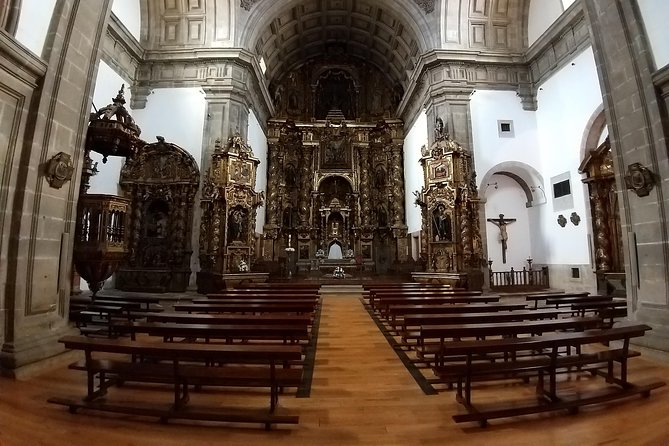
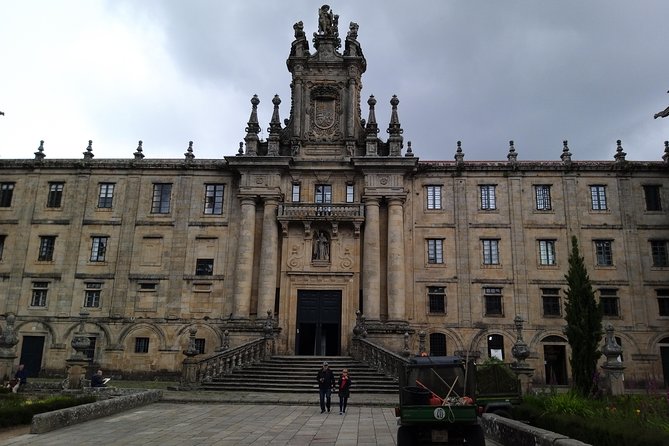
Next comes Monasterio de San Martin Pinario. This is one of those sites where the story helps you read the building. The monastery is tied to the arrival of Benedictine monks after news of St. James’ remains, and what you see today largely dates from the late‑15th century.
The reason people remember this place is the architecture. It’s described as powerful baroque and noted as one of Spain’s most spectacular. But the tour also points you to specifics: you can step up to the choir area to see the detailed wood carving, and you can admire the altarpieces by Fernando de Casas Novoa (an 18th‑century architect).
This stop is about 30 minutes and is set up so you can look without panic. If churches tend to blur together for you, this one works because the art details give your eyes a job.
Possible trade-off: If you’re not into church interiors or baroque ornament, you might wish the stop were shorter. Still, even a quick visit pays off if you care about how Galicia expresses faith through art.
Portico de la Gloria: Maestro Mateo’s sculpture with 200+ faces
One of the tour’s best “stand still and stare” moments is Portico de la Gloria. This isn’t just decoration—it’s a sculpted teaching scene.
It was conceived as a portico / narthex of the Cathedral, with work attributed to Maestro Mateo between 1168 and 1188. You’ll see three arches packed with more than 200 granite figures. That number matters: it’s easy to think you’re just looking at a doorway until you realize it’s a whole program of carved characters.
This stop is short—about 15 minutes—so you’ll want to pace yourself. Don’t try to “see it all.” Pick one arch, then scan slowly. Look for how the figures are arranged and where the carving guides your attention.
Even if you’re not a medieval art scholar, this is the kind of place where your brain goes quiet for a moment. The stone has a lot to say.
Rather go at your own pace? More private guides


Santiago Cathedral and the pilgrimage story behind it
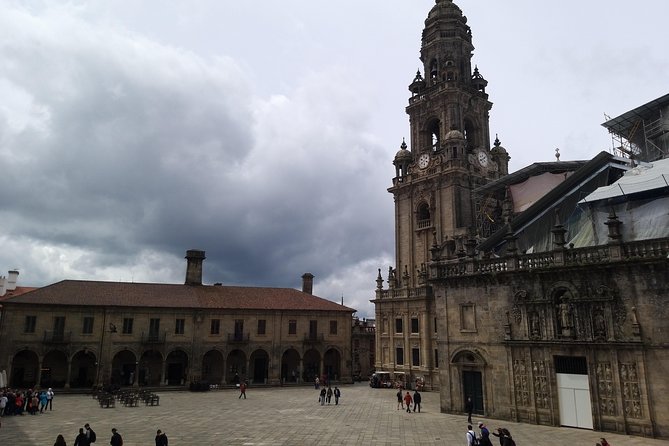
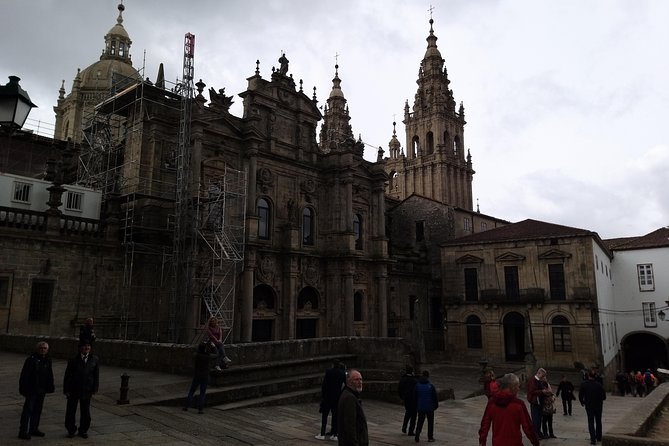
Then you reach the main event: Santiago de Compostela Cathedral. This temple sits in the center of Galicia’s Santiago city and is where tradition places the tomb of the Apostle Santiago—which is why it became a top pilgrimage destination across Europe during the Middle Ages via the Camino de Santiago.
You’re given about 1 hour for the Cathedral visit area. The tour includes time for the Cathedral’s setting and the big visual moments around it, especially Plaza del Obradoiro, but the practical detail is that Cathedral entry can have an added ticket cost.
So here’s how to plan realistically: the itinerary is built around key Cathedral elements and nearby monuments, but ticketing may cost extra. The tour info indicates a ticket to the Cathedral and Museum for €20 per person is not included, and there’s also an option to add an official Spanish guide for a 2‑hour walking tour of the Cathedral at €200 per booking.
If you’re deciding whether to pay for a guide, ask yourself one question: do you like understanding what you’re looking at? If yes, the guide option is often worth it in a place this dense with symbolism and dates.
One more thing to note: one recent highlight from a group review was an especially memorable focus on the Cathedral’s altar and a pipe organ. If those are your interests, it’s worth taking your time in the Cathedral environment rather than rushing to the next stop.
Plaza del Obradoiro: the Cathedral’s front door and the city’s stage
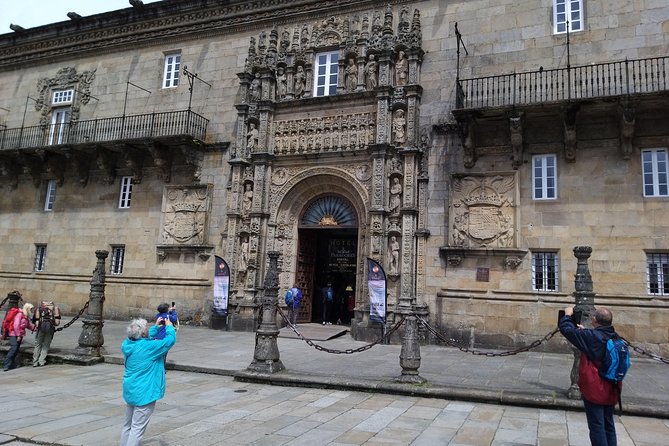
Right outside, you’ll spend time in Plaza del Obradoiro (about 10 minutes). This square is the Cathedral’s main public stage—so much so that even though it’s not described as being in the city’s exact center, it still feels like the center of everything.
You’ll see the mix of styles that defines Santiago: the Cathedral has a Romanesque structure, later layers in Gothic and Baroque elements, and the visual result feels like multiple eras talking to each other.
Even if you’re tired, this stop is worth it because it resets your orientation. After it, you can walk the older streets with a clearer mental map of what you already saw and what you’re heading toward.
Royal Hospital turned 5-star hotel: Hostal de los Reyes Católicos
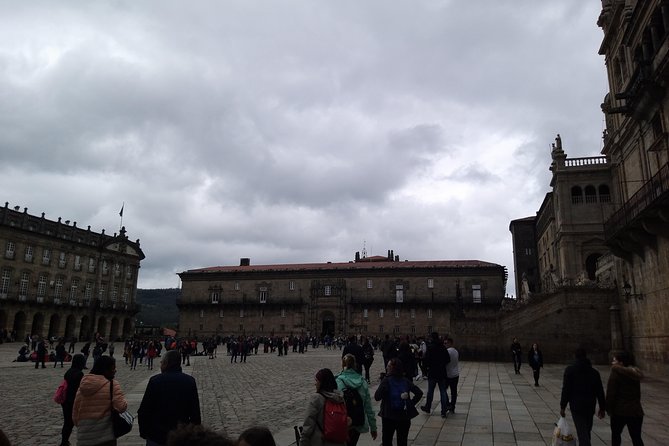
Another excellent “context stop” is Hostal de los Reyes Catolicos. The Royal Hospital began in 1501, ordered by the Catholic Monarchs after a visit in 1486—they recognized pilgrims and locals needed better care.
Today, this building is converted to a 5‑star hotel. The tour keeps it respectful and practical: you get the historical framing and time to look at the grandeur without needing a hotel booking.
This is a great moment to connect the Camino’s physical reality to the architecture. Pilgrimage wasn’t just prayer; it was food, beds, and medical care. Santiago grew around that need.
Neoclassical boundaries and palace-lined streets
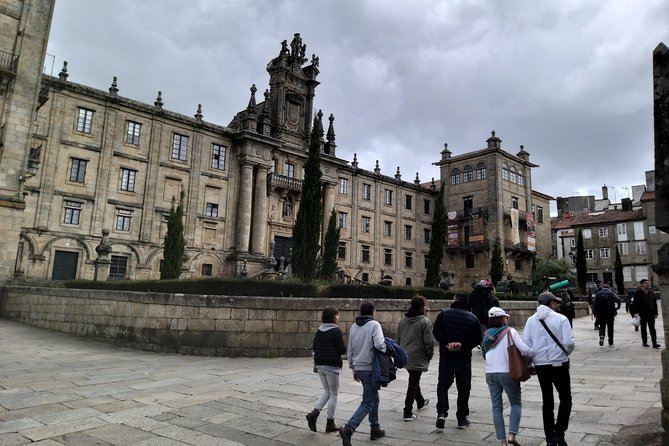
The tour continues with more of the city’s shaping around the Cathedral. You’ll visit Palacio de Raxoi, a neoclassical building named after an archbishop who founded it. It helped enclose the square in the 18th century—a reminder that even the “open air” parts of Santiago are designed.
Then there are two quick street walks that I found useful because they shift you from monument mode to everyday Santiago.
- Rúa Nova (about 15 minutes) is where you’ll notice palaces and cultural institutions like Teatro Principal and Salón Teatro.
- Rúa do Franco (also about 15 minutes) is described as the old town’s gastronomic street. It links to the Camino story with the origin of its name: “Franks” meant pilgrims from beyond the Pyrenees—free men from the Frankish Nation.
If you want a city where history still influences how people eat and gather, this street logic helps you feel it.
Rúa do Vilar and the pilgrim certificate moment
On Rúa do Vilar, you’ll encounter a key Camino-related detail: the Santiago Cathedral Foundation, where pilgrims can get a certificate of their pilgrimage.
This stop is short—about 15 minutes—but it’s one of the more meaningful “I’m in the real tradition” moments on the tour, because it connects the Cathedral myth to a modern practice.
If you’re not sure you’ll get one, still stop and check the process on-site. This is the kind of detail that makes Santiago feel personal, even on a day trip.
Museo del Pueblo Gallego: a useful optional add-on
The tour also includes Museo del Pueblo Gallego, focused on Galician culture and traditions. The time you get is about 30 minutes, and the museum has an extra cost listed as €4 per person.
I like this museum option because it helps you understand what you saw at the Cathedral through the lens of a region with its own identity—not just a generic Spanish sightseeing stop. If you’re the type who wants to connect architecture to living culture, consider it.
Trade-off: if you’re already doing heavy church sights and your feet feel done, you might skip it and use the time for walking and snacks on the surrounding streets.
Food breaks and what costs extra (so you don’t get surprised)
You’ll notice the tour suggests time for sightseeing and walking, but typical lunch isn’t included. The listed lunch option is a set meal with starter, main, drink, dessert, and coffee, plus Alvarinho wine, at €30 per person.
Also, ticket costs can apply. The tour info lists €20 per person for tickets to the Cathedral and museum. And if you want a more guided Cathedral understanding, there’s an official Spanish guide option for a 2-hour walking tour at €200 per booking.
My practical advice: treat those as “choose your depth” costs. If you prefer autonomy, you can keep expenses lower. If you like history and interpretation, allocate budget for the guide and museum.
Price and value: what $337.39 per person buys you
At $337.39 per person, this tour is not a budget daytrip. But it does include several things that justify at least part of the price: luxury vehicle transport, Wi‑Fi and refreshments, hotel pickup/drop-off, and personal accident and liability insurance. It’s also private, which can be a big deal if you’re traveling as a small group and want control over timing.
The best value usually comes when:
- your group avoids spending money on extra taxis or trains to get to Santiago, and
- you actually use the time you’re paying for at the monuments (not just passing through).
Also, this tour includes mobile ticket convenience and a smooth plan for how the day flows.
If you’re a solo traveler watching costs closely, it might feel pricey. If you’re a couple or a small group who hates logistics, it can feel more reasonable fast.
Who this private Santiago day trip suits best
This experience is a strong match if you:
- love religious history and art details (especially sculpture and baroque interior work),
- want someone else handling navigation and timing,
- prefer hotel pickup and a low-stress day trip,
- want both big sites (Cathedral, Plaza del Obradoiro) and street-level context (food streets, theatre/palace lanes).
It may be less ideal if you:
- hate churches and carved stone,
- want free wandering time above all else (this is structured around specific stops),
- are on a tight budget and don’t plan for extra tickets.
One more practical point: it’s noted that the day depends on good weather. If conditions aren’t right, you’ll either get an alternate date or a full refund.
Should you book this tour from Porto?
I’d book this if you want a clean, high-comfort route from Porto to Santiago with the main religious sights handled in a sensible order. The mix of Monasterio de San Martin Pinario, Portico de la Gloria, the Cathedral area, plus the streets that explain the pilgrimage culture is the real win—not just the famous building.
Also, the fact that it’s private and starts with pickup makes it feel like a day planned around your time, not around other people’s schedules. If you’re willing to budget a little extra for Cathedral/museum tickets and maybe a guide if you like explanations, you’ll get a lot out of the day.
If you want, tell me your travel month and whether you care more about art details or the Camino story. I can suggest how to prioritize the extra ticket/guide options so the day feels exactly right.
FAQ
How long is the private tour from Porto to Santiago de Compostela?
It runs for about 8 to 10 hours.
Where does the tour start in Porto?
The meeting point is Praça da Liberdade 19, 4000-322 Porto, Portugal.
Is hotel pickup included?
Yes. Pickup is offered from downtown Porto and Gaia hotels and B&Bs.
Is this tour private or shared?
It’s a private tour/activity, so only your group participates.
What language is the tour offered in?
The tour is offered in English.
What’s included in the luxury vehicle?
The vehicle includes Wi‑Fi, bottled water, refreshments, and a comfortable atmosphere.
Are tickets for the Cathedral and museum included?
A ticket to the Cathedral and Museum (€20 per person) is listed as not included.
Is lunch included?
A typical lunch option is not included. The listed lunch option is €30 per person.
Can I get a pilgrimage certificate during the tour?
The tour includes a stop on Rúa do Vilar where the Santiago Cathedral Foundation is located, and pilgrims can get a certificate there.
What happens if weather is bad?
This experience requires good weather. If it’s canceled due to poor weather, you’ll be offered a different date or a full refund.
Over the Border to Santiago


Private Porto Tours to Compare

Porto Landmarks Worth the Queue




Fresh in the Porto notebook


Livraria Lello & Landmarks, compared.
 ★ 4.5Spiritus Multimedia Show Entry TicketFrom $116,403 reviews
 ★ 4.6Torre dos Clerigos Entrance TicketFrom $116,395 reviews
 ★ 3.9Livraria Lello Entry Ticket & Foundation OptionFrom $184,834 reviews
 ★ 5.0Porto Walking Tour, Lello Bookshop, River Cruise and Cable CarFrom $723,354 reviews
 ★ 4.5World of Discoveries Entry TicketFrom $212,922 reviews
 ★ 4.8Walking Tour, Lello Bookshop, Boat and Cable CarFrom $70965 reviews
 ★ 4.8Guided Walking Tour and Lello BookshopFrom $70895 reviews
 ★ 4.1Bridges Cruise & Sunset & World of Discoveries OptionFrom $21267 reviews
Browse the lists this tour appears in