
Reviewed · PORTO CITY WALKS
Porto Highlights (Private Walking Tour)
Porto is a city you can understand fast when someone shows you the links between streets and stories. This private 3-hour walking tour strings together classic landmarks, older neighborhoods, and food culture in a route that feels logical, not random. I especially like the way you get key viewpoints and landmark moments in a short time, and then you end up with a clearer picture of Porto’s past, not just photos.
Two things I really appreciate: the balance between big-name stops like Livraria Lello and São Bento Station, and the calmer add-ons like Rua das Flores and the Miradouro da Vitória view. The one drawback to plan for is that the walk may be adjusted by car depending on weather, so you’ll want flexible expectations if conditions are rough.
In This Review
- Key highlights at a glance
- Why Porto’s landmarks make more sense on a private 3-hour route
- The small bonus: hotel pickup and drop-off
- Starting at Fonte dos Leões: getting your bearings in Porto’s core
- Carmo and Carmelitas Descalcos churches: the quiet power of Porto’s sacred architecture
- Practical note
- Livraria Lello & Irmão: the famous bookstore, explained
- If you care about architecture
- Clérigos Church area and the Porto skyline feeling
- Miradouro da Vitória: the view stop you’ll remember later
- What to watch for
- Rua das Flores: stepping into a charming street without losing the story
- Footwear matters here
- São Bento Station azulejos: the tiles that train you to look carefully
- Why this stop is worth fitting into a short tour
- Dom Luís Bridge: a guided crossing moment
- Porto Cathedral (Sé): ending on a landmark that ties the city together
- The Jewish heritage stop: history placed where you walk
- A short taste of Portuguese sweets (and why it matters)
- What I’d do next
- Price and value: what $116 for a group up to 6 really buys you
- Weather and walking reality: what to expect if conditions change
- Who this private tour suits best
- The guide experience: names you might hear and what they suggest
- Should you book this Porto Highlights private tour?
- FAQ
- FAQ
- How long is the Porto Highlights private walking tour?
- Where does the tour start and end?
- Is this a private tour or a shared group?
- What languages are offered?
- What’s included in the price?
- Are monument or museum tickets included?
- What should I bring?
- What happens if the weather is bad?
Key highlights at a glance
- Fonte dos Leões to Porto Cathedral: a satisfying, mostly walkable arc across the core of town
- São Bento Station azulejos: guided time in the station where the tiles do the talking
- Miradouro da Vitória viewpoint: a quick guided moment with payoff views over the historic area
- Clérigos Church area: you’ll hit one of Porto’s most recognizable landmark zones
- Old Jewish Quarter context: heritage stories placed right where you’re standing
- Pastel de nata sweet stop: a small Portuguese flavor moment included with the tour
More routes on foot through Porto
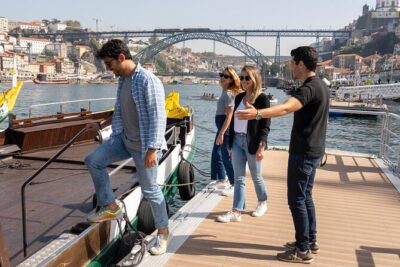
- Porto Walking Tour, Lello Bookshop, River Cruise and Cable Car★ 5.0 · 3,354 reviews
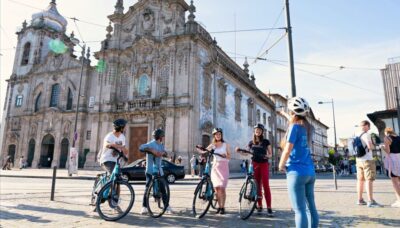
- Porto: City Highlights 3-Hour Guided Electric Bike Tour★ 4.8 · 3,092 reviews
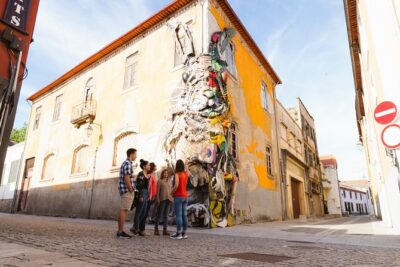
- Experience Porto’s Charm: 3-Hour Guided Walking Tour★ 5.0 · 2,432 reviews
- Porto: 3-Hour Guided City Highlights Walking Tour★ 4.8 · 2,050 reviews
Why Porto’s landmarks make more sense on a private 3-hour route
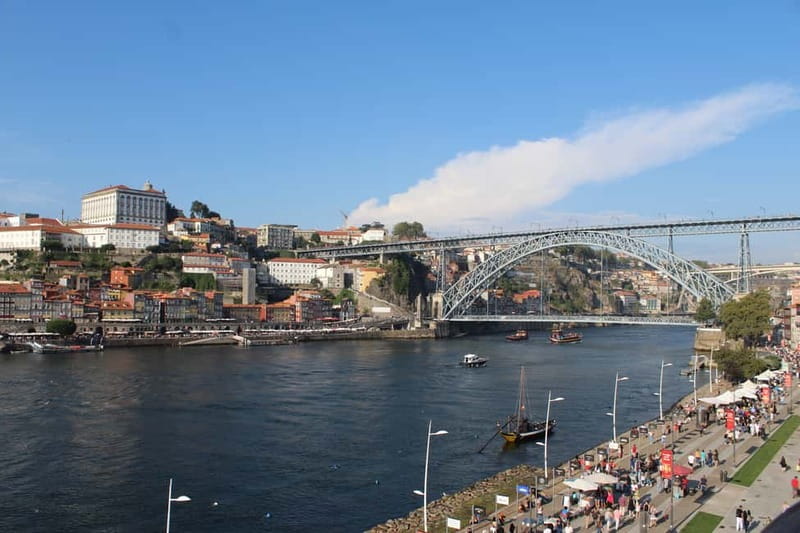
Porto can feel like two cities stitched together: the postcard riverfront, and the older city hills with tight streets and sudden view openings. What I like about this kind of small-group private format is that your guide can pace the route around your interests, and you still cover the sights that matter without spending half the day in transit.
With a 3-hour duration, you’re also protected from the biggest tour problem in Porto: trying to do too much and ending up sprinting between stops. Here, the itinerary naturally builds from squares and churches into bookstores, viewpoints, and iconic interiors like São Bento Station, then wraps with Porto Cathedral back near the starting area.
The small bonus: hotel pickup and drop-off
If you’re staying in a central area, the included hotel pickup and drop-off saves time and avoids the awkward question of how you’ll get to Fonte dos Leões. It makes a short tour feel easier, especially if you’re arriving the day before and want a “get oriented” walk.
Starting at Fonte dos Leões: getting your bearings in Porto’s core
The tour begins at Fonte dos Leões (Lions Fountain). This isn’t just a neat landmark to tick off. It’s a good anchor point because it places you in the historic center and gives you a mental map of where the rest of the walking will lead.
From here, you start moving through church zones and older streets. That order matters. You’re not jumping around town; you’re walking into the layers of Porto—religious sites, old neighborhoods, and the kind of city fabric that still shapes how locals move.
Carmo and Carmelitas Descalcos churches: the quiet power of Porto’s sacred architecture
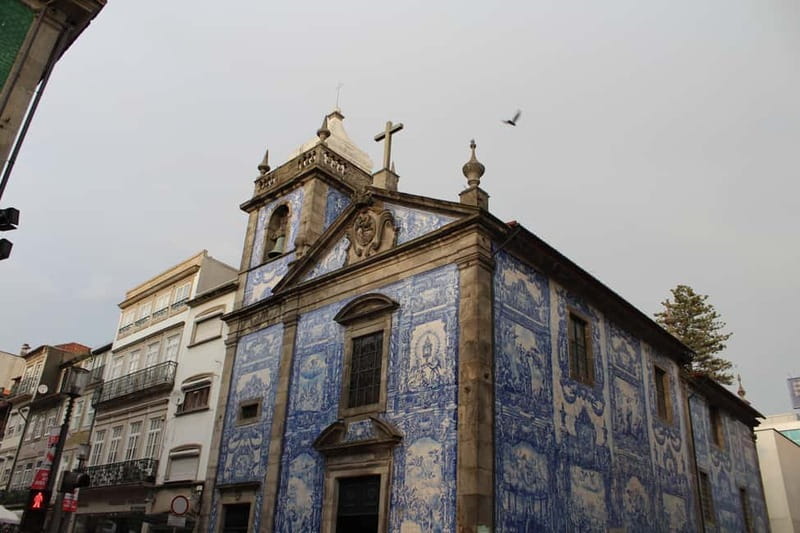
Next up are the churches in the Carmo and Carmelitas Descalcos area. These stops are valuable because they show Porto’s identity beyond the riverfront. Churches in Porto aren’t just religious buildings; they’re community landmarks and cultural markers.
A good guided moment here is noticing how the stonework, façade details, and setting give you clues about different periods of the city’s growth. Even if you don’t consider yourself a church person, this is where you start understanding why Porto feels “stacked” and layered—built up over time, shaped by faith, and then shaped again by trade and migration.
Rather go at your own pace? More private guides



Practical note
Wear shoes that handle uneven pavement and small steps. You’ll be walking between sites, and church-adjacent streets can be slick if the weather is damp.
Livraria Lello & Irmão: the famous bookstore, explained
You’ll then reach Livraria Lello & Irmão, one of Porto’s most famous bookstores. Yes, it’s a “must-see” for many people. But the best part of a guided stop is context: why it became such a cultural symbol and how Porto’s intellectual and artistic life ties into its streets.
This is also a good timing moment in the day. A short guided visit helps you avoid the common trap: spending all your time taking photos and missing the story of what the bookstore represents in Porto.
If you care about architecture
This stop tends to be a hit for people who like buildings that mix function with beauty. You’ll likely walk away with a better sense of why this place gets referenced so often.
Clérigos Church area and the Porto skyline feeling
From Livraria Lello, you move toward the Clérigos Church area. Even if you don’t go inside (tickets aren’t included), you’ll still get the landmark impact and the stories your guide ties to the site.
This is another stop where location matters. Porto’s viewpoints and steep gradients make certain areas feel like they’re positioned for looking out. Clérigos sits in that category: it shapes how you see the city while you’re still surrounded by older neighborhoods.
Miradouro da Vitória: the view stop you’ll remember later
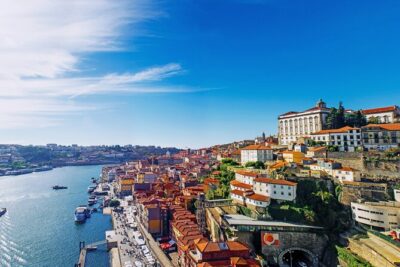
Then you reach Miradouro da Vitória, a viewpoint stop. You’ll get guided time here (about 15 minutes), which is the right length: long enough to soak in the landscape, short enough that you don’t turn the middle of the tour into a long break.
Why this matters: Porto is a city of angles. If you want your photos to feel like Porto and not just “pretty buildings,” you need at least one solid viewpoint where the city’s layout makes sense.
What to watch for
From a viewpoint like this, you’ll often notice patterns in how neighborhoods stack and how major streets cut through the hills. That visual understanding makes the rest of the walk feel clearer—especially when you’re moving toward streets like Rua das Flores and landmark interiors like São Bento.
Rua das Flores: stepping into a charming street without losing the story
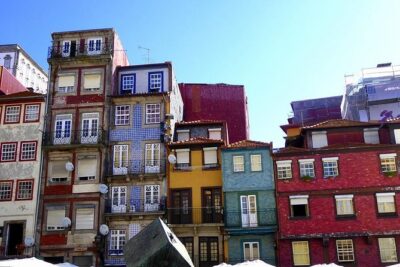
Next, you’ll walk through Rua das Flores with guided commentary. This street tends to be remembered because it feels like one of those places where Porto’s style shows up in a concentrated way: walkable scale, strong street character, and an easy-to-scan rhythm.
The value on a guided walk is that Rua das Flores is more than a photogenic corridor. You get the connection to how the city evolved culturally and socially, and how those older lanes link back to the bigger landmarks around them.
Footwear matters here
Streets like this often involve curves and small uneven sections. Comfortable shoes turn this from “managed walking” into “pleasant wandering.”
São Bento Station azulejos: the tiles that train you to look carefully
One of the highest-impact parts of the tour is São Bento Station, guided for about 15 minutes. The big draw is the azulejos—those famous Portuguese tile murals—but the real benefit is guidance on how to look.
Tiles like these are visual storytelling. A guide can point out themes and historical references so you don’t just admire them as decoration. You’ll start reading the station as a cultural document, not just a place where trains happen to pass.
Why this stop is worth fitting into a short tour
If you’re only in Porto for a couple days, it’s easy to skip train stations. Here, São Bento is treated like a main event, and it should be. It’s one of those “Porto-sourced” experiences that you can’t fully reproduce elsewhere.
Dom Luís Bridge: a guided crossing moment
You’ll then reach Dom Luís Bridge, with guided time (about 20 minutes). Even if you’ve seen bridge photos online, standing in this area changes things because Porto’s geography becomes obvious: the river isn’t a backdrop, it’s the city’s operating system.
A guide helps you interpret what you’re seeing and why this bridge became a symbol of connection between parts of Porto. In a three-hour tour, this is one of the moments that helps you understand the city’s trade and identity without turning the outing into a history seminar.
Porto Cathedral (Sé): ending on a landmark that ties the city together
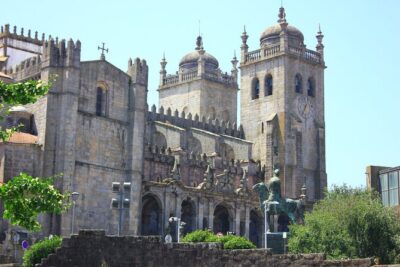
The tour ends at Sé, Porto (Porto Cathedral) and then returns to the starting point at Fonte dos Leões. A cathedral finish works well because it brings the walk full circle: earlier church areas told part of the story, and the cathedral gives you a broader, more central-feeling conclusion.
This is also where heritage stories often click for people. Porto’s religious sites, older neighborhoods, and cultural identities feel like they’re connected rather than separate sightseeing items.
The Jewish heritage stop: history placed where you walk
As you move through the older parts of town, the tour includes learning about Porto’s Jewish heritage in the old Jewish Quarter. I like this approach because it avoids vague “history lecture” mode. Instead, the stories are attached to place, and that makes the information stick.
Even if you already know basic facts, being shown the area with a guide’s framing can change how you understand the city’s evolution. It’s one of those added layers that turns a “sights tour” into a “Porto understanding tour.”
A short taste of Portuguese sweets (and why it matters)
You’ll get a brief introduction to Porto’s culinary traditions, plus a small sweet tasting. Pastel de nata is included, and that’s a good starting point because it’s simple, recognizable, and very Portuguese.
This isn’t a full food tour. It’s a taste that helps you connect what you learned on the walk—streets, neighborhoods, culture—to everyday life. If you’re the kind of traveler who likes food context, you’ll appreciate that the tour treats sweets as part of the cultural story, not an afterthought.
What I’d do next
After a guided bite, you’ll usually feel ready to explore on your own: markets, local pastry shops, and simple Portuguese meal staples. You’ll know what to look for without guessing.
Price and value: what $116 for a group up to 6 really buys you
The price is $116 per group up to 6, with a 3-hour duration. That’s where the value shows up. If you travel as a family or a small cluster of friends, the cost per person drops quickly compared to booking separate individual tours.
You’re also getting more than a walking guide. Included items—hotel pickup and drop-off, a private guide, bottle of water, and pastel de nata—cut down on small add-ons that can add up elsewhere. Tickets to monuments aren’t included, so you should expect that some stops are guided from the outside or inside only where you don’t need paid entry.
In short: pay for convenience, pacing, and interpretation, not for museum ticket access.
Weather and walking reality: what to expect if conditions change
The tour notes that depending on weather conditions, it may be adapted to be done by car. That’s a practical heads-up. Porto streets can get slippery when it rains, and a short tour is easier to enjoy if your guide adjusts the route.
So keep a flexible mindset: you might still see the same core sights, but the “how” of getting from place to place could shift.
Who this private tour suits best
This tour is a strong fit if you:
- Want a 3-hour orientation to Porto’s historic center
- Like culture with clear stop-by-stop stories (churches, station, viewpoints)
- Prefer private pacing over crowded group schedules
- Travel with up to a few people and want good value per group
- Enjoy food context, even if you’re not doing a full-blown tastings itinerary
It may be less ideal if you specifically want long, ticketed time inside multiple monuments, since tickets to monuments or museums aren’t included.
The guide experience: names you might hear and what they suggest
The tour is led by a private guide, and past bookings highlight guides like Ruben and R. Pinto for being very informative and for taking time to answer questions. That matters more than it sounds. A good guide can turn a famous place like São Bento or Livraria Lello into something you actually remember, because they connect details to broader city stories.
If you want your time to feel efficient but not rushed, this is exactly the kind of guide feedback that tends to predict a great walk.
Should you book this Porto Highlights private tour?
I’d book it if you want a smart, concentrated route that mixes landmark recognition with local context. The combination of São Bento Station, viewpoint time at Miradouro da Vitória, and the walk through older streets like Rua das Flores gives you variety without exhausting you.
Skip it only if you’re planning to spend most of your day doing paid museum entrances and want long interior time. Otherwise, this tour is a good value way to see Porto’s “why” as well as its “what.”
FAQ
FAQ
How long is the Porto Highlights private walking tour?
It lasts about 3 hours.
Where does the tour start and end?
It starts at Fonte dos Leões and returns there at the end.
Is this a private tour or a shared group?
This is a private group tour (up to 6 people per group).
What languages are offered?
The live guide is available in English, Spanish, and Portuguese.
What’s included in the price?
Hotel pickup and drop-off, a private tour guide, a bottle of water, and pastel de nata are included.
Are monument or museum tickets included?
No. Tickets to monuments or museums are not included.
What should I bring?
Bring comfortable shoes.
What happens if the weather is bad?
The tour may be adapted to be done by car depending on weather conditions.
More Tour Reviews in Porto




Private Porto Tours to Compare

More of Porto on Foot





Fresh in the Porto notebook



Porto City Walks, compared.
 ★ 5.0Porto Walking Tour, Lello Bookshop, River Cruise and Cable CarFrom $723,354 reviews
 ★ 4.8City Highlights 3-Hour Guided Electric Bike TourFrom $513,092 reviews
 ★ 5.0Experience Porto’s Charm: 3-Hour Guided Walking TourFrom $352,432 reviews
 ★ 4.83-Hour Guided City Highlights Walking TourFrom $342,050 reviews
 ★ 4.4Wine Tasting with Tapas Walking TourFrom $531,541 reviews
 ★ 4.7Historic City Center Walking TourFrom $331,172 reviews
 ★ 5.0Porto’s #1 Walking TourFrom $01,026 reviews
 ★ 4.8Delicious Food and Wine Walking TourFrom $87977 reviews
Browse the lists this tour appears in