
Reviewed · PORTO CITY WALKS
Old Jewish Quarters Private Walking Tour
Porto’s Jewish past isn’t on the average postcard. This private walking tour helps you follow the thread through Porto’s old quarters, and I love how it turns a map into an easy walk with a real guide. I also liked having André, the guide, keep the stories clear and engaging as you move from stop to stop. One possible drawback: the tour is weather-dependent, so a rainy day can shuffle plans.
You’ll cover medieval streets and viewpoints in about 2 to 3 hours, without having to hunt for details yourself. Along the way, you pass major and lesser-known places, including Porto Cathedral at the start and Ribeira Square at the end, with built-in context for what you’re seeing. The only watch-out I’d flag is that it’s a moderate walking experience, so comfy shoes matter.
If you’re into history that feels tied to real neighborhoods—alleys, trade, and local landmarks—this is a strong way to spend a morning or afternoon. And since it’s private, you only walk with your group, not a random mix of strangers.
In This Review
- Key things that make this Old Jewish Quarters walk worth it
- Entering Porto Cathedral and the oldest Jewish-quarter feel
- Miradouro da Vitoria: the Olive Field Quarter and the 1496 Law story
- Horto das Virtudes garden: a legendary burial-ground setting
- Praça Ribeira finish: Jewish business in Porto’s social hub
- What the guide actually adds (especially if you hate reading maps)
- Price and value: what you’re paying for, and where it can pay off
- Logistics that affect your comfort (pickup, timing, shoes)
- Who this tour suits best
- Should you book the Old Jewish Quarters Private Walking Tour?
- FAQ
- How long is the Old Jewish Quarters Private Walking Tour?
- Where does the tour start and where does it end?
- Is pickup included?
- Is a synagogue visit included?
- What fitness level do I need?
- What happens if the weather is poor?
- Can I cancel for a full refund?
Key things that make this Old Jewish Quarters walk worth it
- Private group format: Only your group participates, so questions and pacing stay comfortable.
- No-map navigation: The guide handles the turns, so you can focus on the sites and stories.
- André’s storytelling: In the guide feedback, André stood out as engaging and strong on the details.
- Four focused stops: Porto Cathedral, Miradouro da Vitoria, Horto das Virtudes garden, and Praça Ribeira.
- Admission tickets included at stops: Each listed stop includes an admission ticket as part of the experience.
- Synagogue not included: You’ll see key areas and landmarks, but plan around that if you want a synagogue visit.
More routes on foot through Porto
- Porto Walking Tour, Lello Bookshop, River Cruise and Cable Car★ 5.0 · 3,354 reviews
- Porto: City Highlights 3-Hour Guided Electric Bike Tour★ 4.8 · 3,092 reviews
- Experience Porto’s Charm: 3-Hour Guided Walking Tour★ 5.0 · 2,432 reviews
- Porto: 3-Hour Guided City Highlights Walking Tour★ 4.8 · 2,050 reviews
Entering Porto Cathedral and the oldest Jewish-quarter feel
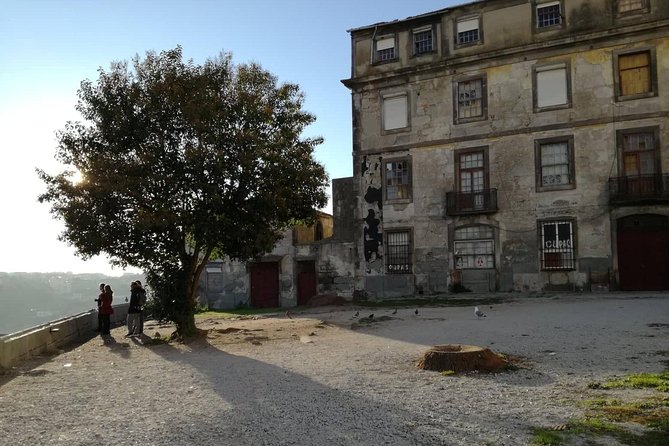
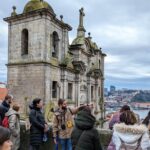
Most people go to Porto Cathedral for the building. This tour starts the other way around: with the neighborhood feeling and the early Jewish presence around it. The meeting point is Terreiro da Sé, right at the Catedral do Porto area, and the first stop is timed at about 40 minutes.
Here’s what you should expect on the ground. You’re placed in one of Porto’s older quarters, then guided through the idea that Jewish presence in Porto is described as going back to the Phoenician period, before the medieval era shape of the city takes over. The route emphasizes the old alleys where Jews lived during Porto’s Dark Ages—so you’re not just hearing abstract history.
Why I think this opening stop works: it helps you get your bearings fast. You’re in the right part of town from the start, and the guide frames what you’ll see next. Also, the tour includes an admission ticket for this stop, which can save you a step if you were planning to add places one by one.
Possible drawback to keep in mind: since you’re starting in the old core around the cathedral, the streets can feel tight and old-school. If you’re the type who hates walking on uneven ground, wear shoes you trust.
Miradouro da Vitoria: the Olive Field Quarter and the 1496 Law story
Next, you head to Miradouro da Vitoria (about 50 minutes). This is where the tour centers on what it calls the heart of Judaism in Porto, including the Olive Field Quarter.
On this stop, the guide focuses on the idea of a city inside the city—an old-quarter layout that functioned like a ghetto and where Jews experienced a Golden Age just before the 1496 Law. Even if you don’t know Porto’s Jewish timeline yet, the guide’s job is to connect what you hear to what you can actually see in the neighborhood.
You’ll also notice urbanism remnants—basically, traces of how the area was organized before modern changes reshaped the city. That’s the key benefit here. A casual self-walk can show you streets and viewpoints, but it’s easier to miss what those streets might have meant in the past.
One practical note: Miradouro da Vitoria is also a viewpoint area, so plan for open-air conditions. On a breezy or cooler day, you might want a light layer. On a hot day, bring water.
Horto das Virtudes garden: a legendary burial-ground setting
The third stop is Jardim Municipal do Horto das Virtudes (around 30 minutes). This one is all about a green space with a story attached: a legend that the garden served as a burial ground for Jews.
The tour faces you toward the Douro River as you take in the garden. That pairing—quiet greenery plus a major river—changes the vibe from the medieval-alley feel earlier in the walk. Instead of constant city motion, you get a breather, which matters because you’re still on foot for the full tour.
What I like about including this stop: the history doesn’t stay locked in buildings. It spreads into landscape and memory. Even if you treat the burial-ground part as a legend, the point is the way people have linked Jewish life in Porto with specific places.
How to think about it practically: this is one of the most relaxing segments of the route, so it’s a good place to reset. If your feet get sore, use this stop to slow down, stand still for a moment, and let the guide finish the explanation before you move on.
Praça Ribeira finish: Jewish business in Porto’s social hub
The final scheduled stop is Praca Da Ribeira (about 30 minutes), ending at Praça Ribeira by the Douro River. This is the part of Porto that many visitors recognize fast—cultural and social life—so the tour’s twist is how it connects that lively area to older Jewish settlement and business.
Here, you hear about Jews running their own private commerce: tailors, merchants, doctors, and goldsmiths. It’s a useful shift from “where did people live” to “how did people live,” which is often what you want from history tours. You’re still in an outdoor setting, but the guide connects the present-day waterfront energy to the older community patterns.
A small consideration: Ribeira can be crowded during peak hours. Your guide helps you stay focused on the historical points, but you still have the usual city noise and foot traffic around a famous area. If you’re sensitive to bustle, plan to arrive a bit earlier to steady your expectations.
Rather go at your own pace? More private guides



What the guide actually adds (especially if you hate reading maps)
A guided walking tour wins when it reduces decision fatigue. This one does that for two reasons.
First, it gives you navigation help. The included promise is simple: no need for a map because someone else is moving you through the route. That sounds basic, but in Porto’s older streets, it’s the difference between wandering and learning.
Second, the guide makes the timeline legible. The tour isn’t just a checklist of stops. It connects each place to a theme—medieval quarters, the Olive Field Quarter, the garden legend, and then everyday business in the Ribeira area. When you see those pieces in order, the city stops feeling like separate sightseeing zones and starts feeling like one connected story.
From the tour feedback you’ll have: André comes up as a standout guide. In the notes, André is described as extremely engaging and strong at putting Jewish history into understandable walking commentary. That’s exactly what you want when a topic can otherwise feel distant.
Group size also matters. This is private, so the guide can adjust pace and stop for questions instead of rushing to finish a set script for a big crowd.
Price and value: what you’re paying for, and where it can pay off
At $106.50 per person, this is not the cheapest walking tour option in Porto. But value isn’t only about “lowest price.” Here, your money is buying a few specific things you can’t easily replicate on your own:
- A private guide-led route through four timed stops (2 to 3 hours total).
- Admission tickets included at each of the listed stops (Catedral do Porto, Miradouro da Vitoria, Jardim Municipal do Horto das Virtudes, and Praca Da Ribeira).
- Guided historical interpretation, including themes like the 1496 Law and the Olive Field Quarter’s role.
If you’ve ever tried to self-guide Porto’s Jewish history, you know the problem: you’ll find sites, but you might not know what you’re looking at or why it matters. Paying for a guide makes sense if you care about context more than photo ops.
One catch: the synagogue visit is not included. So if your personal “must-do” is stepping into a synagogue building during this tour, you’ll need to plan that separately. This tour is built around Jewish quarters, landmarks, and the stories tied to them.
Logistics that affect your comfort (pickup, timing, shoes)
The tour lists pickup offered, and it’s near public transportation, which helps if you’re mixing it with other Porto days. The meeting point is Terreira da Sé at Porto Cathedral, and the tour finishes at Praça Ribeira facing the Douro River.
Timing-wise, plan for a 2 to 3 hour commitment. That fits well into a typical Porto itinerary without eating your entire day.
Physical comfort is listed as moderate fitness. Translation: you should expect to do a fair chunk of walking through older streets. Wear comfortable, grippy shoes, especially if the weather turns slippery.
Weather matters here. The experience notes it requires good weather. If conditions aren’t right, you’ll be offered a different date or a full refund. So it’s smart to schedule this on a day you’re not depending on for something else indoors.
Who this tour suits best
This tour is a great fit if you:
- Want to understand Jewish life in Porto through neighborhoods and landmarks, not only museum-style stops.
- Prefer a guided route where the turns and explanations are handled for you.
- Like history you can “see” in the streets and urban layout.
It’s also a good match if you’re traveling with a small group that enjoys asking questions. Private tours are often the best option for that.
If you’re more into architecture facts only (dates, styles, big monuments), you might find you want more time at fewer stops. This tour spreads attention across four sites, each tied to community stories. That’s the point, but it’s good to know.
Should you book the Old Jewish Quarters Private Walking Tour?
I’d book it if your goal is a guided walk through Porto’s Jewish quarters with clear context and a manageable time commitment. The price may look steep until you factor in the private format, the guide-led storytelling, and the fact that admission tickets are included at each stop. Ending in Ribeira also gives you a natural payoff: you finish near the Douro, not miles from everything.
I wouldn’t treat it as your one-stop “must see every synagogue thing.” The synagogue visit isn’t included, so if that’s your main priority, plan to add it separately.
My bottom line: if you want a meaningful, neighborhood-level way to understand Porto’s Jewish past, this is a solid use of your time.
FAQ
How long is the Old Jewish Quarters Private Walking Tour?
The tour lasts about 2 to 3 hours.
Where does the tour start and where does it end?
It starts at Porto Cathedral, Terreira da Sé (4050-573 Porto), and ends at Praça Ribeira, facing the Douro River.
Is pickup included?
Pickup is offered.
Is a synagogue visit included?
No. The synagogue visit is not included.
What fitness level do I need?
The tour is listed for travelers with a moderate physical fitness level.
What happens if the weather is poor?
The experience requires good weather. If it’s canceled due to poor weather, you’ll be offered a different date or a full refund.
Can I cancel for a full refund?
Yes, you can cancel for free up to 24 hours in advance for a full refund.
More Tour Reviews in Porto




Private Porto Tours to Compare

More of Porto on Foot





Fresh in the Porto notebook




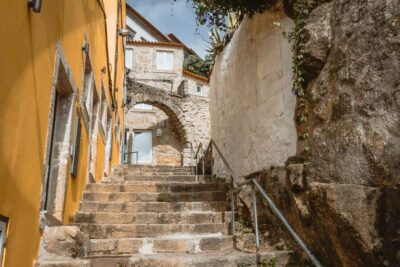
Porto City Walks, compared.
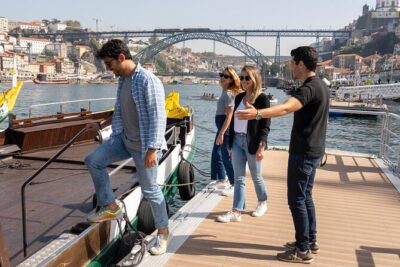 ★ 5.0Porto Walking Tour, Lello Bookshop, River Cruise and Cable CarFrom $723,354 reviews
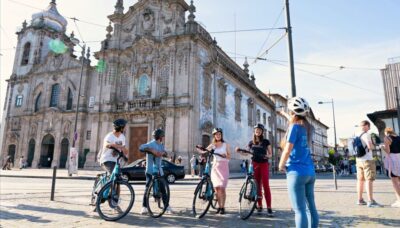 ★ 4.8City Highlights 3-Hour Guided Electric Bike TourFrom $513,092 reviews
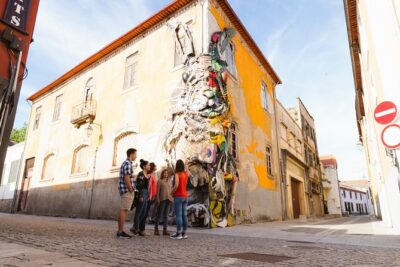 ★ 5.0Experience Porto’s Charm: 3-Hour Guided Walking TourFrom $352,432 reviews
 ★ 4.83-Hour Guided City Highlights Walking TourFrom $342,050 reviews
 ★ 4.4Wine Tasting with Tapas Walking TourFrom $531,541 reviews
 ★ 4.7Historic City Center Walking TourFrom $331,172 reviews
 ★ 5.0Porto’s #1 Walking TourFrom $01,026 reviews
 ★ 4.8Delicious Food and Wine Walking TourFrom $87977 reviews
Browse the lists this tour appears in