
Reviewed · RIBEIRA & OLD TOWN
Guimarães Old Town Private Walking Tour
Guimarães feels like Portugal’s history class—minus the boredom. This private walking tour puts you in the middle of the medieval streets, with stops that explain how people lived, prayed, and worked when Guimarães helped shape the kingdom. I especially like that the guide, often listed as Andre, uses stories to connect the buildings to real daily life.
Two things I like a lot are the small-town pace (you can go at your own speed because it’s just your group) and the included break for coffee and a local pastry. You’ll also have an easy start point in town, so you’re not wasting time hunting down meeting spots.
One thing to consider: the tour visits the castle, but the castle entry costs extra (7.50 euros per person). Also, since Guimarães old town is compact, the walk covers key highlights in a short time—great if you like efficiency, less great if you’re expecting a huge checklist of sights.
In This Review
- Key Highlights You’ll Actually Feel
- First Stop: Guimarães Castle and the Extra Ticket Reality
- Birthplace of Portugal: How Guimarães Old Town Reads Like a Timeline
- Largo do Toural: The Square Where City Life Organized Itself
- Cruzeiro de Nossa Senhora da Guia: Baroque Devotion in a Quiet Corner
- The Old Jewish Quarter Story: Sephardic Life to Inquisition Pressure
- Coffee and Pastry Break: Why It’s More Than a Snack
- Price and Value: What 57.60 Per Person Really Buys
- Where You Start (and Where You Finish): Avenida Dom João IV to Museu Alberto Sampaio
- How Much Walking Is Actually Involved?
- Who This Tour Fits Best
- Should You Book This Guimarães Old Town Private Walking Tour?
- FAQ
- Is Guimarães Castle admission included?
- How long is the walking tour?
- What’s included in the tour besides the guide?
- Where do we meet, and where does the tour end?
- Are there any stops with paid admission?
- What if the weather is bad?
- Can I cancel and get a full refund?
Key Highlights You’ll Actually Feel
- Private group pacing: you’re not rushing with a crowd
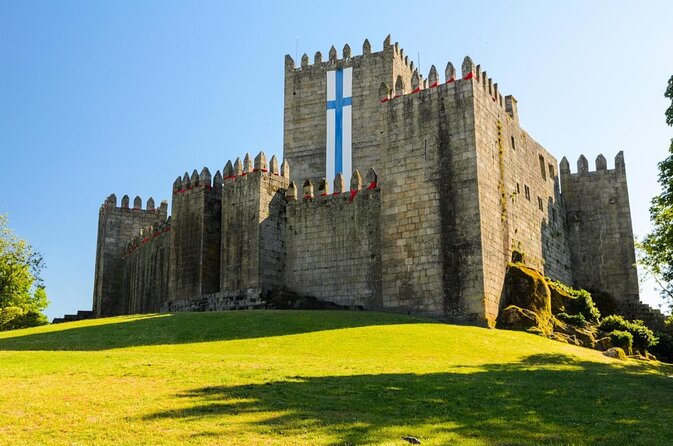
- Guimarães Castle stop: the 10th–11th century architecture story starts here (entry costs extra)
- The birthplace of Portugal: medieval streets tied to faith and everyday work
- Largo do Toural: a central square that shaped urban life in the 12th–14th centuries
- Cruzeiro de Nossa Senhora da Guia: an 18th-century Baroque chapel with a Passion of Christ focus
- Old Jewish quarter context: Sephardic Jewish life and the pressure of the Inquisition era
Deeper into Ribeira, its arcades and riverfront
- Guimarães Old Town Private Walking Tour★ 4.0 · 4 reviews
First Stop: Guimarães Castle and the Extra Ticket Reality
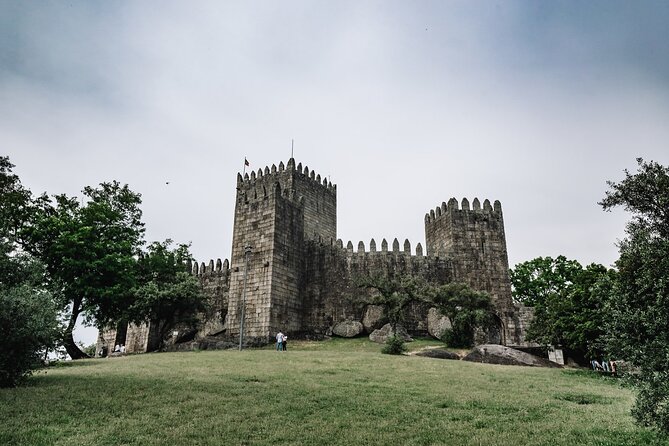
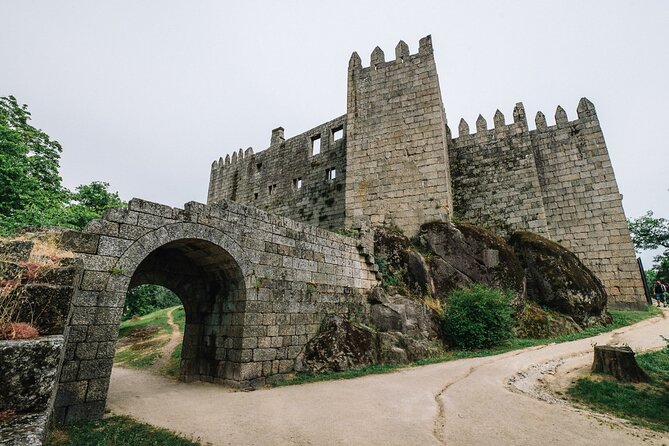
Your tour starts with Guimarães Castle, a major anchor for understanding why this town mattered. Expect an architecture-focused look at its early-medieval roots, with the 10th–11th century story connected to how the north helped shape Portugal as a kingdom.
Plan around the money detail: castle admission is not included. The price is listed as 7.50 euros per person, so if you want the castle itself, bring cash or a card you can use on-site.
If you like context, this first stop is a smart opener. A lot of castles in Portugal are impressive, but here the guide’s goal is to help you see what the fortress meant for the people living just beyond its walls.
Birthplace of Portugal: How Guimarães Old Town Reads Like a Timeline
After the castle, you move into the medieval core with Guimarães itself—often called the birthplace of Portugal. The town is small, but that works in your favor because you can actually connect details: religious heritage, older building traces, and the way daily life likely ran long before modern convenience.
This is also where the guide’s storytelling matters most. Instead of listing monuments like a brochure, you’ll get explanations about how Portuguese people used to live and work. That “how it felt” angle is what turns a walk into something you remember.
There’s a practical upside too: most of the essential sightseeing is concentrated here. Even with a relaxed pace, the time in the old town feels efficient rather than frantic.
Largo do Toural: The Square Where City Life Organized Itself
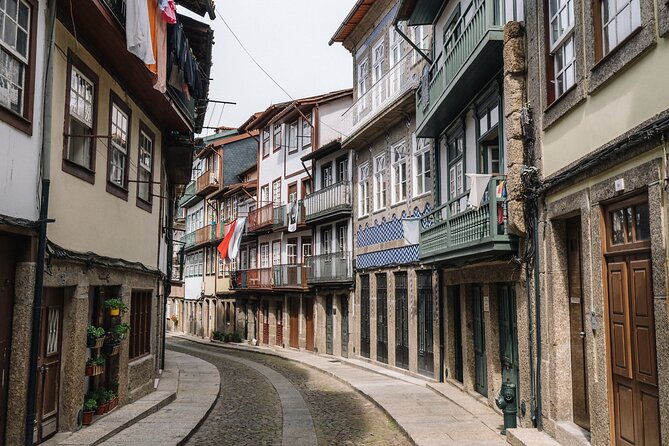
Next up is Largo do Toural, one of the key squares that shaped Guimarães’s urban landscape, especially during the 12th–14th centuries. Think of it as the town’s public living room: a space that likely hosted gatherings, announcements, and the kind of everyday movement you can’t see just by staring at walls.
This stop is short, but it’s meaningful. The guide’s explanations help you understand why squares like this became the “center of gravity” for medieval towns—socially, politically, and religiously.
If you’ve ever visited a pretty historic town and wished you understood where the real action happened, this is your answer. It’s less about one building and more about how people used shared space.
Cruzeiro de Nossa Senhora da Guia: Baroque Devotion in a Quiet Corner
Then you’ll head to Cruzeiro de Nossa Senhora da Guia, an 18th-century Baroque chapel dedicated to the imagery of the Passion of Christ. This is the kind of stop that often gets skipped when you’re rushing, but it adds depth because it shows how devotion continued to evolve long after medieval power struggles.
The Baroque style is typically about drama—heavy on emotion and visual storytelling. In a tour like this, that matters because you’re not just seeing architecture; you’re seeing how faith was presented to ordinary people.
This is also a good pacing break. The tour stays walking-focused, but the chapel stop gives your eyes a new “genre” to notice: less town layout, more religious art language.
More routes on foot through Braga

The Old Jewish Quarter Story: Sephardic Life to Inquisition Pressure
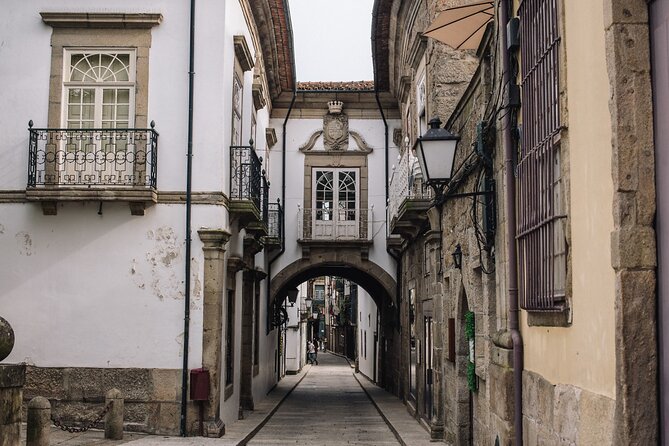
One of the most substantial story stops is the area associated with the old Jewish quarter. Here, you’ll learn how Sephardic Jews lived and navigated life alongside Christians during the 14th century, leading up to the period when the Portuguese Inquisition intensified and improved its machinery.
This is important context, and it’s handled differently than a typical “sights only” tour. Instead of treating the quarter like a dead historical label, you get human-scale explanations for what changed and why it mattered to daily life.
A quick note for your expectations: the tour time here is limited, so you’ll get the core narrative rather than every detail. If you want to go further afterward, you’ll leave with enough names and themes to research responsibly—and more importantly, you’ll know what questions are worth asking.
Coffee and Pastry Break: Why It’s More Than a Snack
The tour includes a small stop for coffee and/or tea paired with local pastry. This kind of break sounds minor, but on a 2–3 hour walk it does real work: it keeps energy steady and makes the stories feel easier to absorb.
It also changes the tone. A private guide can teach all day, but if you’re hungry and thirsty, you start rushing. This stop helps you stay in a calm, observational mode—exactly what makes old town walking rewarding.
And because it’s a private format, you can usually enjoy this pause without feeling like you’re competing with a schedule full of strangers.
Price and Value: What 57.60 Per Person Really Buys
The price is $57.60 per person, for a private tour lasting about 2 to 3 hours. For Guimarães, that’s a fair setup if you value explanation over self-guided wandering.
Here’s the value math I’d use: you’re paying for (1) a guided narrative that connects buildings to lived experience, (2) a private pace, and (3) an included pastry-and-coffee stop. The castle entry fee is extra, so add 7.50 euros per person if you plan to go inside.
Also, the average booking window is about 16 days in advance, which suggests this isn’t a last-minute-only experience. If you want a specific date and time, it’s smart to lock it in earlier rather than later.
If you’re the type who loves reading plaques and building your own story, you might feel the price is higher than a free stroll. But if you’d rather trade guesswork for context, this tour is built for that trade.
Where You Start (and Where You Finish): Avenida Dom João IV to Museu Alberto Sampaio
Getting oriented matters in older cities, and this tour has a clear start and finish. The meeting point is at Avenida Dom João IV (4810-225 Guimarães), and you end outside the Museum Alberto Sampaio.
This is handy for two reasons. First, the meeting point is easy to find, so you start on time instead of doing a slow “where are they?” dance. Second, ending near a museum gives you a natural next step if you want to keep the momentum going.
It also notes that the meeting area is near public transportation, which is useful if you’re arriving from elsewhere in the region without wanting to spend extra time figuring out local transfers.
The tour uses a mobile ticket, and confirmation is received at booking. That’s the kind of straightforward setup that keeps your day stress-free.
How Much Walking Is Actually Involved?
This is a walking tour with a requirement for moderate physical fitness. Since the total time is 2 to 3 hours, you can expect a steady stroll rather than long, exhausting hikes.
Guimarães’s old town is compact, which helps. You’re moving between core points without needing long transfers, and the short stop lengths make it easier to stay comfortable even if you’re not a power-walker.
Practical tip: plan for uneven historic surfaces and bring shoes you’re happy to walk in for a couple hours.
Who This Tour Fits Best
This tour is a good match if you:
- want medieval context instead of a checklist of monuments
- prefer a private guide who can match your pace
- enjoy learning how everyday life and belief systems shaped a place
- like the idea of mixing major sites (like the castle) with smaller, story-driven stops
It’s especially attractive if you like the “town as a living timeline” style of sightseeing. Guimarães isn’t huge, so the guide’s job is to make the size work—turning a short walk into a coherent story.
If you’re chasing huge, world-famous sights, you might find Guimarães feels smaller than other big-name Portuguese stops. But if you’re after meaning, the compact scale is part of the charm.
Should You Book This Guimarães Old Town Private Walking Tour?
I’d book it if you want your Guimarães time to feel purposeful. The castle stop plus the old-town streets give you the backbone, while Largo do Toural, the Baroque chapel, and the old Jewish quarter story add the texture that makes the town feel real.
If you’re budget-focused, just remember the castle admission is extra, and you’ll want to factor that in. If you hate guided tours and prefer wandering with your own interpretation, the private format might feel like overkill.
My simple advice: if you care about understanding how medieval Portugal shaped daily life, this is a strong use of a half-day. You’ll get a guided narrative, a comfortable pace for your group, and that nice built-in pause for coffee and pastry.
FAQ
Is Guimarães Castle admission included?
No. Guimarães Castle costs 7.50 euros per person and is not included in the tour price.
How long is the walking tour?
The tour runs about 2 to 3 hours.
What’s included in the tour besides the guide?
You’ll have a included coffee and/or tea stop with local pastry.
Where do we meet, and where does the tour end?
You meet at Avenida Dom João IV, 4810-225 Guimarães and the tour ends outside the Museum Alberto Sampaio on R. Alfredo Guimarães.
Are there any stops with paid admission?
Yes, the castle has an extra admission fee. Other listed stops are free.
What if the weather is bad?
The experience requires good weather. If it’s canceled due to poor weather, you’ll be offered a different date or a full refund.
Can I cancel and get a full refund?
Yes. You can cancel up to 24 hours in advance for a full refund. If you cancel less than 24 hours before the start time, the amount paid is not refunded.
Private Braga Tours to Compare





More of Braga on Foot
More of Ribeira and the Old Town
Fresh in the Braga notebook


Ribeira & Old Town, compared.
 ★ 5.0The Unvanquished Tour in Porto City CenterFrom $326,497 reviews
 ★ 4.8The highest-rated traditional fado concert (downtown)From $241,557 reviews
 ★ 4.7Historic City Center Walking TourFrom $331,172 reviews
 ★ 4.8Historical Center Walking TourFrom $41898 reviews
 ★ 4.5Historic Porto by Private Electric Tuk Tuk to Top LandmarksFrom $42735 reviews
 ★ 4.9Tile Painting and Cocktails in Downtown PortoFrom $41484 reviews
 ★ 5.03-Hour Old Town & Riverside Bike Tour – Guided ExperienceFrom $47481 reviews
 ★ 5.0Pastel de Nata | Workshop from scratch | Porto’s city centerFrom $48449 reviews
Browse the lists this tour appears in