
Reviewed · PORTO CITY WALKS
Guimarães: Highlights and Hidden Gems Walking Tour
Guimarães feels like Portugal’s opening chapter. This 2.5-hour walking tour ties together the famous birthplace landmarks with lesser-known streets, led by local guide Ricardo, and I like that you get both medieval storytelling and real tower views in one tight loop. You’ll also stop for a traditional pastry, which turns a history walk into something you can actually taste.
My other favorite part is the way Ricardo connects the city’s big names to everyday details, including the working life behind the scenes, like the leather-tanning area. One consideration: expect uphill walking, stairs, and cobblestones, so this isn’t the right fit if your legs get tired fast.
In This Review
- Key Things You’ll Want to Know Before You Go
- Where This Tour Fits in Guimarães (And Who It’s Best For)
- Meeting at Campo de São Mamede: Start Smart, Start Smooth
- Guimarães Castle and the Power Behind the Stone
- Good to know
- Church of São Miguel do Castelo: Faith Meets Fortress Thinking
- Palace of the Dukes of Braganza: Seeing the City’s Big Players
- Practical note
- Rua de Santa Maria and the Muralha de Guimarães: Medieval Streets With Teeth
- Largo da Oliveira and Praça de São Tiago: Squares Where Life Happens
- Largo do Toural and Aqui Nasceu Portugal: Climb for the View, Then Understand the City
- Tanques de Couros: The Leather-Tanning Neighborhood That Explains the City’s Work
- The Final Approach Near Oliveira Square and S. Gualter Church
- Price, Time, and Value: Is $35 Worth It?
- What to Bring and What to Expect on the Ground
- The Guide Experience: Ricardo’s Style and Why It Matters
- Should You Book This Guimarães Highlights and Hidden Corners Walk?
- FAQ
- How long is the Guimarães walking tour?
- What is the group size?
- Is the tour in English?
- What’s included in the price?
- Are monument entry tickets included?
- Where do I meet the guide?
- Is this tour okay for kids?
Key Things You’ll Want to Know Before You Go
Local guide Ricardo, with personal connections: You’re not getting generic script stops; you get stories tied to life in Guimarães.
UNESCO-listed medieval center, on foot: Major power-and-faith landmarks are matched with quieter lanes and squares.
Walls and lookouts, not just palaces: You’ll walk defensive walls and climb a tower for a panoramic city view.
Leather-tanning neighborhood insights: The tour shines a light on industry that shaped the city.
Included water plus a local pastry: It’s a small thing, but it matters on cobbles and stairs.
More routes on foot through Guimaraes
- Guimarães: Private Flexible Walking Tour in Historic Center★ 4.8 · 44 reviews
Where This Tour Fits in Guimarães (And Who It’s Best For)
If you’re coming to Guimarães to see the must-dos, this tour does that. But it also helps you understand why the city matters beyond the postcard shots. It’s built around UNESCO-listed medieval streets and structures, plus a very practical rhythm: walk, pause for photos, then learn what you’re actually looking at.
It’s also a good value for the time. At $35 per person for 2.5 hours, you’re paying for a local English-speaking guide, plus a bottle of water and a local pastry. Monument tickets aren’t included, so you’re really buying the route, the guidance, and the context—not museum entry.
This experience is best for adults, and older teens who like history and walking. The tour is listed as not suitable for children under 10, and it isn’t recommended for wheelchair users or people with mobility impairments. If you love exploring on foot and don’t mind some hills, you’ll feel right at home.
Meeting at Campo de São Mamede: Start Smart, Start Smooth
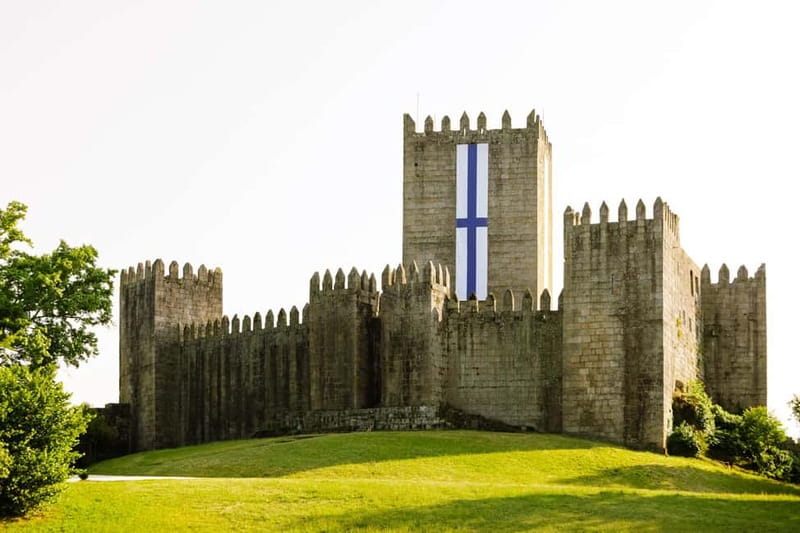
You meet at Campo de São Mamede, in front of the castle. The field also works as a parking lot when there aren’t events, so it’s one of those spots where it’s easy to arrive a bit early and orient yourself.
Your guide will be wearing a red cap and carrying a green backpack. That little detail matters more than you’d think. In older city centers, groups can spread out, and clear meeting cues reduce stress.
Bring comfortable shoes—really comfortable. This tour includes cobblestone paving and stair segments, which can be rough if you’re in soft sneakers or sandals. A camera helps too. Most of the best views come at photo-stop moments, and you’ll want a quick way to capture them without rushing.
Guimarães Castle and the Power Behind the Stone
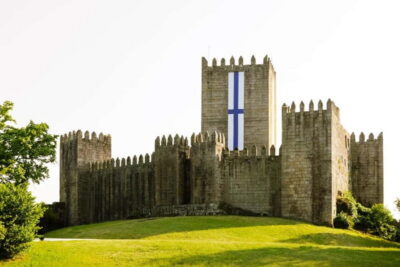
The walk begins with Guimarães Castle, with a mix of guided tour and sightseeing plus a photo stop. Even if castles aren’t your thing, this one works because it frames the rest of the city. Ricardo uses the castle as a reference point: power in stone, defense in layout, and the way the medieval center grew around these strategic choices.
You’ll also get a feel for how the city’s elevation shapes walking routes. That matters later when you realize why certain streets feel steep and why viewpoints are reachable only after a climb. If you like history that connects to geography, this is where it clicks.
Good to know
Expect standing and some uphill movement from the start. The castle area is the kind of place where you’ll want a few extra minutes for photos, then keep going.
Two cities in a day, Braga's shrines and Guimaraes' castle


Church of São Miguel do Castelo: Faith Meets Fortress Thinking
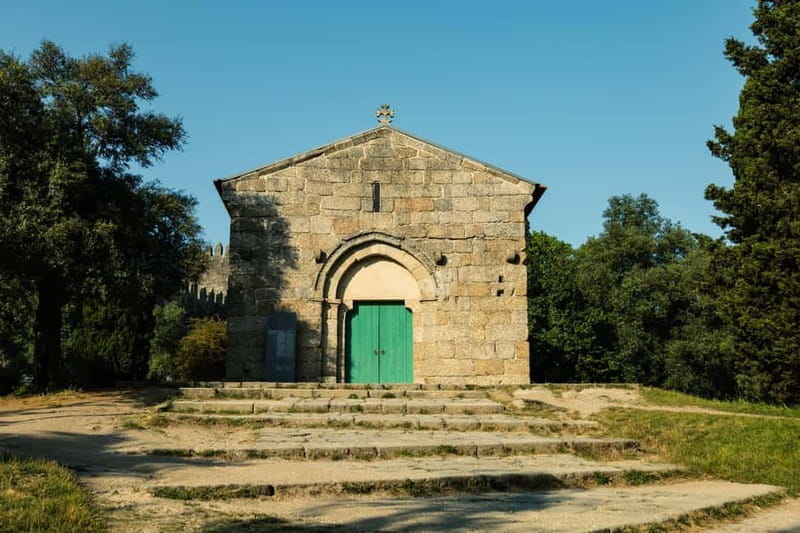
Next up is the Church of São Miguel do Castelo, again with a photo stop and guided visit. What I like about including a church right after the castle is that it shows a different kind of authority. Castles protect territory. Churches organize belief and community.
Ricardo’s style turns these stops into something you can picture. You’re not just seeing a building; you’re learning how the medieval city lived around faith, governance, and daily routines. Even if you’re not a church superfan, you’ll probably walk away with at least one clearer mental image of the city’s layout and priorities.
Palace of the Dukes of Braganza: Seeing the City’s Big Players
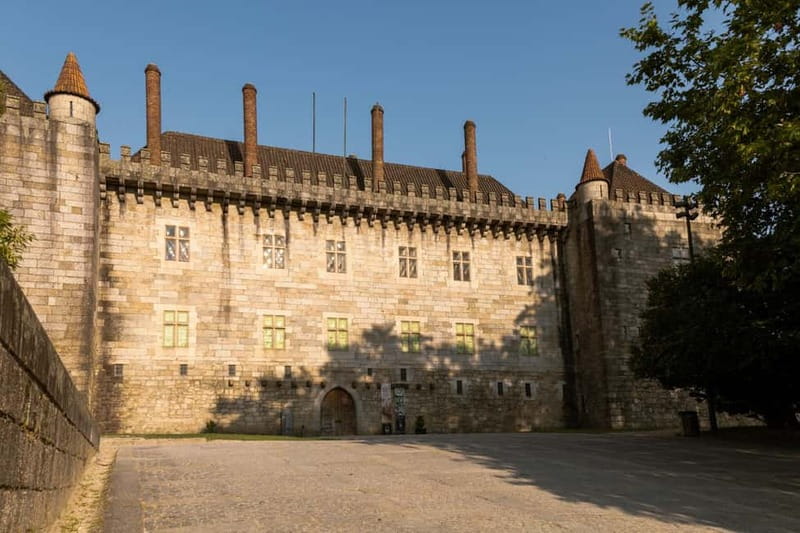
Then you move to the Palace of the Dukes of Braganza for guided tour and sightseeing with another photo stop. This is where the tour balances out. After the castle’s defensive tone and the church’s community rhythm, the ducal palace brings the narrative back to leadership and influence.
If you like learning how dynasties shaped cities, this stop helps. The palace context gives you a reason to pay attention to the surrounding squares and streets. Look at where routes seem to funnel, and you’ll start to understand how movement and power worked together in medieval Guimarães.
Practical note
Entry tickets aren’t included, so if you’re hoping to go inside every site, you might want to plan for that separately.
Rua de Santa Maria and the Muralha de Guimarães: Medieval Streets With Teeth
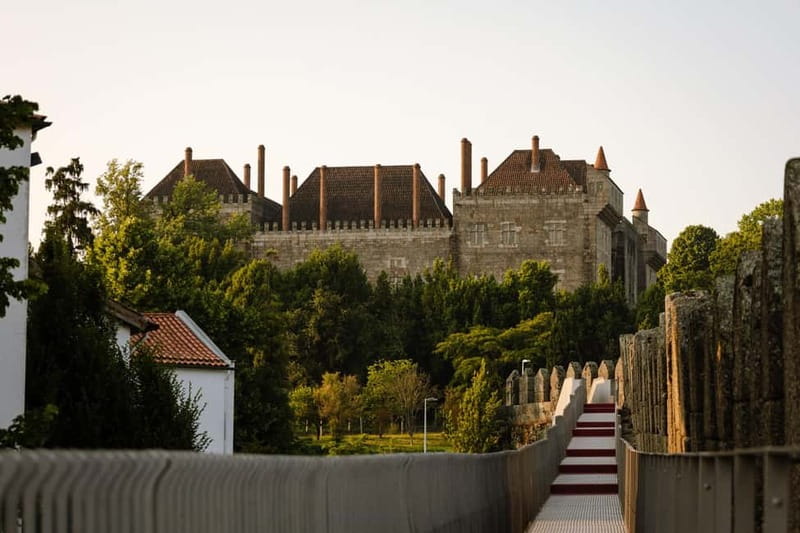
After the palace, the walk goes through Rua de Santa Maria. This is the kind of street where guided context makes a difference. You’re moving through the city’s lived-in spine, and Ricardo helps you spot what’s worth slowing down for.
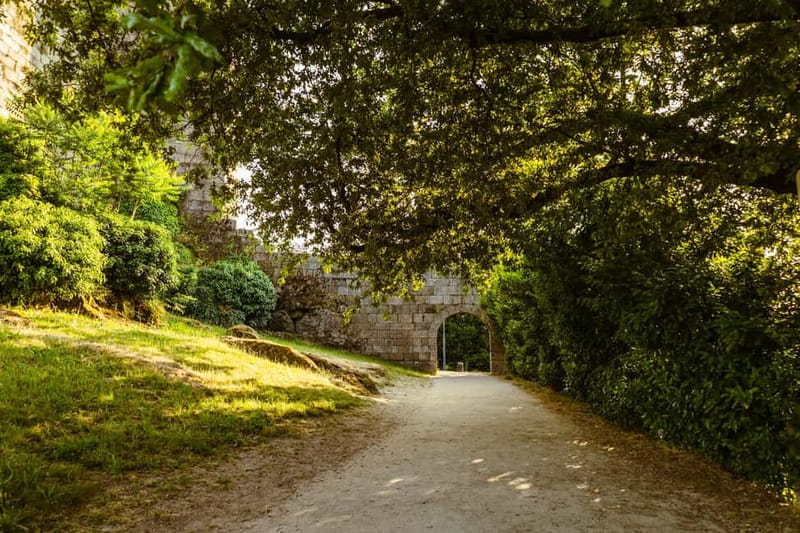
Then comes the highlight for many people: walking along the Muralha de Guimarães—the old city walls. You’ll get guided sightseeing and photo stops while learning the purpose behind what you see. Walls weren’t decorative. They were the city’s survival system, and they also become walking paths for modern visitors who want to trace the old defenses.
This section is also a chance to notice textures and views. The walls sit at angles that make the city feel layered, not flat. If you enjoy photography, this is where you’ll want to pause more often than you planned.
Largo da Oliveira and Praça de São Tiago: Squares Where Life Happens
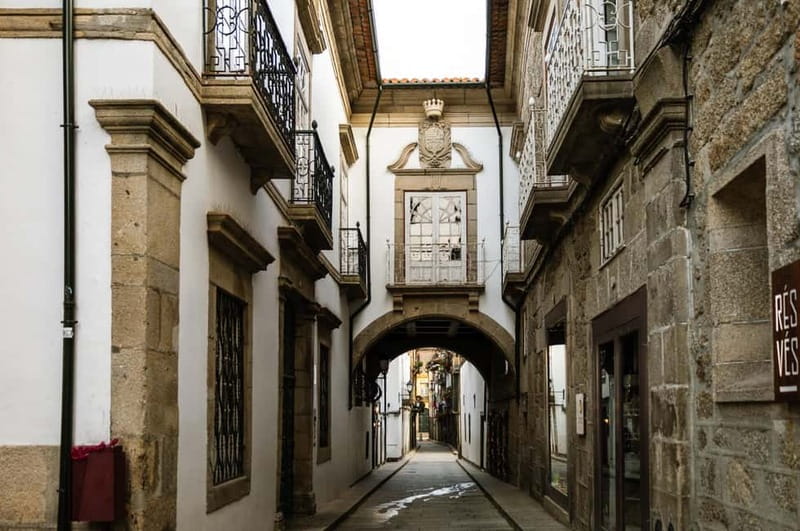
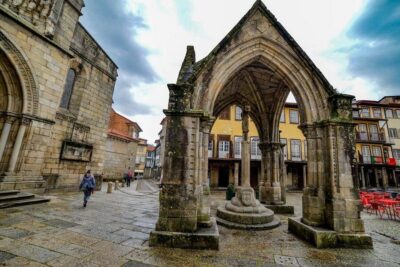
The tour brings you to Largo da Oliveira, with guided tour, sightseeing, and a photo stop. Squares like this are where medieval cities show their social logic: gather here, trade here, announce here, and use the surrounding streets like corridors.
From there you reach Praça de São Tiago. There’s a break built in, with photo stop, guided tour, local snacks, and food tasting. I like that the tour doesn’t treat the pastry as an afterthought. It gives you a moment to reset, catch your breath on the hills, and then continue with better energy.
This break is also where the walking tour feels most “human.” Ricardo pays attention to pacing. In real-world terms, that means hydration matters, and the group doesn’t feel like it’s constantly sprinting to the next stop.
Largo do Toural and Aqui Nasceu Portugal: Climb for the View, Then Understand the City
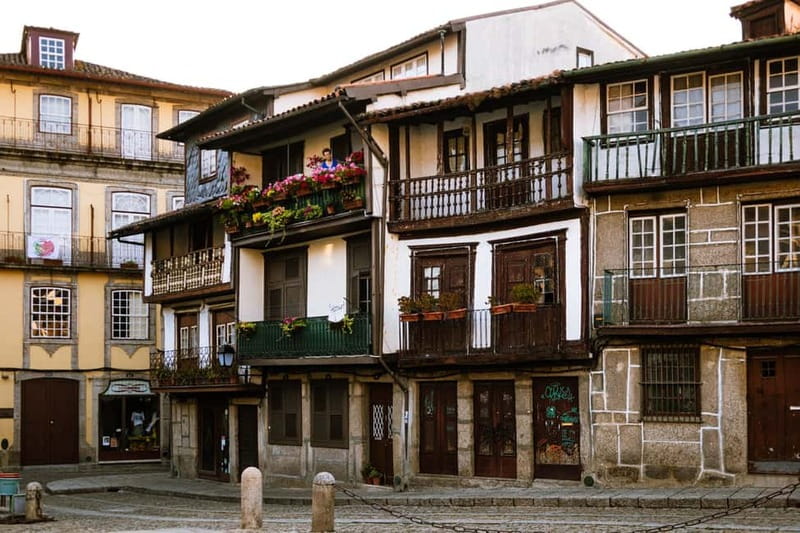
Next is Largo do Toural for guided tour, sightseeing, and a photo stop (plus time to pass by other points of interest). This area helps you see Guimarães as more than monuments. You’re seeing a place where daily rhythms connect with centuries-old stonework.
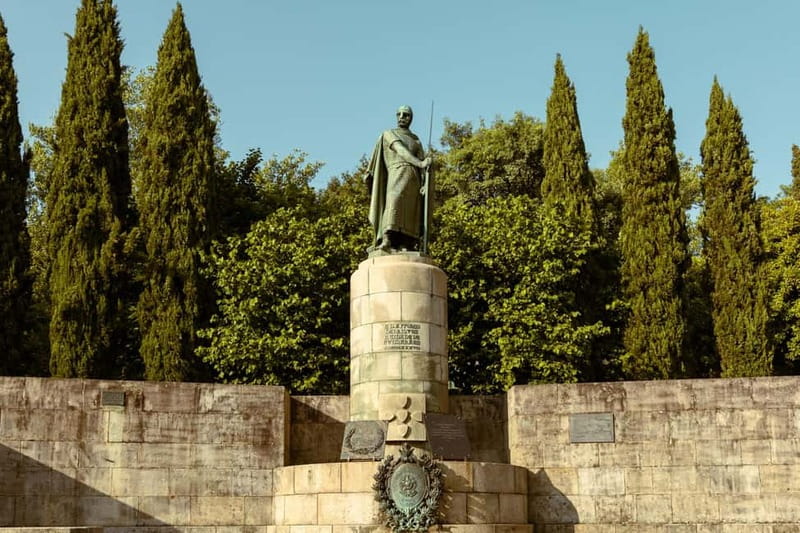
Then comes the big climb: the Aqui Nasceu Portugal lookout, tied to the message Portugal Was Born Here. You’ll visit and climb for panoramic views. Ricardo uses this moment to tie the city’s identity to what you can actually see from above—how rooftops, towers, and street lines connect into one idea of place.
If you’re the type who loves a viewpoint but hates long crowds, this portion hits a good balance. The focus isn’t just on the view itself. It’s on why the viewpoint exists in the city’s story, and why people built there in the first place.
Tanques de Couros: The Leather-Tanning Neighborhood That Explains the City’s Work
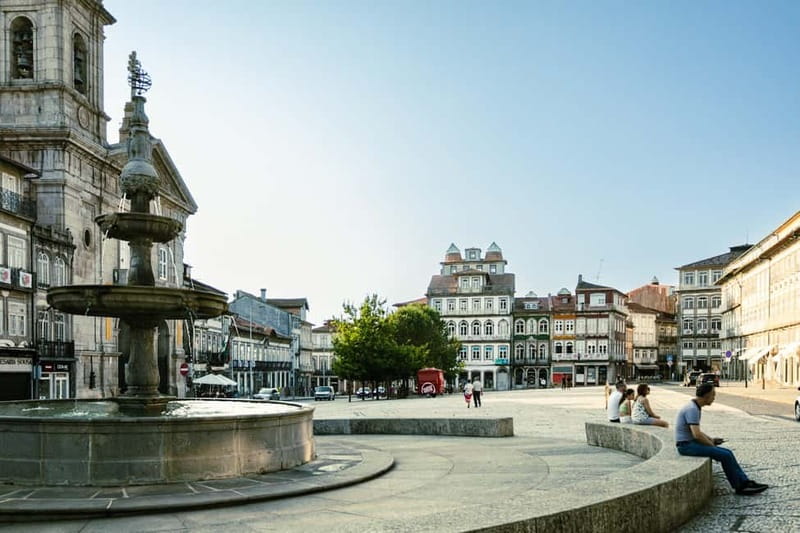
The tour finishes with a visit to the Tanques de couros, the historic leather-tanning area. This is one of the most compelling parts of the whole walk because it’s not the stuff most people automatically plan. Ricardo leans into the industrial side of Guimarães, including how textile and leather production helped shape city development.
You’ll see the processing spaces near streams, in stone-walled areas that are built for work, not display. In a good guided moment, the past stops being abstract. Suddenly, you can connect the industrial machinery of the city to the streets you’ve already walked.
I especially appreciate that Ricardo doesn’t treat industry like a random add-on. He connects it back to the city’s growth and explains how craft and trade turned into infrastructure and neighborhoods. It’s the kind of detail that makes your photos feel smarter later.
The Final Approach Near Oliveira Square and S. Gualter Church
After the tanning tanks, the tour heads toward Oliveira Square, passing S. Gualter Church along the way. This ending is useful because it brings you back to one of the center-points of Guimarães.
Ending near a major square gives you an easy on-ramp for what comes next: wandering further on your own, grabbing a meal, or simply sitting down and taking in what you now understand about the city’s structure.
If you’re trying to build a full day in Guimarães, I’d plan a relaxed slot after the tour. You’ll already be walking the medieval center; you’ll get more enjoyment if you don’t immediately stack another intense activity.
Price, Time, and Value: Is $35 Worth It?
At $35 per person for 2.5 hours, the math works best if you value a guide and context. You get:
- A local English-speaking guide
- A bottle of water
- A local pastry
- A route that covers major medieval sites plus the leather-tanning neighborhood
- A small group limited to 10 participants
Monument entry tickets aren’t included, so if you plan to go inside multiple sites, you might spend extra on top. Still, the tour is built around what you can see and learn without paid entry, and that’s usually how you get good value in a historic city.
For me, the best value is the guide factor. Ricardo’s personal connections and storytelling style are repeatedly the standout. When someone can explain why the city is shaped the way it is, you end up walking with better understanding, not just more photos.
What to Bring and What to Expect on the Ground
Plan for real walking. This tour includes uphill segments, stairs, and cobblestone streets. That doesn’t mean it’s extreme, but it does mean you should dress for effort.
Bring:
- Comfortable shoes
- A camera (you’ll have photo stops)
- Water (you’ll get one bottle, but you can carry more if it’s hot)
- Comfortable clothes and weather-appropriate layers
If rain or heat is in the forecast, wear something you can move in. Older stone streets can get slippery, and cobbles don’t forgive poor footwear.
The Guide Experience: Ricardo’s Style and Why It Matters
The reviews and tour design point to the same theme: Ricardo is local to Guimarães, and his stories come with roots. He has family ties that give context beyond dates and dates. That personal angle turns the walk into a more human experience.
He’s also attentive to group flow. Small group size helps, and Ricardo keeps everyone engaged without turning the tour into a lecture. Practical details show up too: hydration gets checked, and bathroom needs can be accommodated when possible.
If you’ve ever been on a tour where you feel like you’re always trying to catch up, you’ll likely appreciate this one’s pacing. You’ll get enough time at stops to take photos and absorb what the guide is pointing out.
Should You Book This Guimarães Highlights and Hidden Corners Walk?
I’d book this tour if you:
- Want Portugal’s birthplace story with medieval sites you can actually connect
- Like guided walking tours that cover more than the biggest monuments
- Care about local industry and everyday history, not just castles and palaces
- Appreciate small group energy and a guide who stays engaged
I would skip it (or choose another option) if:
- You can’t handle stairs, cobblestones, and uphill walking
- You need fully accessible routes
- Your travel style is mostly grab-and-go with minimal walking
If you want a smart first look at Guimarães that leaves you understanding the city’s why, this tour is a strong pick.
FAQ
How long is the Guimarães walking tour?
It lasts about 2.5 hours.
What is the group size?
The tour is limited to a small group of up to 10 participants.
Is the tour in English?
Yes, the live tour guide speaks English.
What’s included in the price?
The price includes a local tour guide, a bottle of water, and a local pastry.
Are monument entry tickets included?
No. Entry tickets for monuments and museums are not included.
Where do I meet the guide?
You meet at Campo de São Mamede, in front of the castle. The guide wears a red cap and a green backpack.
Is this tour okay for kids?
The tour is listed as not suitable for children under 10.
More Tour Reviews in Guimaraes




Day Trips to Braga and Guimaraes
More of Guimaraes on Foot
Fresh in the Guimaraes notebook


Porto City Walks, compared.
 ★ 5.0Porto Walking Tour, Lello Bookshop, River Cruise and Cable CarFrom $723,354 reviews
 ★ 4.8City Highlights 3-Hour Guided Electric Bike TourFrom $513,092 reviews
 ★ 5.0Experience Porto’s Charm: 3-Hour Guided Walking TourFrom $352,432 reviews
 ★ 4.83-Hour Guided City Highlights Walking TourFrom $342,050 reviews
 ★ 4.4Wine Tasting with Tapas Walking TourFrom $531,541 reviews
 ★ 4.7Historic City Center Walking TourFrom $331,172 reviews
 ★ 5.0Porto’s #1 Walking TourFrom $01,026 reviews
 ★ 4.8Delicious Food and Wine Walking TourFrom $87977 reviews
Browse the lists this tour appears in