
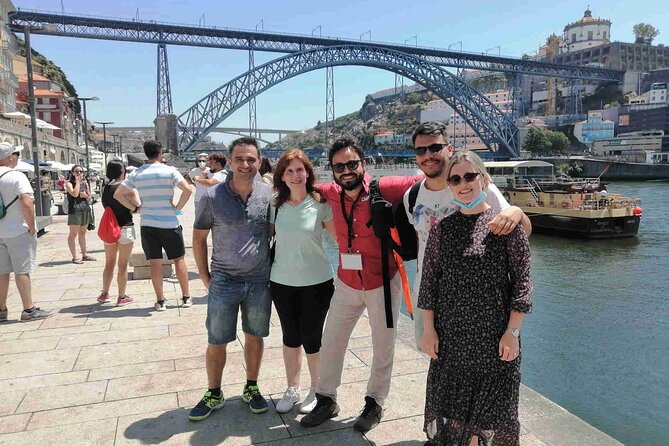
Reviewed · PORTO CITY WALKS
Best of Porto Private Walking Tour
Porto teaches fast on foot. This private 3-hour walk strings together Porto’s biggest landmarks, explains the city’s role in Portugal’s Age of Discoveries, and keeps the UNESCO story readable as you move. I especially like the personal pace and the fact that several major stops are ticket-free, so your money goes to the guide and the context, not admission lines. One thing to plan for: the tour depends on good weather, and you will be on your feet for most of the 3 hours.
What makes this experience work well for first-timers is how the route builds like a story: you start in the civic heart of Porto, then shift to the religious and cultural icons (Clérigos area, Carmo church tiles, São Bento), and then swing toward the riverfront where the view and the “Discoveries” connections land. I also appreciate the local guide factor; names like Jorge, Monica, Gianfranco, Caoi, Artur, and Filipe show up repeatedly, and the common thread is they keep things engaging and easy to follow, even with kids.
You’ll finish with an open, satisfying payoff at the top of the river—Jardim do Morro—with a classic Douro panorama. If you’re the type who likes photos, but also wants to know what you’re looking at, this is a strong way to get oriented on day one or two.
In This Review
- Key highlights before you go
- Porto’s best-of route in a walkable 3 hours
- Price and value: is $84.48 per person worth it?
- Where the tour starts and why the route ends at Jardim do Morro
- City Hall, Clérigos Tower, the iconic bookshop, and Porto’s most famous fountain
- Igreja do Carmo: why the blue-and-white tile work is worth your time
- São Bento Station tiles: when a railway hub becomes a storytelling wall
- Sé Cathedral, Dom Luís I Bridge, and the river story you’ll actually remember
- Henry the Navigator’s birthplace and the Age of Discoveries angle
- The oldest UNESCO-listed quarter (designated in 1996) and your final viewpoint
- Guide quality: Jorge, Monica, Gianfranco, and the “make it click” factor
- What to pack and how to pace yourself (especially if it rains)
- Who this private Porto walk is best for
- Should you book the Best of Porto Private Walking Tour?
- FAQ
- How long is the Porto private walking tour?
- What’s the price per person?
- Is the tour private?
- What language is the tour offered in?
- Where does the tour start and where does it end?
- Are there admission tickets for the stops?
- Do I need good weather?
- How does cancellation work?
- When will I get confirmation?
- Is it near public transportation?
Key highlights before you go
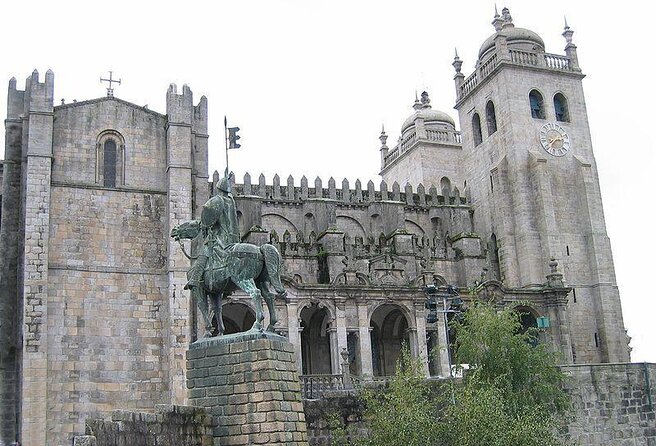
- Private group, tailored pacing: only your group walks with your guide.
- UNESCO focus that makes sense on a sidewalk: Porto’s old quarter (designated UNESCO in 1996) is part of the narrative.
- Age of Discoveries connections: Henry the Navigator shows up as more than a name on a plaque.
- Big architectural hits, low hassle: many stops are marked as free to enter.
- A memorable finish: the Douro River view from Jardim do Morro closes the loop.
More routes on foot through Porto
- Porto Walking Tour, Lello Bookshop, River Cruise and Cable Car★ 5.0 · 3,354 reviews
- Porto: City Highlights 3-Hour Guided Electric Bike Tour★ 4.8 · 3,092 reviews
- Experience Porto’s Charm: 3-Hour Guided Walking Tour★ 5.0 · 2,432 reviews
- Porto: 3-Hour Guided City Highlights Walking Tour★ 4.8 · 2,050 reviews
Porto’s best-of route in a walkable 3 hours
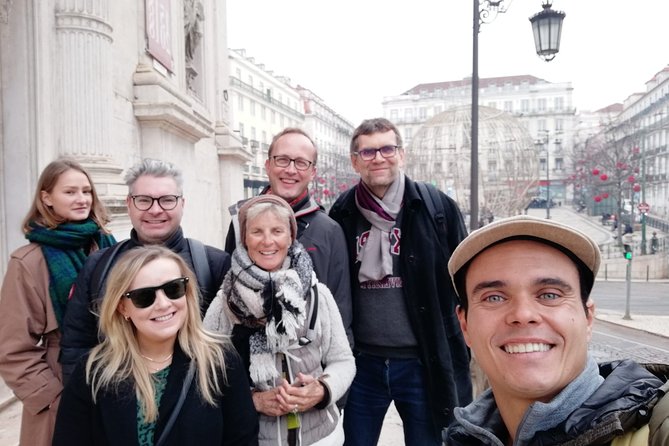
This tour is built for people who want the headline sights without spending the day hopping between far-flung neighborhoods. In about three hours, you cover a tight set of landmarks that help you understand why Porto looks the way it does: the civic pride, the religious power, and the commercial ambition that sat alongside maritime exploration.
Because it’s private, the guide can slow down when you want photos or speed up when you’ve already “got it.” That matters in Porto, where the details are half the fun: doorways, church façades, azulejo patterns, and viewpoints that don’t look important until you see them from the right angle.
It’s also easy to pair this with the rest of your stay. Once you’ve walked this spine, you’ll know which directions to go for riverside wandering, bookstores, churches, and longer food breaks.
Price and value: is $84.48 per person worth it?
At $84.48 per person for a ~3-hour private walking tour, the value isn’t about “more monuments per minute.” It’s about paying for interpretation. You’re getting a guide to connect symbols—like Clérigos Tower, tiled church façades, São Bento’s azulejos, and the bridge-to-river story—into something you can remember.
Several stops are listed as ticket-free, which helps keep the experience from turning into an admission-heavy agenda. And since it’s private, you’re not fighting a big group’s pace or timing. If you like asking questions, or you’re traveling with kids who need a lighter rhythm, that private format becomes part of the value.
One practical note: this style of tour tends to sell well. It’s commonly booked around 58 days in advance, so I’d avoid waiting until the last minute if your dates are fixed.
Where the tour starts and why the route ends at Jardim do Morro
The walk begins at Fonte dos Leões (Praça de Gomes Teixeira 10) in Porto. That’s a useful starting point because it’s central and easy to reach using public transportation.
You end at Jardim do Morro in Vila Nova de Gaia. The finish here is smart. After you’ve been learning your way through Porto’s older streets and monuments, you get the reward: open sightlines over the Douro River. It helps the whole day “click” visually, not just intellectually.
If you’re the kind of traveler who likes a plan but hates feeling trapped, this start-to-finish flow is a good compromise. You don’t have to backtrack to see views, and you can keep exploring after the tour without feeling like you’re starting over.
City Hall, Clérigos Tower, the iconic bookshop, and Porto’s most famous fountain
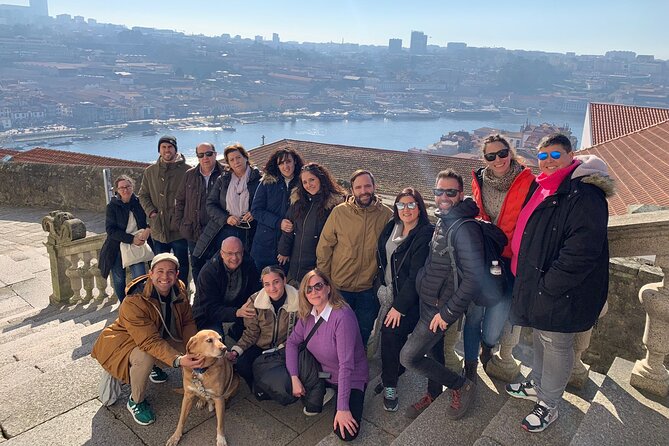
The first stretch sets the tone: Porto’s civic image and the symbols people actually come to see. You begin by stopping at Porto City Hall, a charming landmark that works as an early anchor. The time here is short, but it’s a good way to orient you before the route starts pulling you toward the city’s most recognizable sights.
Next comes the Clérigos Tower area, described as the most important symbol of Porto. Even if you’ve seen it in photos, it means more when a guide places it in context—what it represents and why it became a reference point for the city.
Then you’ll pass by one of the world-famous bookshops in Porto—famed for its beauty and reputation. This stop is a reminder that Porto isn’t just churches and viewpoints. It also has a cultural side, and the guide can help you see what makes the architecture and reputation endure.
After that, you hit the most famous fountain in Porto, plus the tour connects you with the city’s major university presence in the North. The mix here matters: the route isn’t only religious and maritime. It also includes education and public life, which is part of how Porto kept its identity as Portugal changed.
A small drawback to consider in this early section: the highlights are close together, which means you can feel the walk “move fast.” If you want extra time for photos, that’s where the private format helps—you can ask to slow down.
Rather go at your own pace? More private guides




Igreja do Carmo: why the blue-and-white tile work is worth your time
The tour’s next major stop is Igreja do Carmo, known for the incredible tile work on the façade. This is the kind of detail that’s hard to appreciate without someone pointing out how the façade functions like a public canvas.
Tile churches in Portugal can look like decoration at first glance. With a guide, you start noticing patterns: the way the façade directs your eye, the way craftsmanship carries meaning, and how religious spaces communicated visually in a world before modern signage.
The listed visit time is about 10 minutes, so keep your expectations realistic. You’re not going to linger for hours. But you will leave knowing what you saw and why it matters.
São Bento Station tiles: when a railway hub becomes a storytelling wall
From there, you move to São Bento Railway Station, described as one of the most beautiful stations in the world. The magic here is the azulejos—the painted tile scenes that cover much of the interior.
This stop can be surprisingly educational. Even if you don’t plan to take a train that day, it’s a lesson in how Porto remembers itself—events, people, and regional identity presented visually in a public space.
As with many major Porto sights, the timing is tight. The station stop is listed at about 10 minutes. If you love art and want longer viewing time, your best move is to ask your guide at the start of the tour whether you can spend extra minutes here. Private tours make that possible.
Sé Cathedral, Dom Luís I Bridge, and the river story you’ll actually remember
After São Bento, the route naturally points toward Porto’s most important older religious site—an old, major church in Porto—and then continues into the riverfront landmarks.
You’ll see the church described as the most important in Porto and one of the oldest ones. This gives you a deeper historical backbone after the tile façade and azulejos stop. The guide helps tie it to the city’s growth and spiritual identity.
Then comes one of Porto’s most remarkable landmarks: the bridge built by one of Eiffel’s disciples—Dom Luís I Bridge. This is where Porto’s geography stops being a map idea and becomes a feeling. You can understand how the river shaped trade, movement, and even the city’s sense of ambition.
The itinerary also includes the former Stock Exchange, a shift that matters because it brings the story from religion into commerce. Porto was not only a spiritual city. It was a working port city with money, networks, and maritime connections.
Henry the Navigator’s birthplace and the Age of Discoveries angle
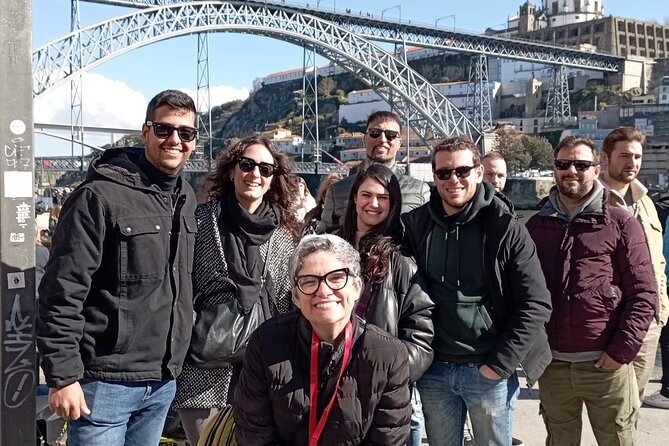
A key part of the tour’s theme is Portugal’s Age of Discoveries. This isn’t just a mention. The route includes the birthplace area connected to Henry the Navigator, described as the father of the Discoveries and the most important person born in Porto.
This is a smart inclusion for two reasons. First, it answers the question you’ll have later when you visit other discovery-related sites around Portugal: why Henry, why Porto, and why it mattered to Portugal’s outward-looking story. Second, it gives you a human anchor for what can otherwise feel like abstract history.
If you like history that shows up in the street layout and building choices, this tour’s theme will click quickly.
The oldest UNESCO-listed quarter (designated in 1996) and your final viewpoint
The walk ends by reaching the older area of Porto described as UNESCO-listed in 1996. This part of the route is where you feel the city’s age in a physical way—tight streets, layered architecture, and the sense of walking through the portion of Porto that tourism can’t manufacture.
Then you finish at Jardim do Morro, with that final, dramatic Douro River view. Finishing here isn’t random. It ties together the earlier parts of the route: the bridge, the commercial past, and the maritime connections that made the river so central.
If you’re thinking about where to take photos afterward, you’ll already understand the direction you should face and why the view is worth the climb.
Guide quality: Jorge, Monica, Gianfranco, and the “make it click” factor
This tour’s strongest repeat theme is the guide’s ability to turn a list of sights into a coherent walk. I’d put the top praised strengths into a few buckets:
- Warm personality with real explanations: Guides like Jorge and Caoi are praised for being fun while still connecting the history dots.
- Adjusting the pace for families: Monica comes up often for keeping things kid-friendly and not letting rain or energy levels derail the plan.
- Going above and beyond after the walk: Several guides are credited with sharing extra recommendations, so you can keep exploring with less guesswork.
- A strong Porto-Portuguese perspective: Artur and Filipe are noted for linking Porto’s story to broader Portugal (and in Artur’s case, even cross-Atlantic connections).
If you get one of these standout guides, you’re not just “seeing sights.” You’re getting the why behind them, plus practical ideas for your next steps.
What to pack and how to pace yourself (especially if it rains)
This experience requires good weather, but Porto weather can still be changeable. The best approach is to dress for movement: comfortable walking shoes, a light rain layer, and something to keep your phone protected if drizzle hits.
Aim to arrive ready to walk for close to the full 3 hours. You can pause for photos, but the schedule is built as a continuous route. If you tend to stop for long shopping breaks, consider saving that for after the tour when you’ll have more control over timing.
If your group includes kids, this tour can work well because the guide may keep the tone light and adjust pacing. That’s especially valuable on day one, when everyone’s still learning the city’s rhythm.
Who this private Porto walk is best for
This tour fits best when you want:
- a first-time orientation to Porto
- a route focused on the city’s major highlights and the UNESCO old-quarter story
- an English-language guide who can explain what you’re seeing
- a private format that can flex for families or smaller groups
It’s also a good match if you’re interested in the Age of Discoveries and want Henry the Navigator and the maritime storyline threaded through the monuments.
If you hate walking or you want to stop for long sit-down meals during the core route, you might find the pace a little “tight.” The tour is designed to keep moving from stop to stop.
Should you book the Best of Porto Private Walking Tour?
I’d book this if you’re planning a short trip and want maximum context with minimal friction. The price makes sense when you think of it as paying for a guide plus access to a concentrated set of iconic sights—especially since multiple stops are ticket-free.
Pick it even more confidently if your travel style is: see the highlights, learn the connections, then spend the rest of your days wandering with a sense of direction. Ending at Jardim do Morro is the kind of payoff that makes the route feel complete.
Skip it if you’re mainly looking for a relaxed, unstructured stroll with lots of downtime. This one is a guided route with a theme, and it works best when you want that structure.
FAQ
How long is the Porto private walking tour?
It’s about 3 hours.
What’s the price per person?
The listed price is $84.48 per person.
Is the tour private?
Yes. It’s a private tour/activity, and only your group participates.
What language is the tour offered in?
The tour is offered in English.
Where does the tour start and where does it end?
It starts at Fonte dos Leões (Praça de Gomes Teixeira 10, 4050-161 Porto) and ends at Jardim do Morro (4430-210 Vila Nova de Gaia).
Are there admission tickets for the stops?
Several stops are marked as ticket free in the itinerary.
Do I need good weather?
Yes. The experience requires good weather, and if it’s canceled due to poor weather you’ll be offered a different date or a full refund.
How does cancellation work?
Free cancellation is available if you cancel up to 24 hours in advance for a full refund.
When will I get confirmation?
Confirmation is received at the time of booking.
Is it near public transportation?
Yes, it’s listed as near public transportation.
More Tour Reviews in Porto






Private Porto Tours to Compare

More of Porto on Foot






Fresh in the Porto notebook




Porto City Walks, compared.
 ★ 5.0Porto Walking Tour, Lello Bookshop, River Cruise and Cable CarFrom $723,354 reviews
 ★ 4.8City Highlights 3-Hour Guided Electric Bike TourFrom $513,092 reviews
 ★ 5.0Experience Porto’s Charm: 3-Hour Guided Walking TourFrom $352,432 reviews
 ★ 4.83-Hour Guided City Highlights Walking TourFrom $342,050 reviews
 ★ 4.4Wine Tasting with Tapas Walking TourFrom $531,541 reviews
 ★ 4.7Historic City Center Walking TourFrom $331,172 reviews
 ★ 5.0Porto’s #1 Walking TourFrom $01,026 reviews
 ★ 4.8Delicious Food and Wine Walking TourFrom $87977 reviews
Browse the lists this tour appears in