
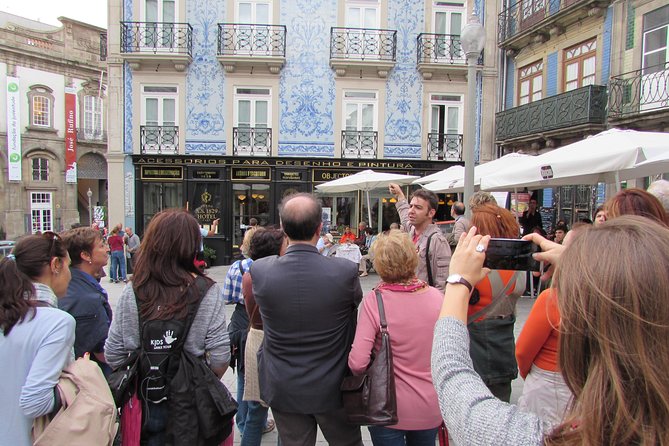
Reviewed · PORTO CITY WALKS
Walking Tour – History of Tiles in Porto
Porto’s azulejos are everywhere, but you’ll start seeing the story behind them. This walking tour focuses on the history and craft of Portuguese tiles as you move through the UNESCO center, with standout moments like São Bento Station mosaics. Guides like Susana and Nuno have a real talent for turning wall art into something you can actually read—pattern, technique, and meaning included.
Two things I really like about this experience: you don’t just look at tiles, you learn what to notice (colors, painting methods, and design choices), and you get a clear route that hits major Porto sights in sensible order. One thing to consider: it’s still a walk for 2 hours 45 minutes in historic-street conditions, and there’s no hotel pickup or food included—so plan on moving and bring water.
In This Review
- Key Things You’ll Notice on This Porto Tile Walk
- Why Porto Tiles Feel Different Once You Learn How to Look
- Meeting at Igreja do Carmo and Getting Your Bearings
- Stop 1: São Bento Railway Station and Jorge Colaço’s Mosaics
- Stop 2: Museu da Cidade do Porto for Context
- Stop 3: Igreja do Carmo Facade Panel and How to Read a Tile Story
- The Tile-Making Story You’ll Carry Into the Streets
- How Ribeira Square Fits the Ending
- Small Group Size: Max 10 People Means More Looking Time
- Price and Value: Is $81.93 Worth It?
- What to Bring (So You Don’t Spend the Whole Tour Checking Your Phone)
- Who This Tour Fits Best
- A Few Practical Notes That Affect Your Experience
- Should You Book This Porto History of Tiles Walking Tour?
- FAQ
- How long is the Walking Tour – History of Tiles in Porto?
- What does the tour cost?
- Where is the tour start and end point?
- Is the tour in English?
- How big is the group?
- Are there any admission fees at the stops?
- What is included in the price?
- What is not included?
- Can I bring children or service animals?
Key Things You’ll Notice on This Porto Tile Walk
- São Bento Station mosaics tied to the work of Jorge Colaço, plus battle-and-history storytelling in blue-and-white
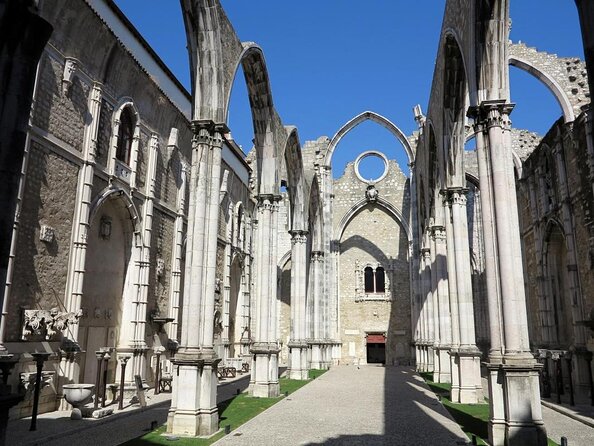
- Carmo Church facade panels that teach you how to spot a “tile face” and what the designs are doing
- Small-group format (max 10 people) that keeps the pace comfortable for questions and close-up looking
- Tile-making evolution and techniques, explained in a way that helps you read new facades on your own
- Ribeira Square area finish, so the tour ends in the heart of the city where tiles feel part of daily life
More routes on foot through Porto
- Porto Walking Tour, Lello Bookshop, River Cruise and Cable Car★ 5.0 · 3,354 reviews
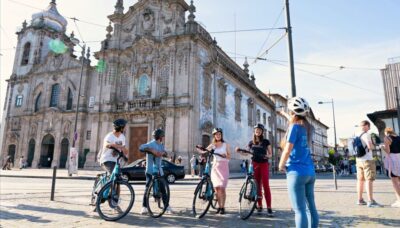
- Porto: City Highlights 3-Hour Guided Electric Bike Tour★ 4.8 · 3,092 reviews
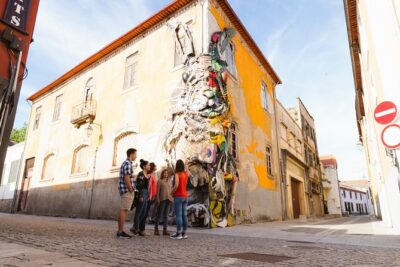
- Experience Porto’s Charm: 3-Hour Guided Walking Tour★ 5.0 · 2,432 reviews
- Porto: 3-Hour Guided City Highlights Walking Tour★ 4.8 · 2,050 reviews
Why Porto Tiles Feel Different Once You Learn How to Look
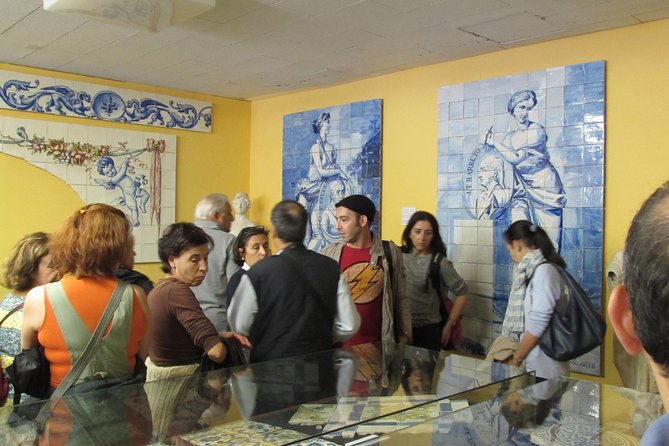
Porto’s tiles are not decorative wallpaper. They’re public art, craft history, and sometimes a message system built into everyday buildings. The best part of this tour is how it trains your eye fast. You start noticing repetition (patterns and motifs), but also variations—how designs change by technique and by the era they come from.
I also like the tour’s realistic focus. Instead of treating tiles like a museum-only thing, you see how churches, storefronts, and houses use azulejos as part of Porto’s identity. By the time you reach the station mosaics and the church facade work, tiles stop being a background detail and become the main way to understand the streets.
Meeting at Igreja do Carmo and Getting Your Bearings
You start at Igreja do Carmo (R. do Carmo, 4050-164 Porto). This is a good starting point because it places you right at a hub where tile art and architecture belong to the same visual language. You’ll begin with an easy meet-up and then get oriented before the walking really starts.
From a practical standpoint, the start location matters. There’s no hotel pickup, so you’ll want to arrive a little early and be ready to walk. The tour also runs without food service, so I suggest budgeting for a break either before or after if you’re hungry. The good news: the tour is offered in English, and the pace is built for a small group.
Stop 1: São Bento Railway Station and Jorge Colaço’s Mosaics
The first real “wow” moment hits at São Bento Railway Station at Praça de Almeida Garrett. Admission here is free, and the timing is short—about 10 minutes—but it’s structured so you can absorb the main thing: the dazzling mosaic scenes made from tile-like artwork.
The tour highlights mosaics made by Jorge Colaço. That matters because it gives you a name to connect with what you’re seeing, not just a vague sense of impressive artwork. The station mosaics depict dramatic battles and historical events, so you get a visual history lesson without needing extra explanation while you’re standing there.
A drawback of any station stop is that it can feel busy. But the tour’s format helps. You’re not wandering for your own soundtrack—you’re guided toward what to look for so you can read the scene rather than just stare.
Stop 2: Museu da Cidade do Porto for Context
Next you head to Museu da Cidade do Porto, with about 15 minutes on the schedule. Admission is listed as free for this stop. This portion works well because it gives you city context between the biggest showpiece (São Bento) and the quieter, more architectural tile details that follow.
Even if museum time is short, it helps you understand why azulejos spread the way they did across Porto. Tiles weren’t only for grandeur. They became part of urban life—public-facing, repeatable, and adaptable to different buildings and audiences. If you tend to like “why this exists” more than “just tell me what it looks like,” you’ll probably appreciate this break in the walking rhythm.
More Porto days out worth booking





Stop 3: Igreja do Carmo Facade Panel and How to Read a Tile Story
Back near the church, you get a focused moment at Igreja do Carmo for roughly 5 minutes. The stop is tied to a first panel covering a church facade, and it’s a perfect “training wheels” exercise.
Five minutes sounds quick, but that’s why the tour format works. When you’re standing in front of a facade, the guide can teach you specific visual skills—what to notice first, how to follow the design flow, and how to connect tile imagery to architecture.
This is also where you start learning “tile literacy.” Once you learn what different techniques and styles look like, it becomes harder to walk past a tiled wall without seeing details. And that’s the real value of the guide’s approach: you take home a way of noticing.
The Tile-Making Story You’ll Carry Into the Streets
The heart of this tour isn’t one building. It’s the bigger arc: how Porto’s tile tradition developed and what changed over time. You’ll learn about different techniques used to paint and create azulejos, and you’ll see selected churches, stores, and houses where tile craft is part of the architecture.
Here’s why that history matters for you as a visitor: when you understand the process and purpose, tiles stop looking like random blue-and-white patterns. They become a clue. They can hint at date ranges, cultural influences, and even the kind of message a building wanted to send.
From the feedback I’m drawing on, guides tend to connect tile craft with street life too. That means you might notice how the city’s modern visual culture borrows energy from traditional decoration. In other words, you get history without living only inside the past.
How Ribeira Square Fits the Ending
The tour ends after about three hours, and the route closes near the Ribeira Square area. Your listed end point is São Bento station (so you’re finishing in the same central zone). Either way, the timing matters: you finish while you still feel the “pattern recognition” momentum from earlier stops.
I like this kind of ending because you can take what you’ve learned and apply it instantly. Ribeira Square is busy, full of buildings, and easy to keep looking. You’re not done—you’re simply done with guided structure.
Small Group Size: Max 10 People Means More Looking Time
A lot of city walks feel rushed. This one is limited to a maximum of 10 people, which keeps the experience tight and friendly. That size is ideal for a craft-focused tour because you need to stop and look closely. You also want time for quick questions when something catches your eye.
You’ll also get the benefit of a professional teaching tone. The tour includes a professional art historian guide plus a local guide, so you get both the art/craft explanation and the Porto-specific city context.
Price and Value: Is $81.93 Worth It?
At $81.93 per person for about 2 hours 45 minutes, the price isn’t a budget impulse buy. But it can feel fair when you look at what you’re actually getting:
- You’re paying for guided interpretation, not just access to a few sights.
- You’re getting a small group cap of 10, which protects your ability to truly look.
- You’re learning a skill (how to read azulejos), not just collecting photos.
If you’re the type who loves design details—architecture, materials, and how objects are made—this is the kind of tour that pays off quickly. If you mainly want sweeping views and fast sightseeing, you might feel the focus is more “art lesson” than “tour of everything.” The good middle ground is that even if you’re not a tile fanatic, Porto tiles are unavoidable here—so learning how to read them makes the rest of the city click.
What to Bring (So You Don’t Spend the Whole Tour Checking Your Phone)
Because there’s no hotel pickup and no food/drinks included, you’ll enjoy the tour more if you show up ready to walk and refuel later. Here’s what I’d plan for:
- Comfortable shoes for historic streets and standing time
- Water (you won’t get a drink included)
- Your mobile ticket, since the tour uses a mobile ticket
- A phone camera, but not just for photos—use it to zoom in on details after the guide points them out
Also, since this tour is tied to churches and station interiors, dress with a bit of practical respect. You’ll be standing still at times, looking at facades and mosaics.
Who This Tour Fits Best
This is a great match if you want:
- A tile-focused explanation of Porto’s best-known surfaces
- Architecture and art details explained in plain terms
- A route that hits major landmarks like São Bento and Igreja do Carmo without feeling random
It also works well as a first-day orientation walk. Learning what to look for early means your later self-guided strolls get better. You’ll start spotting tile technique and story cues on your own, even when you didn’t plan to stop.
A Few Practical Notes That Affect Your Experience
The tour confirmation comes within 48 hours of booking (subject to availability). It requires a minimum of 2 people per booking, and it runs with a maximum of 10.
It’s offered in English, and children must be accompanied by an adult. The route is near public transportation, so you’ll have an easier time getting there and then continuing your day.
Service animals are allowed, which is always worth noting if you need that support.
If you like flexibility, the cancellation terms are free up to 24 hours in advance for a full refund.
Should You Book This Porto History of Tiles Walking Tour?
I’d book it if you’re genuinely curious about how Porto buildings use azulejos—not just that they use them. The guided craft focus, the small group size, and the combination of São Bento mosaics plus Igreja do Carmo facade details create a “learn and then immediately apply it” experience.
Skip it only if you want a broad, fast sampler of Porto with less emphasis on materials and design. This tour rewards patient looking. If that’s your style, you’ll walk away seeing tiles as part of Porto’s language, not just part of its scenery.
FAQ
How long is the Walking Tour – History of Tiles in Porto?
It lasts about 2 hours 45 minutes.
What does the tour cost?
The price is $81.93 per person.
Where is the tour start and end point?
It starts at Igreja do Carmo (R. do Carmo, 4050-164 Porto) and ends at São Bento station (Praça de Almeida Garrett, 4000-069 Porto).
Is the tour in English?
Yes, it is offered in English.
How big is the group?
It’s a small group with a maximum of 10 people per booking.
Are there any admission fees at the stops?
The itinerary lists free admission for the stops at São Bento Railway Station, Museu da Cidade do Porto, and Igreja do Carmo.
What is included in the price?
The tour includes a professional art historian guide and a local guide.
What is not included?
Food and drinks are not included, and there is no hotel pickup and drop-off.
Can I bring children or service animals?
Children must be accompanied by an adult, and service animals are allowed.
More Tours in Porto






More Tour Reviews in Porto


More of Porto on Foot



Fresh in the Porto notebook




Porto City Walks, compared.
 ★ 5.0Porto Walking Tour, Lello Bookshop, River Cruise and Cable CarFrom $723,354 reviews
 ★ 4.8City Highlights 3-Hour Guided Electric Bike TourFrom $513,092 reviews
 ★ 5.0Experience Porto’s Charm: 3-Hour Guided Walking TourFrom $352,432 reviews
 ★ 4.83-Hour Guided City Highlights Walking TourFrom $342,050 reviews
 ★ 4.4Wine Tasting with Tapas Walking TourFrom $531,541 reviews
 ★ 4.7Historic City Center Walking TourFrom $331,172 reviews
 ★ 5.0Porto’s #1 Walking TourFrom $01,026 reviews
 ★ 4.8Delicious Food and Wine Walking TourFrom $87977 reviews
Browse the lists this tour appears in