
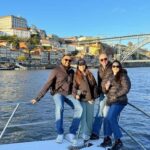
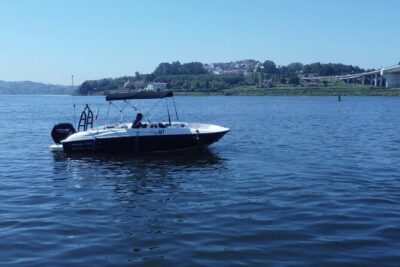
Six bridges, one calm private yacht. This cruise is built for slow time on the Douro, gliding under key crossings between Porto and Gaia while you snack on local treats. I like that it feels private and relaxed, not a loud cattle-line tour, and you get the kind of river views that are hard to recreate from the banks.
Two things I’d put at the top: the onboard snacks table with local products plus a bottle of Lambrusco, and the way the route lets you watch major bridge designs change as you move downstream. One thing to consider is weather: this experience needs good weather, so if you hate plan changes, build in flexibility.
In This Review
- Key things to know before you go
- Why the bridges-by-boat approach feels smarter
- Getting aboard at Marina do Freixo (and what to plan for)
- The route: 6 bridges of the Douro and what each one gives you
- The first bridge right after departure
- A second bridge, including a railway crossing
- The 1877 Eiffel-designed rail bridge: Porto meets Gaia the old way
- The 2003 latest bridge between Porto and Gaia
- The 1886 bridge that’s basically Porto’s symbol
- The final bridge: the bold highway arch from 1963
- Snacks, Lambrusco, and onboard comfort that make the ride easy
- Timing: when to go for the best light and mood
- Price and value: what $319 per group really buys you
- Who this private Douro bridge cruise fits best
- Should you book this quiet bridge cruise?
- FAQ
- Where does the cruise start?
- How long is the yacht cruise?
- Is this a private tour?
- How many people can be in a group?
- What language is it offered in?
- What’s included onboard?
- Can we choose music during the cruise?
- Are service animals allowed?
- Is there a restroom on the boat?
- What happens if weather is bad?
Key things to know before you go
- Private for up to 8 people: it’s only your group, so the vibe stays calm and conversational.
- Six bridges in about two hours: you see major Porto–Gaia crossings without spending the whole day on the water.
- Local tasting onboard: a cold spread of local products comes with a bottle of Lambrusco.
- Comfort details matter: there’s a restroom on board, which makes the short cruise much more pleasant.
- Your music, your mood: the group can choose the music, so you’re not stuck with someone else’s playlist.
- Weather-dependent: if conditions aren’t right, the cruise may be rescheduled or refunded.
Other ways to ride the river past the six bridges
- Complete Douro Valley Wine Tour with Lunch, Wine Tastings and River Cruise★ 5.0 · 12,920 reviews
- Porto: 6 Bridges Douro River Cruise★ 4.3 · 6,472 reviews
- Porto: Guided Tour by Tuk-Tuk & Optional Douro River Cruise★ 4.5 · 5,980 reviews
- Authentic Small Group Douro Wine Tour with Lunch & River Cruise★ 5.0 · 4,775 reviews
Why the bridges-by-boat approach feels smarter
Porto’s best sights don’t just look good from land. They work from the water, because you get angles that show structure, scale, and the relationship between the city and the river. This cruise focuses on that exact sweet spot: bridges as landmarks, not just background scenery.
The big win is pace. At roughly two hours, you get a satisfying taste of the Douro’s “Porto-to-Gaia” corridor without committing to a full-day boat trip. You’re also away from the busiest viewpoints along the riverbank, so it feels more like you’re getting your bearings in a moving panorama.
And since it’s private (up to 8), you don’t have to time your photos around other people’s schedules. You can spread out, look around, and actually enjoy the moment rather than sprinting between stops.
Getting aboard at Marina do Freixo (and what to plan for)
You’ll meet at Restaurante Marina do Freixo, located at N108, 4300-316 Porto. The activity ends back at the same meeting point, so you won’t need to coordinate a second transit step afterward.
A couple practical points that affect your day:
- No private transportation is included. You’ll want to sort out how you’ll get to Marina do Freixo on your own.
- The experience uses a mobile ticket, so keep your phone charged and ready.
- It’s offered in English, which helps if you don’t want to rely on translations while the boat is moving.
On board, there’s a restroom, which is a surprisingly big quality-of-life upgrade for a two-hour ride. Based on the experience description and the positive feedback on comfort and safety, this is the kind of outing that tends to work for couples, friends, and families—assuming everyone is comfortable spending time on a boat.
The route: 6 bridges of the Douro and what each one gives you
The cruise leaves the Marina do Freixo and then heads under a sequence of bridges—six crossings total. Each one changes the feel of the ride: steel and railway at first, then a mix of older landmarks and newer infrastructure, with a final, dramatic highway arch.
Here’s what to watch for as you go.
The first bridge right after departure
This first crossing is basically your “warm-up” moment. You’ll quickly get the boat moving through the river corridor that links Porto and Gaia. It’s also when you’ll start noticing how the river bends the city views—buildings look flatter from shore, but from water they show depth fast.
Tip: This is a good time to settle in, find the most comfortable side for views, and take your first set of photos before the route becomes more landmark-heavy.
Catch the river mouth as the light drops, other sailings compared
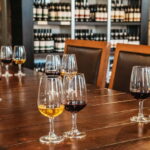

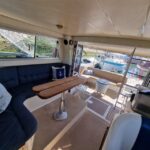
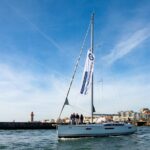
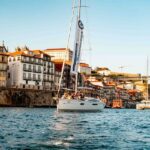
A second bridge, including a railway crossing
Next comes a railway bridge. Railway infrastructure tends to look extra graphic from water because you can see the lines and supports clearly against the skyline. It’s the start of the theme: this ride isn’t just about “pretty views,” it’s about engineering and design.
If you like architecture or bridges in general, this section is the first time the cruise feels educational—without turning into a lecture.
The 1877 Eiffel-designed rail bridge: Porto meets Gaia the old way
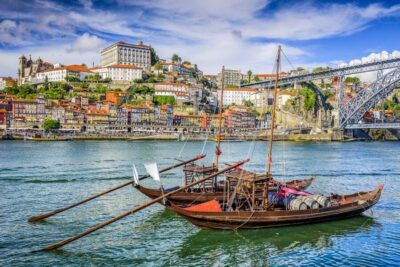
Then you’ll reach a standout: the oldest bridge connecting Porto to Gaia, inaugurated in 1877. It was designed by Gustave Eiffel and is described as the first railway bridge of the Douro.
This is one of the moments where the boat viewpoint really pays off. From the water, you can read the bridge like a structure instead of a distant landmark. You’ll also see how the bridge anchors the route between the two cities, making the whole Porto–Gaia relationship feel tighter.
A drawback here is mostly practical: if you’re trying to get photos, the light may shift as the boat turns and passes through the bridge’s shadow. Just be ready with your settings rather than waiting for perfect conditions.
The 2003 latest bridge between Porto and Gaia
After the older crossing, the cruise continues to a more modern bridge inaugurated in 2003. That contrast is part of the fun. Older bridges show you the era’s style; newer ones show what changed in design and construction as the decades rolled on.
This stop also tends to feel refreshing because it breaks up the “historic landmark” momentum. It’s like the cruise quietly says: yes, Porto has heritage, but it also keeps building.
The 1886 bridge that’s basically Porto’s symbol
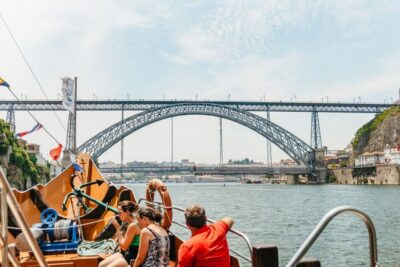
Next is widely treated as the most beautiful bridge on the river: the bridge inaugurated in 1886, designed by Théophile Seyrig, a disciple of Eiffel. In the description, it’s framed as a key symbol of Porto, with views toward the historic center and the wine cellars of Gaia.
From the boat, this is a big-picture moment. You get the famous silhouette of Porto’s identity while still seeing the river’s “work” side—how the cities hug the water and how Gaia’s basement/cellar world sits nearby.
This is also where you’ll likely feel the ride shift from sightseeing into something more emotional. The river views around the symbol of Porto tend to land better from water than from land, because you can watch the structure unfold around you.
The final bridge: the bold highway arch from 1963
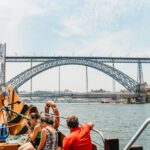
The last of the six crossings is an imponent highway (road) bridge inaugurated in 1963. It’s noted for an engineering record at the time: the bridge held the world record for the largest concrete arch, with an arch span of 270 meters.
This finale works because it changes the visual language again. Instead of focusing on rail lines or classic landmark shapes, you end with scale. From water, the arch doesn’t just look tall—it looks massive, and it gives you that “wow, that’s big” feeling without needing extra explanations.
If you’re someone who likes a satisfying ending, this stop usually delivers.
Snacks, Lambrusco, and onboard comfort that make the ride easy
The included food is simple but thoughtfully chosen: a snacks table of local products plus a bottle of Lambrusco. It’s the kind of setup that keeps the cruise social without turning it into a formal meal.
Cold food on a boat is also practical. You avoid the slow pacing of a full dinner while still getting something real to nibble. And because it’s local products, you get a Porto-area taste that feels connected to the place.
From the feedback, the hosts and crew tend to keep the tone welcoming and relaxed. A couple details matter here:
- People describe the hosts as friendly and making everyone feel at ease.
- The crew is highlighted for safety and experience.
- The boat itself is described as comfortable, with calm handling that helps you actually enjoy the views.
One more small but meaningful note: the group can choose the music. That means the vibe is yours, not some generic background audio. If you’re celebrating a birthday or just want a low-key “we’re on vacation” feeling, this is the kind of touch that makes a short cruise memorable.
Timing: when to go for the best light and mood
This is about enjoying the river, so timing affects your overall satisfaction. The experience is often experienced at sunset-level energy, and the views can feel especially memorable when the sky starts to soften.
If your schedule allows, aim for a time when you’ll get good daylight for bridge details and then a warmer light for the Porto and Gaia sides. The bridge sequence is strong even in daylight, but the “end of day” atmosphere tends to make the whole route feel more special.
Also, remember that the cruise is weather-dependent. If you’re booking a day with uncertain skies, don’t treat it like a “set and forget” plan. Flexibility will make your trip smoother.
Price and value: what $319 per group really buys you
The price is $319.39 per group, up to 8 people, for about two hours. On paper, that can look steep if you’re thinking per person like a standard bus tour. But the structure is different: it’s private, and it includes food, drink, and comfort basics.
Here’s why it can feel like good value:
- Private boat time for a small group is the core cost driver, and splitting across up to eight people makes it more reasonable.
- You get an included snacks table plus Lambrusco, not just a coffee-and-water situation.
- The ride also includes a restroom, which you don’t always get on short boat experiences.
- You avoid the hassle of figuring out how to transport a group to multiple viewpoints.
If you’re traveling solo or as a couple, this can still be worth it, but your “value math” depends on what you’d otherwise spend on separate activities plus taxis plus meals. For groups, it often becomes one of those practical splurges that feels fair.
Who this private Douro bridge cruise fits best
This fits best if you want:
- a quiet, private experience instead of a busy public tour,
- views focused on Porto–Gaia bridges and their design,
- included snacks and a drink so you don’t have to plan food around the boat.
It’s also a strong choice for celebrations. The ride description and feedback point to birthdays and friend-group outings as a natural fit, especially with the option to choose music and the easy onboard food setup.
If you’re the type who likes active sightseeing but still values comfort, the two-hour length is perfect. If you’re someone who hates any chance of weather-related disruption, treat this as a “book with flexibility” activity, since the experience depends on good weather.
Should you book this quiet bridge cruise?
If you’re choosing between a standard sightseeing plan and something more personal, I’d lean toward booking this—especially if you’re going with 3–8 people. The private feel, the included snacks and Lambrusco, and the bridge-focused route are a rare combo: it’s sightseeing you can actually relax inside.
If you’re only going as one or two people, you can still have a great time, but double-check whether you’re comfortable paying for privacy. Also, watch the forecast. When conditions are good, this kind of quiet river cruise is exactly the Porto experience that stays in your head.
FAQ
Where does the cruise start?
It starts at Restaurante Marina do Freixo, N108, 4300-316 Porto, Portugal, and it ends back at the same meeting point.
How long is the yacht cruise?
The duration is about 2 hours.
Is this a private tour?
Yes. It’s a private tour/activity, and only your group participates.
How many people can be in a group?
The price is listed per group for up to 8 people.
What language is it offered in?
The cruise is offered in English.
What’s included onboard?
You get a snacks table of local products, a bottle of Lambrusco, and there is a restroom on board.
Can we choose music during the cruise?
The experience description from feedback indicates you can choose the music for the ride.
Are service animals allowed?
Yes, service animals are allowed.
Is there a restroom on the boat?
Yes. There is a restroom on board.
What happens if weather is bad?
The experience requires good weather. If it’s canceled due to poor weather, you’ll be offered a different date or a full refund.
Private Porto Tours to Compare


Sunset Sailings on the Douro
Back on the River, Bridge by Bridge
Fresh in the Porto notebook

Six Bridges River Cruises, compared.
 ★ 5.0Complete Douro Valley Wine Tour with Lunch, Wine Tastings and River CruiseFrom $10112,920 reviews
 ★ 4.2Six Bridges CruiseFrom $2111,680 reviews
 ★ 4.36 Bridges Douro River CruiseFrom $236,472 reviews
 ★ 4.5Guided Tour by Tuk-Tuk & Optional Douro River CruiseFrom $205,980 reviews
 ★ 5.0Authentic Small Group Douro Wine Tour with Lunch & River CruiseFrom $1334,775 reviews
 ★ 4.2Bridges Cruise & Sunset & Port Wine Cellar OptionFrom $214,180 reviews
 ★ 4.3River Douro 6 Bridges CruiseFrom $174,168 reviews
 ★ 5.0Douro Valley Tour: 2 Vineyard Visits, River Cruise, Winery LunchFrom $1013,542 reviews
Browse the lists this tour appears in