
Reviewed · PRIVATE PORTO TOURS
Private tour to Ponte de Lima, Vinho Verde region
Ponte de Lima feels like Portugal in miniature. In a single long day, you get the old river bridge story, major churches, and then you shift gears into the Vinho Verde world. It’s a great way to see more than one side of northern Portugal without doing the logistics yourself.
I especially like the pace and how much context you’re given—on this private tour, Carlos (the guide) takes extra time when you want it, explains details clearly, and even adds practical restaurant ideas near where you’re staying. I also like that the day mixes free stops (most monument time is free) with one focused wine experience, so you can spend your money where it matters. One drawback to plan for: you’ll be on the move for 8 to 10 hours, mostly outdoors, and the tour needs good weather to run smoothly.
In This Review
- Key highlights worth planning for
- Ponte de Lima and Vinho Verde: a day trip with two different moods
- Price and what you really get for $211.84
- Getting from Porto to Ponte de Lima without wasting your morning
- Roman bridge to medieval bridge: Ponte Romana e Medieval in context
- Capela do Anjo da Guarda and Santo António da Torre Velha: small stops, big signals
- Wine Verde without the tourist fog: Centro de Interpretação e Promoção do Vinho Verde
- Corpus Christi and the Taverna Vaca das Cordas: tradition you can actually picture
- Dona Teresa, the Igreja Matriz, and the layers of one town’s identity
- Estátua de Dona Teresa
- Igreja Matriz de Ponte de Lima
- Igreja da Misericordia de Ponte de Lima
- Marquês palace and the old defense system: from Paço to towers
- Paço do Marquês de Ponte de Lima
- Torres de São Paulo e da Cadeia Velha + wall remnants
- Pelourinho de Ponte de Lima
- Largo de Camões and Fonte Nobre
- Optional add-ons: if you want more wine or medieval architecture
- Calheiros Manor cellar visit and tasting (Optional)
- Mosteiro de Santa Maria de Refoios do Lima (Optional)
- Quinta da Torre de Refoios (Optional)
- What this tour is best for (and who might not love it)
- Should you book this private Ponte de Lima and Vinho Verde tour?
- FAQ
- What time does the tour start?
- Where do I get picked up?
- Is this a private tour?
- Is the tour offered in English?
- How long is the tour?
- What’s included in the price?
- Are the wine-tasting and wine interpretation stops included?
- How much does lunch cost?
- Are there optional stops if I want more wine or medieval sites?
- What happens if weather is bad?
Key highlights worth planning for
- Private, English-speaking guide with a flexible pace that doesn’t feel rushed
- Ponte Romana e Medieval and nearby monuments are mostly quick, free stops
- Vinho Verde interpretation center includes terrace views and a wine tasting
- Corpus Christi tradition nearby centers around the Taverna Vaca das Cordas event scene
- Stone towers and old wall remnants connect medieval fortifications to today’s town layout
- Optional wine and monastery add-ons let you tailor the day to your interests
Rather go at your own pace? More private guides
- Discover Porto’s Highlights on a 2-Hour Private Electric Tuk Tuk★ 4.5 · 1,860 reviews
- Porto PRIVATE TOUR With Locals: Highlights & Hidden Gems★ 5.0 · 984 reviews
- Porto: Private Tour of the Historic City in a Ford T Car★ 4.8 · 932 reviews
- Porto: Private tour in the Douro (1 to 4 people) on a boat just for you★ 5.0 · 744 reviews
Ponte de Lima and Vinho Verde: a day trip with two different moods
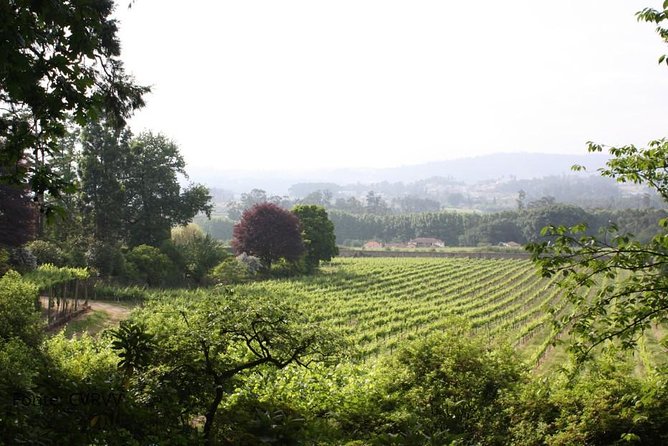
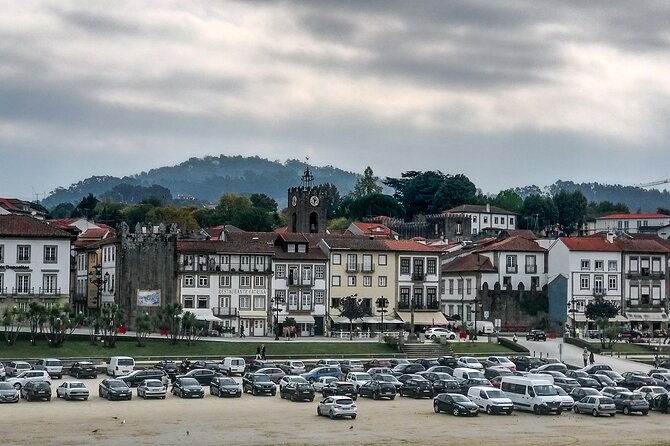
If you like travel days that don’t feel like a checklist, this route makes sense. Ponte de Lima sits on the Lima River and has a compact historic center, so the morning works as a walking-and-looking tour of old bridges, chapels, and churches. Then, you shift to the wine theme with a dedicated stop connected to the Demarcated Region of Vinhos Verdes.
The best part is how the sites connect. The bridge isn’t just a pretty structure; it’s the reason the town exists. And the surrounding monuments are all clustered tightly enough that you feel like you’re following one thread, not hopping randomly.
Price and what you really get for $211.84
At $211.84 per person, you’re paying for private transport plus a guide who can stitch the story together. You’re not just buying access to a few buildings.
Here’s what’s included that affects your value:
- Transport in luxury vehicles with Wi‑Fi, bottled water, and refreshments
- Personal accident and civil liability insurance
- A private setup (only your group participates), which usually means less waiting and more flexibility on timing
- Pickup from central Porto and Gaia hotels and B&Bs (so you’re not wrestling public transit after a big morning)
What’s not included is also important for budgeting. Typical lunch costs €30 per person, and some museum or tasting entries are extra (more on that below). If you’re the type who usually skips add-ons and sticks to free sights, you can keep the day under control. If you love wine, you’ll probably want the optional cellar/tasting experiences.
Getting from Porto to Ponte de Lima without wasting your morning
Start time is 8:00 am, with pickup offered from hotels and B&Bs in central Porto and Gaia. That matters because Ponte de Lima is a real day trip, and the smooth start sets the tone.
Also, because the vehicle comes with Wi‑Fi and refreshments, you’re not stuck feeling dehydrated or annoyed during the drive. You can use that time to review what you want to see most—bridge first, churches next, then decide whether you want the optional wine and monastery stops.
Carlos’s approach (from past guests’ feedback) includes taking extra time to match your pace. That’s a big deal in a day like this, because many of the stops are close, and the best tours are the ones that let you linger when something clicks.
Roman bridge to medieval bridge: Ponte Romana e Medieval in context
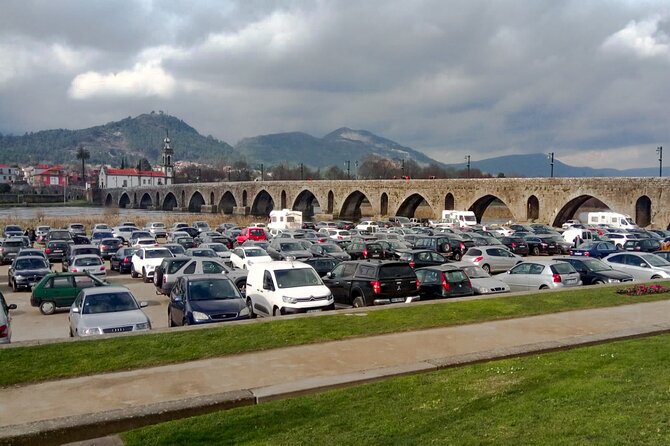
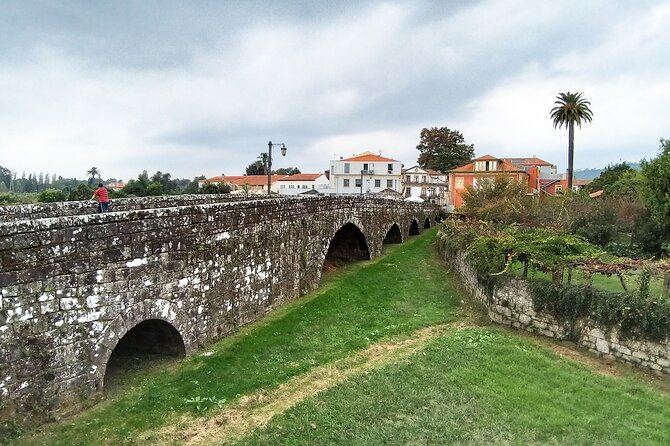
Your day starts at Ponte Romana e Medieval (about 30 minutes, free admission). This is the ex‑libris of Ponte de Lima: two bridges, one story.
What makes it special is that you can literally see the layers:
- A medieval section beginning on the left bank and stretching toward Igreja de Santo António da Torre Velha, crossing in two arches
- A Roman section made of five arches, including a prominent “great arch” where the river bed is dry
The bridge was declared a National Monument in 1910, so it’s protected and treated as a core historic object, not a random photo spot. Practically, it’s also a good first stop because it gives you orientation. Once you understand the river and the bridge, the rest of the town makes more sense.
More Porto days out worth booking




Capela do Anjo da Guarda and Santo António da Torre Velha: small stops, big signals
Right nearby you visit two monuments with short time blocks (each about 20 minutes, both free).
First is Capela do Anjo da Guarda, also known as Padrão de São Miguel, classified as a National Monument in 1978. It may date from the 17th century, and it’s built next to the Lima River and the old bridge—specifically beside the Roman portion.
Then comes Igreja de Santo António da Torre Velha. This one has a story that shows how towns evolve. An older hermitage dedicated to Nossa Senhora da Esperança is documented since the 18th century, but the current look reflects a 19th-century reform ordered by the Confraternity of Santo António. It’s also tied to the timeline of the old medieval fence: church and tower coexisted until the mid‑19th century, when the fence was demolished, and the church’s name changed to reflect its location.
Even if you’re not a church-detail person, these two stops are worth it because they connect architecture to the town’s geography. You start seeing the “why” behind where things were built.
Wine Verde without the tourist fog: Centro de Interpretação e Promoção do Vinho Verde
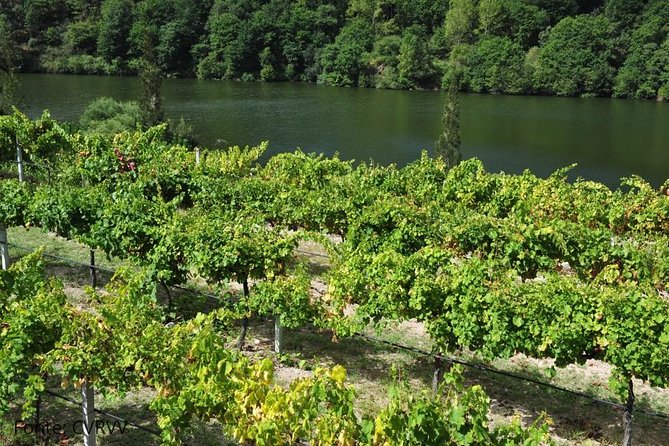
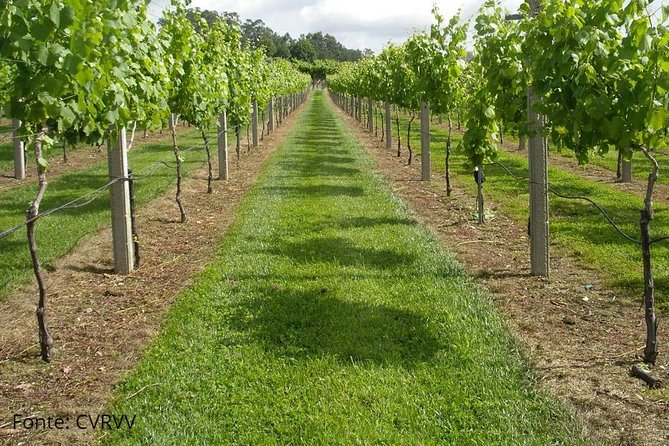
Stop four is where the day turns into wine-country mode: Centro de Interpretação e Promoção do Vinho Verde (about 30 minutes). Free time is limited here; the key part is the wine experience, and that has a fee.
What you get during the visit:
- Access to the permanent exhibition
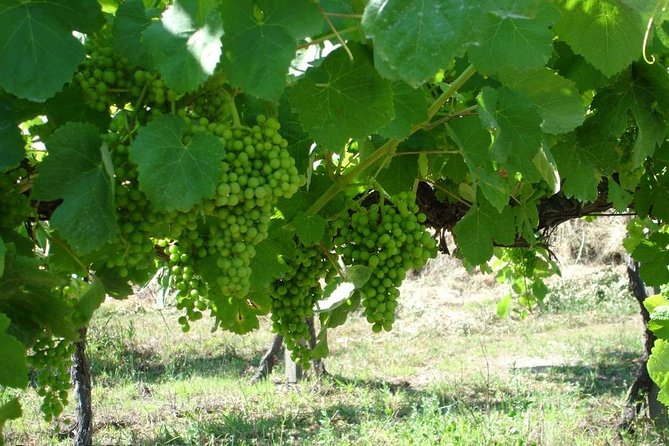
- Time on the terrace with a small vineyard plantation
- A promotional film about the Demarcated Region of Vinhos Verdes
- A wine tasting of a regional wine
This tasting part is not included. The listed admission note says the center’s visit includes proof-related access to Alvarinho as part of the materials, with a small extra fee mentioned. If you like structured wine learning (even just the basic “how and why”), this is one of those stops that justifies the wine part of the day.
If you’re trying to budget tightly: you can still see the historic sights for free and choose how much money you want to spend on wine entries.
Corpus Christi and the Taverna Vaca das Cordas: tradition you can actually picture
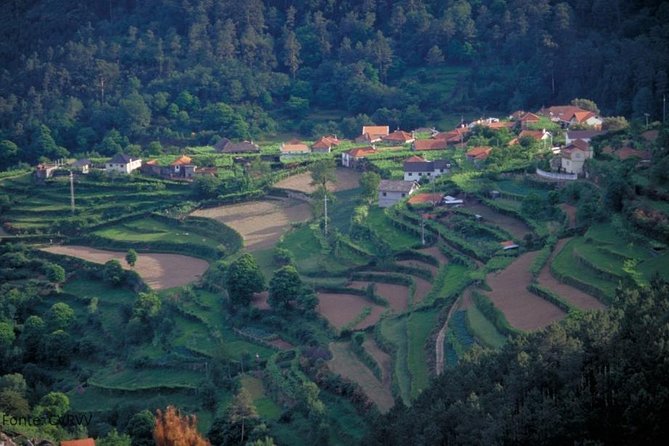
One of the more memorable stops is Taverna Vaca das Cordas (about 30 minutes, free). This is connected to a tradition dating back to the 15th century and attracting visitors from Portugal and Spain.
The key detail: it happens on the eve of the religious holiday of Corpus Christi, in the late afternoon. You’ll see the setup and the town-energy vibe linked to the event—especially along the historic center and near the river sands.
How the “race” works (and why it matters for understanding the culture):
- It begins on Rua do Arrabalde, heads toward Largo da Matriz
- The tradition includes going around the church three times
- Then it continues through streets of the historic center to the beach area
Even if your visit isn’t on the exact day of the tradition, this stop helps you understand Ponte de Lima as a living place, not just a museum town. It’s a reminder that old towns run on calendar rituals.
Dona Teresa, the Igreja Matriz, and the layers of one town’s identity

After the event-linked energy, you move into political and religious heritage with a few free stops.
Estátua de Dona Teresa
The Estátua de Dona Teresa (about 30 minutes, free) honors Queen D. Teresa, who granted Ponte de Lima its charter of Vila in 1125. It’s short, but it gives a clean anchor for the idea that civic power shaped town growth.
Igreja Matriz de Ponte de Lima
Next is Igreja Matriz de Ponte de Lima (about 20 minutes, free). This late Gothic church replaced an older structure that grew from one nave to three. Inside, the highlight is the Chapel of Nossa Senhora da Conceição, which belonged to the Solar de Bertiandos.
Built by D. João I in 1425 with completion in 1446, the church then saw transformations across centuries, leaving visible overlap of Romanesque, Gothic, and Neoclassical styles. In other words: you’re not just looking at one style; you’re watching history change its mind over time.
Igreja da Misericordia de Ponte de Lima
Then comes Igreja da Misericórdia (about 20 minutes, free). The Santa Casa da Misericórdia institution dates back to 1530. The church, in a mix of mannerist and baroque style, was built in the 17th and 18th centuries.
It has a single nave and a chancel with a coffered vault (1638). A standout feature is the main portico laterally over the old cemetery, currently functioning as a churchyard closed by railing—creating a porch-veranda effect. Even in a short stop, you’ll feel the design logic.
Marquês palace and the old defense system: from Paço to towers
Two stops in the middle of the day are about power, protection, and how the town arranged itself for survival.
Paço do Marquês de Ponte de Lima
Paço do Marquês de Ponte de Lima is a splendid 15th-century stone building that currently houses the Military History Interpretation Center (about 30 minutes). Admission here is not included, so this is one to decide based on your interest in military history.
Even if you skip the interior fee, you’ll likely appreciate the stop as a contrast to the church-heavy parts of the morning. The town wasn’t only spiritual; it was strategic.
Torres de São Paulo e da Cadeia Velha + wall remnants
Then you get the defensive leftovers: Torres de São Paulo e da Cadeia Velha (about 20 minutes, free). Together with the wall that connects them, these towers are some of the most noticeable parts of what remains of the old fortification system.
Built in the 14th century during King D. Pedro I’s reign, the set includes more than just two towers—originally, there were doors and additional towers too (like the Expectation Tower and Postigo Tower).
What you’ll learn from Cadeia Velha specifically:
- Torre de Cadeia Velha, also called Porta Nova, reflects major improvement works
- It was built on the site of an older tower tied to a 14th-century prison district
- Manuel’s works are referenced, and completion is noted as 1511
These details matter because they show the town’s functions changed over time while using the same physical geography.
Pelourinho de Ponte de Lima
A quick hit next is the Pelourinho (about 10 minutes, free). The pillory is attributed to the 16th century and originally built on the beach, near the São Paulo tower. Later, weapons from the United Kingdom of Portugal, Brazil, and the Algarve were added. It was demolished after liberal struggles and rebuilt during the Estado Novo in front of City Hall using fragments from the primitive monument.
That’s a lot of political history for one short stop, and it helps explain why old towns keep rebuilding their symbols.
Largo de Camões and Fonte Nobre
Finally, before optional stops, you’ll likely pass through the atmosphere of Largo de Camões (about 20 minutes, free). The Fonte Nobre was completed in 1603, tied to a tax story (a false tax in 1580 on consumer goods like precious salt funded the structure). It later got moved to this plaza area in 1929 after being built in an earlier location tied to town walls. Renaissance execution is attributed to João Lopes.
It’s the kind of detail that makes a walking day feel rewarding, not random.
Optional add-ons: if you want more wine or medieval architecture
You have two optional routes that can reshape the day, so plan around your interests and energy.
Calheiros Manor cellar visit and tasting (Optional)
Stop 13 is optional: Calheiros Manor (listed at €25 per person, not included). This is a cellar visit at Quinta do Paço de Calheiros with a boutique-cellar look and tasting of three wines:
- Paço de Calheiros
- 100% Loureiro fermented and aged in stainless steel
- Conde de Calheiros, 100% Loureiro aged in oak barrels
- plus a red sparkling wine also produced there
This is the best option if you want a more structured tasting experience. It also helps you understand how the same grape can taste different depending on fermentation and aging choices—information that the interpretation center only scratches the surface of.
Mosteiro de Santa Maria de Refoios do Lima (Optional)
Stop 14 is another optional pick: Mosteiro de Santa Maria de Refoios do Lima (not included). Founded in the 12th century, it was for Canons of the State of Santo Agostinho and has changed through the centuries. Today it houses facilities for the Escola Superior Agrária de Ponte de Lima and is near the parish church that gives the group its name.
It’s classified as a Property of Public Interest since 1939. If you enjoy medieval religious architecture and want a quieter change of pace, this adds depth.
Quinta da Torre de Refoios (Optional)
Stop 15 is the other optional: Quinta da Torre de Refoios, a 14th-century defensive tower inside a housing tourism estate. It’s classified as a Property of Public Interest since 1996 and is described as very well-preserved.
This one tends to appeal to people who like seeing medieval defense structures in good condition, rather than only learning about them from photos.
What this tour is best for (and who might not love it)
This private tour is a smart fit if you:
- want history tied to place (bridge, river, monuments)
- like a day that blends free sights with one planned wine experience
- prefer having a guide who can adjust pace and explain details clearly
It may not be ideal if you:
- hate walking or being outdoors for long stretches
- want a fully wine-centric itinerary only (this includes wine, but it also prioritizes the town’s historic fabric)
Because it requires good weather, pack for cool mornings if you’re going early and bring a layer you can tolerate if the light shifts.
Also, plan your expectations: the day includes many short stops. That’s not a problem—it’s part of the value. You get variety without losing the plot.
Should you book this private Ponte de Lima and Vinho Verde tour?
I’d book it if you’re basing yourself in Porto and you want a worthwhile day trip with private transport, a guide who can explain what you’re seeing, and a clear connection between old-town history and the wine region.
If you’re the type who likes to stop for photos, ask questions, and then still get good dining ideas at the end of the day, this one fits. Just factor in the likely extras: lunch and any wine or interpretation admissions you choose, plus optional add-ons if you want more.
FAQ
What time does the tour start?
The tour starts at 8:00 am.
Where do I get picked up?
Pickup is offered for transfers from all hotels and B&Bs in central Porto and Gaia.
Is this a private tour?
Yes. It’s private, so only your group participates.
Is the tour offered in English?
Yes. The tour is offered in English.
How long is the tour?
It runs about 8 to 10 hours.
What’s included in the price?
Included are luxury vehicle transport with Wi‑Fi, bottled water, and refreshments, plus personal accident and civil liability insurance.
Are the wine-tasting and wine interpretation stops included?
No. The Centro de Interpretação e Promoção do Vinho Verde wine tasting portion is listed as not included, and optional cellar/tasting add-ons have separate fees.
How much does lunch cost?
Typical lunch (entry, main dish, drink, dessert, coffee) with wine is listed at €30.00 per person.
Are there optional stops if I want more wine or medieval sites?
Yes. Calheiros Manor is an optional cellar visit (listed at €25 per person). Mosteiro de Santa Maria de Refoios do Lima and Quinta da Torre de Refoios are also optional.
What happens if weather is bad?
This experience requires good weather. If it’s canceled due to poor weather, you’ll be offered a different date or a full refund.
More Tours in Porto




More Tour Reviews in Porto

Private Porto Tours to Compare

Fresh in the Porto notebook



Private Porto Tours, compared.
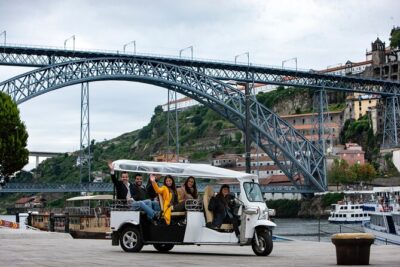 ★ 4.5Discover Porto’s Highlights on a 2-Hour Private Electric Tuk TukFrom $481,860 reviews
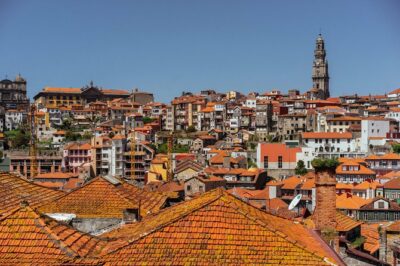 ★ 5.0Porto PRIVATE TOUR With Locals: Highlights & Hidden GemsFrom $96984 reviews
 ★ 4.8Private Tour of the Historic City in a Ford T CarFrom $32932 reviews
 ★ 5.0Private tour in the Douro (1 to 4 people) on a boat just for youFrom $168744 reviews
 ★ 4.5Historic Porto by Private Electric Tuk Tuk to Top LandmarksFrom $42735 reviews
 ★ 5.0Porto Private Food and Drink Tasting Tour with LocalFrom $139652 reviews
 ★ 5.0Private Taxi Transfer to/From Porto AirportFrom $24649 reviews
 ★ 5.0Private tasting in the Douro (1 to 7 people) on a yacht for yourselfFrom $313559 reviews