
Reviewed · WINE TOURS
Porto: Tile Painting Workshop with Tea and Port Wine
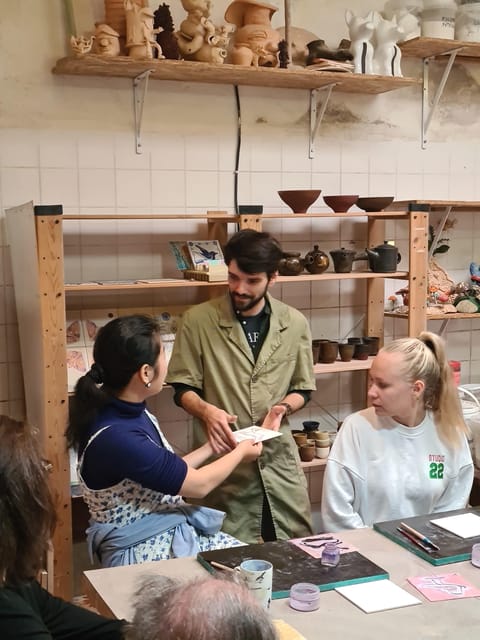
Porto does tiles like other cities do football: everyone notices. This workshop pairs hands-on tile painting with a clear story about why Portuguese azulejos matter in Porto. I especially like that you don’t just watch—you paint two tiles with traditional motifs you can take home. The main thing to plan around: your tiles must be fired, so you’ll pick them up the next morning.
The session runs close to Campanhã, near the train station and the new Bus station TIC, so it’s easy to slot into a day that already involves that side of town. You’ll work with an English-, Japanese-, or French-speaking instructor, and Francisco Pessegueiro is the provider behind the experience. One small heads-up from personal logistics sense: parking near the station area isn’t the friendliest, so I’d build your plan around walking or public transit.
In This Review
- Key things to know before you go
- Porto Tile Painting: More Than a Craft Souvenir
- Finding the Atelier Near Campanhã Without Stress
- The 2-Hour Flow: From Tile History to Your First Brushstroke
- Step one: tile history and why it matters in Porto
- Step two: how traditional tile painting is made
- Step three: instructions that leave room for you
- Painting Traditional Motifs: Two Tiles, Real Creative Control
- Expect stencils, not a blank canvas
- You’re still the artist
- Tea, biscuits, and a pause that feels human
- The Kiln Part: What Happens After You Finish Painting
- Picking Up Your Tiles and Traveling With a Fragile Treasure
- Price and Value: What $53 Gets You in Porto
- Who Should Book This Tile Workshop (and Who Might Skip It)
- Small Group Energy and Language Options
- The Bottom Line: Should You Book?
- FAQ
- How long is the tile painting workshop?
- What does the $53 per person price include?
- Do I take the tiles home the same day?
- When can I pick up my fired tiles?
- What languages are available for the instructor?
- If I want Japanese or French, do I need to tell them when booking?
- Where is the meeting point?
- What should I bring and wear?
- Is there free cancellation, and can the workshop be canceled if the group is too small?
Key things to know before you go
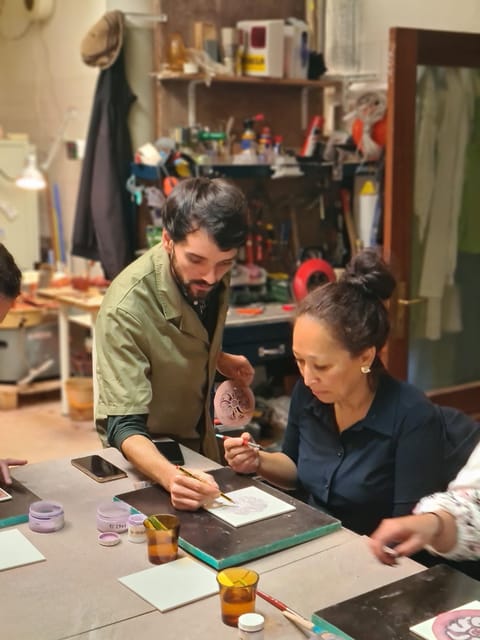
- You paint two tiles per person, and you’ll take them home after they’re fired
- Stencils and guidance are provided, so you can create something traditional without being an artist
- You’ll learn why azulejos show up everywhere—from monuments to ordinary homes
- Your finished tiles get fired in a kiln and are ready for pickup after about 24 hours
- Tea and biscuits are included, plus time to browse the studio atmosphere
- Small group format helps keep the class hands-on
Rainy afternoon? Escape rooms and immersive shows
- Porto: Tile Painting Workshop with Porto Wine – Sé do Porto★ 4.9 · 1,095 reviews
- Impressive Monet & Brilliant Klimt -The Immersive Experience★ 4.4 · 656 reviews
- Porto: Tile Painting and Cocktails in Downtown Porto★ 4.9 · 484 reviews
- Spiritus Porto: Videomapping Immersive Show at Clerigos Church★ 4.5 · 223 reviews
Porto Tile Painting: More Than a Craft Souvenir
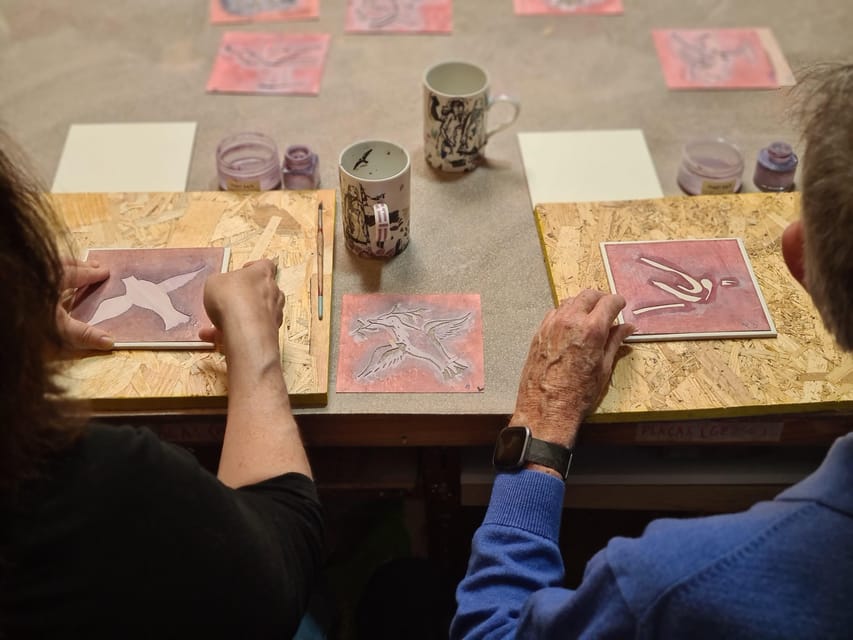
Azulejos—Portuguese tiles—are everywhere in Porto for a reason. In this workshop, you start with the meaning behind them, then you get to make your own version of that tradition. It’s not just about pretty patterns. You’ll connect the dots between how tiles spread across Portugal and why they became part of the visual language of the country.
I like the way the class balances story and doing. You get enough context to understand what you’re painting, without turning the workshop into a lecture you have to survive. And the result feels more personal than buying a postcard-style souvenir, because you’re literally carrying something you made.
A practical note: you’ll be painting for much of the 2 hours, but the real magic happens after. The tiles need firing, so your “final product” isn’t immediate.
Finding the Atelier Near Campanhã Without Stress
Your meeting point is near the train station and near the new Bus station TIC (Terminal Intermodal de Campanhã). Right by the station area you’ll see a school and a taxi square, which makes it easier to orient yourself once you’re in the right neighborhood.
This is the kind of activity that works well if you’re already moving through Porto by rail or planning to spend time on that side of town. Since transportation to and from the activity isn’t included, I suggest building your day around the location—think “before lunch” or “after a train ride,” not “across town with no plan.”
Parking isn’t great around the station zone, so if you’re driving, I’d plan on letting public transport or walking do most of the work. Comfortable shoes matter here, because station areas mean walking.
The 2-Hour Flow: From Tile History to Your First Brushstroke
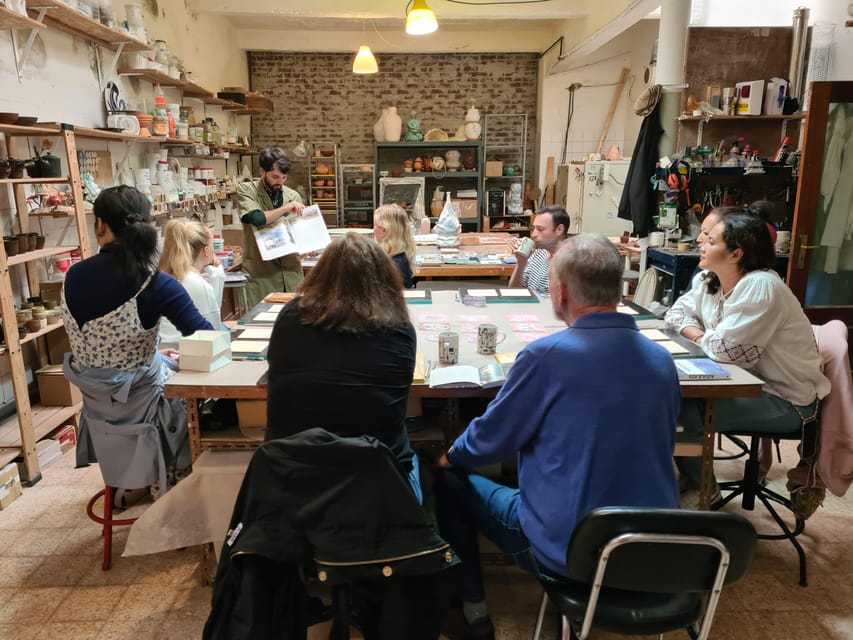
The workshop is scheduled for 2 hours. You’ll meet your guide, get an intro to Portuguese tile history, and then move into technique and painting.
Step one: tile history and why it matters in Porto
You’ll learn how tiles became important in Portuguese art and culture and how they spread across the country. The explanation is practical: you’ll hear how tiles show up on monuments and also on everyday buildings, not only in museums. That context matters because it shapes how you look at Porto outside the workshop—suddenly you notice patterns with meaning, not just color on walls.
More Porto days out worth booking





Step two: how traditional tile painting is made
After the story, you’ll get taught about tile-painting techniques tied to traditional production. The goal isn’t to turn you into a tile technician—it’s to help you paint with intention, using approaches that match how these designs work.
You’ll also see inspiration materials in the studio, which helps you pick motifs that look right on a finished tile. Some participants mention browsing inspiration books and the studio setting before painting gets underway.
Step three: instructions that leave room for you
In a lot of workshops, the instructor does the hard part for you. Here, you’re expected to paint your own tiles. Stencils are provided, and the guides (including Francisco Pessegueiro and, in one standout experience, a guide named David) are available for help and creative feedback. That balance is the sweet spot: you get structure without losing your own hand in the design.
Painting Traditional Motifs: Two Tiles, Real Creative Control
You’ll paint two tiles, each inspired by traditional Portuguese motifs. That’s a big deal for the value of the experience, because you end up with more than one souvenir, and you have more chances to try different patterns.
Expect stencils, not a blank canvas
You won’t be asked to invent everything from scratch. Stencils are available, and the guidance helps you line up shapes and colors in a way that looks authentic once fired. That’s ideal if your drawing skills are more “smiling stick figures” than “museum-quality realism.”
You’re still the artist
Guidance doesn’t equal takeover. You can use the materials and stencils provided, but you’re the one making the choices: which motif, how the layout works, and where you place the details. If you want to keep it simple and classic, you can. If you want to play a little, you can too.
One detail I really like: you’ll get feedback while you work. That means if something looks off while you’re painting, you can fix it before the kiln does its final transformation.
Tea, biscuits, and a pause that feels human
Alongside the start of the workshop, tea and biscuits are included. You may also get herbal infusions depending on what’s on offer. It’s a small touch, but it helps the workshop feel like a friendly studio moment rather than a hurried “sign in and go” activity.
And yes, some people would personally prefer less time on tea and history so they could paint longer. If you’re the type who just wants the brushwork, you can treat the early part as your warm-up and jump into the motifs quickly.
The Kiln Part: What Happens After You Finish Painting
Here’s the key mechanic: after class, your tiles go for firing. You don’t take them home right away because the paint needs the kiln step to become a finished souvenir.
You’ll leave your painted tiles at the workshop, and they’ll be ready around 24 hours later. The pickup time is typically between 11:00 and 12:30 the next morning. The provider also includes proper packaging, so your tiles are protected for the trip home.
This is one of the best parts of the workshop, because it keeps the process realistic. Real tiles are made through production steps. You get to participate in the fun human step—painting—while the firing happens behind the scenes.
Picking Up Your Tiles and Traveling With a Fragile Treasure
The workshop includes packaging for your painted tiles, and that matters more than you’d think. Tiles are sturdy, but corners and edges still need respect. By having them packed properly, you avoid the worst-case scenario of carrying a masterpiece in whatever bag you grabbed that morning.
Plan to return the next day for pickup. The expected pickup window is 11h/12.30 am, so build that into your schedule—especially if you’re leaving Porto soon after. If you’re the kind of traveler who keeps plans tight, this is the one logistical constraint you’ll want to manage.
Also keep in mind: you’re picking up your souvenirs from a workshop, not a hotel lobby. So once you decide your return day, give yourself enough time to get there without rushing.
Price and Value: What $53 Gets You in Porto
At $53 per person for a 2-hour workshop, you’re paying for more than painting time. Your price includes:
- all tile painting materials
- tea and biscuits
- firing of your painted tiles
- proper packaging for take-home tiles
When you compare that to buying a souvenir tile set, the value is in the process. You’re getting a guided cultural explanation plus the making part plus the kiln step that turns your paint into a finished keepsake. You’re also getting two tiles, which is a helpful bonus for families and for anyone who wants a gift.
What’s not included is food and drinks beyond the tea and biscuits, and transportation to and from the activity. So if you want a full meal, grab it nearby before or after. That’s also where being near the train station helps—you can usually find easy options in that zone.
Who Should Book This Tile Workshop (and Who Might Skip It)
This workshop suits you if you want a hands-on Porto experience that connects to what you’re seeing around town. It’s a good fit for:
- couples who want one creative activity that still feels local
- families (the format is friendly and guided, and the studio supports questions)
- art-minded travelers who like process more than just photos
- anyone who wants a souvenir that has your fingerprints on it
It might be less ideal if:
- you absolutely need a souvenir the same day (you’ll pick up the next morning)
- you dislike scheduled pickup windows and prefer zero “come back tomorrow” commitments
- you’re expecting a painting class with no cultural context at all (there is an intro and some history, though it doesn’t take over the whole session)
Small Group Energy and Language Options
You’ll be in a small group, which helps because tile painting benefits from real guidance. If you have questions about motifs, techniques, or how your tile will look when finished, it’s easier to get help in a smaller setting.
Language options include English, Japanese, and French. If you’re booking in French or Japanese, you’ll need to mention that when reserving. The instructor is listed as providing those languages, so you can plan around communicating clearly.
The Bottom Line: Should You Book?
If you want a Porto souvenir with a story you actually understand, book this workshop. The combination of tile history, hands-on painting, and kiln firing plus packaging makes the $53 feel fair, not inflated. Plus, you end with two tiles, not one.
I’d book it especially if you’ll be near Campanhã anyway or you like doing one structured “make something” activity while in town. Just make sure you can handle the next-morning pickup window, because that’s the main trade-off.
FAQ
How long is the tile painting workshop?
The workshop lasts 2 hours.
What does the $53 per person price include?
Your ticket includes all materials for tile painting, tea and biscuits, firing of the painted tiles, and packaging for the finished tiles.
Do I take the tiles home the same day?
No. Your tiles need to be fired, so you’ll pick them up about 24 hours after the class.
When can I pick up my fired tiles?
Pickup is the next morning around 11:00 to 12:30.
What languages are available for the instructor?
The instructor offers English, Japanese, and French.
If I want Japanese or French, do I need to tell them when booking?
Yes. If your language is French or Japanese, you must say so when booking.
Where is the meeting point?
The store is near the train station and near the new Bus station TIC (Terminal Intermodal de Campanhã), with a school and a taxi square right beside the station area.
What should I bring and wear?
Wear comfortable shoes and comfortable clothes.
Is there free cancellation, and can the workshop be canceled if the group is too small?
You can cancel up to 24 hours in advance for a full refund. Also, if a minimum group of 2 participants isn’t gathered until one day before the experience, the workshop will have to be canceled.
More Wine Tours in Porto

More Tour Reviews in Porto


Indoors: Shows and Escape Rooms





Fresh in the Porto notebook




Wine Tours, compared.
 ★ 4.7From Porto: Douro Valley w/ Boat Tour, Wine Tasting & LunchFrom $8219,061 reviews
 ★ 5.0Complete Douro Valley Wine Tour with Lunch, Wine Tastings and River CruiseFrom $10112,920 reviews
 ★ 4.7Douro Valley with Winery Lunch, Tastings & CruiseFrom $997,002 reviews
 ★ 4.8Live Fado Show with Glass of Port WineFrom $236,498 reviews
 ★ 4.9From Porto: 2 Wine Regions, Farm-to-Table Lunch & BoatFrom $945,724 reviews
 ★ 5.0Douro Valley: Historical Sites, Wine Experience, Lunch & CruiseFrom $1075,133 reviews
 ★ 5.0Authentic Small Group Douro Wine Tour with Lunch & River CruiseFrom $1334,775 reviews
 ★ 4.2Bridges Cruise & Sunset & Port Wine Cellar OptionFrom $214,180 reviews
Browse the lists this tour appears in