
Reviewed · PORTO CITY WALKS
Porto: Queer Walking Tour
Porto gets personal on this queer walk. This Porto LGBTQIA+ walking tour connects recognizable sights like Sé and São Bento Station to the stories of struggle, resilience, and celebration that shaped the city. I especially love the guide’s LGBTQIA+ stories and the way the route mixes famous architecture with lived community details. The tour also includes time to pause, ask questions, and get local context so the city feels less like a postcard and more like a place you can understand.
One thing to consider: this is an outdoor, walking-focused tour. If rain or wind is heavy, plan for wet streets and long blocks on foot, and bring comfortable shoes that you won’t mind getting a little dirty.
In This Review
- Key highlights at a glance
- Where the tour starts: Largo Soares dos Reis and Virginia Moura
- Sé Cathedral to São Bento Station: big architecture, human-scale stories
- The short stop that fills in the gaps between neighborhoods
- Avenida dos Aliados and Jardim Cordoaria: where daily life meets identity
- Clérigos Tower: a fast photo moment with big visual pay-off
- Antiga Cadeia da Relação and the Portuguese Photography Center
- The coffee break at a local café: a calm reset
- What about the guide experience (and little extras)?
- Pace, timing, and what to wear
- Price and value: what $45 gets you in Porto
- Who this tour suits best
- Should you book the Porto Queer Walking Tour?
- FAQ
- Where does the tour start?
- How long is the Porto Queer Walking Tour?
- What’s included in the price?
- Is the tour in English?
- Does the tour include entrance fees to attractions?
- What should I bring or wear?
- Is free cancellation available?
Key highlights at a glance
- A landmark-by-landmark route that ties Porto’s queer community to specific historic places
- Coffee break with a pastry to reset your energy halfway through the walk
- Short, guided stops (often 5–20 minutes) so you’re never stuck listening for too long
- A practical mix of photo stops and on-foot explanations near major neighborhoods
- Guide extras you might get, like postcards/zine-style recommendations (not guaranteed)
More routes on foot through Porto
- Porto Walking Tour, Lello Bookshop, River Cruise and Cable Car★ 5.0 · 3,354 reviews
- Porto: City Highlights 3-Hour Guided Electric Bike Tour★ 4.8 · 3,092 reviews
- Experience Porto’s Charm: 3-Hour Guided Walking Tour★ 5.0 · 2,432 reviews
- Porto: 3-Hour Guided City Highlights Walking Tour★ 4.8 · 2,050 reviews
Where the tour starts: Largo Soares dos Reis and Virginia Moura
Largo de Soares dos Reis is a smart starting point because it already puts you in Porto’s rhythm. You meet in front of the bust of Virgínia Moura. It’s an easy landmark to find once you know what you’re looking for, and arriving 10 minutes early helps you settle in without rushing.
From there, you’re immediately in “guide mode.” You’ll move at a walking pace and pass by key areas that connect the older city center to places people now associate with contemporary Porto life. This matters because it keeps the tour from feeling like a history lecture. You’re watching how neighborhoods line up street to street, and that’s when the stories start to make spatial sense.
If you’re the type who likes your guides to point out what you might otherwise miss, you’re going to like this setup. You’ll get regular “look here” moments tied to queer history and community life—plus time for photos when the location calls for it.
Sé Cathedral to São Bento Station: big architecture, human-scale stories
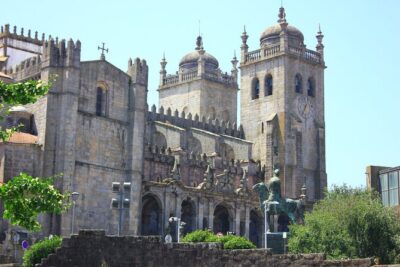
The first major stop is Sé, Porto. Expect a photo stop and a visit with guided commentary for about 20 minutes. Sé is one of those places where you can easily get lost staring at stonework and forget to notice the layers of meaning around it. The value of the tour is that it anchors you in a specific point in Porto’s social timeline—then shows how community identity and public life have played out in public spaces like this.
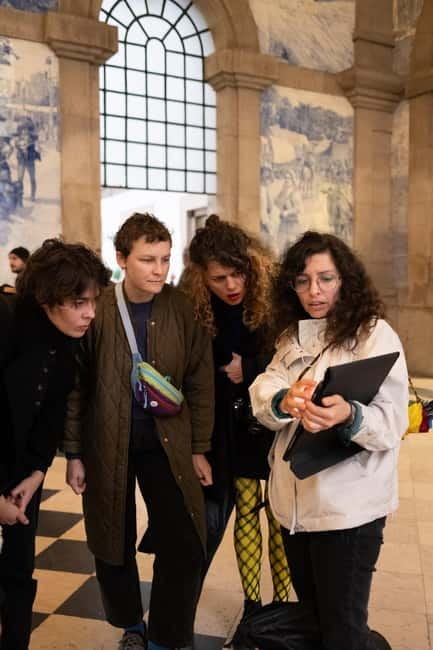
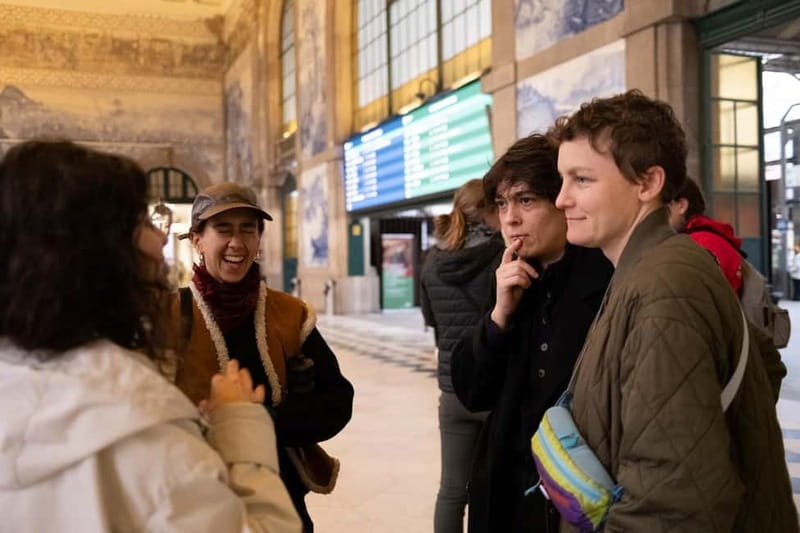
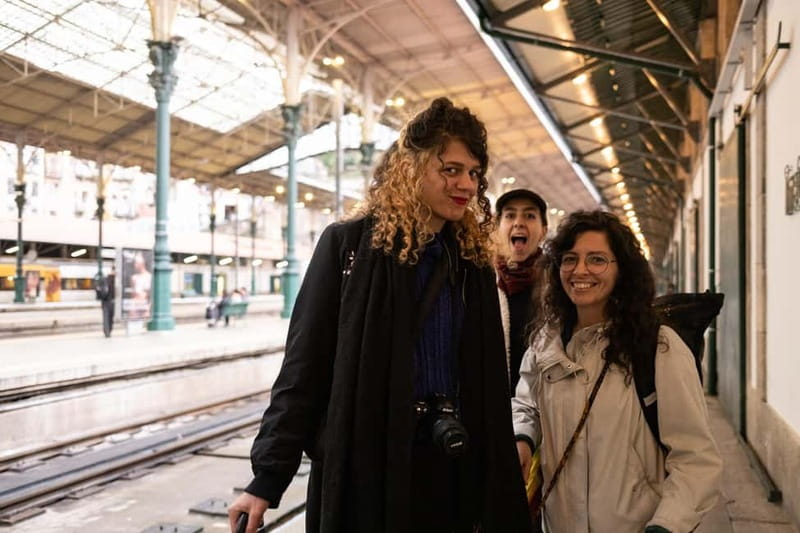
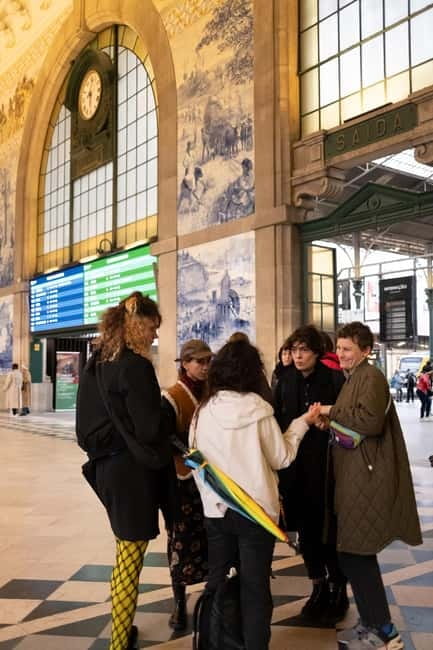
Then you head to São Bento Station for another photo stop and about 20 minutes of guided time. This is a strong move for two reasons. First, São Bento is visually striking, so it’s a natural place to pause and pay attention. Second, it’s a transit hub, which makes it an excellent context for thinking about movement, meeting, and visibility in a city.
What I’d watch for here: your guide’s pace. The station and cathedral areas attract crowds, so you’ll want to keep an eye on your footing and on where you stand for photos. The tour keeps stops timed, so you should be able to see a lot without feeling dragged, but you’ll still be outside and standing.
The short stop that fills in the gaps between neighborhoods
After São Bento, there’s an additional guided stop for about 15 minutes at a point along the route where the focus is on context. The name isn’t specified in the outline you’ll get, but the purpose is clear: this is where your guide connects the dots between the major squares and the smaller street-level signals of community life.
I like these short “bridge stops” because they prevent the walk from becoming a string of unrelated sightseeing. If you’ve ever done a walking tour where every stop is cool but none of them connect, you’ll appreciate the structure here. You’re being taught how to read the city, not just how to name it.
Avenida dos Aliados and Jardim Cordoaria: where daily life meets identity
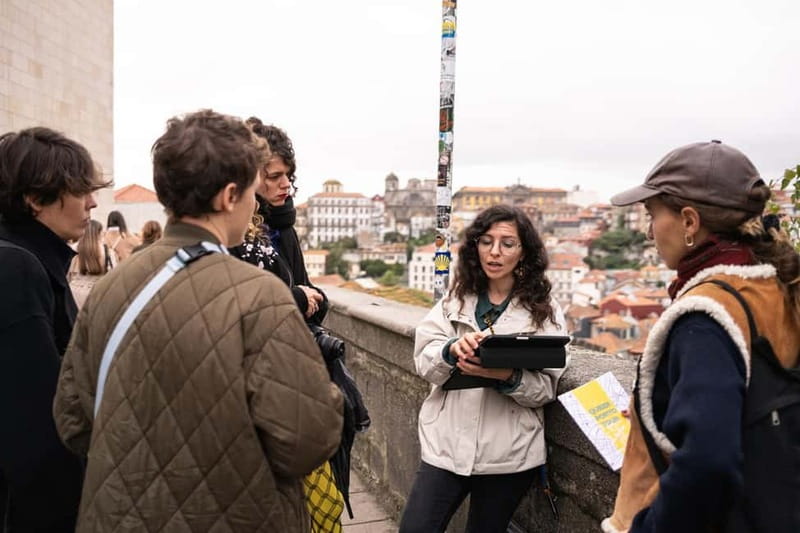
Next up is Avenida dos Aliados, where you’ll get a break plus a quick photo stop and guided time (about 5 minutes). This is a logical inclusion: Aliados is central and visible, so it helps you understand how public spaces shape how people are seen—and how communities find ways to be present.
Right after that, you head to Jardim Cordoaria (also spelled Cordoaria’s Garden in the tour notes). You’ll have a photo stop and a visit with guided commentary for about 15 minutes.
This garden stop is particularly useful if you’re trying to understand the social side of Porto, not only the architectural side. Gardens and open spaces are where people talk, linger, and gather—so they’re perfect for stories about resilience and community life. Even if you’re not a “sit and relax” person, the quick change of scenery can help you process what you’ve learned so far.
Practical tip: plan on some walking between stops. Shoes matter more here than you’d think, especially if you hit uneven pavement or damp ground after a drizzle.
More Porto days out worth booking




Clérigos Tower: a fast photo moment with big visual pay-off
Your route continues to Clérigos Tower for a photo stop and a brief guided segment of about 5 minutes. This is one of those moments where you can absorb the scale of Porto in one glance.
The “why it works” angle: the tour doesn’t linger here, so you’re not stuck with a long pause at a loud, famous landmark. Instead, it gives you the visual marker, then moves you forward to the next story location. If you’re thinking in terms of efficient sightseeing plus meaning, this is a good design.
If you’re tall, you might find photo angles easier. If you’re short, stand slightly back and let others move before you take your shots—there’s usually a practical flow to where people stand around famous sights.
Antiga Cadeia da Relação and the Portuguese Photography Center
One of the strongest parts of the route is the stop at the Antiga Cadeia da Relação do Porto, tied to the Portuguese Photography Center (the tour references it as the Portuguese Photography Center / Antiga Cadeia da Relação).
You’ll get guided time of about 15 minutes here. This is the kind of place where the setting itself makes you pay attention. A former prison paired with a photography context naturally raises questions about documentation, visibility, and how people are recorded in public memory. Even if you don’t know the backstory before you arrive, your guide’s explanations are designed to connect the location to Porto’s LGBTQIA+ heritage.
This stop is also where you’re likely to feel the emotional weight more clearly. The tour’s theme isn’t just celebration; it includes struggle and resilience too. Places like this help that land, because the walls and the institutional history are doing a lot of the work for you.
The coffee break at a local café: a calm reset
About halfway through your walk, you’ll stop for a café break for roughly 30 minutes. This is included with coffee and a pastry, and it’s not just a nice add-on. It’s smart pacing.
After a series of guided explanations and photo stops, a break gives you time to:
- digest what you just learned,
- ask follow-up questions you didn’t want to interrupt before,
- and plan how you’ll move around Porto afterward.
This also helps you avoid the classic walking-tour fatigue. Two and a half hours can sound short, but it’s enough time to feel your feet. The café stop gives you a natural end point to reset your energy.
What about the guide experience (and little extras)?
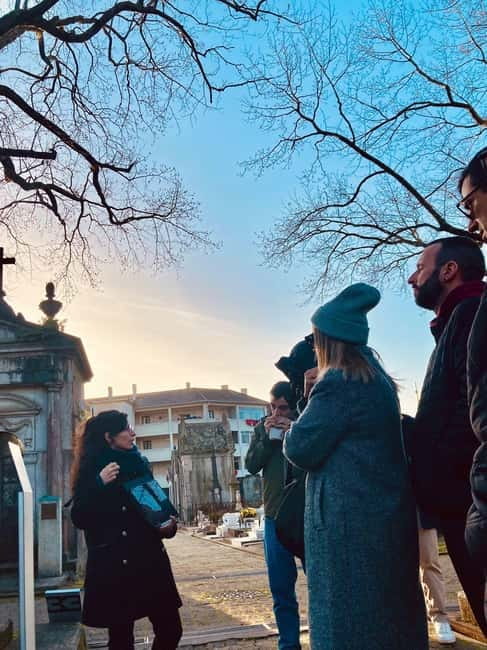
The tour is led by a live guide in English (with Portuguese, Spanish, and French also available). In past experiences, guides have included Diana, who’s noted for sharing queer stories with specific anecdotes and answering lots of questions. That kind of Q&A energy matters because it helps you get beyond “facts” and into “how did people live?”
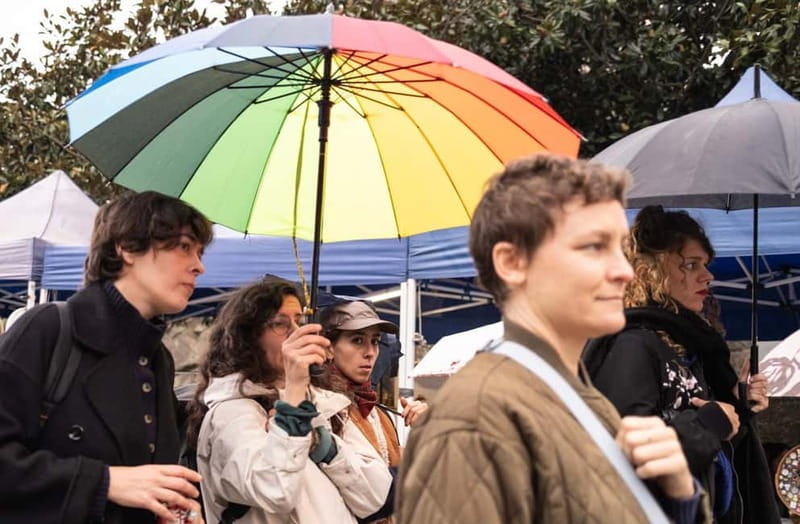
One especially memorable extra from a recent booking: Diana offered an umbrella on a rainy day and also gave a set of designed postcards featuring people discussed on the tour. That’s the sort of thoughtful touch that can turn a standard walking tour into something you remember—though it’s best treated as a welcome bonus, not a guarantee for every group.
Pace, timing, and what to wear
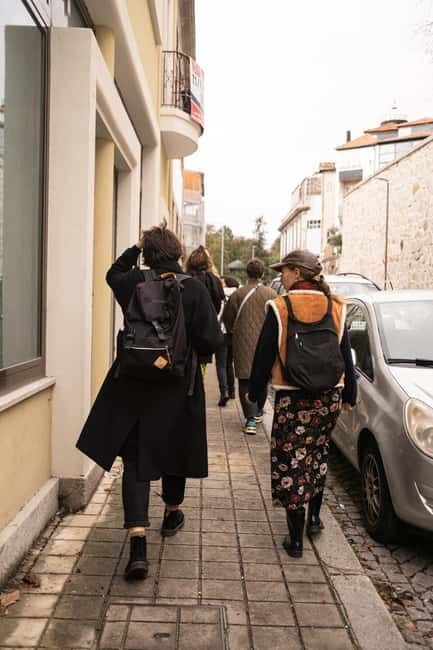
This tour runs about 2.5 hours, and it operates in all weather conditions. So you’re not getting a “nice weather only” experience. You’ll be outside through the route, which makes weather-ready choices worth it.
Bring:
- comfortable shoes,
- weather-appropriate clothing.
Also, plan to start on time. The meeting point is Largo Soares dos Reis, in front of the bust of Virgínia Moura. Arriving about 10 minutes early gives you time to find the guide and settle before you start walking.
If you’re sensitive to standing, you might prefer going earlier in the day or picking a time when the weather is manageable. The itinerary includes multiple short guided segments, which helps, but it’s still a walk.
Price and value: what $45 gets you in Porto
At $45 per person for roughly 2.5 hours, this isn’t the cheapest thing in Porto, but it also isn’t priced like a museum ticket day. What you’re paying for is a guided route that turns landmark sightseeing into context—plus a coffee-and-pastry break.
Here’s the value math that makes it feel worth it:
- You get structured stops at major sites across the center of town.
- You get guided storytelling tied to LGBTQIA+ heritage and inclusive culture.
- You get time to ask questions, not just listen passively.
- You get a built-in food/drink pause (coffee and a pastry).
What’s not included: entrance fees to any attractions. That’s common, and it means your total cost could rise only if you decide to add entrances on your own later. But the tour itself is designed so you can still enjoy each stop without needing an extra ticket at every location.
Who this tour suits best
This tour is a great match if you want:
- a walking route that connects history to the streets you see,
- LGBTQIA+ stories told through real places (not just abstract dates),
- and a guide who can answer questions with specific detail.
It’s also a good choice if you’re balancing Porto’s classic highlights with something more meaningful. You’ll still see major sites like Sé, São Bento Station, Clérigos Tower, and the Antiga Cadeia da Relação area. The difference is that you’re given a lens to look through, so your “normal tourist view” becomes a “why does this matter” view.
If you dislike walking tours or you need frequent long sitting breaks, this might feel a bit tight. The segments are short, but you do keep moving.
Should you book the Porto Queer Walking Tour?
I’d book it if you want Porto with context—Porto that explains what visibility, community, and identity have looked like across time. The structure is sensible: a landmark route, a café reset, and guided stops that don’t drag.
Book it especially if you’re the kind of person who likes learning through place names you’ll actually remember later. And if you’re visiting in rain or cooler weather, you’ll likely appreciate the all-weather approach and the fact that guides have handled it kindly in the past.
Skip it if you mainly want “stand in front of famous buildings, get a photo, move on.” This tour is for people who want stories, meaning, and a guide connecting the dots.
FAQ
Where does the tour start?
The meeting point is Largo Soares dos Reis, in front of the bust of Virgínia Moura.
How long is the Porto Queer Walking Tour?
It lasts about 2.5 hours.
What’s included in the price?
The tour includes a guided tour and a coffee break with a pastry.
Is the tour in English?
Yes. The live tour guide works in English, and it also lists Portuguese, Spanish, and French.
Does the tour include entrance fees to attractions?
No. Entrance fees to attractions are not included.
What should I bring or wear?
Bring comfortable shoes and dress for the weather. The tour runs in all weather conditions.
Is free cancellation available?
Yes. You can cancel up to 24 hours in advance for a full refund.
More Tours in Porto





More Tour Reviews in Porto


More of Porto on Foot


Fresh in the Porto notebook


Porto City Walks, compared.
 ★ 5.0Porto Walking Tour, Lello Bookshop, River Cruise and Cable CarFrom $723,354 reviews
 ★ 4.8City Highlights 3-Hour Guided Electric Bike TourFrom $513,092 reviews
 ★ 5.0Experience Porto’s Charm: 3-Hour Guided Walking TourFrom $352,432 reviews
 ★ 4.83-Hour Guided City Highlights Walking TourFrom $342,050 reviews
 ★ 4.4Wine Tasting with Tapas Walking TourFrom $531,541 reviews
 ★ 4.7Historic City Center Walking TourFrom $331,172 reviews
 ★ 5.0Porto’s #1 Walking TourFrom $01,026 reviews
 ★ 4.8Delicious Food and Wine Walking TourFrom $87977 reviews
Browse the lists this tour appears in