
Reviewed · PRIVATE PORTO TOURS
Porto private morning Tour, discover the most iconic attractions
Porto in four hours feels like a cheat code. I love the UNESCO-level sights packed into a smart route, and I love having onboard Wi‑Fi so you can plan your next stops while you ride. The only catch: some of the most famous places have optional entry tickets, so you may pay extra for Lello, Clérigos, or the Church of Gold.
The meeting point is Praça da Liberdade, and pickup can come from hotels and B&Bs in Porto and Gaia. In a standout example from recent private tours, guides like Carlos bring the city to life with clear history and very practical restaurant and Port-wine advice, not just facts. Since it is private, your van time stays efficient, but you’ll want good shoes for quick photo walks.
In This Review
- Key things to know before you go
- Price and logistics: what $185.02 buys you (and what to watch)
- Starting at Praça da Liberdade: your orientation shot list
- D. Pedro Square and Avenida dos Aliados: Porto’s grand entrance
- Mercado do Bolhão: see how Porto shops, not just how Porto looks
- Praça da Batalha and the story behind the name
- The medieval wall and the Cathedral of Porto: Gothic meets centuries of change
- São Bento Railway Station tiles: free art that’s worth stopping for
- Café Majestic and the Galerias clock: Belle Époque in motion
- Teatro Rivoli and the University building: Porto’s institutional backbone
- Carmo, Carmelitas, and the Casa Escondida: Baroque churches with a twist
- Torre dos Clérigos: 240 steps for a city-wide view
- Livraria Lello and the Palácio de Carrancas: book culture and fine-arts Portugal
- Church of São Francisco and Palácio da Bolsa: gold woodwork and the Arab Room
- The bridge sequence: D. Maria II to Luís I, plus the railway bridge
- Jardim do Morro and Serra do Pilar: Gaia views with a calm pace
- Modern Porto on the edges: Arrábida Bridge, forts, Leixões, and She Changes
- Serralves and Casa da Música: Art Deco meets contemporary architecture
- Praça de Mouzinho de Albuquerque: war memory on a grand scale
- Optional add-ons: Douro sunset cruise, Port tasting, and fado nights
- Who this private morning Porto tour fits best
- Should you book this tour?
- FAQ
- How long is the Porto private morning tour?
- Where does the tour start, and is pickup available?
- Is this tour private?
- What language is the tour offered in?
- Is Wi‑Fi provided during the tour?
- Are entrance tickets included for all stops?
- What happens if the weather is bad?
Key things to know before you go
- Private morning flow: you get your own group and a driver who adjusts on the fly.
- Onboard comfort: Wi‑Fi, bottled water, and refreshments keep the tempo relaxed.
- UNESCO on both banks: you’ll hit Porto and Gaia viewpoints, including the famous bridge area.
- Short stops, big context: many stops are 10 minutes, so you’ll get the story fast.
- Ticket extras matter: some interiors are not included, so decide what you truly want to enter.
- Good for limited time: this is a fast way to get your bearings across centuries.
Rather go at your own pace? More private guides
- Discover Porto’s Highlights on a 2-Hour Private Electric Tuk Tuk★ 4.5 · 1,860 reviews
- Porto PRIVATE TOUR With Locals: Highlights & Hidden Gems★ 5.0 · 984 reviews
- Porto: Private Tour of the Historic City in a Ford T Car★ 4.8 · 932 reviews
- Porto: Private tour in the Douro (1 to 4 people) on a boat just for you★ 5.0 · 744 reviews
Price and logistics: what $185.02 buys you (and what to watch)
At about $185.02 per person for roughly 4 hours, this is not a bargain-bus deal. But you are paying for the private setup: a luxury vehicle, pickup options around Porto and Gaia downtown areas, and a driver focused on history and navigation rather than rushing a big group. If you only have a morning and want the iconic stuff plus the backstory, it can be very cost-effective.
The main thing to plan for is that several top sights are not included with admissions (like Livraria Lello and Clérigos Tower). The tour still gives you the key exterior time and context, but if your heart is set on interior visits, budget extra.
Starting at Praça da Liberdade: your orientation shot list
Your day typically starts at Praça da Liberdade. This is a smart place to begin because it lets you orient quickly before the older streets start stacking up in your mind. You’ll then move into the areas that define Porto’s look: wide avenues, monumental squares, and the steep little corridors that make the city feel layered.
From the start, you’ll also get the rhythm of Porto: quick stops, short walks, and lots of looking—up at facades and out toward the river. That’s a big part of why a private morning works so well here.
D. Pedro Square and Avenida dos Aliados: Porto’s grand entrance
One of the first big visual anchors is the avenue scene lined with 1920s to 1940s buildings, with the Cardosas area nearby and Porto’s civic presence (including the Town Hall) shaping the view. You’ll also pause near the statue of D. Pedro IV, known as the Liberator, right in the flow of D. Pedro Square.
This is the moment to notice how Porto mixes eras on purpose. The city doesn’t separate old and new into tidy zones—it stacks them side by side, and the route reflects that.
Mercado do Bolhão: see how Porto shops, not just how Porto looks
Next up is Mercado do Bolhão, a market dating to 1850 and known for its two-floor neoclassical structure. It’s officially classified as a property of public interest, and it shows its age in the best way: it still feels like a working market, not a museum set.
You’ll get about 10 minutes here, with attention on fresh produce and the market’s specialized stalls—fish, butcher sections, vegetables, and flowers. Ticket admission is free, which is a nice bonus for keeping costs down. Even if you don’t buy anything, it’s a fast way to understand Porto’s everyday life.
Practical tip: if you have any food-related plans later, this stop helps you spot what locals prioritize and what looks freshest.
More Porto days out worth booking



Praça da Batalha and the story behind the name
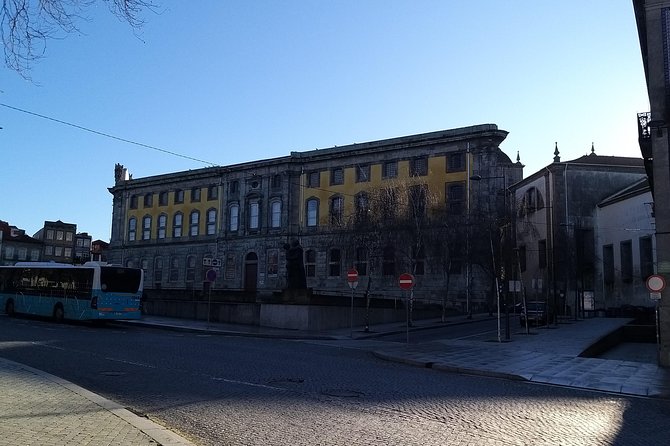
At Praça da Batalha, you’re in a historic square tied to a very old defeat in the region. The name connects to a battle around the 10th century involving Almançor, and the area later became a major public space—urbanized around 1861.
The square is also linked to Teatro São João, one of Porto’s oldest cultural venues, inaugurated in 1798. Its history includes a major fire in April 1908, which is the kind of detail that makes a square feel more real than just a photo stop.
This section works especially well when your guide tells the “why it’s named that” story before you start hunting for angles.
The medieval wall and the Cathedral of Porto: Gothic meets centuries of change
You’ll pass by a surviving section of the city’s old defensive wall—work started in the 14th century under D. Afonso IV, almost completed around 1370, and finished later in 1409 under D. Fernando. Since the 18th century it has been gradually removed for military and practical reasons, leaving only portions today.
Then comes Catedral do Porto, a medieval structure dating to the 12th/13th century. It has been expanded and renovated across time, but it retains the medieval cathedral shape as its foundation, with its final configuration arriving in the 20th century.
If you want one inside highlight to imagine before you go, the tour typically calls out the Gothic Chapel of St. John the Evangelist and its cloister, plus the Chapel of the Blessed Sacrament with a silver altar. Admission isn’t included for this stop, so factor in whether you want to pay to go in—or enjoy the exterior and learn the key landmarks from outside.
São Bento Railway Station tiles: free art that’s worth stopping for
One of my favorite “free but do not skip” stops in Porto is São Bento Railway Station. The station was built in the early 20th century on the former Convent of São Bento de Avé Maria site. The current station design features glass and iron work by architect Marques da Silva.
Inside, you’ll see twenty thousand painted tiles by Jorge Colaço, showing scenes from transport evolution, regional life, and history. This one is ticket-free, so it’s a great value moment in the middle of a paid tour.
If the line outside is short, take a quick look before moving on—tile lighting can be different at different times of day, and you’ll get the best feel by watching your eyes adjust.
Café Majestic and the Galerias clock: Belle Époque in motion
Porto’s Belle Époque side shows up at Café Majestic on Rua Santa Catarina, opened in 1921. The interior is Art Nouveau and known for marble, gilded mirrors, and intricate woodwork—basically a time capsule you can sit inside for coffee and pastries.
Just nearby is the Relógio das Galerias Palladium, an ornate clock that has a carillon and statues that perform every three hours. The figures include São João, Infante D. Henrique (Prince Henry the Navigator), writer Almeida Garrett, and novelist Camilo Castelo Branco.
This stop is less about racing through another landmark and more about catching Porto’s personality. Even if you don’t pause for a snack, you’ll leave with a better sense of the city’s intellectual and artistic vibe.
Teatro Rivoli and the University building: Porto’s institutional backbone
Between the classic facades, you’ll also see performance culture and education in action. The Rivoli Theatre was inaugurated in 1932, after changes related to the former National Theatre, and it shifted to cinema and performance programming (opera, dance, theatre, concerts). It was later closed for refurbishment after being acquired by the Porto City Council.
You’ll also get the story of a neoclassical building designed by Carlos Amarante, financed by a literary tax on wine in 1803. In 1911, it housed the Faculty of Sciences, and today it’s connected to the University’s rectory and the Natural History Museum.
This is a subtle but valuable part of the morning: you see Porto isn’t only romance and river views. It also runs on institutions.
Carmo, Carmelitas, and the Casa Escondida: Baroque churches with a twist
Now you get into Porto’s big religious cluster. The Igreja do Carmo and Igreja das Carmelitas are both Baroque, and the tour highlights the churches’ external tile work and ornate facades. Across the street, the scene is dramatic enough on its own—but Porto adds a quirky surprise between them: the Casa Escondida (Hidden House).
This small house fits into the dense built area between the two churches, and it’s the kind of detail you’d totally miss on your own if you weren’t looking for it. Ticket admission is listed as free for this stop, which makes it an easy win.
Torre dos Clérigos: 240 steps for a city-wide view
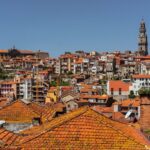
No Porto morning tour is complete without Torre dos Clérigos. This Baroque tower by Nicolau Nasoni was built in the first half of the 18th century, and climbing it means 240 steps for panoramic views over Porto and the Douro River.
Admission for the tower is not included, but the payoff is obvious: you’ll understand why Porto’s geography shapes everything—from street slopes to bridge placement. There’s also a fun pop-culture footnote: the tower appeared in the 2021 Hollywood blockbuster Suicide Squad.
If you’re sensitive to heights or have mobility limits, you’ll want to plan your decision early. It’s worth asking how much walking time you’ll have before you commit.
Livraria Lello and the Palácio de Carrancas: book culture and fine-arts Portugal
Livraria Lello is one of Porto’s most recognizable interiors from the outside first: the building opened in 1906 and is known for its Art Nouveau façade with Neo-Gothic details. Inside, you’ll see painted plaster mimicking wood and a grand staircase linking levels, plus a huge stained-glass skylight.
This stop also has a ticket requirement not included, and the tour typically gives you about 10 minutes for the exterior and immediate context. If you care deeply about interiors, it’s the kind of place where buying priority entry can make your life easier.
Next, you’ll visit the story of a major public arts space connected to the National Public Library: the museum function in the Palace of the Carrancas area, installed since 1942 and associated with fine arts, decorative arts, and archaeology. Ticket admission is not included for this segment, so again: decide if the interior is a must.
Church of São Francisco and Palácio da Bolsa: gold woodwork and the Arab Room
Porto’s church wow-factor hits at Igreja de São Francisco—a major Gothic temple whose build began in the 14th century. The interior is famed for golden Baroque woodwork from the 17th and 18th centuries, and it’s been described as the Church of Gold by Count Raczinsky. The tour also calls out the Tree of Jesse and the catacombs.
This one is not included ticket-wise, so you’ll want to think in advance. If you can’t or don’t want to pay for one interior in this tour, you can often choose whether to prioritize the church or another ticketed highlight.
Then comes Palácio da Bolsa, a neoclassical building built in 1842 (designed by Joaquim da Costa Lima) on the former convent site destroyed during the Siege of Porto. The famous highlight is the Arab Room, and the palace functions as a cultural and conference center. A guided tour fee is listed as not included, so you may want the guided version if this is your one “big indoor” budget splurge.
The bridge sequence: D. Maria II to Luís I, plus the railway bridge
Porto’s skyline story is basically a bridge story. First, you’ll see the area tied to the old suspension bridge called D. Maria II, created to connect Porto and Gaia. It opened in 1843, ran for about four years, and was deactivated due to safety concerns—today, only two stone obelisk-shaped pillars remain.
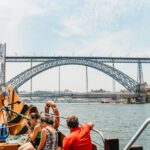
Then you get the big one: Ponte D. Luís I. Completed with the upper board inaugurated in 1886 and the lower board in 1888, it’s known for being the largest wrought-iron arch in the world. The Historic Center UNESCO designation also covers this bridge area, so your guide will likely connect what you see on the riverfront with what makes Porto “Porto” on a global level.
You may also be shown the railway bridge structure by Edgar Cardoso, connecting Campanhã station to destinations in the south. It was inaugurated on St. John’s Day (June 24, 1991) and uses a gantry solution with three spans (two 125m and one 250m).
This section is great for photo lovers because each bridge gives you a different framing of the city. It’s also a practical history lesson: Porto’s growth is tied directly to how people and goods moved.
Jardim do Morro and Serra do Pilar: Gaia views with a calm pace
On the Gaia side, Jardim do Morro offers a public park feel with panoramic views. It’s developed in the 20th century and complements the monastery setting, so you can slow down after earlier church-and-tiles intensity.
Then you’ll reach Mosteiro da Serra do Pilar, an Augustine monastery whose construction began in 1538 and evolved across centuries. The circular church and cloister shapes are a key point here, and the site is classified as a national monument (1910) and part of UNESCO in 1996 alongside the Historic Center and Luís I Bridge.
Ticket admission isn’t included here. Even if you don’t go in, the viewpoint logic is easy: Porto looks best when you understand how the river bends and where the city rises.
Modern Porto on the edges: Arrábida Bridge, forts, Leixões, and She Changes
This tour doesn’t stop at the postcard center. You’ll also see more modern infrastructure and coastal history.
The Arrábida Bridge, designed by Edgar Cardoso, is a concrete engineering star. It stretches 270 meters and was, for a time, the longest reinforced concrete bridge in the world, inaugurated in 1963, sitting about 70 meters above average water level. Bronze sculptures sit on top of four large pillars.
You’ll then get into fort territory: Fortress São João Baptista built at the end of the 16th century to protect the coast and the Douro entrance, with additions in the 17th century and an access gate from the 18th century. Nearby is Castelo do Queijo, the Fort São Francisco Xavier, built in the 17th century to protect against North African pirates and named for its cheese-like rocky hill shape.
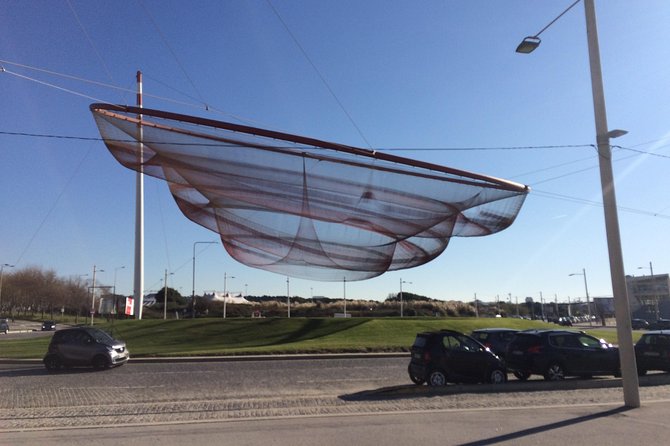
You’ll also pass the King John VI statue on its decorated granite pedestal, inaugurated June 1966, and you may get a view of the sculpture She Changes (also called anemone), created by Janet Echelman. It’s a fishing net artwork that moves with the wind, so it can look different minute to minute.
Then there’s the port reality: Leixões Port has been ramping up cruise operations, with a new cruise pier opening in April 2011 and two docks able to handle larger ships. If your trip overlaps with cruise season, this stop can feel especially alive.
Serralves and Casa da Música: Art Deco meets contemporary architecture
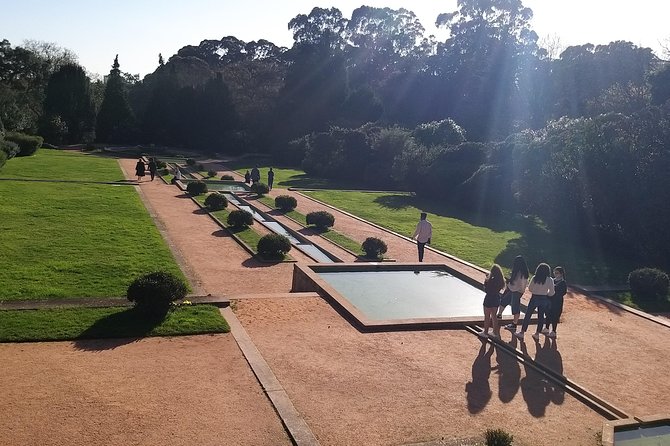
Porto also has taste for modern design. At Serralves, you’ll learn about the Art Deco House built in the 1930s, used for exhibitions and events, set within the broader Serralves Park landscape with gardens, a traditional farm, and even forest areas. The park’s design is tied to architect Jacques Greber’s project, and the whole setup is also home to the Museum of Contemporary Art.
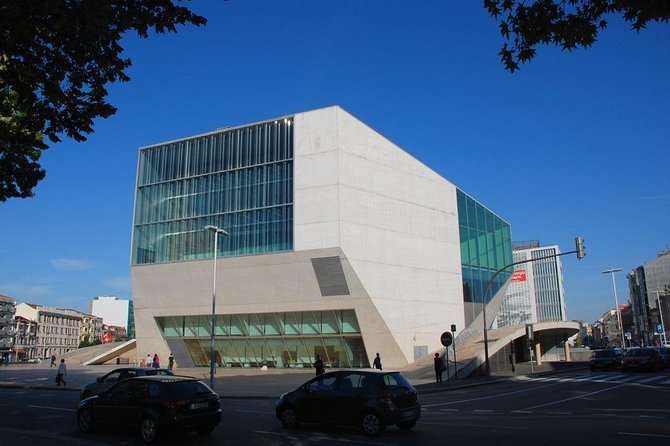
Then the tour points to Casa da Música in the Boavista area—designed by Rem Koolhaas and inaugurated in 2005. It’s Porto’s main contemporary concert hall, and even just seeing the building from outside helps you appreciate how Porto’s architectural story didn’t stop in the 1800s.
Ticket admission isn’t included for Casa da Música, so this is mostly a visual and contextual stop unless you add something on your own.
Praça de Mouzinho de Albuquerque: war memory on a grand scale
To wrap the city loop, you’ll reach Praça de Mouzinho de Albuquerque, home to a monumental 45m high Monument to the Heroes of the Peninsular War. The centerpiece is an obelisk with groups of sculptures that represent the union of Portuguese and English forces (lion) and victory against Napoleonic armies (eagle).
The monument was inaugurated in 1951. It’s not the romantic Porto most people expect, but it helps explain why the city’s identity includes strong historical memory.
Optional add-ons: Douro sunset cruise, Port tasting, and fado nights
If you want to turn the morning into a full Porto story, the add-ons are well matched to Porto’s “three pillars”: river, wine, and music.
- Private Douro River cruise (sunset): about 2 hours, described as a private exclusive sunset experience with views of six bridges and riverside neighborhoods.
- Exclusive Dona Antónia Port wine cellar tour: about 1.5 hours with a walk through historic cellars and a tasting of five Port wines.
- Fado night + traditional dinner: around 2.5 hours starting at 20:00, with transport included per the option description.
- Fado show with Port wine: about 1 hour, scheduled daily at 18:00 and 19:30, and includes a Port wine tasting.
If you’re the type who gets tired halfway through indoor tickets, you can simplify: do the morning tour, then choose just one evening add-on.
Who this private morning Porto tour fits best
This tour fits best when you want the big hits without planning your own route block by block. It’s also a strong choice if you like context—your driver tells the city story while you move between sites.
It’s especially good for:
- first-timers trying to understand Porto fast
- people who want a private guide style (your group only)
- anyone who wants both the historic core and major bridge-and-river viewpoints
Should you book this tour?
Yes—if you want a smart, private way to see UNESCO-level Porto and get your bearings across the river in one morning. The price makes sense when you factor in the private vehicle, pickup options, onboard Wi‑Fi, and the way the route strings together markets, cathedrals, iconic stations, towers, and bridges.
Skip it (or customize your expectations) if you only care about one or two interiors and don’t want ticket add-ons. The tour does a lot of exterior-and-context stops, so you’ll get the most value by deciding in advance which paid entries matter to you.
FAQ
How long is the Porto private morning tour?
It lasts about 4 hours.
Where does the tour start, and is pickup available?
The meeting point is Praça da Liberdade 19, 4000-322 Porto. Pickup is offered from downtown Porto and Gaia hotels and B&Bs.
Is this tour private?
Yes. It is a private tour/activity, and only your group participates.
What language is the tour offered in?
The tour is offered in English.
Is Wi‑Fi provided during the tour?
Yes. The vehicle includes onboard Wi‑Fi.
Are entrance tickets included for all stops?
No. Some stops list admission as free, while others have tickets that are not included (for example Livraria Lello, Clérigos Tower, and the Church of São Francisco).
What happens if the weather is bad?
This experience requires good weather. If it’s canceled due to poor weather, you’ll be offered a different date or a full refund.
More Tours in Porto




More Tour Reviews in Porto

Private Porto Tours to Compare

Fresh in the Porto notebook


Private Porto Tours, compared.
 ★ 4.5Discover Porto’s Highlights on a 2-Hour Private Electric Tuk TukFrom $481,860 reviews
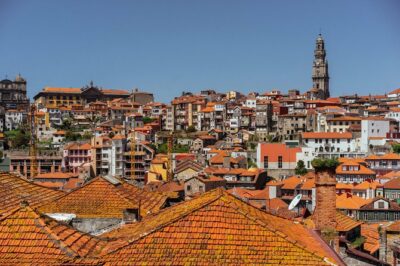 ★ 5.0Porto PRIVATE TOUR With Locals: Highlights & Hidden GemsFrom $96984 reviews
 ★ 4.8Private Tour of the Historic City in a Ford T CarFrom $32932 reviews
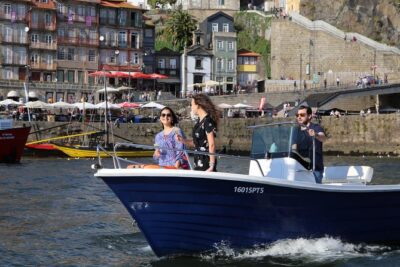 ★ 5.0Private tour in the Douro (1 to 4 people) on a boat just for youFrom $168744 reviews
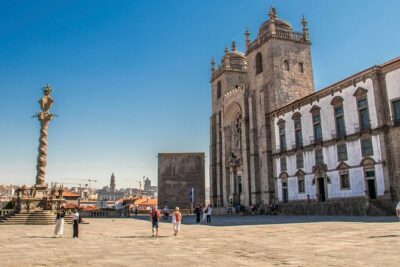 ★ 4.5Historic Porto by Private Electric Tuk Tuk to Top LandmarksFrom $42735 reviews
 ★ 5.0Porto Private Food and Drink Tasting Tour with LocalFrom $139652 reviews
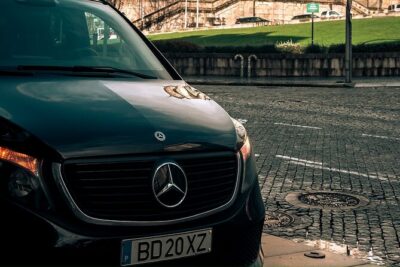 ★ 5.0Private Taxi Transfer to/From Porto AirportFrom $24649 reviews
 ★ 5.0Private tasting in the Douro (1 to 7 people) on a yacht for yourselfFrom $313559 reviews