
Reviewed · PRIVATE PORTO TOURS
Porto private afternoon tour, discover the most iconic attractions
Porto in four hours feels like a greatest-hits mixtape.
This private afternoon tour strings together markets, churches, cafés, museums, and big Douro River viewpoints—with pickup and a guide who explains how Porto actually got to where it is today.
I especially like the smooth logistics: hotel pickup, comfortable executive vehicle (with Wi‑Fi and water), and a route that keeps you from zigzagging across town.
And I like the history-first storytelling, where medieval walls and Baroque churches come with clear context, not just dates.
One thing to plan for: the pace is fast, and several top sights have separate entry tickets (think Clerigos Tower, Livraria Lello, and the Golden Church).
If you want lots of time inside every stop, this format may feel a bit too “see it, then move on.”
In This Review
- Key highlights worth your attention
- Avenida dos Aliados and Praça de D. Pedro: where the tour starts to make sense
- Mercado do Bolhão and Praça da Batalha: daily Porto with a story attached
- The medieval wall, the Cathedral of Porto, and São Bento’s free tile show
- Café Majestic and Porto’s theatre and science buildings: Belle Époque to modern learning
- Carmo and the Hidden House, then Clérigos Tower: Baroque drama with a stair penalty
- Livraria Lello and the National Public Library Museum: ticket reality vs payoff
- Palácio de Cristal Gardens and two transport museums: pretty space plus serious engineering
- Golden Church, Palácio da Bolsa, and the calm power of UNESCO sights
- Douro bridge viewpoints: from Jardim do Morro to Serra do Pilar and beyond
- Forts, coast stops, Leixões cruise terminal, and public art like Anemone
- Serralves and Casa da Música: Porto’s 20th-century creative side
- Praça de Mouzinho de Albuquerque: a 45-meter monument that’s hard to ignore
- Optional add-ons: when you want more Douro and more night life
- Price and value: what $185.43 really buys you
- Should you book this Porto private afternoon tour?
Key highlights worth your attention
- Hotel pickup + luxury vehicle so you spend less time hunting cabs and more time seeing Porto
- São Bento’s tile murals—free, and seriously memorable even if you only stop briefly
- Baroque to Art Nouveau, in one afternoon: Clérigos Tower, Café Majestic, and Lello’s stained glass
- Douro bridges from multiple angles, including UNESCO-classified bridge viewpoints
- Optional upgrades that can turn your afternoon into a sunset cruise or a full fado evening
Rather go at your own pace? More private guides
- Discover Porto’s Highlights on a 2-Hour Private Electric Tuk Tuk★ 4.5 · 1,860 reviews
- Porto PRIVATE TOUR With Locals: Highlights & Hidden Gems★ 5.0 · 984 reviews
- Porto: Private Tour of the Historic City in a Ford T Car★ 4.8 · 932 reviews
- Porto: Private tour in the Douro (1 to 4 people) on a boat just for you★ 5.0 · 744 reviews
Avenida dos Aliados and Praça de D. Pedro: where the tour starts to make sense
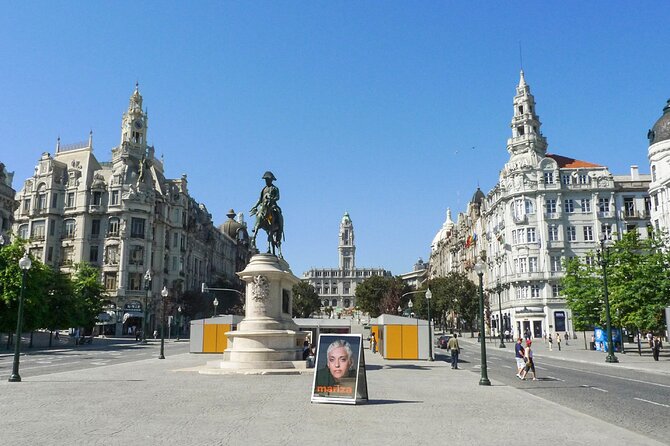
Most afternoons begin at Avenida dos Aliados, the big central boulevard that acts like Porto’s living room. You’ll be in the right frame of mind fast, because you can feel how the city’s neighborhoods and monuments connect to one main axis.
The tour area around Praça de D. Pedro is built for orientation. There’s the equestrian statue of D. Pedro IV in the square, and the surrounding architecture gives you a timeline vibe: older structures, plus the more 20th–40s era buildings that help explain Porto’s growth beyond its medieval core.
This is a good start if you want your guide to set the pattern. You’re not just being dropped at landmarks—you’re getting the “why” behind the geography.
Mercado do Bolhão and Praça da Batalha: daily Porto with a story attached
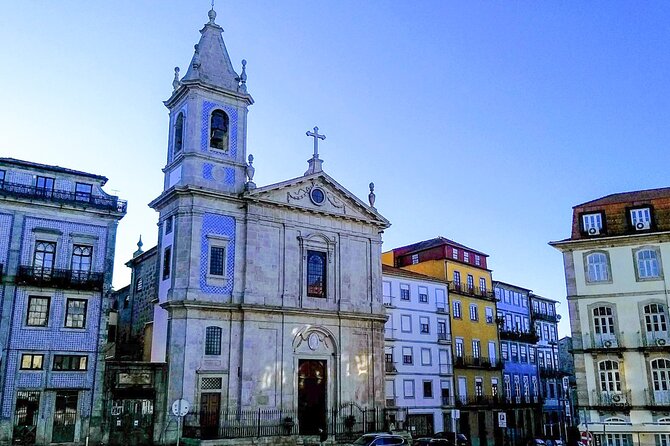
Mercado do Bolhão is one of those places that feels like it belongs in a documentary. It dates back to 1850 and has a striking two-story, neoclassical structure. Even if you only spend a short walk outside, you get the market’s layout: many specialty stalls facing the surrounding streets, with fresh produce as the center of the action.
Practically, this stop works because it isn’t tourist-only. It’s fresh fruit, fish, meat, flowers—very Porto, very real. You’ll also notice the market’s shape: it’s compact and organized, which makes a quick stop feel efficient instead of rushed.
Then you head toward Praça da Batalha, a historic square whose name is tied to a battle story tied to earlier centuries. The square gained real urban importance after being developed around 1861, and it’s also the home area for Teatro São João, Porto’s major cultural venue.
One detail I like here: the theatre’s early life ended in a destructive fire in 1908. That tragedy becomes part of Porto’s identity—architecture, art, and reinvention all in the same neighborhood.
The medieval wall, the Cathedral of Porto, and São Bento’s free tile show
Porto’s medieval defensive wall is a key “connective tissue” stop. The fortification work started in the 14th century under D. Afonso IV, then pushed forward later during the reign of D. Fernando—which is why the wall carries that name. Parts of it survived into modern times, but in the 18th century military needs faded, and much of it was demolished.
This is one of those moments where a guide’s context matters. In a few minutes, you can understand why Porto’s old center is arranged the way it is, and why the city feels so layered when you walk around.
Next comes Catedral do Porto, a medieval cathedral with a long edit history. Construction began in the 12th/13th centuries, then renovations kept shaping it into its current form. If you like specific, named highlights, this is where the stops matter: the Gothic chapel of São João Evangelista and its cloister, the chancel enlargement, and the Chapel of the Blessed Sacrament with a silver altar.
Then, like a visual exhale, you reach São Bento Railway Station. It’s free, and it’s built on the site of an older convent. The station’s big claim to fame is the tile artwork—around 20,000 painted tiles by Jorge Colaço—covering transport themes and stories from Portuguese life. You don’t need museum time here. Even a quick look can feel like a full experience.
Tip: if you’re short on time, stand where you can see groups of tiles at once. The artwork is what your eyes will remember later, not the train schedule.
Café Majestic and Porto’s theatre and science buildings: Belle Époque to modern learning
After medieval and station tiles, you shift to charm and design. Café Majestic, opened in 1921, is a classic example of Porto’s Belle Époque era and its Art Nouveau style. The café is known for intellectual and creative regulars, and the interior’s marble, gilded mirrors, and ornate woodwork turns a quick stop into a mini time machine.
If you like details, you’ll also notice the nearby Palladium clock. It’s an ornate clock with a carillon, and four statues perform every three hours. That means timing matters if you’re chasing the show—if you happen to catch it, it’s a fun little burst of theatre on a city street.
From there, you move through another layer of Porto: entertainment and education architecture. The tour includes the Rivoli Theatre, opened in 1913 and later adapted for cinema and performances; it later closed for a full refurbishment from 1992 with completion four years later. It’s not just a building—it’s Porto adjusting its cultural spaces as the city’s needs changed.
You’ll also see a neoclassical building designed by Carlos Amarante, financed via a tax on wine in 1803. It housed the Faculty of Sciences in 1911 and is currently tied to the University of Porto’s rectory and the Natural History Museum. This stop is a reminder that Porto’s cultural life isn’t only churches and cafés—it’s also research and learning housed in beautiful stone.
More Porto days out worth booking



Carmo and the Hidden House, then Clérigos Tower: Baroque drama with a stair penalty
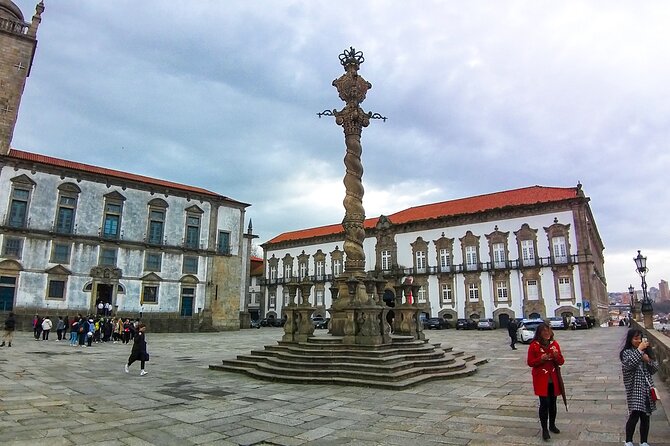
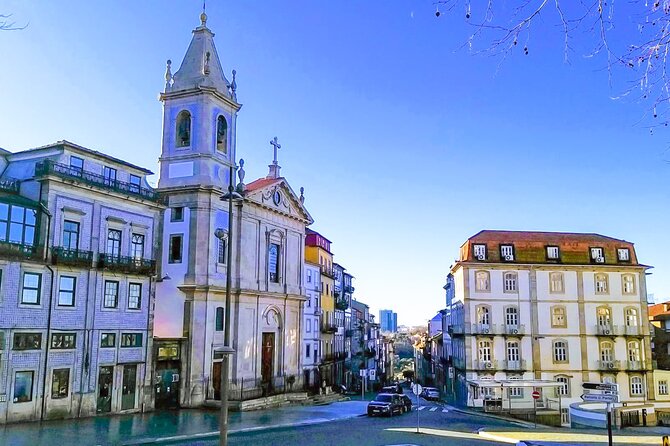
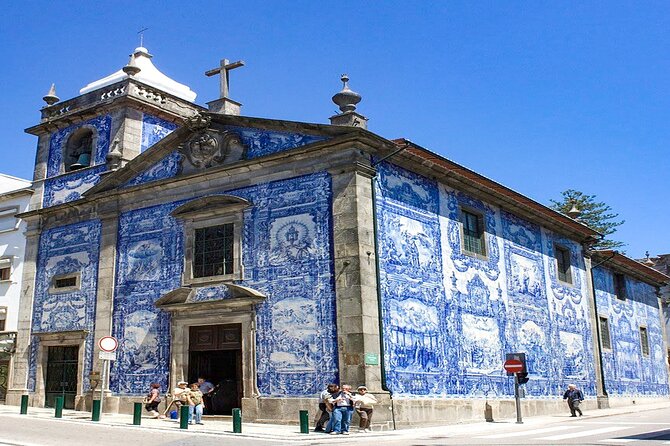
Porto delivers major religious architecture in a tight span. The Igreja do Carmo area includes the Church of Carmo and the Carmelites (two Baroque churches close together). One reason this part works is visual contrast: the Church of Carmo is known for exterior azulejo tiles, while the Carmelites offers the kind of ornate facade that makes you stop even when your schedule says don’t.
Between them is the Hidden House, a small space wedged in between the two churches. It’s exactly the kind of detail you could miss on your own, and that makes it special in a “private tour for orientation” way. Porto is dense; that little architectural solution explains why older neighborhoods feel so snug.
Then comes the signature climb: Torre dos Clérigos. This Baroque tower by Nicolau Nasoni was built in the early 1700s, and it’s famous for the panoramic views. You’ll climb 240 steps. If you’re okay with stairs, the view is the point. If stairs make you grumpy, bring patience—and pick your spot for photos fast.
Clérigos Tower entry isn’t included. There’s an optional “Evita Fila” ticket listed for €10 per person. That extra cost can be worth it if you hate lines, especially on busy days.
Livraria Lello and the National Public Library Museum: ticket reality vs payoff
Livraria Lello is one of Porto’s most photographed interiors, and the outside doesn’t disappoint. The building opened in 1906 and has an Art Nouveau facade with neo-Gothic details. Inside, you’re looking at painted plaster that imitates wood and a dramatic staircase connecting floors. The stained glass skylight with the library’s monogram and motto is the kind of detail you’ll end up remembering even after you’ve left the building.
Entry isn’t included in the base tour, and there’s a listed upgrade for a Gold Ticket (priority + book) at €16 per person. If you’re set on going inside, I’d strongly consider that upgrade because the whole point here is to experience what everyone raves about—without spending your limited time stuck in queue.
The tour also stops by the National Public Library area. The museum component is described as the oldest public museum in Portugal, installed in the building of a former convent and currently housed since 1942 in Palácio dos Carrancas (late 18th century). It functions as a museum of fine arts, decorative arts, and archaeology. You won’t get a full museum marathon in a four-hour afternoon, but it’s a great “quick credibility check” stop for anyone who wants Porto’s intellectual side.
Palácio de Cristal Gardens and two transport museums: pretty space plus serious engineering
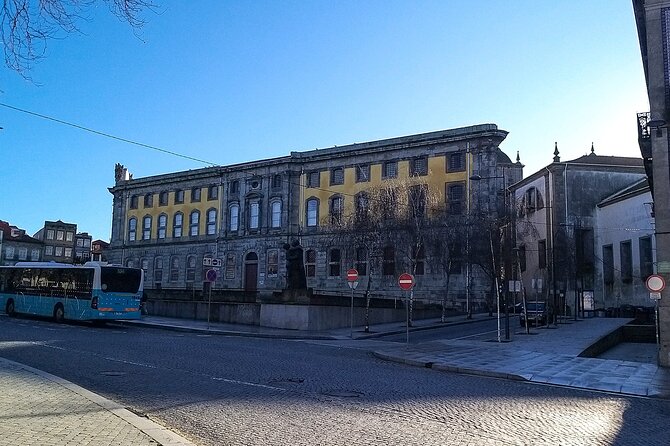
At Palácio de Cristal Gardens, you get a breather. This Romantic-era garden covers about 8 hectares in the center of Porto and was designed in the 19th century by landscape architect Émille David for the Palácio de Cristal building. The garden layout is preserved according to the original plan, including Jardim Émille David, Avenida das Tílias, and the forested sections. There are also balconies over the Douro River, which makes it a natural “photos and fresh air” moment.
Then you shift to engineering and transport, which I love because it changes your Porto mental picture. The tour includes the Electric Car Museum, opened in 1992, housed in the former Massarelos power station. You’ll see trams and auxiliary vehicles and learn about early light rail history, including horse-drawn trolley buses introduced in 1872. The setting in an old power station adds atmosphere.
Right after that comes the Museum of Transports and Communications in a neoclassical building from the 19th century by engineer Jean FG Colson. The building’s two facades—one toward the Douro River, one toward the city—plus the way iron combines with stone, brick, and wood gives you a chance to look at real industrial-era craftsmanship. It’s the kind of place where even a short visit feels meaningful because you’re looking at objects that literally moved people and goods.
Golden Church, Palácio da Bolsa, and the calm power of UNESCO sights
The tour includes Igreja de São Francisco—often called the Golden Church because of its golden Baroque interior from the 17th and 18th centuries. Construction began in the 14th century, and the result is dramatic. You’ll also hear about the Tree of Jesse and the catacombs. It’s a national monument and a UNESCO World Heritage Site since 1996.
Entry for the Golden Church isn’t included, with a listed fee of €10 per person.
Also on the stop list is Palácio da Bolsa, Porto’s Commercial Association headquarters. Designed in neoclassical style and built in 1842, it sits on the former São Francisco Convent site, destroyed in a fire during the siege. The highlight is the famous Arab Room. There’s a listed optional guided ticket fee for entry via €14 per person.
This area is one of the best examples of why the tour style works. In a short afternoon, you get sacred architecture, then a civic building, then a whole UNESCO-level “how Porto shows power” lesson—all in the same zone.
Douro bridge viewpoints: from Jardim do Morro to Serra do Pilar and beyond
The tour hits the Douro River and bridges at a good time of day for photos. Jardim do Morro is a public park with panoramic views and a peaceful break from streets. It complements nearby monastery settings, and the big upside is that you can enjoy the view without needing a ticket.
Then you go to Mosteiro da Serra do Pilar in Vila Nova de Gaia. It belongs to the Order of Saint Augustine. Construction began in 1538 and continued over centuries, so the final look isn’t “one moment” but layered evolution. The circular shapes of the church and cloister are the star here, and it’s part of the UNESCO classification alongside Porto’s historic center and the Luís I Bridge.
From there, bridge spotting becomes the game. You’ll see:
- D. Maria III suspension bridge remnants: created in 1843 to connect Porto and Gaia, deactivated after four years due to insecurity; today only two stone obelisk-like pillars remain.
- Ponte D. Maria Pia: Eiffel’s first masterpiece, inaugurated in Porto in 1877, in service for 114 years until replaced. It’s a bi-articulated arch with a rail deck supported by lattice pillars.
- Ponte de São João: connects Campanhã to southern destinations, inaugurated June 24, 1991. Edgar Cardoso designed the three-span bridge with two pillars anchored near riverbanks.
- Arrábida Bridge: opened in 1963, designed by Edgar Cardoso, and noted as a record in reinforced concrete at the time; bronze sculptures sit atop the supporting pillars.
- The Maillart-type arch bridge opened in 2003: 371 meters long, 20 meters wide, with a 280-meter arch span and a span/arrow ratio designed for slenderness.
In real terms: you’re not getting long stays at each bridge. You’re getting the right angles. If you want to fully explore bridges on foot, that’s a separate plan—but for a four-hour overview, this hits the main “Porto identity” features hard.
Forts, coast stops, Leixões cruise terminal, and public art like Anemone
Porto’s waterfront isn’t only prettiness. The tour includes coast defense and modern city energy.
You’ll see Fortress São João Baptista, built at the end of the 16th century to protect the coast and the Douro entrance, with later additions in the 17th century and a gate from the 18th. There’s also Castelo Do Queijo (Fort São Francisco Xavier), built in the 17th century to protect against North African pirates, shaped like a cheese wedge on a rocky hill.
Then comes a modern port reality check at Leixões Cruise Terminal. The new cruise pier opened in April 2011, giving Leixões two docking piers for bigger ships. The data points included are impressive: in 2012 passengers jumped 81% and ships by 25%, and the port drew tens of thousands of passengers that year.
The tour also pauses for public art, including Anemone, a sculpture by Janet Echelman designed for Porto and Matosinhos. It’s described like a huge fishing net that moves with the wind, like anemones in sea currents. It’s a great way to end a bridge-and-fort afternoon: wind-driven, photogenic, and very contemporary in a city that loves layers.
Serralves and Casa da Música: Porto’s 20th-century creative side
If you want a break from stone churches and river engineering, this part is for you.
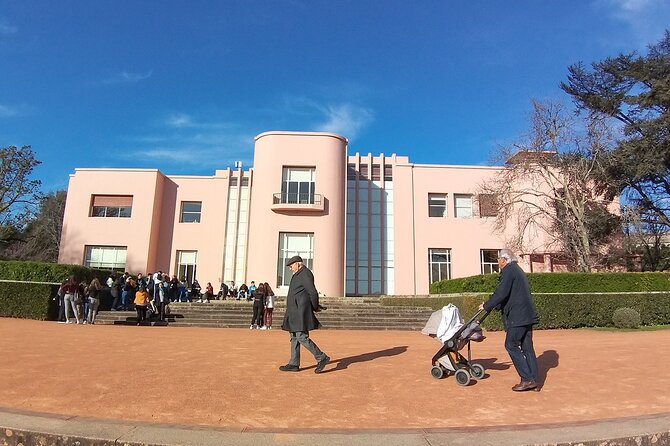
Serralves includes the Foundation house built in the 1930s, a standout example of European Art Deco, used for exhibitions and events. It sits in Parque de Serralves, about 18 hectares, designed by architect Jacques Greber. The park includes designed gardens, a farmhouse, and a forest—so even a quick stop gives you a sense of how Porto thinks about art in public space.
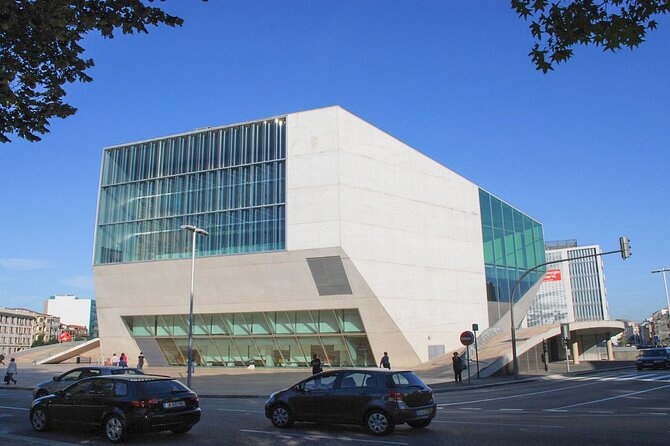
Then the tour heads to Casa da Música, Porto’s main concert hall in the Boavista area. It opened in 2005 and is an icon of contemporary architecture, designed by Rem Koolhaas. You get Porto’s music culture from the outside perspective—more “architecture as invitation” than a ticketed event.
Praça de Mouzinho de Albuquerque: a 45-meter monument that’s hard to ignore
The afternoon ends with a dramatic monument stop at Praça de Mouzinho de Albuquerque. The centerpiece is a 45m high statue for the Heroes of the Peninsular War, inaugurated in 1951. It’s composed like a grand obelisk with multiple groups of sculptures.
The symbolism is very explicit: the union of Portuguese and English forces (the lion) against French Napoleonic armies (the eagle). It’s a clear, visual way to learn how Porto commemorates alliances and conflict—history you can see from a sidewalk.
Optional add-ons: when you want more Douro and more night life
The base tour is already full, but the operator lists strong add-ons if your schedule allows.
Private Douro River Cruise (sunset): €360–€460 per boat, ~2 hours
This is a sunset experience with views over Porto and Vila Nova de Gaia, plus the listed “six bridges” along the route. If you want the river in a relaxed way after all the street stops, this is the cleanest upgrade.
Port Wine Cellars – Exclusive Dona Antónia tour: €32–€41 per person, ~1h30
You walk through historic cellars tied to Dona Antónia Adelaide Ferreira and finish with a tasting of five port wines named after her. This is ideal if you want a focused, story-driven intro to Port without turning it into a half-day detour.
Fado Night & Traditional Dinner (transport included): ~2h30, €80 per person
Starts at 20:00 and bundles a fado-centered evening with dinner and the cultural vibe of Northern Portugal.
Fado show with Port Wine: €20–€26 per person, 1 hour
Daily shows at 18:00 and 19:30, and it includes a port wine tasting.
If you’re only doing one extra, I’d pick based on your taste: river views (cruise), wine education (Dona Antónia), or music and dinner (fado).
Price and value: what $185.43 really buys you
At $185.43 per person for about 4 hours, you’re not paying for a “long entry” museum tour. You’re paying for three things that matter in Porto:
1) Guide time to stitch the city together—medieval walls, Baroque churches, Art Nouveau design, and bridge engineering all in one flow.
2) Private vehicle comfort (Wi‑Fi, bottled water, and a relaxing ride). Porto streets are manageable, but distances and hills still add up.
3) Time discipline: you get many iconic stops, with short, well-chosen viewing windows, rather than spending your afternoon lost between neighborhoods.
The main cost caveat: major attractions like Clérigos Tower, Livraria Lello, São Francisco Golden Church, and Palácio da Bolsa have separate entry fees listed. If you plan to go inside those, consider budgeting the add-ons up front so the total doesn’t surprise you.
Should you book this Porto private afternoon tour?
Book it if you want an organized, high-impact overview of Porto—especially if it’s your first time and you like understanding what you’re seeing. The combination of iconic landmarks plus a guide who gives you real context makes this feel like more than a checklist.
Skip it (or upgrade for more time) if you hate pace and need long indoor stays. This tour is built for smart stops, not for lingering for hours in one place.
If you’re the type who likes photos, architecture, and quick “aha” moments—this tour is a very efficient way to fall for Porto fast.
More Tours in Porto



More Tour Reviews in Porto

Private Porto Tours to Compare

Fresh in the Porto notebook

Private Porto Tours, compared.
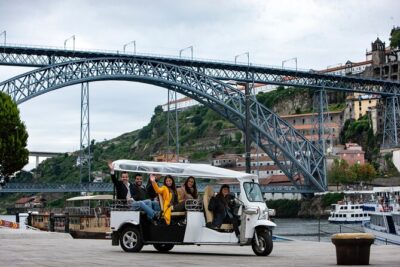 ★ 4.5Discover Porto’s Highlights on a 2-Hour Private Electric Tuk TukFrom $481,860 reviews
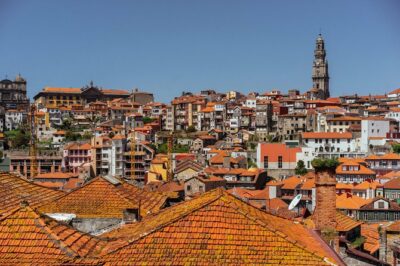 ★ 5.0Porto PRIVATE TOUR With Locals: Highlights & Hidden GemsFrom $96984 reviews
 ★ 4.8Private Tour of the Historic City in a Ford T CarFrom $32932 reviews
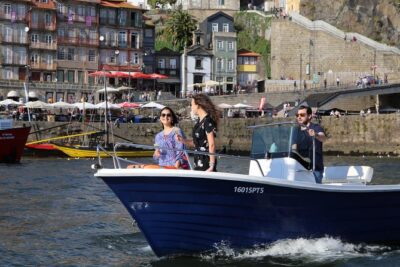 ★ 5.0Private tour in the Douro (1 to 4 people) on a boat just for youFrom $168744 reviews
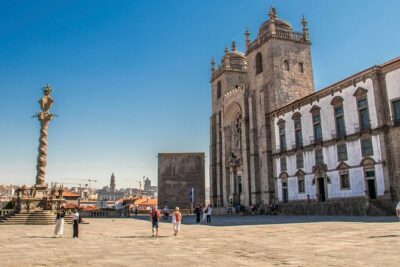 ★ 4.5Historic Porto by Private Electric Tuk Tuk to Top LandmarksFrom $42735 reviews
 ★ 5.0Porto Private Food and Drink Tasting Tour with LocalFrom $139652 reviews
 ★ 5.0Private Taxi Transfer to/From Porto AirportFrom $24649 reviews
 ★ 5.0Private tasting in the Douro (1 to 7 people) on a yacht for yourselfFrom $313559 reviews