
Reviewed · PORTO CITY WALKS
Porto: Historic Walking Tour with Local Guide
Porto can feel like a puzzle that finally clicks. This 150-minute walking tour uses big viewpoints and key landmarks to explain why Porto matters to Portugal, and why Portugal matters beyond its borders. I love the way the route turns into a story—starting near Praça de Carlos Alberto, then moving through Clérigos Tower and down toward the medieval lanes—so you don’t just see places, you understand them. I also like the guide’s energy; Artur, who leads in English, is clear, enthusiastic, and genuinely happy to answer questions. One thing to consider: you’ll cover steep medieval streets, so comfortable shoes and good pacing matter.
You’ll start with a quick sense of place, then the tour builds momentum. The Douro Valley reveal from Miradouro da Vitória is a top payoff moment, and the azulejos at São Bento Station give you a memorable, arts-and-history stop in the middle of your walk. I also appreciate the small-group setup (max 8), which makes it easier to ask questions and get photo help when you need it. If weather is rough, it can affect the comfort of the outdoor sections, though Artur adapts the experience when conditions aren’t great.
Bottom line: this is strong value at $23 because it bundles major sights, a guided explanation, and practical recommendations—without turning your day into a long, exhausting slog. If you want a slow, sit-down tour with lots of transport, this probably isn’t the best fit.
In This Review
- Key highlights worth your attention
- Starting on Praça de Carlos Alberto with a green-umbrella meet
- Lello Bookstore and Clérigos Tower: big names, quick context
- A quick look at Porto’s Jewish Quarter
- Miradouro da Vitória: the Douro Valley payoff moment
- Rua das Flores: elegant streets between “important” stops
- Time Out Market break: local ideas without the hard sell
- São Bento Station: hand-painted azulejos with a story behind them
- Sé do Porto: finishing under the cathedral’s long gaze
- Why this tour feels like more than a checklist
- Price and value: what $23 buys you in real terms
- Who this tour suits best
- Practical tips before you go
- Should you book this Porto historic walking tour?
- FAQ
- How long is the Porto historic walking tour with a local guide?
- Where does the tour start?
- Is the tour guided in English?
- Is Lello Bookstore and Clérigos Tower included inside or just outside?
- What’s included at São Bento Station?
- Are meals included in the price?
Key highlights worth your attention
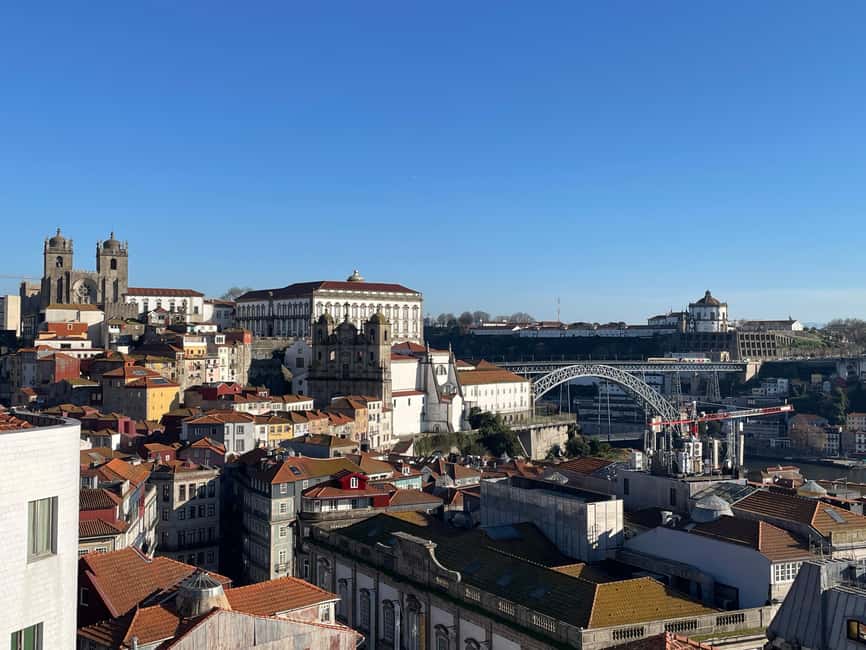
- Miradouro da Vitória: Douro Valley views that feel like a reward after the first uphill blocks
- Clérigos Tower + socio-economic roots: Porto’s influence explained through landmarks, not lectures
- Rua das Flores and medieval lanes: the walk is part of the experience, not just a way to get between stops
- São Bento Station azulejos: thousands of painted tiles that connect Portugal’s early sovereignty and empire
- Time Out Market break: a short pause plus ideas for where to eat and what’s worth your money
- Green-umbrella guide and small group: easier conversation, easier photos, less waiting around
More routes on foot through Porto
- Porto Walking Tour, Lello Bookshop, River Cruise and Cable Car★ 5.0 · 3,354 reviews
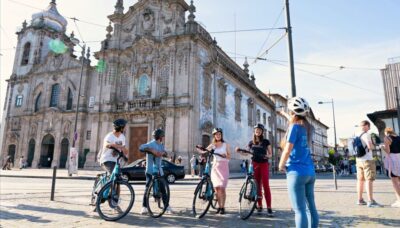
- Porto: City Highlights 3-Hour Guided Electric Bike Tour★ 4.8 · 3,092 reviews
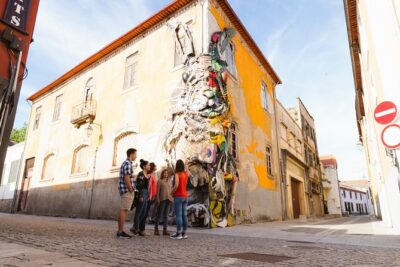
- Experience Porto’s Charm: 3-Hour Guided Walking Tour★ 5.0 · 2,432 reviews
- Porto: 3-Hour Guided City Highlights Walking Tour★ 4.8 · 2,050 reviews
Starting on Praça de Carlos Alberto with a green-umbrella meet
I like tours that start with you actually finding the guide fast, and this one keeps it simple. You meet on Praça de Carlos Alberto, near the Monumento aos Mortos da Grande Guerra, and you look for your guide by a green umbrella. It’s a practical setup because you’ll be walking through a compact historic area where getting oriented early saves time later.
The duration is 150 minutes, so it’s long enough to hit several major stops but short enough that you should still feel fresh by the end. The group is limited to 8 participants, which matters here: Porto’s old streets are tight, and a smaller group means fewer bottlenecks when you’re stopping for explanations or photos.
Before you go, do two small prep moves: bring water and wear shoes that can handle uneven pavement and slopes. The tour itself flags steep medieval streets as part of the deal, so treat this as a walking experience, not a casual stroll.
Lello Bookstore and Clérigos Tower: big names, quick context
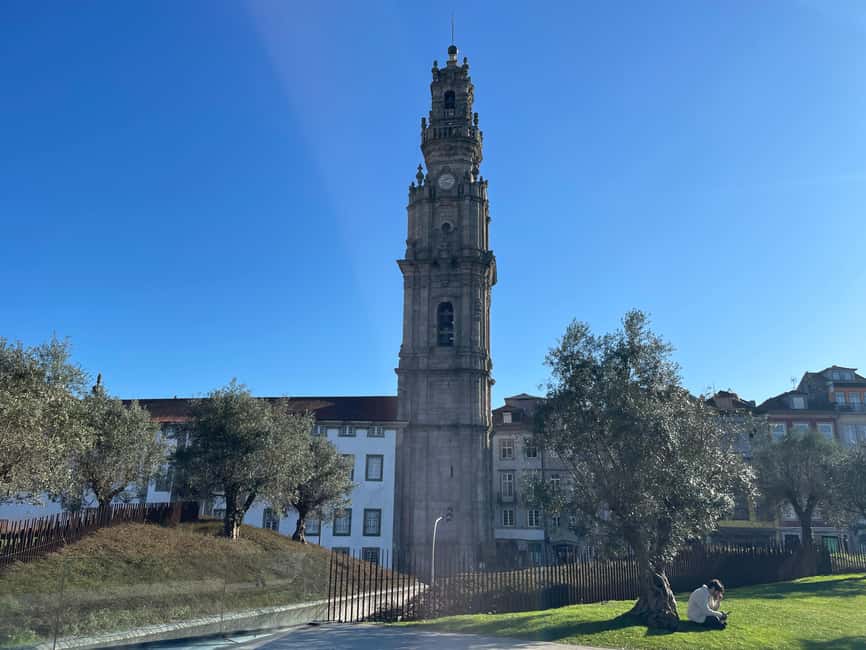
The first “art and architecture” moments land early. You get an exterior look at Livraria Lello & Irmão, so you’ll see the building even if you don’t go inside on this particular tour. It’s a good warm-up because it signals you’re in Porto’s tradition of distinctive design and cultural identity.
Then comes the Clérigos Tower (also an exterior visit). The explanation connects the tower to Porto’s socio-economic roots—how the city developed its power and status, and why that mattered for Portugal as a whole. Even if you’re not a history person, the guide’s format uses each place as a threshold into the next story, so you’re always moving with a reason.
A tip if you like photos: both early stops are good candidates for wide shots that show the building shapes and street layout. And since the tour is English-language, you’ll get the “why it matters” part without needing to patch together your own context.
A quick look at Porto’s Jewish Quarter
Halfway through the early run, you’ll pass through the Jewish Quarter. This stop isn’t presented as a box-check. Instead, it works as another cultural layer while you’re still walking at a steady pace.
Why I think this matters: Porto’s historic center isn’t only churches and viewpoints. When a guide includes neighborhoods tied to everyday life, you start to see the city as lived-in history, not just museum stops.
If you’re sensitive to crowds, keep your expectations realistic: you’ll be in the historic core, and you’ll be on foot. The small group helps, but it’s still Porto’s central area, so plan for some pedestrian activity.
Miradouro da Vitória: the Douro Valley payoff moment
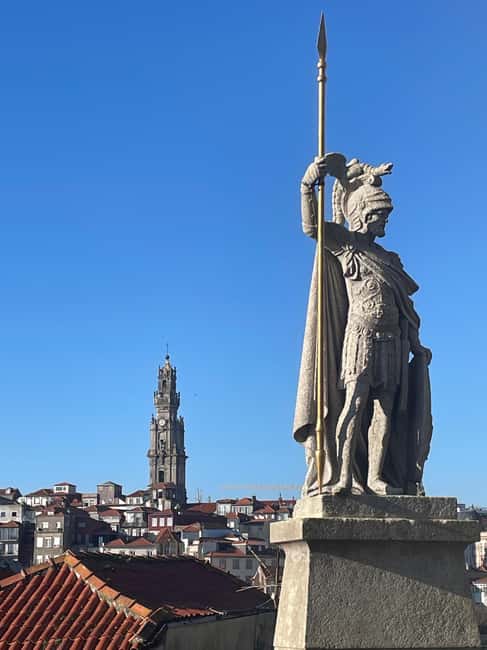
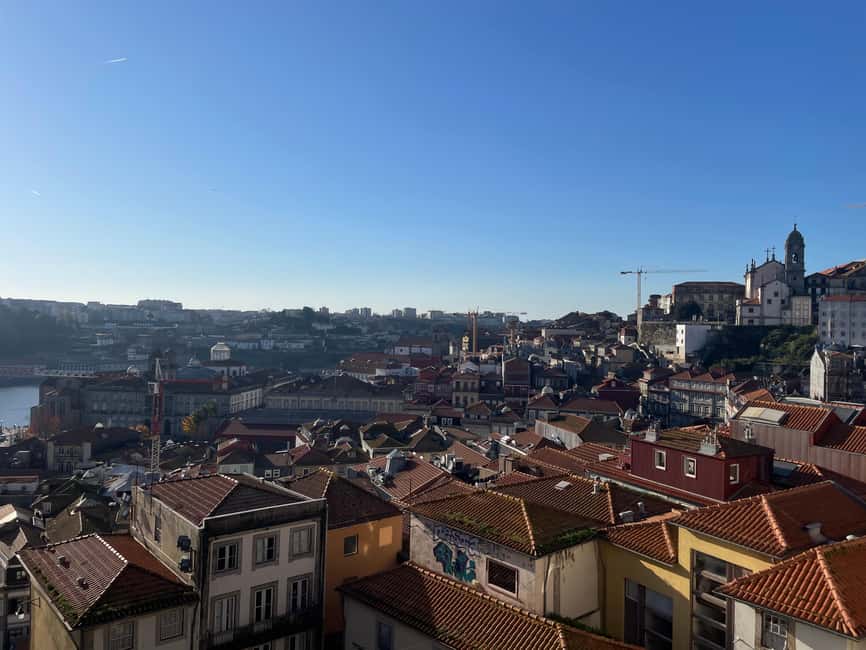
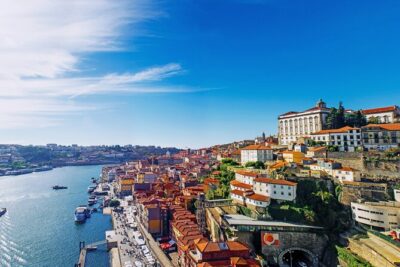
Then you climb your way into one of the tour’s clearest highlights: Miradouro da Vitória. This is a break and photo-stop, and the reason it’s included is obvious once you’re there—views of the Douro Valley open up in a big, memorable way.
I like that the guide doesn’t just point at the view. The place is used to connect Porto’s importance outward—showing you how geography and history tie together. The valley isn’t just scenery; it’s part of the story of how trade and identity shaped the city.
Timing is your friend here. The tour builds to this viewpoint after earlier landmarks, so you’ll feel like the walk has momentum, not repetition. Bring your camera, because you’ll want both wider shots and close-ups that show how the city sits against the terrain.
One consideration: outdoor viewpoints depend on weather. In a review, Artur adapted when conditions were awful, which tells you the guide isn’t rigid if the sky turns on you. Still, come ready with a light layer, and don’t expect miracles if rain is heavy—focus on getting good angles and keeping the photo stops efficient.
More Porto days out worth booking





Rua das Flores: elegant streets between “important” stops
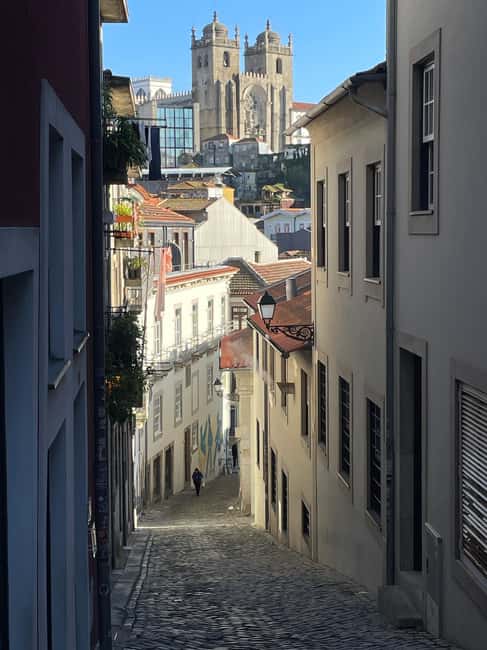
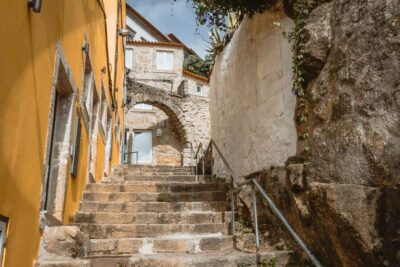
After the viewpoint break, the tour shifts back into streets: Rua das Flores and the surrounding medieval lanes. This is one of those moments where the city’s beauty isn’t a single landmark, it’s the whole corridor—street scale, façades, and the way the road funnels you deeper into the old center.
I like Rua das Flores in particular because it feels elegant without trying too hard. It’s also a useful transition: you move from panoramic wonder back into human-scale walking, which keeps the energy balanced.
This is also where comfortable shoes pay off. The tour explicitly includes steep medieval streets, so if you tend to get sore easily, pace yourself. Short breaks during stops help, but you’ll still be doing real walking between points.
Time Out Market break: local ideas without the hard sell
You’ll reach Time Out Market for a short break. This part is less about a specific museum experience and more about momentum management: a place to pause, reset, and gather practical recommendations.
What I find valuable is that the guide uses the moment to offer ideas—where to find good deals, what to try, and how to think about food options in Porto. You end up with a mini plan for the rest of your day instead of guessing from a list on your phone.
Keep your expectations simple: this isn’t a full food tour. It’s a breather in the itinerary, plus guidance that you can use right away. Since meals aren’t included, you decide what fits your budget and hunger level.
São Bento Station: hand-painted azulejos with a story behind them
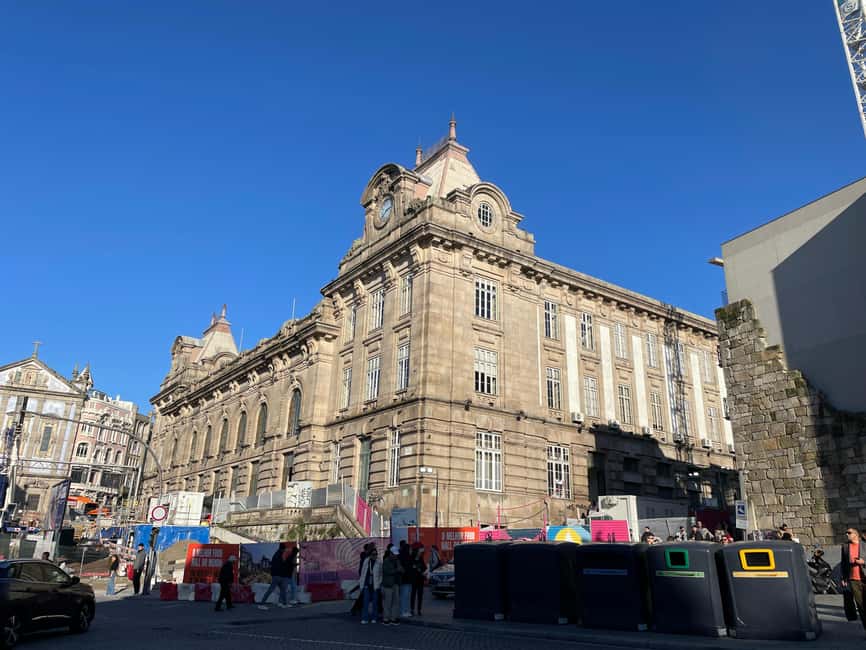
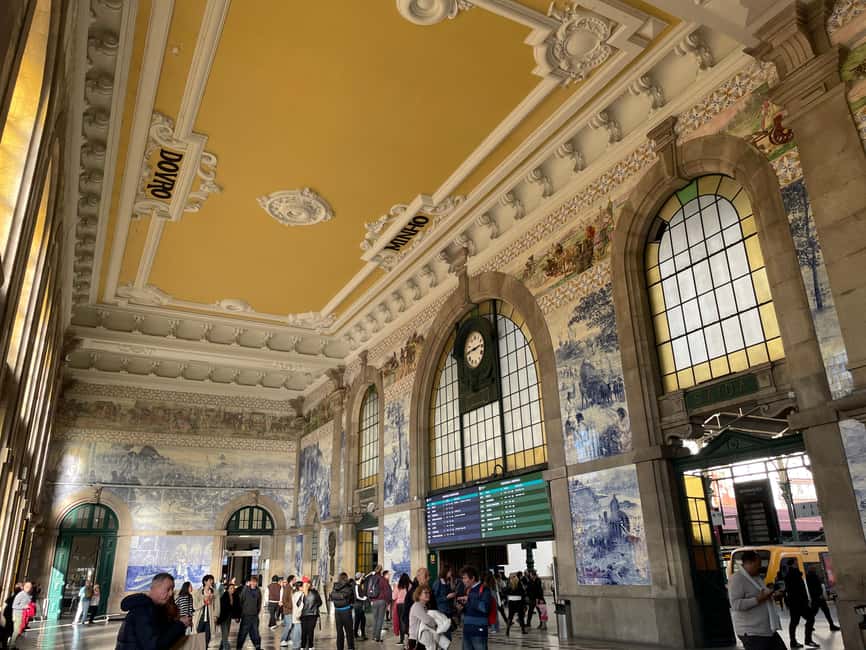
Next, you go to São Bento Station for an interior visit and a dedicated stop for photos. The main attraction is the hand-painted azulejos—more than twenty thousand painted tiles—depicting the beginnings of Portugal’s sovereignty and the inception of its empire.
This is a standout because it hits two types of travelers at once. If you love art, it’s visual storytelling on a huge scale. If you care about history, you can see how major national narratives get translated into everyday public space.
I also like the pacing: the tour shifts from outdoor streets to an interior cultural moment, which helps when the weather is unpleasant or when you just need to rest your feet for a few minutes.
Practical note: treat this like a photo-friendly stop. The guide is willing to help take pictures—another review mentioned Artur being happy to help with photos—so if you want a clean shot with your group or a sharp composition, ask.
Sé do Porto: finishing under the cathedral’s long gaze
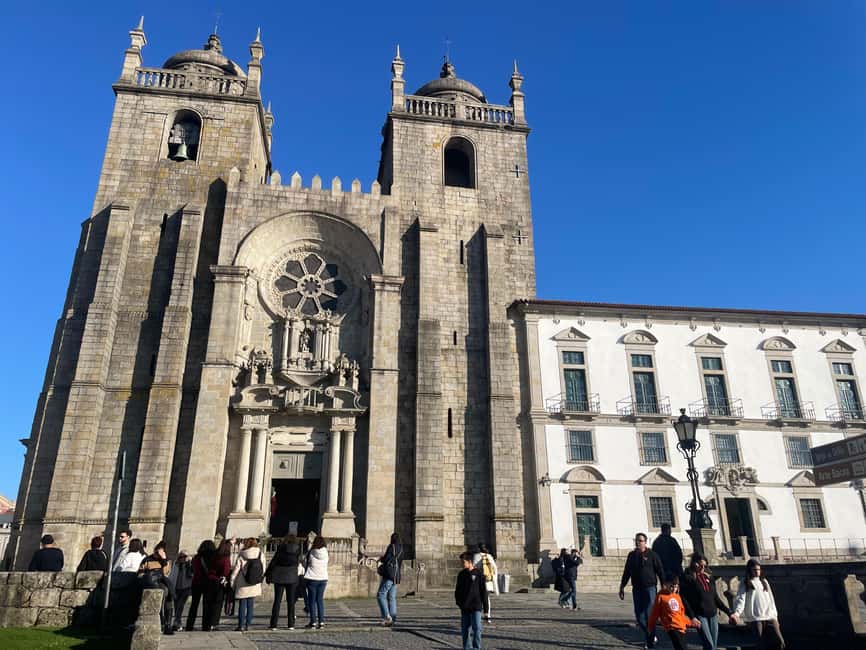
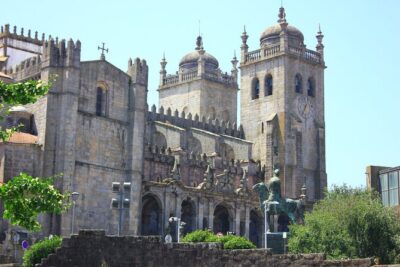
To close, you end at Sé do Porto (Sé Cathedral). This final stop ties the walk’s themes back to roots—how Porto connects to Portugal’s story over centuries.
I like ending at a major religious landmark because it gives closure. You’ve been moving through social context, architecture, viewpoints, and art. The cathedral finish feels like you’re seeing the center of gravity for Porto’s historic identity.
Your final minutes are also useful for orientation. After the tour ends, you’re in a strong location for wandering nearby streets on your own, especially if you want to keep exploring without adding another scheduled stop.
Why this tour feels like more than a checklist
Here’s the thing: I think what makes this tour worth it isn’t that it hits famous places. It’s that it uses them as steps in a connected story.
You start with landmarks like Clérigos Tower and Livraria Lello (exterior), then you’re guided through neighborhood texture with the Jewish Quarter and medieval lanes. The viewpoint at Miradouro da Vitória gives you a dramatic external sense of Porto’s position. São Bento Station gives you an internal, cultural layer through thousands of painted tiles. Then Sé Cathedral closes the loop.
That structure helps you remember what you saw, not just that you saw it. And because the group is small and the guide speaks English, it stays conversational rather than robotic.
Price and value: what $23 buys you in real terms
At $23 per person for about 150 minutes, you’re paying for a guided route that includes multiple major stops and one interior (São Bento Station). You’re also paying for someone to connect the dots—Porto’s role in Portugal’s story, and why that matters in a larger historical view.
Since meals aren’t included, the price stays focused on the guiding and entry/visit components listed. For value, I weigh two things: number of stops and quality of interpretation. Here you get both—multiple landmark types and a guide who’s described as energetic and adapt-able when weather changes.
If you’re the kind of traveler who likes to stop often, take a few photos, and ask questions, the small group format helps justify the cost. If you prefer self-guided wandering with no structured explanations, you might be able to replicate parts of the route cheaper. But you’d miss the connecting narrative and the local deal-focused tips at Time Out Market.
Who this tour suits best
This works well if you want:
- A fast, organized orientation to Porto’s historic core
- English explanations tied to specific sites (not generic city facts)
- A mix of views, streets, and art (azulejos) in a short window
It might not suit you if:
- You hate walking on steep, uneven medieval streets
- You need lots of seating or long rest breaks
- You’re looking for a food-heavy tour (Time Out Market is a short break, not a meal included)
Also, it’s noted as not suitable for people over 95 years, which you should take seriously when evaluating whether the route will feel safe and comfortable.
Practical tips before you go
You’ll get the best experience if you show up prepared:
- Bring water (you’ll be out for about 2.5 hours)
- Wear comfortable shoes built for steep, old streets
- Bring a camera (Miradouro da Vitória and São Bento are prime photo stops)
- Keep your pace steady and save energy for the climb to the viewpoint
- Keep your tone calm and respectful in busy areas; the tour sets expectations about making noise and other disruptive behavior
One more practical detail: the tour is live English guided, and the group is small, so arrive a few minutes early to avoid starting late or missing the first instructions at Praça de Carlos Alberto.
Should you book this Porto historic walking tour?
I’d book it if you want a guided “connected story” of Porto in a tight time window. The combination of viewpoint payoff (Miradouro da Vitória), high-impact public art (São Bento azulejos), and a conversation-friendly guide in English makes it feel like a smart use of time.
I’d skip it if your main goal is a museum day, or if you dislike steep, uneven walking. In that case, you’d probably do better with a slower, transportation-based plan.
If you do book, look for Artur and lean into the questions. Reviews highlight that he’s thoughtful, enthusiastic, and happy to help with photos and follow-up recommendations—so you’ll get more out of the tour than just the route.
FAQ
How long is the Porto historic walking tour with a local guide?
The tour lasts 150 minutes.
Where does the tour start?
You meet at Praça de Carlos Alberto near the Monumento aos Mortos da Grande Guerra. The guide is easy to spot with a green umbrella.
Is the tour guided in English?
Yes. The live tour guide speaks English.
Is Lello Bookstore and Clérigos Tower included inside or just outside?
Both are exterior visits during this tour.
What’s included at São Bento Station?
You get an interior visit to São Bento Station to see the hand-painted azulejos, with time for photos and a short break.
Are meals included in the price?
No. Meals are not included, though there is a short break at Time Out Market during the tour.
More Tours in Porto





More Tour Reviews in Porto


More of Porto on Foot



Fresh in the Porto notebook


Porto City Walks, compared.
 ★ 5.0Porto Walking Tour, Lello Bookshop, River Cruise and Cable CarFrom $723,354 reviews
 ★ 4.8City Highlights 3-Hour Guided Electric Bike TourFrom $513,092 reviews
 ★ 5.0Experience Porto’s Charm: 3-Hour Guided Walking TourFrom $352,432 reviews
 ★ 4.83-Hour Guided City Highlights Walking TourFrom $342,050 reviews
 ★ 4.4Wine Tasting with Tapas Walking TourFrom $531,541 reviews
 ★ 4.7Historic City Center Walking TourFrom $331,172 reviews
 ★ 5.0Porto’s #1 Walking TourFrom $01,026 reviews
 ★ 4.8Delicious Food and Wine Walking TourFrom $87977 reviews
Browse the lists this tour appears in