
Reviewed · PRIVATE PORTO TOURS
Porto Douro Private Cruise with Port Wine
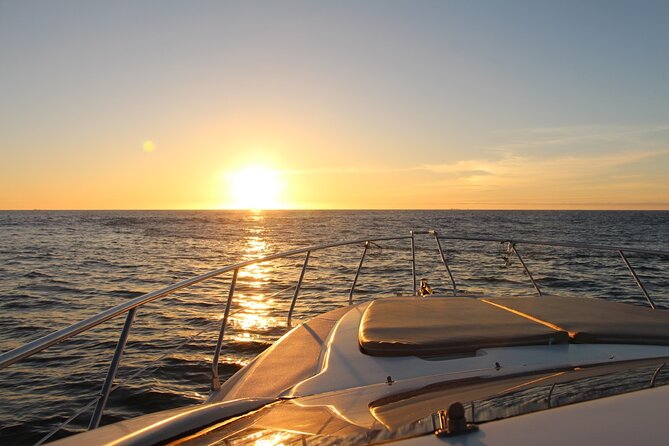
A night on the Douro feels like a cheat code. You start at Douro Marina and glide past Porto’s most famous landmarks while someone explains what you’re seeing, with port wine and Portuguese snacks to keep things easy.
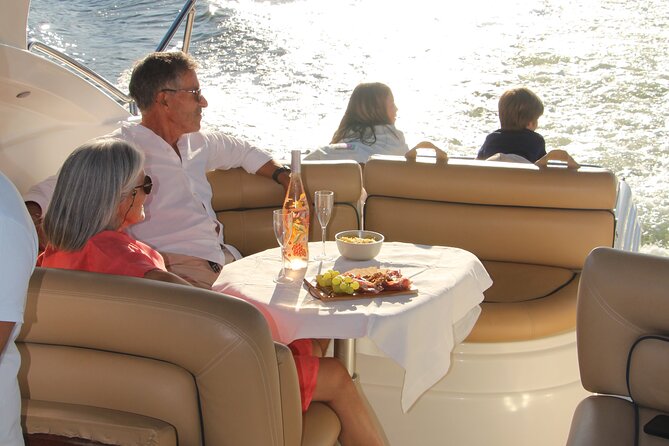
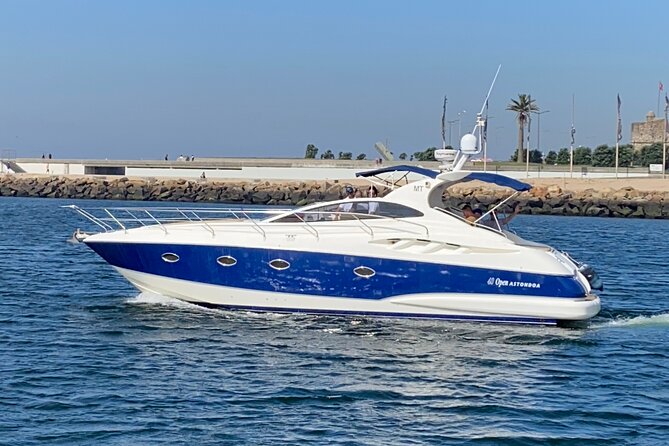
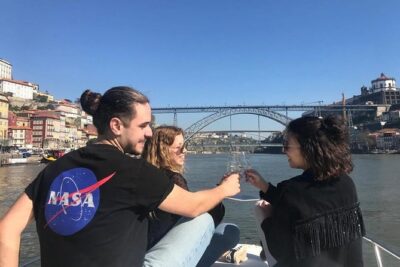
I especially like the way this feels truly private: when I picture the experience, I see a small group spread out on a beautiful yacht, not a packed boat. I also like the food-and-drink setup, because it turns a sightseeing cruise into something you actually look forward to, not just sit through.
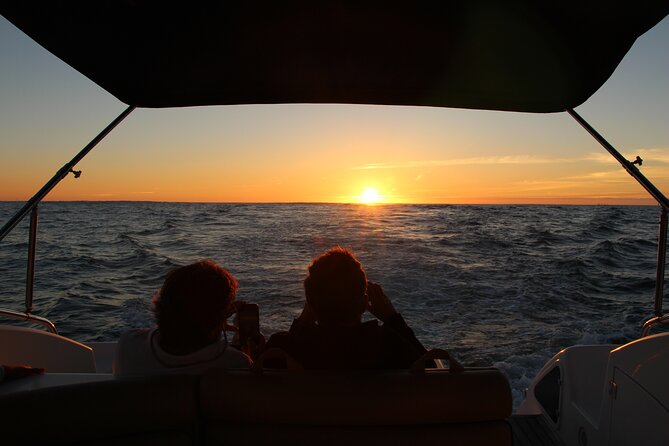
One thing to consider: the trip starts at 7:00 pm, so depending on the season and cloud cover, you may not catch the best sunset light.
In This Review
- Key highlights you’ll feel right away
- A 2-hour private yacht outing from Porto’s riverside
- Meeting point at Marina da Afurada: easy start, easy finish
- What’s included on board: port wine, Portuguese snacks, and guide talk
- From the Douro Estuary to Arrábida Bridge: the cruise’s opening scene
- Alfândega do Porto: customs power from the 19th century
- Cais de Gaia: warehouses, cellars, terraces, and the port-wine skyline
- Ribeira de Porto: colorful façades and river-level energy
- Ponte Dom Luís I: one of Porto’s most iconic bridge viewpoints
- Serra do Pilar and the monastery hillside: why the views matter
- Muralha Fernandina: the defensive wall that shaped Porto’s edges
- Ponte Dona Maria Pia: UNESCO-listed engineering in motion
- Foz do Rio Douro and Farol de S. Miguel: river meets the Atlantic
- Price and value: why $117 can be a smart deal
- Who this cruise suits best (and who might want to skip it)
- Practical tips for a smooth, comfortable evening
- Should you book this Porto Douro Private Cruise with Port Wine?
- FAQ
- How long is the Porto Douro private cruise?
- Where does the tour start and end?
- What time does the cruise begin?
- What’s included during the cruise?
- Is this a private tour?
- Is a mobile ticket used?
- Do I need good weather for the cruise?
- Are service animals allowed?
- Is there free cancellation?
Key highlights you’ll feel right away
- Small-group, private yacht vibe that stays relaxed (and leaves room to move)
- Port wine plus snacks included, so you’re not hunting for food mid-cruise
- On-board commentary that connects landmarks like Serra do Pilar and the Fernandina Wall to what shaped Porto
- Ribeira to Vila Nova de Gaia views from the water, including classic bridge angles
- Historic engineering moments, including the UNESCO-linked Ponte Dona Maria Pia
- 7:00 pm timing can affect how close you get to sunset
Rather go at your own pace? More private guides
- Discover Porto’s Highlights on a 2-Hour Private Electric Tuk Tuk★ 4.5 · 1,860 reviews
- Porto PRIVATE TOUR With Locals: Highlights & Hidden Gems★ 5.0 · 984 reviews
- Porto: Private Tour of the Historic City in a Ford T Car★ 4.8 · 932 reviews
- Porto: Private tour in the Douro (1 to 4 people) on a boat just for you★ 5.0 · 744 reviews
A 2-hour private yacht outing from Porto’s riverside
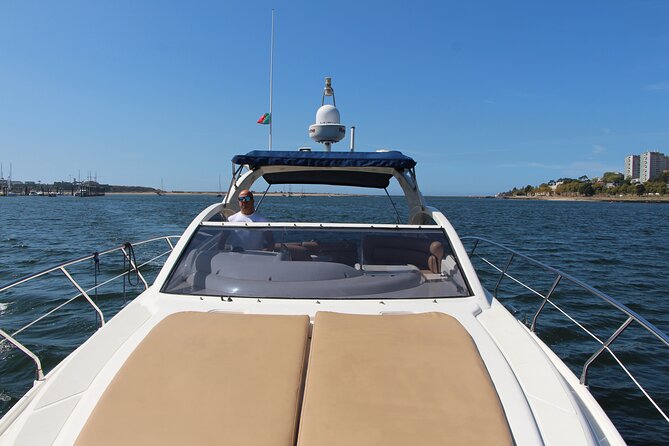
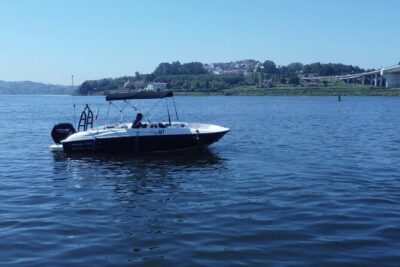
This is a simple idea done well: a private Porto Douro cruise where the “tour” is the ride itself. Instead of walking stop-to-stop, you float along the river and let Porto come to you in a sequence of framed views.
The ride lasts about 2 hours, which is a nice sweet spot. You get enough time to see multiple districts and landmarks, but you’re not stuck for half a day in the water-walk-and-queue style of many day tours.
You’ll also be in a group that stays small—this matters more than you’d think. When you’re on a yacht, space and comfort shape the whole mood, and the experience is designed around that slower pace.
Meeting point at Marina da Afurada: easy start, easy finish
The cruise begins and ends at the Marina da Afurada at R. da Praia 430, 4400-554 Vila Nova de Gaia. It’s a practical location because it’s right where you expect to board for Douro cruises, and the activity is noted as being near public transportation.
You’ll want to arrive a bit early so you’re not rushing when you see the water. Once you’re aboard, the rest runs smoothly with no need to coordinate transfers or jump between neighborhoods.
The tour uses a mobile ticket, which usually means fewer steps at the start. You just show your ticket on your phone and get on with the fun.
What’s included on board: port wine, Portuguese snacks, and guide talk
For $117, the value is mostly about what you don’t have to organize yourself. You get the yacht time, the port wine, and snacks—plus the guide’s explanations as you pass landmarks.
The port-and-snack element is more than a nice extra. It helps you settle in quickly. You’re not thinking about where to eat next; you’re focused on the views and the stories going by the windows.
And the onboard commentary is the glue. You’re not just staring at architecture—you’re getting meaning while you watch it slide past: why certain walls exist, what a hillside monastery connects to, and how Porto’s river life shaped the city.
From the Douro Estuary to Arrábida Bridge: the cruise’s opening scene
Right after you embark, you head out with the Douro River Nature Reserve Estuary in view. That protected-area setting gives the start a calmer feel than a purely city-only route. Even if you’re not a “nature person,” it’s a helpful reset before you hit the urban highlights.
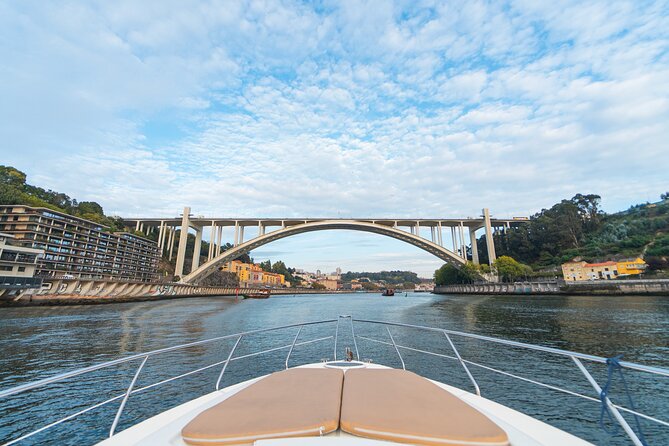
Soon after, you’ll pass Arrábida Bridge. From the water, bridges like this feel different than they do on foot. You get scale instantly, and you see the river as a working corridor, not just a backdrop.
This early stretch is a good moment to get your bearings—watch how Porto and Gaia set up their riverfronts, where the built-up areas begin, and how the river curves your line of sight.
More Porto days out worth booking




Alfândega do Porto: customs power from the 19th century
One of the stops on the route is Alfândega do Porto, a historic 19th-century building that used to be Porto’s customs headquarters. It mattered because this is where imported and exported goods were supervised and where taxes were collected.
That’s a big deal, because Porto’s prosperity has long been tied to maritime trade. So when you see Alfândega from the water and hear what it did, the city’s river economy stops being a vague idea and becomes a real mechanism.
Today, the building plays a different role as a cultural and events center. That shift—from collecting taxes to hosting exhibitions, conferences, and shows—is the kind of reuse you hope for when you visit older cities.
Cais de Gaia: warehouses, cellars, terraces, and the port-wine skyline
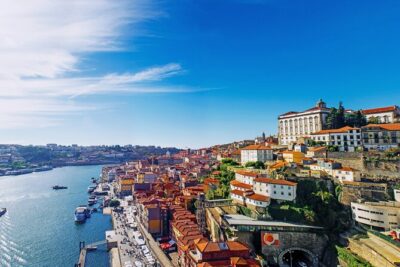
Next, you pass Cais de Gaia, the riverside area across from Porto in Vila Nova de Gaia. This stretch is known for its port wine warehouses and cellars, along with restaurants and terraces—so yes, it’s the classic port-wine landscape.
What makes this stop especially interesting from a cruise is perspective. From land, port cellars can feel like an indoor experience. From the river, they become part of the city’s silhouette, with the waterline wrapping around the story.
If you enjoy drinking port as part of travel, this is where the cruise quietly earns its keep. The fact that you’re tasting port wine while seeing the port-wine district works like a built-in lesson, without turning the evening into class.
Ribeira de Porto: colorful façades and river-level energy
You’ll also pass Ribeira do Porto, one of the city’s most emblematic areas. It’s famous for colorful historic buildings, narrow cobbled streets, and lively riverside terraces.
Even though you’re not walking here, the river view gives you a cleaner sense of pattern and color. You see how the façades step along the water and how the terraces face the river like they’re built for watching boats.
Ribeira is also where traditional rabelo boats depart for river cruises. That detail helps you connect today’s sightseeing to the workboats that once moved goods along the Douro.
Ponte Dom Luís I: one of Porto’s most iconic bridge viewpoints
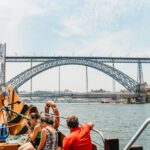
The yacht cruise takes you past Ponte de Dom Luís I, the iconic metal bridge that connects Porto and Gaia. It was inaugurated in 1886 and was designed by Belgian engineer Théophile Seyrig, a disciple of Gustave Eiffel.
From the water, it’s easier to appreciate the engineering. You get a view of the bridge’s structure, not just its postcard shape. And because you’re moving, the bridge becomes a dynamic frame instead of a single viewpoint.
This is also one of those moments where you understand why people take photos at the river. The bridge plus the city waterfront is a pairing that looks good in almost any light.
Serra do Pilar and the monastery hillside: why the views matter
On the route, Serra do Pilar appears on the left bank in Vila Nova de Gaia. Its name comes from the Serra do Pilar Monastery, built in the 16th century.
You might think you’re just passing a viewpoint. But when you hear the monastery connection, the hillside becomes more than scenery. It’s part of the spiritual and historical layering that makes Gaia look like more than the port-wine side of the river.
This stop also helps you read the skyline. You start to notice how churches, walls, and bridges share river visibility, because historically the river was where people needed to understand terrain fast.
Muralha Fernandina: the defensive wall that shaped Porto’s edges
Another key landmark on the route is Muralha Fernandina, an ancient defensive wall built in the 14th century during King Fernando I of Portugal’s reign. Its job was straightforward: protect Porto from invasions and external attacks.
What I like here is the connection between architecture and survival. When you pass the wall remnants—like the Torre da Rua de Baixo and the Torre de Menagem—the city stops feeling purely aesthetic. You see it as a built response to risk.
On a cruise, these structures can feel even more dramatic because you’re viewing them at an angle. The river acts like a lens, helping you understand where defensive features would need to be positioned.
Ponte Dona Maria Pia: UNESCO-listed engineering in motion
The route also includes Ponte Dona Maria Pia, the double-deck metal bridge completed in 1887. It was designed by Gustave Eiffel, and it received UNESCO World Heritage status in 2013 as part of the Historic Center of Porto.
This is a big one for architecture lovers. You get the feeling of industrial heritage without needing a museum ticket. And because it’s a double-deck bridge, you can often spot how the two levels connect movement through both the city and the river corridor.
If you like history but dislike being stuck indoors, this is a great compromise. You’re watching major landmarks in real time and getting just enough context to make them stick.
Foz do Rio Douro and Farol de S. Miguel: river meets the Atlantic
Towards the later part of the route, you reach Foz do Rio Douro, where the Douro River meets the Atlantic Ocean. Foz is known for sandy beaches, scenic promenades, and more upscale residential neighborhoods.
This part of the cruise shifts the mood. Instead of only old-city texture and port warehouses, you get an edge of the Portuguese coast—plus the feeling that the river’s story expands outward.
The area includes Farol de S. Miguel, the lighthouse in this coastal zone. It’s a visual marker that helps you orient yourself: you’re no longer just in Porto’s river corridor; you’re at the meeting point of two worlds.
Also, Foz is known for sunset views and seafood restaurants. Since your cruise starts at 7:00 pm, this is where timing matters most. In some seasons you might catch beautiful evening light; in others, you may miss the peak glow.
Price and value: why $117 can be a smart deal
At $117 for about 2 hours, you’re paying for three things at once: (1) time on the water, (2) an included wine-and-snacks setup, and (3) a private, guided pass of major sights.
If you tried to replicate this with taxis, separate attraction tickets, and a bunch of individual viewpoints, it’s hard to keep costs in check. Here, the big “transport cost” is built into the experience because the yacht is the movement.
The best value shows up in how the experience is paced. The cruise doesn’t force you to rush, and it doesn’t require you to plan multiple stops. That’s a real benefit in a city where sight logistics can eat your evening.
The strong rating—4.9 with 100% recommended—makes sense for a product like this. Small-group comfort plus included port wine is a straightforward winning combo.
Who this cruise suits best (and who might want to skip it)
This is a good match if you:
- Want a relaxed Porto evening with minimal walking
- Like port wine and want a direct link between tasting and place
- Prefer guided context without a full-day itinerary
- Enjoy architecture and bridges when someone explains why they matter
You might choose something else if you’re:
- Traveling with a strong priority on a long sunset window and don’t want to risk timing issues
- Hoping for big, hands-on activities (this is sightseeing from the water)
Practical tips for a smooth, comfortable evening
A few small choices can make the cruise feel easier.
- Bring a light layer. Even in warmer months, river air can feel cooler once you’re moving.
- Keep your phone charged for photos of Dom Luís I and Maria Pia. The angles are best when you’re not scrambling.
- If you care about sunset lighting, check local sunset times for your travel dates and remember the tour begins at 7:00 pm.
- Don’t over-plan dinner right before the cruise. The snacks and port help, but you’ll still want room for a proper meal afterward if you’re hungry.
Should you book this Porto Douro Private Cruise with Port Wine?
If you want a high-comfort evening that mixes Porto + Gaia landmarks with included port wine and simple, guided context, I’d book it. It’s the kind of experience that gives you major sights in one smooth loop, without tiring you out.
Choose it if your idea of a great night is being on a yacht, hearing what you’re seeing, and letting Porto’s riverfront unfold piece by piece. Skip it only if sunset timing is your one non-negotiable, since the start time may not line up perfectly with peak light on every date.
FAQ
How long is the Porto Douro private cruise?
The cruise lasts about 2 hours.
Where does the tour start and end?
It starts at Marina da Afurada, R. da Praia 430, 4400-554 Vila Nova de Gaia, Portugal and ends back at the meeting point.
What time does the cruise begin?
The start time listed is 7:00 pm.
What’s included during the cruise?
You get provided port wine and snacks, along with onboard sightseeing and explanations about the landmarks you pass.
Is this a private tour?
Yes. It’s a private tour/activity, and only your group will participate.
Is a mobile ticket used?
Yes. The tour offers a mobile ticket.
Do I need good weather for the cruise?
Yes. The experience requires good weather. If it’s canceled due to poor weather, you’ll be offered a different date or a full refund.
Are service animals allowed?
Yes, service animals are allowed.
Is there free cancellation?
Yes. You can cancel up to 24 hours in advance for a full refund.
More Cruises & Boat Tours in Porto
More Tour Reviews in Porto
Private Porto Tours to Compare


Fresh in the Porto notebook

Private Porto Tours, compared.
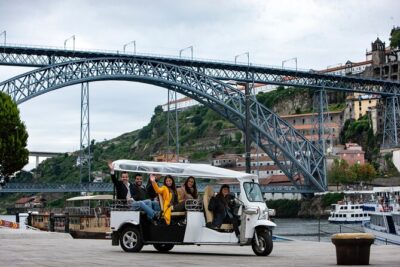 ★ 4.5Discover Porto’s Highlights on a 2-Hour Private Electric Tuk TukFrom $481,860 reviews
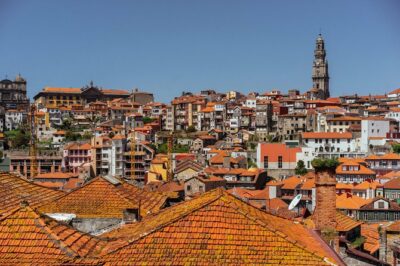 ★ 5.0Porto PRIVATE TOUR With Locals: Highlights & Hidden GemsFrom $96984 reviews
 ★ 4.8Private Tour of the Historic City in a Ford T CarFrom $32932 reviews
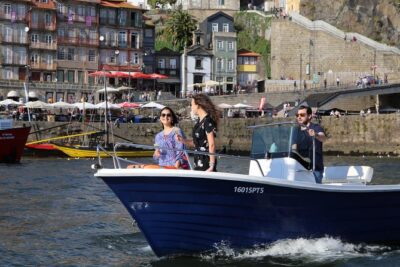 ★ 5.0Private tour in the Douro (1 to 4 people) on a boat just for youFrom $168744 reviews
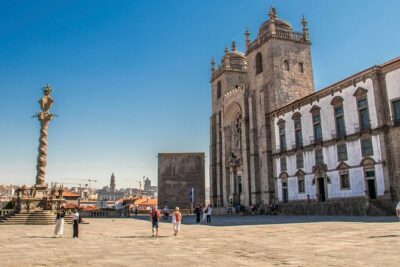 ★ 4.5Historic Porto by Private Electric Tuk Tuk to Top LandmarksFrom $42735 reviews
 ★ 5.0Porto Private Food and Drink Tasting Tour with LocalFrom $139652 reviews
 ★ 5.0Private Taxi Transfer to/From Porto AirportFrom $24649 reviews
 ★ 5.0Private tasting in the Douro (1 to 7 people) on a yacht for yourselfFrom $313559 reviews
Browse the lists this tour appears in