
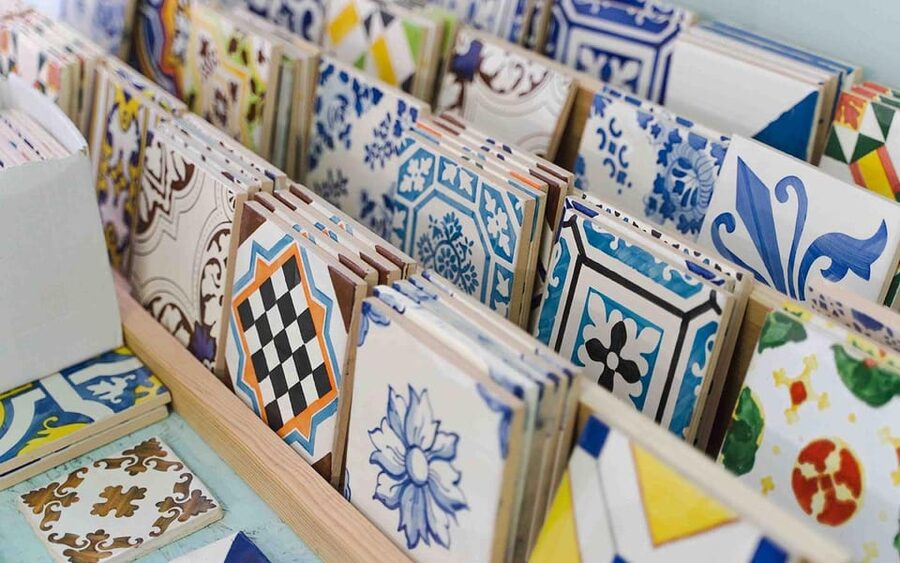
Reviewed · PORTO CITY WALKS
Porto: Azulejos Tiles Walking Tour
Porto’s walls tell stories in ceramic. This azulejo walking tour turns what you see into something you understand, starting at Carmo Church and ending near São Bento while you spot tilework on churches, depots, stores, and the train station. I especially liked the tile techniques lesson and the chance to read the UNESCO historic center like a map, not a postcard. One possible drawback: you’re on your feet for about 2.5 hours, and the walking pace isn’t designed for slow strolling.
The guides make the difference. I’ve seen this run with leaders like Susana and Nuno Miguel Ferreira Silva, and the best part is how they answer questions as you go, not after the fact. You’ll come away noticing details you’d normally miss, from how tiles are applied on facades to what different colors and layouts were meant to do.
This is a great fit if you like art, architecture, or the history behind everyday things. It’s also worth knowing the tour is listed as wheelchair accessible, but it’s also marked not suitable for people with mobility impairments, so I’d plan around that reality and talk to the operator if you’re unsure.
In This Review
- Key highlights worth your time
- Porto azulejos make sense with a guide next to you
- Route overview: Carmo Church to the São Bento area
- How that helps you as a visitor
- Stop-by-stop: what to look for at each part of the walk
- Start at Igreja do Carmo (meeting point by the tiled facade)
- Igreja do Carmen (about 10 minutes)
- Bank of Materials (about 20 minutes)
- The 15-minute tile stop (the in-between segment)
- End near São Bento station by Avenida dos Aliados
- What you learn about azulejo techniques (and how it changes your visit)
- Why $53 feels fair (especially for a short, focused walk)
- Practical tips so the 2.5 hours feel easy
- Who should book this tour
- Should you book Porto’s Azulejos Tiles Walking Tour?
- FAQ
- How long is the Porto Azulejos Tiles Walking Tour?
- Where do I meet the guide?
- What places will the tour include besides churches?
- What is the tour’s ending point?
- What languages is the tour offered in?
- Can I cancel and get a full refund?
Key highlights worth your time
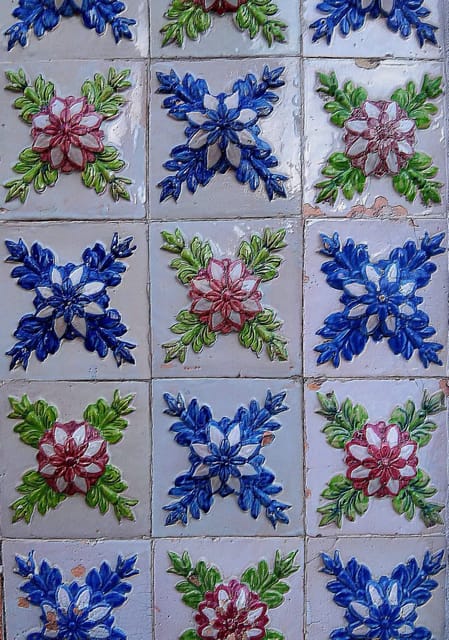
- Carmo Church as the launch point: you meet by the tiled facade and start with tilework right away
- Tiles in real places: churches, depots, stores, and the train station, not only museum-style examples
- Hands-on visual lessons: techniques and applications you can spot on buildings immediately
- UNESCO Porto historic center walking: you pair world heritage streets with the art that decorates them
- Guides who talk with you: Susana and Nuno Miguel Ferreira Silva are known for answering questions clearly
- A strong value for $53: focused time, multiple stops, and practical ideas for spotting azulejos after the tour
More routes on foot through Porto
- Porto Walking Tour, Lello Bookshop, River Cruise and Cable Car★ 5.0 · 3,354 reviews
- Porto: City Highlights 3-Hour Guided Electric Bike Tour★ 4.8 · 3,092 reviews
- Experience Porto’s Charm: 3-Hour Guided Walking Tour★ 5.0 · 2,432 reviews
- Porto: 3-Hour Guided City Highlights Walking Tour★ 4.8 · 2,050 reviews
Porto azulejos make sense with a guide next to you
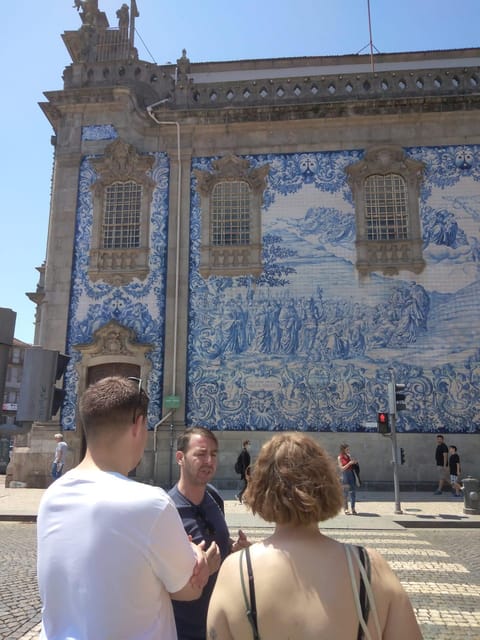
Porto’s azulejos can look like pure decoration at first. But with a guide, you start seeing systems: how ceramic tiles were made, how they were installed, and why certain styles showed up on certain kinds of buildings.
What I liked most is that you don’t just get pretty photos. You get a way to look. After you learn the basics—panels vs. full facades, patterns vs. “story” scenes—you’ll start noticing tiles everywhere you walk in the city. Even better, your souvenir shopping changes. Instead of buying the first nice tile you spot, you start asking what it might be based on, what period it could belong to, and who might have made it.
A minor caveat: this kind of tour is designed for people who want explanations. If you prefer silence and quick stops, you might find the commentary a touch long. If you’re the type who likes to ask why something was made a certain way, you’ll be in your element.
Route overview: Carmo Church to the São Bento area
The walk runs through Porto’s historic center (a UNESCO World Heritage Site), starting at Igreja do Carmo and ending near São Bento station in the Avenida dos Aliados area. It’s designed as a practical route: you begin with a church facade, then move through other tile-heavy locations, finishing at a spot where tiles are basically part of the city’s identity.
The tour lasts about 2.5 hours, and the guided portion is also listed as about three hours, so I’d plan with a little flexibility. You’ll spend short blocks at each stop—enough time to look closely, but not so long you feel stuck.
How that helps you as a visitor
- You’re not trying to “research” on your own while your feet hurt.
- You get tile context before you see similar styles later in the day.
- You end at a major landmark (São Bento), so the tour gives you closure—and a natural place to re-route for the rest of your Porto itinerary.
Stop-by-stop: what to look for at each part of the walk
More Porto days out worth booking





Start at Igreja do Carmo (meeting point by the tiled facade)
You meet at Carmo Church, specifically by the tiled facade. This matters because the first few minutes train your eyes for the rest of the walk. You’ll see how tiles frame architectural details and how the surface “reads” from street level.
If you want an easy win: arrive a few minutes early and take 20 seconds to scan the facade from left to right. Tiles often repeat motifs, and once you spot one pattern, the rest become easier to interpret.
Igreja do Carmen (about 10 minutes)
This is a quick orientation stop: enough time to connect what you saw at the start to the style you’re about to notice elsewhere. Expect you’ll be guided toward specific visual cues—layout, color choices, and how the tilework sits on the building.
In a short stop like this, don’t try to photograph everything. Pick one section and look for structure: are there panels that tell scenes, or is the facade treated like a single pattern field?
Bank of Materials (about 20 minutes)
This is the longer window on the route, which signals something important: tiles aren’t only for churches and grand monuments. You’ll have time to observe how tile art shows up on more everyday or utilitarian building fronts.
This stop is where I think the tour earns its value. When tiles show up on stores and depots, you start understanding azulejos as part of public life—advertising, protection, identity, and decoration all at once. You’re not just learning art history. You’re learning how a city used ceramics as a visual language.
The 15-minute tile stop (the in-between segment)
There’s another stop on the route listed at 15 minutes, but the specific location name isn’t provided here. Even so, the purpose is clear: you’ll see another type of tile application and add another piece to the “how it works” puzzle.
My practical advice: treat this stop like a checkpoint. By now you should be able to identify at least one technique or application style you’ve learned earlier. If you can’t, ask your guide to point out what to look for. These walks are designed for questions.
End near São Bento station by Avenida dos Aliados
The tour finishes next to São Bento train station, in the Avenida dos Aliados area. That ending is smart because São Bento is where tilework feels most cinematic—tiles and trains are a natural pairing for people-watching.
It’s also a good place to regroup. Once you’ve learned what to notice, you can keep exploring nearby streets with sharper eyes, or hop into the rest of your day’s plans with a strong landmark already in your mental map.
What you learn about azulejo techniques (and how it changes your visit)
The core promise of the tour is learning the history of Porto’s tiles and the techniques behind them. The route is built to show you how tile art can behave in different ways:
- Some facades function like billboards, delivering imagery and messaging at street level.
- Others feel like wallpaper for buildings, with intricate patterns covering large sections.
- You’ll also see the idea of tiles as a system: panels, repeated motifs, and different styles of decoration depending on the building type.
One of the standout strengths mentioned in the feedback is how guides connect tiles to the city’s culture, and then help you keep seeing those connections after the tour. A personal highlight I’d recommend you expect: you may start “reading” tiles the way you’d read typography—spotting cues about time period, maker, and style.
Also, don’t underestimate the value of learning the production mindset. Once you understand that factories and manufacturing choices mattered, it gets easier to connect the look of a tile to where and how it likely came to be used.
Why $53 feels fair (especially for a short, focused walk)
At $53 per person for roughly 2.5 hours, the price may look like “just a walking tour” until you list what’s included: a live guide, multiple tile-rich locations (churches, depots, stores, plus the train station), and explanations about production and design.
Here’s what you’re really paying for:
- Guided interpretation, so you don’t have to guess what you’re seeing.
- Time savings. The route takes you through several high-impact stops without you stitching them together blindly.
- Added context at the exact moment you’re looking at the tilework.
There’s also a practical perk listed: skip the ticket line. The exact ticketed feature isn’t spelled out here, but the intent is clear—less waiting, more time observing.
If your Porto days are tight and you want a focused hit of art plus city context, this price lands in the “worth it” zone.
Practical tips so the 2.5 hours feel easy
You can make this tour smoother with a few small moves:
- Wear comfortable shoes. The tour is short, not stationary.
- Bring water so you don’t end the walk thirsty.
- Bring your camera (or phone) but be selective. One great photo beats twenty rushed ones.
Meeting point matters. You start at Carmo Church and meet by the tiled facade. That’s a helpful clue, but it also means you should arrive a few minutes early and be ready to point out you’re in the right spot.
Language options are English and Portuguese, and the guide is live, so you can ask questions on the spot. If you’re unsure how much explanation you’ll want, remember you can always ask for a quicker “what should I notice here?” moment.
Who should book this tour
This experience is best for you if you:
- love art and architecture but want more than a surface-level look
- enjoy learning how cities create visual identity through everyday materials
- want your Porto walk to carry into the rest of your trip (so you keep noticing tiles long after the tour ends)
It’s also a good choice for photography people who like context. Tilework isn’t just colorful. It’s structured, historical, and often tied to specific building types.
On the flip side, it isn’t a great fit if:
- you don’t enjoy walking around for a couple of hours
- you’re traveling with kids under 8 years (it’s marked not suitable)
- you have mobility concerns. Even with wheelchair accessibility noted, the tour is also marked not suitable for people with mobility impairments. If that applies to you, check directly before booking so you’re not gambling on comfort.
Should you book Porto’s Azulejos Tiles Walking Tour?
I’d book it if your goal for Porto is to see more than the big sights. This is a short, efficient way to understand why azulejos are everywhere, and to learn how tiles function across churches, depots, stores, and one of the city’s most famous stations.
You should skip it if you’re chasing only quick landmarks, or if you strongly prefer minimal talk. This tour is built around explanation and observation, so it’s made for people who like to learn while they look.
If you’re on the fence, here’s the simplest decision rule: if you’ll regret not knowing what you saw, book this. If you’re happy just snapping photos and moving on, you might feel you already have enough tile in your day without a guide.
FAQ
How long is the Porto Azulejos Tiles Walking Tour?
The duration is listed as 2.5 hours, with the guided walking tour also described as 3 hours.
Where do I meet the guide?
Meet at Igreja do Carmo, by the tiled facade.
What places will the tour include besides churches?
The tour includes tilework you can see on churches, depots, stores, and at the train station.
What is the tour’s ending point?
The tour ends next to São Bento train station, in the Avenida dos Aliados area.
What languages is the tour offered in?
The live tour guide offers English and Portuguese.
Can I cancel and get a full refund?
Yes. Free cancellation is available up to 24 hours in advance for a full refund.
If you tell me your travel dates and whether you prefer more walking or more sitting/looking, I can help you decide if this fits best on your Porto schedule.
More Tours in Porto






More Tour Reviews in Porto



More of Porto on Foot



Fresh in the Porto notebook



Porto City Walks, compared.
 ★ 5.0Porto Walking Tour, Lello Bookshop, River Cruise and Cable CarFrom $723,354 reviews
 ★ 4.8City Highlights 3-Hour Guided Electric Bike TourFrom $513,092 reviews
 ★ 5.0Experience Porto’s Charm: 3-Hour Guided Walking TourFrom $352,432 reviews
 ★ 4.83-Hour Guided City Highlights Walking TourFrom $342,050 reviews
 ★ 4.4Wine Tasting with Tapas Walking TourFrom $531,541 reviews
 ★ 4.7Historic City Center Walking TourFrom $331,172 reviews
 ★ 5.0Porto’s #1 Walking TourFrom $01,026 reviews
 ★ 4.8Delicious Food and Wine Walking TourFrom $87977 reviews
Browse the lists this tour appears in