Reviewed · PORTO
Porto’s Amazing Amphibious Adventure
A duck turns Porto into a splashy ride. You’re on a rebuilt World War II D.U.K.W. that hits both road and water, with live guide commentary as the Douro scenery slides by.
I love the point-and-look simplicity: board at Afurada, get the big splash down, then take in the river and estuary views without needing to plan anything. The second win for me is the storytelling-style narration—your guide points out what you’re seeing and keeps the pace moving.
One thing to think about: this isn’t suitable for people with mobility impairments. Also, no food or drinks are allowed onboard, so if you’re sensitive to hunger or thirst, plan ahead before you board.
In This Review
- Key moments that make this tour work
- Getting On: Afurada Ramp and the WWII Duck That Rolls
- The Splash Down: From Ramp to River in About 50 Minutes
- Upstream Sights: Arrábida Bridge, Massarelos, and a Church
- Heading Back and Toward the Estuary: Where Fresh Meets Salt
- Live Guide Commentary: The Real Entertainment Engine
- Price and Value: Why This Feels Like More Than a 50-Minute Ride
- Who Should Book (and Who Might Want to Skip)
- Should You Book Porto Duck Tours?
- FAQ
- Where do you start and end the Porto Duck Tours experience?
- How long is the tour on the water?
- Is there live guide commentary?
- What languages are available for the tour?
- What vehicle do they use?
- What route do you take on the Douro?
- Are food or drinks allowed on the vehicle?
- Is the activity suitable for mobility impairments?
Key moments that make this tour work
- Splash down onto the Douro from the Afurada slipway for a real “now we’re on the water” moment
- Live commentary in Portuguese and English, with Spanish also offered
- WWII D.U.K.W. vehicle, rebuilt from scratch and modified to meet road and river safety rules
- Iconic passing points like Arrábida bridge and the Heliport of Massarelos
- River-to-sea mixing views near the estuary, where fresh river water meets salt sea water
- Easy start/end location right in Afurada, in front of the market ramp
Weighing up your days in Porto? Here are a few more worth pinning to the map.
- The Unvanquished Tour in Porto City Center★ 5.0 · 26,497 reviews
- From Porto: Douro Valley w/ Boat Tour, Wine Tasting & Lunch★ 4.7 · 19,061 reviews
- Complete Douro Valley Wine Tour with Lunch, Wine Tastings and River Cruise★ 5.0 · 12,920 reviews
- Porto: Douro Valley with Winery Lunch, Tastings & Cruise★ 4.7 · 7,002 reviews
Getting On: Afurada Ramp and the WWII Duck That Rolls
This tour is built around one clear idea: swap traditional sightseeing for a vehicle that feels like it was made for surprises. You board one of Porto Duck Tours’ distinctive yellow ducks at Afurada’s ramp, right in front of Mercado d’Afurada (Madureira’s Mercado d’Afurada). That’s helpful because you’re not hunting across town for a dock or a back-alley meeting point.
The duck itself matters. These aren’t movie props. The vehicles were originally used in World War II, and Porto Duck Tours has rebuilt them from scratch, then modified them to meet the strict safety regulations set by road and river authorities. Translation for you: you’re getting the amphibious fun of the concept without treating safety as an afterthought.
From a traveler’s point of view, I like that the starting location is practical. Afurada is far enough from Porto’s dense core to feel like a real change of scene, but still close enough that the ride doesn’t turn into an all-day ordeal.
The Splash Down: From Ramp to River in About 50 Minutes
Here’s the “okay, wow” part. You’re taken to the Afurada slipway, then you get the splash down onto the Douro River. It’s not a slow, polite entry to the water. It’s an actual moment—one of those rides where you can instantly tell you’re doing something different.
The full river adventure lasts about 50 minutes, and that timing is a sweet spot. Long enough to see multiple interesting passes on the water, short enough that you don’t have to plan a perfect half-day around it. If you’re in Porto for a few days and you want one activity that feels like a break from walking, this fits.
Because it’s an amphibious vehicle, you also get a rhythm you don’t get with normal boats: you start on the ramp, shift into the river portion, then later exit back at the slipway. That change in motion makes the views feel more dynamic than a steady cruise.
One more practical note: food and drinks aren’t allowed in the vehicle. If you’re traveling with kids or you know you get cranky when you wait, bring that energy management from home—snacks and water need to be handled before you board.
Upstream Sights: Arrábida Bridge, Massarelos, and a Church
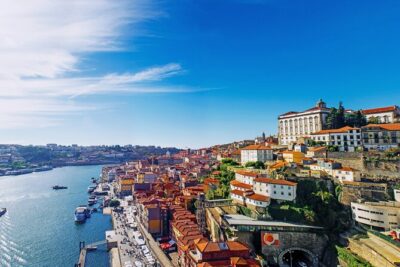
Once you’re underway, the route is designed around passing points you can actually recognize and react to. The duck sails upstream, and your guide’s live narration helps you connect the buildings and structures to what’s going on around you.
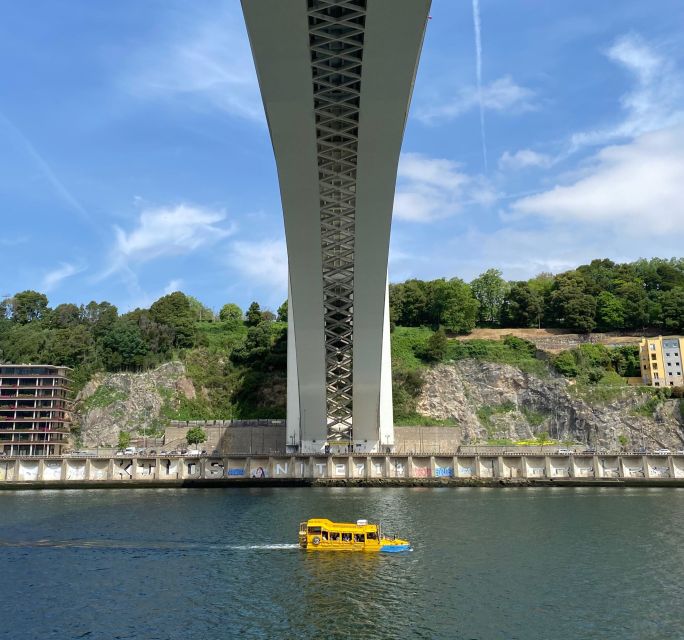
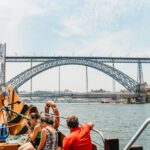
The stand-out pass is under the Arrábida bridge. Even if you’ve only seen photos, you’ll know it immediately when you’re moving beneath it. It’s the kind of landmark that makes a river ride feel connected to the city rather than separated from it.
After that, the duck continues past the Heliport of Massarelos, then along to a church as part of the river corridor. You’re not just looking at abstract water and far shores—you’re seeing Porto in a way that’s built around its bridges, transport hubs, and local structures.
A useful tip for getting the most out of this: treat the live commentary like your map. If you tune in when the guide talks about the next pass, you’ll know what you’re seeing instead of just hoping for a good photo moment. That’s also where the live guide format shines—you can adjust your attention as the story changes.
Heading Back and Toward the Estuary: Where Fresh Meets Salt
After the upstream portion, the duck turns back and heads toward the estuary. This is where the tour adds a smart natural detail that you can actually observe, not just hear about.
As you move into the coastal region, you can see the mixing point where the Douro’s fresh water meets the sea’s salt water. That fresh-and-salt mixing is one of those facts that’s hard to picture from land, but on the river it turns into something you can conceptually track as you watch the water conditions and surroundings shift.
You’ll also pass by the marina, which gives you a more “coast living” feeling near the edge of the river. It breaks the ride up visually: you’re not stuck with the same riverbanks the entire time.
Then it’s back out of the river at the Afurada slipway, returning you toward the ramp where the tour started. The exit matters too. Most boat rides just… end. This one loops through the same amphibious story so the experience feels complete rather than abruptly cut off.

Live Guide Commentary: The Real Entertainment Engine
The biggest value lever here is not the vehicle—it’s the narration. The tour includes a live tour guide presenting commentary in Portuguese and English, and the activity info also lists Spanish as part of the available languages.
Live commentary is especially good on rides like this because the scenery changes quickly. Bridges, transport points, and shoreline areas move past on a schedule you can’t control. A guide keeps you from zoning out.
It also makes the experience work for mixed groups. A family might care about the splash down and the fun vehicle. Adults might care about the landmarks and the river story. The narration gives both types of travelers something to latch onto.
And the tone of the ride tends to feel interactive. One review highlights that getting to drive a bit at the end was a memorable moment for a child. I can’t promise that will be available on every departure, but it lines up with the idea that the duck ride is built to feel playful, not formal.
Price and Value: Why This Feels Like More Than a 50-Minute Ride
At $34 per person for about 50 minutes, you’re paying for three things at once:
- a real amphibious vehicle experience
- the live guide (not just a recorded audio track)
- the Douro-to-estuary viewpoints from the water
If you compare it to typical city sightseeing, the value jumps because you’re not paying only for “views.” You’re paying for the how: a vehicle that literally changes environment as it moves, plus commentary that makes the route make sense.
You’re also buying time-efficiency. Porto has plenty of walking options, and a lot of boat trips run longer. This gives you a compact “different angle on Porto” activity without eating your entire day.
Just keep your expectations aligned. This is a short ride, not a long cruise and not a multi-stop excursion with long pauses. The trade-off is that the tour stays energetic and focused on the amphibious adventure, the splash down, and the recognizable passes.
Who Should Book (and Who Might Want to Skip)
This is a strong match if you want one clear, fun activity that also teaches you something along the way.
You’ll probably love it if:
- you’re traveling with kids or teens who enjoy action moments like splash downs
- your group includes mixed interests (the guide ties it together)
- you want a memorable photo-and-landmark combination without a lot of planning
- you’d rather spend money on an experience than on another museum ticket
You might reconsider if:
- you need accessibility support, because it’s not suitable for people with mobility impairments
- you’re sensitive to being on a vehicle without food or drinks during the ride
- you’re the type who relies on ultra-precise timing for departures and need zero room for surprises
One more fairness note. A negative review mentioned issues with a guide being rude and a time mismatch that caused people to miss the trip. That’s not enough to define the whole experience, but it does suggest a practical move: confirm your exact departure time when you book, and arrive with extra buffer at the Afurada ramp.
Should You Book Porto Duck Tours?
Book it if you want a compact, high-fun amphibious experience that shows Porto from the water—complete with live commentary and a real WWII-style duck story. The $34 price is easier to justify here because you’re not just buying a boat ride; you’re buying the amphibious “road to river” transformation plus guided context for the landmarks you pass.
Skip it if accessibility is a concern for your group or if you prefer low-motion, long-stay sightseeing. And if you’re particular about timing, plan to be early at Afurada’s ramp so the tour starts the way it should.
If your goal is one activity that feels different the moment you step onboard, this one is a strong bet.
FAQ
Where do you start and end the Porto Duck Tours experience?
The tour starts and ends in Afurada, at the ramp, right in front of Mercado d’Afurada (Madureira’s Mercado d’Afurada).
How long is the tour on the water?
The river tour lasts about 50 minutes.
Is there live guide commentary?
Yes. There is live commentary provided by a guide.
What languages are available for the tour?
The guide provides commentary in Portuguese and English, and Spanish is also listed as available.
What vehicle do they use?
They use distinctive yellow amphibious vehicles originally used in World War II, described as World War II D.U.K.W. units rebuilt and modified for safety.
What route do you take on the Douro?
You go from Afurada down onto the Douro, sail upstream passing under Arrábida bridge and the Heliport of Massarelos and by a church, then turn back toward the estuary, where fresh river water mixes with salt sea water, pass a marina, and exit at the Afurada slipway.
Are food or drinks allowed on the vehicle?
No. Food and drinks are not allowed in the vehicle.
Is the activity suitable for mobility impairments?
No, it’s not suitable for people with mobility impairments.