
Reviewed · SIX BRIDGES RIVER CRUISES
Porto Six Bridges Panoramic Cruise on the Douro River
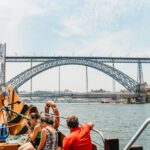
Six bridges in one easy boat ride. This 50-minute Douro cruise lets you see Porto and Vila Nova de Gaia from the water and even pass under all six bridges, including Gustave Eiffel’s D. Maria Pia.
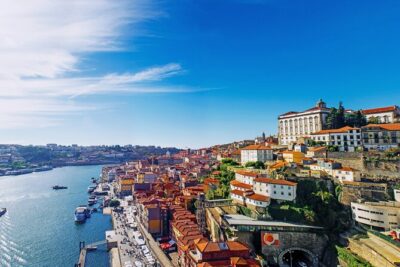
I love the open-ticket flexibility (choose a departure that fits your day) and the photo ops that feel more dramatic than anything you get from the road. From the river, the terraced hills and riverfront buildings make instant sense, and the bridges hit at perfect angles for pictures.
One thing to consider: the cruise is panoramic, and a live guide is not guaranteed—plus the narration can be hard to hear depending on where you sit. If you care most about the story, aim for the inside section or nearer the speaker area.
In This Review
- Key things to know before you go
- Entering the Douro: why these bridges work better from water
- Tickets and departure choices: Porto or Vila Nova de Gaia
- Seating and the narration reality: how to make it easier to hear
- Bridge 1: D. Maria Pia Bridge and Eiffel’s long shadow
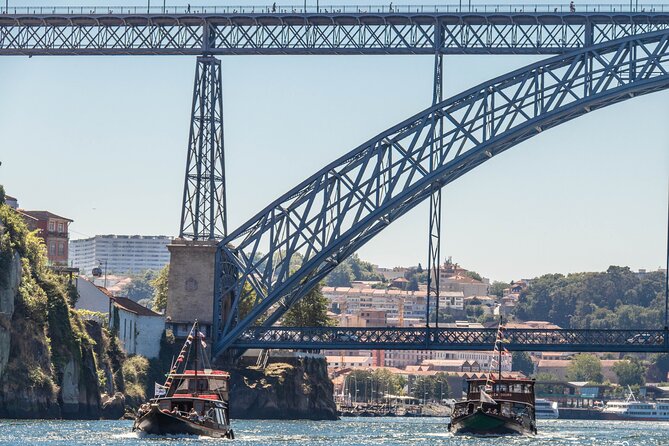
- Bridge 2: Dom Luís I Bridge, Porto’s icon from the river
- Bridge 3: Ponte da Arrábida and the concrete-arch era
- Bridge 4: São João Bridge and the Roman layers under construction
- Bridge 5: Ponte do Freixo, the furthest upstream
- Bridge 6: Infante Dom Henrique, the newest bridge and the name behind it
- Timing, duration, and why this fits almost any Porto itinerary
- Photo tips that actually help on a moving boat
- Value for money: is a short cruise enough?
- Who should book this cruise—and who might want a different one
- Should you book the Porto Six Bridges Cruise?
- FAQ
- FAQ
- How long is the Porto Six Bridges panoramic cruise?
- Are tickets tied to a specific departure time?
- Where do the boats leave from?
- Is there food or drinks included?
- Will there be a guide or audio narration?
- Which bridges are included in the route?
- What are the hours of operation?
- What happens if weather is bad?
- Is the cruise suitable for kids?
- How many people can be on board?
Key things to know before you go
- Open tickets from both sides of the river: you can board from Porto or Gaia.
- A true six-bridge route: the boat sails under all bridges along this stretch.
- Open-air or covered seating: pick based on sun, shade, and how much you want to hear.
- Short but complete: about 50 minutes, then you’re back near where you started.
- Expect photo-friendly stops: each bridge hits from a different viewpoint.
- Most people can do it, and it runs daily during set hours across the year.
Other ways to ride the river past the six bridges
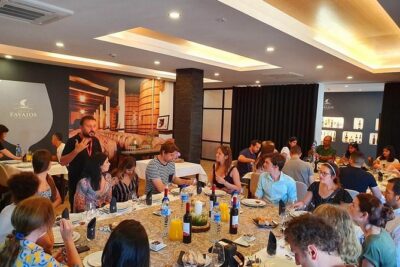
- Complete Douro Valley Wine Tour with Lunch, Wine Tastings and River Cruise★ 5.0 · 12,920 reviews
- Porto: 6 Bridges Douro River Cruise★ 4.3 · 6,472 reviews
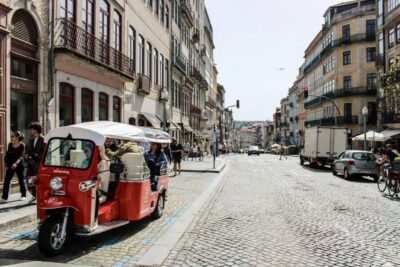
- Porto: Guided Tour by Tuk-Tuk & Optional Douro River Cruise★ 4.5 · 5,980 reviews
- Authentic Small Group Douro Wine Tour with Lunch & River Cruise★ 5.0 · 4,775 reviews
Entering the Douro: why these bridges work better from water
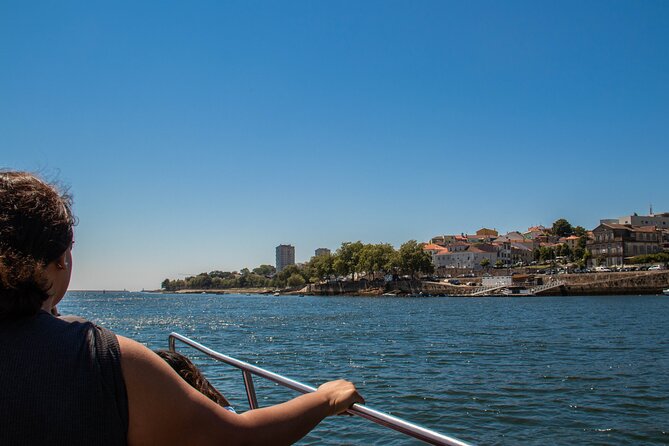
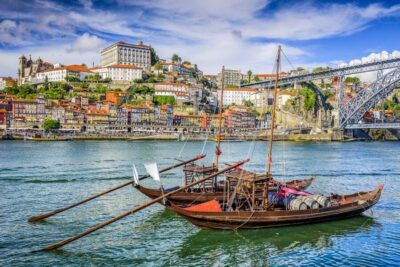
Porto is a city you can walk, but the Douro river changes how you read the whole place. From street level, you’re mostly dealing with hills, rooftops, and viewpoints that come in bursts. From the water, the river becomes the highway—and the bridges are the big “how did they build this?” moments that tie Porto to Gaia.
This cruise is refreshingly direct. You’re not hunting for sites across town for hours. Instead, you get a smooth ride through the stretch where the bridge designs evolve over time. You’ll see iron, steel-age engineering, reinforced concrete, and newer road bridges—all within one short trip.
The timing also helps. At roughly 50 minutes on the water (and you’re back around an hour after departing), it’s a great “connective tissue” activity between a morning of walking and an afternoon of wine-cellar hopping.
Tickets and departure choices: Porto or Vila Nova de Gaia
You can choose your moment more than with fixed tours because this is sold as an open ticket experience. Boats leave from Porto and Gaia, so you’re not locked into one side of the river.
In practice, this means you can match the cruise to where you already are. If you’re working your way through Porto’s center, you can likely find a departure from Porto. If your afternoon plan pulls you toward Gaia, booking from that side keeps you from backtracking.
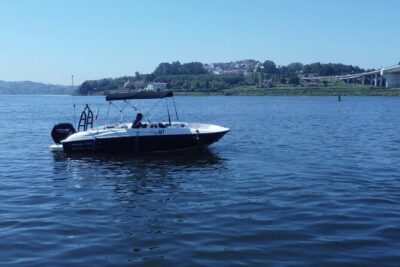
One detail I really like: you get options for seating. Choose open-air if you want the wind and the wide views. Choose covered if sun or light rain is an issue, or if you’d rather focus on the narration area.
Seating and the narration reality: how to make it easier to hear
The experience is built as a panoramic cruise, not a guided lecture. That’s not bad. It just changes what you should expect.
From the boat, you can absolutely enjoy the bridges without needing to listen to much. But if you want the story behind each one, seat placement matters. Some boats provide multilingual commentary, and the audio can be clearer inside than outside. People sitting up front or in open areas sometimes miss parts of the announcements.
So here’s the practical move:
- If hearing the bridge-by-bridge info matters to you, aim for the inside or toward the speaker area.
- If you mainly want the views and photos, open-air is a treat. Just don’t rely on audio being perfectly timed or perfectly loud everywhere.
Also, recordings can be hit-or-miss in clarity and timing. When the timing is off, you’ll still be able to see the bridge being discussed—you just might need to glance quickly to connect the words to the moment.
Bridge 1: D. Maria Pia Bridge and Eiffel’s long shadow
The first major stop in the set is Ponte D. Maria Pia. This is a rail bridge crossing the Douro and connecting Porto with Vila Nova de Gaia. It was designed by Gustave Eiffel, and it was once the largest iron arch bridge in the world. Even if you’re not a rail-bridge nerd, you’ll feel why it became famous: the structure looks like it was drawn for a postcard.
Why this bridge matters on your cruise:
- It gives you an early “engineering-first” perspective.
- From the river, the arch shape reads differently than from viewpoints on land.
- You’re seeing Eiffel’s design language in a real working crossing, not a museum object.
If you like architecture, this is the moment where your brain starts comparing materials and forms across the rest of the bridges. It’s a clean starting point.
More Porto days out worth booking



Bridge 2: Dom Luís I Bridge, Porto’s icon from the river
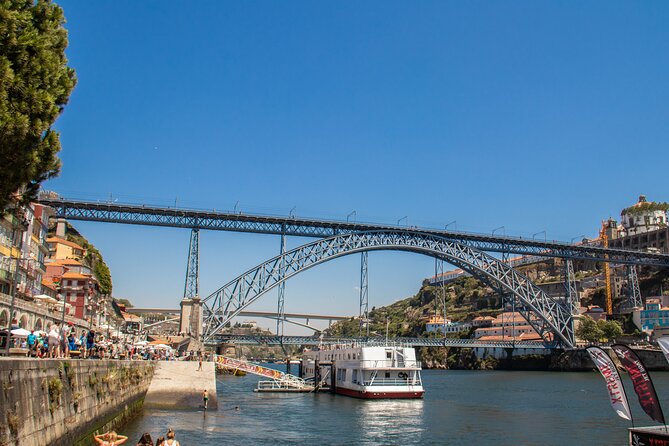
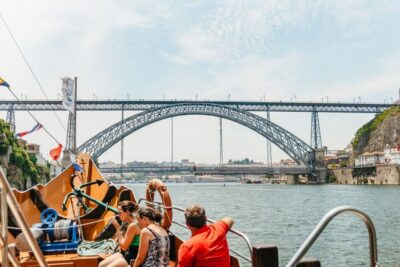
Next up is Ponte Dom Luís I. This one is a true Porto icon, spanning the Douro between Porto (north bank) and Gaia (south bank). It’s 19th-century engineering and one of those bridges you see constantly in photos from land—but nothing quite matches the river-level perspective.
From the water, you get a better sense of:
- how the bridge “frames” the city behind it
- how thick the structure feels in real scale
- how the bridge sits in relation to the river curve
If you want one quick test of whether this cruise is worth it: watch how the bridge lines sweep across the frame as you move. That motion is the whole point. Standing on a street is static. Being on the Douro makes the architecture feel alive.
Bridge 3: Ponte da Arrábida and the concrete-arch era
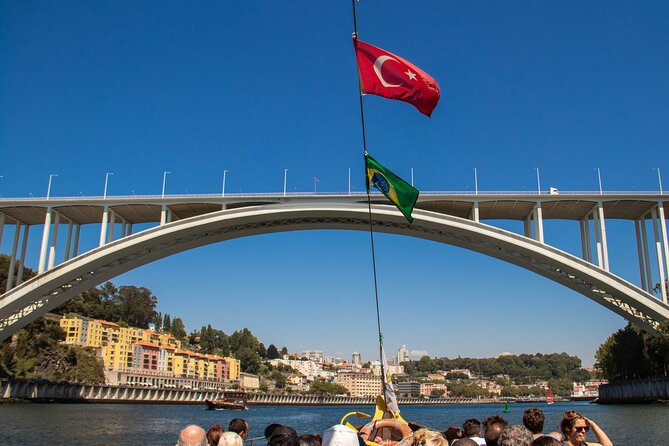
Then comes Ponte da Arrábida, an arch bridge that connects Porto and Gaia. It was built in 1963 as a response to rising traffic and the need for alternative connections to the older bridges. At the time, it had the largest reinforced concrete arch of any bridge worldwide.
This is where the cruise does something smart: it doesn’t just show bridges. It shows change over time.
From the river, the concrete arch reads as more solid and massy than the older iron-arch bridge you just saw. The contrast helps you appreciate how engineering solutions shift with materials, technology, and city needs.
If you’re the type who likes spotting “design themes,” keep an eye on how the arch geometry changes from bridge to bridge. You’ll start seeing patterns quickly.
Bridge 4: São João Bridge and the Roman layers under construction
Next is Ponte de São João. This bridge was built to replace the D. Maria Pia Bridge. It’s now a key landmark in Porto’s skyline and an important transportation link between Porto and Vila Nova de Gaia.
Here’s a detail you’ll want to remember because it makes the bridge feel tied to the land under it: during construction, archaeologists discovered remains of a Roman road and a medieval shipyard.
That’s one of the nice surprises of a cruise like this. You’re not only looking at architecture above the river—you’re getting hints that the riverbanks have been busy for centuries. You’ll likely glance at the bridge as it passes, but the mind will start adding the layers below.
Bridge 5: Ponte do Freixo, the furthest upstream
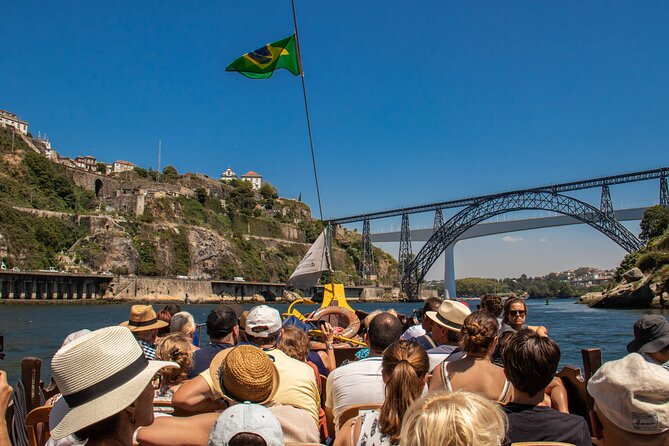
Upstream is Ponte do Freixo, inaugurated in September 1995. Of the bridges connecting Porto to Gaia, it’s the one furthest upstream.
This matters because the changing river stretch gives you different riverfront angles. Even though it’s still the same general area, upstream views shift the skyline relationship. That’s where the cruise earns its “panoramic” label.
Design-wise, it’s the newest of the earlier group in the set, so you get another shift in how the bridge reads against the water—different proportions, different modern road-bridge look, and a fresh angle on the city edge.
Bridge 6: Infante Dom Henrique, the newest bridge and the name behind it
Last of the six is Infante Dom Henrique Bridge (also called the Infante Bridge). It’s a road bridge connecting Vila Nova de Gaia to Porto, and it’s the newest bridge in this group.
The name is a big clue to Porto’s identity: it honors Infante Dom Henrique, a key promoter of the Portuguese Discoveries. He was born in Porto. So when you see the bridge on the river, it’s also a small geographic reminder of where Portugal’s seafaring push began.
In terms of what you’ll feel as you ride toward the end: the cruise often feels like it’s building to this final viewpoint where the skyline and bridge design are both fresh in your mind. By now, you’ve trained your eye on what “bridge type” looks like from water level. The last bridge lands with extra clarity.
Timing, duration, and why this fits almost any Porto itinerary
This is about 50 minutes on the water, with operations running daily within set hours:
- April–September: 10:30am–6pm
- October–March: 11am–4pm
It’s also designed to handle multiple departure times, which is why open tickets work well here. If you’re planning a day of walking and don’t want a half-day commitment, this is a good way to add something different without draining your energy.
Because you return to the original departure point roughly an hour after departing, you can treat it like a simple loop. Do it before a big meal if you want river calm. Do it after if you need a reset between neighborhoods.
Photo tips that actually help on a moving boat
The boat gives you a full 360-degree view, but you still get better results with a few choices.
- Go early if you want the best seats. People often end up with the front section when they’re there right when boarding starts.
- Wear something that handles sun and breeze. Open-air can get bright fast.
- If you’re photographing, remember that your best angle changes as the boat moves. Don’t freeze your stance. Track the bridge as it comes into your frame.
Also, don’t treat this as only a “bridge” cruise. The riverfront buildings and hills make the bridge views feel connected. You’ll likely walk away with photos that show Porto’s shape, not just its structures.
Value for money: is a short cruise enough?
At about $21.69 per person, the key question is whether you’ll use the time well. This cruise wins on efficiency. It’s short enough to fit almost any schedule, and it covers major bridge architecture in one pass.
It can also be good value compared with longer boat trips because you’re paying for a focused experience: six bridges, one river route, back you go. If you only have a little time on your hands, you’re not stuck with a long ride that might overlap with other plans.
One practical note from real-world experience: some people have found the on-site price lower than a booking platform price. Prices can vary by operator and timing, so if you’re at the dock anyway, it doesn’t hurt to compare.
Who should book this cruise—and who might want a different one
This cruise fits best if you want:
- a fast, scenic break with minimal walking
- a bridge-focused ride that still shows both cities
- strong photo opportunities from water level
- an easy way to “read” Porto and Gaia together
It’s less ideal if you’re expecting:
- a live guide who points out every detail in a conversational way
- perfectly timed audio that you can hear from anywhere
- a deep, long-form explanation
If your top priority is maximum info, you might prefer a guided option with a live presenter. If your top priority is the view plus a little context, this is an excellent fit.
Should you book the Porto Six Bridges Cruise?
Yes—if you want a practical, scenic hour on the Douro with dramatic bridge viewpoints and easy scheduling. The open-ticket setup from Porto and Gaia makes it low-stress, and the fact that the boat sails under all six bridges gives you variety without extra effort.
Skip it only if you’re very sensitive to audio quality and need narration that’s clearly audible everywhere. In that case, sit inside or close to the speaking area, or look for a more guided format.
If you’re building a Porto day and you want one “different perspective” activity that doesn’t eat your schedule, this is a smart choice.
FAQ
FAQ
How long is the Porto Six Bridges panoramic cruise?
It’s listed as about 50 minutes.
Are tickets tied to a specific departure time?
No. It’s sold as an open ticket, and boats depart from set times within the daily operating hours.
Where do the boats leave from?
Boats leave from both Porto and Vila Nova de Gaia.
Is there food or drinks included?
No. Food and drinks are not included.
Will there be a guide or audio narration?
This is a panoramic cruise, and a guide or audio guide service is not guaranteed.
Which bridges are included in the route?
The cruise covers Ponte D. Maria Pia, Ponte Dom Luís I, Ponte da Arrábida, Ponte de São João, Ponte Infante Dom Henrique, and Ponte do Freixo.
What are the hours of operation?
April to September: 10:30am–6pm. October to March: 11am–4pm.
What happens if weather is bad?
The cruise requires good weather. If it’s canceled due to weather and navigation conditions, you’ll be offered a different date or a full refund.
Is the cruise suitable for kids?
Children must be accompanied by an adult.
How many people can be on board?
The cruise has a maximum capacity of 100 travelers.
More Cruises & Boat Tours in Porto
More Tour Reviews in Porto
Back on the River, Bridge by Bridge
Fresh in the Porto notebook
Six Bridges River Cruises, compared.
 ★ 5.0Complete Douro Valley Wine Tour with Lunch, Wine Tastings and River CruiseFrom $10112,920 reviews
 ★ 4.2Six Bridges CruiseFrom $2111,680 reviews
 ★ 4.36 Bridges Douro River CruiseFrom $236,472 reviews
 ★ 4.5Guided Tour by Tuk-Tuk & Optional Douro River CruiseFrom $205,980 reviews
 ★ 5.0Authentic Small Group Douro Wine Tour with Lunch & River CruiseFrom $1334,775 reviews
 ★ 4.2Bridges Cruise & Sunset & Port Wine Cellar OptionFrom $214,180 reviews
 ★ 4.3River Douro 6 Bridges CruiseFrom $174,168 reviews
 ★ 5.0Douro Valley Tour: 2 Vineyard Visits, River Cruise, Winery LunchFrom $1013,542 reviews
Browse the lists this tour appears in