
Reviewed · PORTO BIKE & E-BIKE TOURS
Porto: Historic e-Bike Tour with a guide
Porto can feel like a maze. This guided e-bike loop helps you get your bearings fast while still seeing the big landmarks and the quieter city corners. I especially like the way the ride mixes viewpoints—Palácio de Cristal Gardens and the Douro River crossing—with street-level streetscapes, not just postcard stops. The second thing I really value is the guide and shop support, including helmet help and bike adjustments for comfort. One drawback to keep in mind: the tour is moderate and you’ll share roads with regular traffic, even if the route aims to use less busy stretches.
If you can ride a bike confidently, this is a smart first-visit move. The pace is relaxed enough to learn as you go, and you’ll pass the city’s greatest hits—from Clérigos Tower to São Bento Station—without spending your whole day in transit. Still, it’s not for everyone: it’s not suitable for children under 15, anyone who can’t ride, wheelchair users, or people with mobility impairments.
In This Review
- Key reasons this Porto e-bike tour earns its top score
- Why an e-bike tour is the smart move in Porto
- Start in Miragaia: the “get comfortable fast” part
- What 2.5 hours feels like in practice
- Miragaia and the first sweep of Porto’s historic center
- Palácio de Cristal Gardens: where the ride turns into views
- Praça de Carlos Alberto and Cordoaria’s Garden: city life meets landmark scale
- Clérigos Tower to Livraria Lello: icons that work best when you’re moving
- Clérigos Church: that tower you can’t unsee
- Livraria Lello: the famous facade, viewed from the city rhythm
- São Bento Station and Porto Cathedral: getting the “bones” of the city
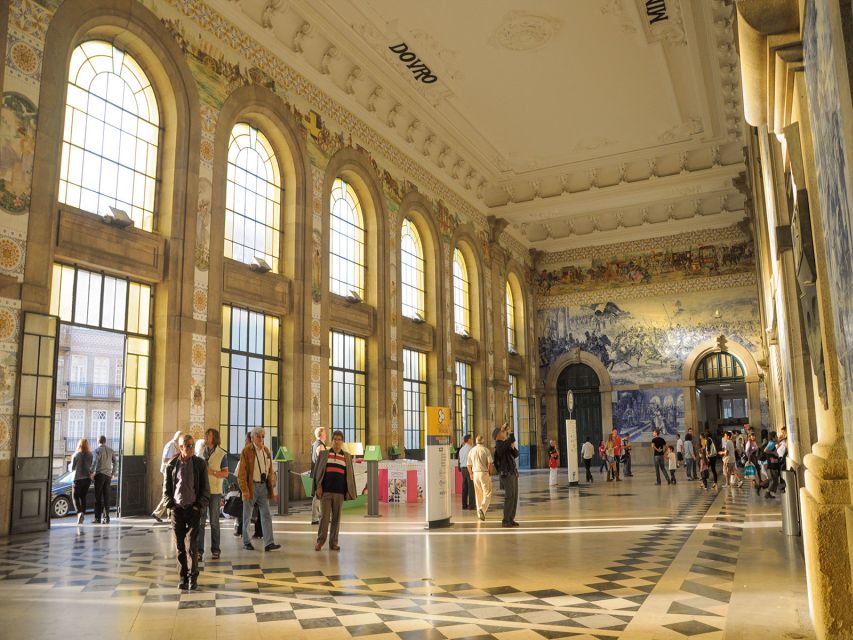
- São Bento Station: tiles and atmosphere from the right angle
- Porto Cathedral: religion, power, and centuries of reuse
- Crossing the Douro on Dom Luís I Bridge: the breezy reset
- Safety and pacing: what “moderate” means on real streets
- Guides who actually help you enjoy it
- Price and value: what you get for about $69
- Who should book this tour, and who should skip it
- Places to put your attention on during the ride
- Should you book this Porto Historic e-Bike Tour?
- FAQ
- How long is the Porto Historic e-Bike Tour?
- What’s the difficulty level?
- Is the tour private or group-based?
- Where do we meet the guide?
- What’s included in the price?
- What languages are available?
- Who is the tour not suitable for?
- What major places will the tour pass by?
- Is hotel pickup or drop-off included?
Key reasons this Porto e-bike tour earns its top score
- Two big view moments: the gardens by Palácio de Cristal and the river breeze when you cross Luis I Bridge
- Comfort-first bike setup: the shop helps fit the right size and adjust seats, which matters on hills
- A guide who teaches while you ride: bike skills, safety confidence, and stories as you move through town
- Real city variety: narrow historic lanes, major squares, and landmark facades like Clérigos and São Bento
- Tour-length that respects your time: about 2.5 hours, so it works even on a busy arrival day
Roll the riverfront on two wheels
- 3-Hour Porto Highlights on a Electric Bike Guided Tour★ 5.0 · 4,392 reviews
- Porto: City Highlights 3-Hour Guided Electric Bike Tour★ 4.8 · 3,092 reviews
- Porto: City Highlights Guided Segway Tour★ 4.9 · 515 reviews
- Porto: 3-Hour Old Town & Riverside Bike Tour – Guided Experience★ 5.0 · 481 reviews
Why an e-bike tour is the smart move in Porto
Porto’s famous for slopes. Even when the streets look small on a map, you feel them in your legs when you’re walking. On an e-bike, those climbs become manageable, which means you can spend your energy on noticing details—stonework, viewpoints, church facades—rather than just surviving the next hill.
This tour keeps that practical goal front and center. You’re not stuck hiking up and down stair-steep streets all day. Instead, you glide between neighborhoods and viewpoints, then slow down for the sights you actually came for. The e-bike doesn’t erase Porto’s character, but it makes the city feel reachable.
Also, the tour doesn’t pretend every street is equally easy. You should expect some traffic and a moderate ride. The itinerary favors quieter parts when possible, but you’re still riding through an active city.
Start in Miragaia: the “get comfortable fast” part
Your tour begins at Biclas & Triclas in Miragaia, right on the riverbank. Starting near the water is helpful because it frames the trip: you’re not just going “from point A to point B,” you’re being oriented to Porto’s two big sides—the inland city and the Douro.
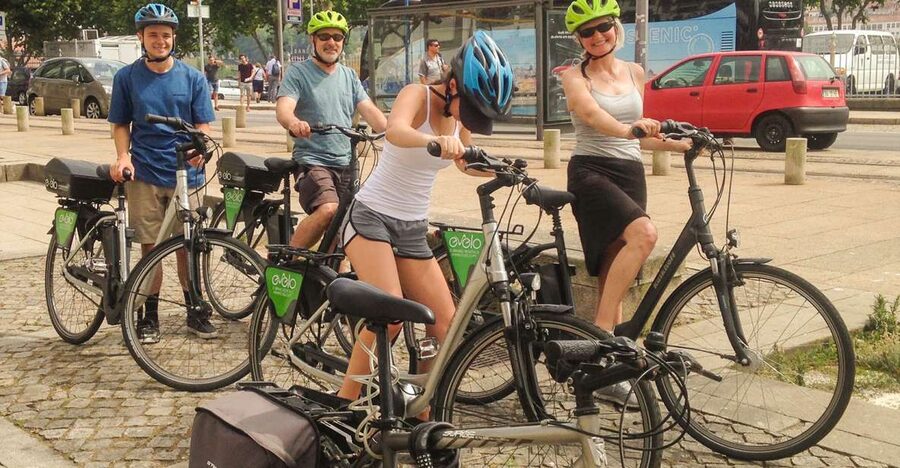
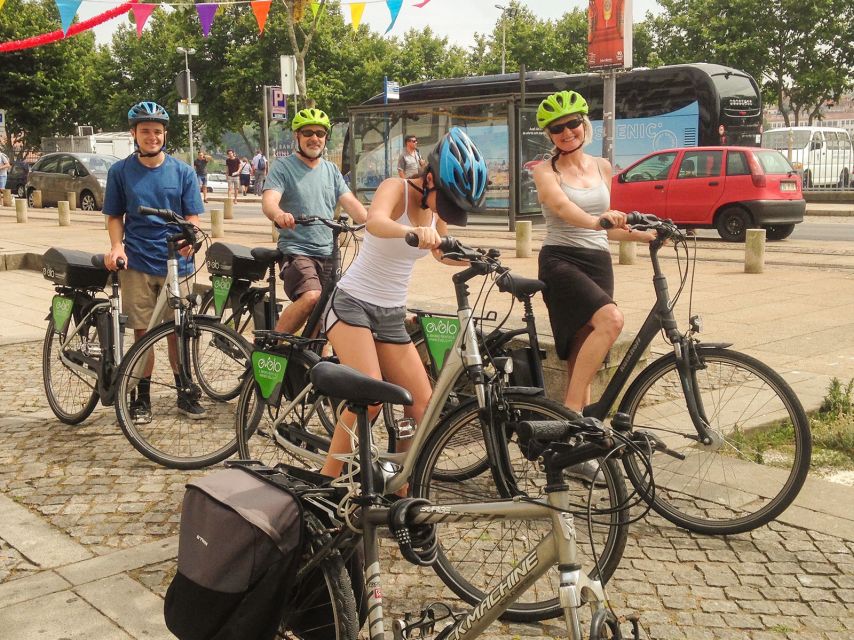
The big win here is the way the shop and guides help you settle in. People report getting the right bike size and helmet, plus seat adjustments so you’re not stuck hunched over. If you’ve never ridden an e-bike before, that support is the difference between a fun first hour and a stressful one.
You’ll meet your guide at Largo de Artur Arcos (historical center) and then head into the old streets. For first-timers, that’s a good order: learn the bike comfort first, then move into the lanes where speed and confidence matter most.
What 2.5 hours feels like in practice
This is built as a 2.5-hour guided circuit, and that timing is unusually practical. Long enough to see the major highlights—Clérigos, São Bento, Porto Cathedral, and the bridges—without eating up your whole day.
You’re on a private group format. That generally keeps things less hectic and helps the guide manage the pace. It’s also the kind of group setup where you can ask questions without feeling like you’re interrupting a crowd.
Language support is solid too: English, French, Portuguese, and Spanish. If you care about context—why a place looks the way it does or what role it played in the city—you’ll get more out of it in your own language.
Miragaia and the first sweep of Porto’s historic center
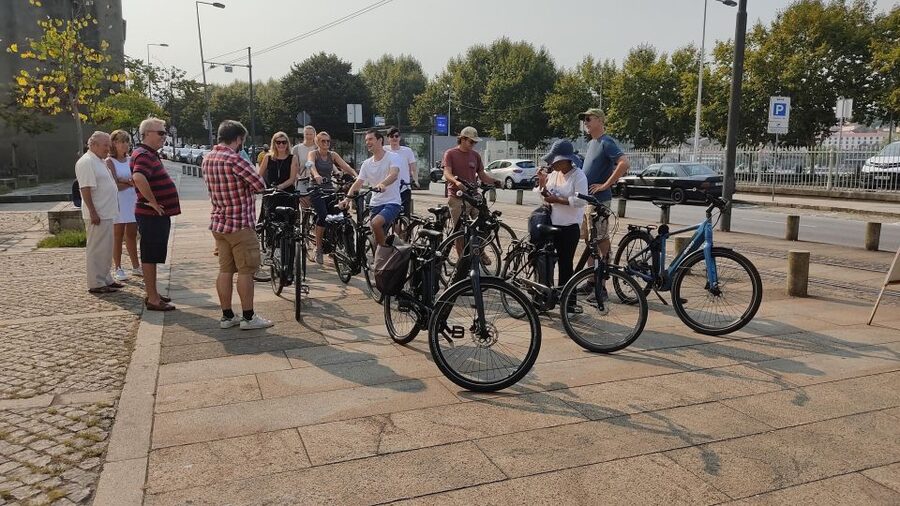
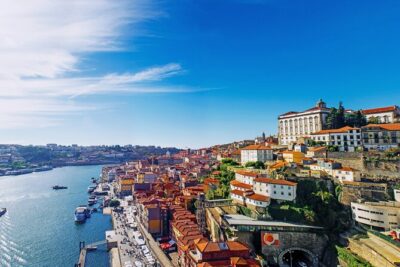
The tour kicks off with Miragaia, a neighborhood that gives you an immediate sense of the river-side posture Porto is known for. You’re close enough to feel that the city is built around water, but you’re still moving into the core streets.
Then you pass the Parish Church of Massarelos. You’re not going to a museum here. You’re watching how a working neighborhood frames its religious buildings—an eye-level reminder that Porto isn’t only monuments. It’s also daily life.
Next comes Parque da Quinta da Macieirinha. Even when it’s a pass-by moment, this park stops you from being stuck in stone and traffic the whole time. It’s a breather zone that helps you reset before more landmark-heavy segments.
More Porto days out worth booking


Palácio de Cristal Gardens: where the ride turns into views
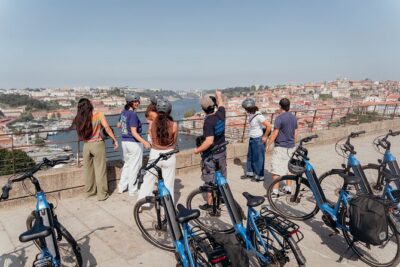
The Jardins do Palácio de Cristal area is one of those Porto moments that makes the effort worth it. The ride makes it easy to reach the viewpoints, and you get a chance to see why this spot is so loved: open sightlines, garden paths, and a strong relationship to the city’s hills.
In practical terms, gardens like this help you understand Porto’s geography. You start to see how one lookout connects to another, and how the city’s structure shapes the route you’re following.
Praça de Carlos Alberto and Cordoaria’s Garden: city life meets landmark scale
Praça de Carlos Alberto is a classic Porto square-feel: a place where the city opens up a little. Even as you pass through, you’ll notice how squares work like wayfinding anchors.
Then you reach Cordoaria’s Garden. This is another “small shift” moment—less about one single monument and more about stepping into a calmer pocket so the landmarks land better.
Clérigos Tower to Livraria Lello: icons that work best when you’re moving
The next cluster is where Porto’s postcard appeal shows up, but the e-bike makes it smarter than a stop-and-start walk.
Clérigos Church: that tower you can’t unsee
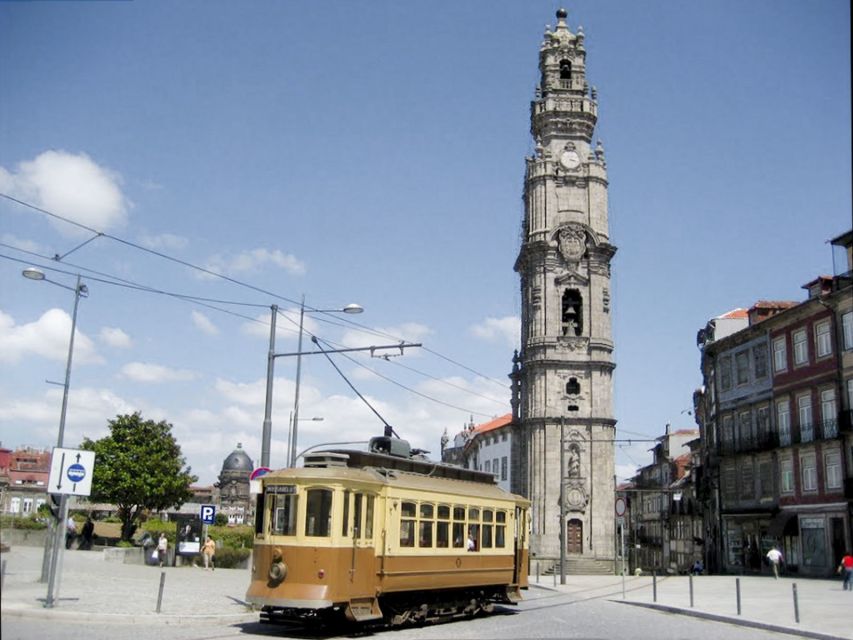
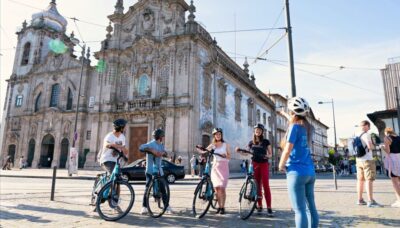
You’ll pass by Clérigos Church and see the Clérigos Tower area from the street-level approach. This is the kind of landmark that changes how you view the surrounding streets. Once you’ve seen the tower in motion, it feels easier to navigate Porto later on foot.
It also sets the stage for why a guided loop helps: the guide’s stories and timing help you connect what you’re seeing now with what you’ll see a few minutes later.
Livraria Lello: the famous facade, viewed from the city rhythm
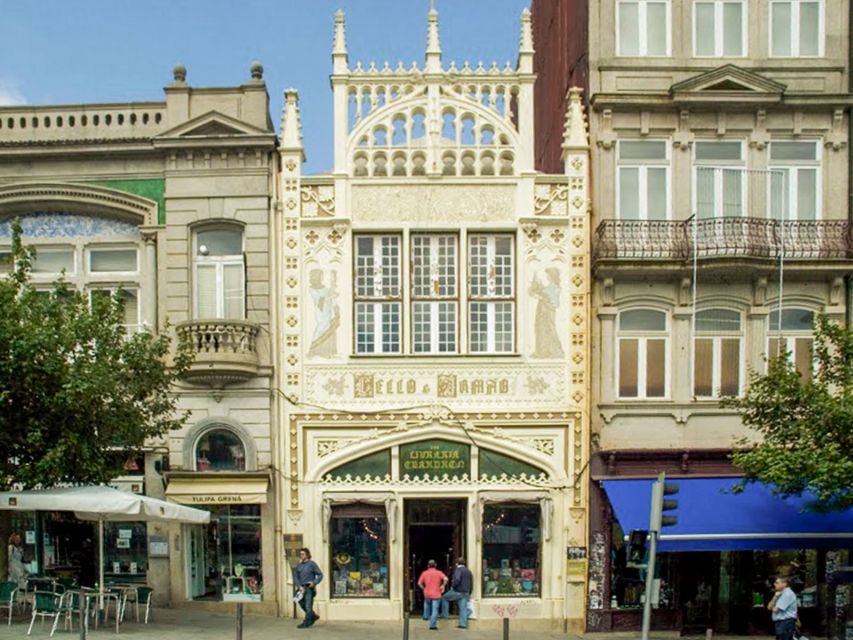
You also pass Livraria Lello & Irmão. You don’t need to be a book-nerd to appreciate why it draws attention. But the bigger value comes from how it sits inside Porto’s urban flow—stone buildings, narrow streets, and crowds that form around a single address.
The tour’s rhythm matters here. You’re not only taking in the exterior; you’re learning how Porto places its most famous buildings where people actually move through the city.
São Bento Station and Porto Cathedral: getting the “bones” of the city
After the inner-core landmarks, the tour turns toward two sites that help you understand how Porto gathers importance.
São Bento Station: tiles and atmosphere from the right angle
São Bento Station is passed by on the route, but that’s still useful. You can recognize its role immediately: this is a public space where arrivals and departures meet the city’s identity. Seeing it while you ride gives you context for your future exploration—later, you’ll know where to return without needing a map.
Porto Cathedral: religion, power, and centuries of reuse
You’ll pass by Porto Cathedral as part of the loop. Cathedral areas are always good for orientation because they’re structural. They anchor the old city and often sit at the center of older street patterns.
When you arrive there by e-bike instead of climbing from afar, it feels less like you’re “checking a box” and more like you’re learning the city’s layout. That helps on your second day, when you can choose your own walking route with less guesswork.
Crossing the Douro on Dom Luís I Bridge: the breezy reset
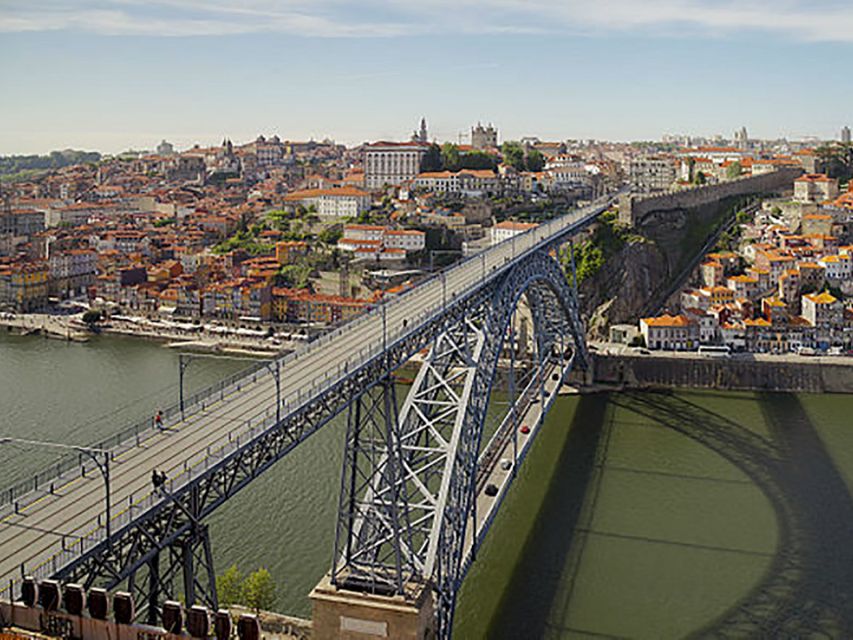
This is one of the most satisfying parts of the tour because it changes the pace.
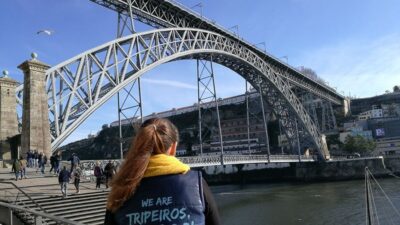
You pass by Dom Luís Bridge and then head toward Jardim do Morro. The bridge crossing is short, but the effect is big: you get a different perspective on Porto’s river relationship, and the motion tends to make you notice details you’d miss on foot.
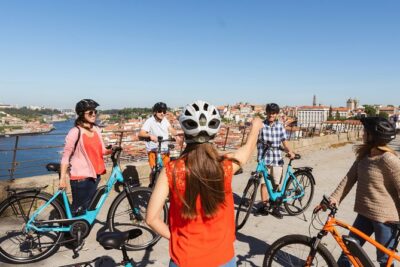
Then you reach Jardim do Morro, a viewpoint-style stop where the city opens up again. Riders describe it as a highlight for a reason: you come down from the concentrated old streets, then you look out and finally feel the whole geography at once.
Safety and pacing: what “moderate” means on real streets
This isn’t a casual stroll. The route takes place on streets with regular traffic. The itinerary aims to use less busy streets where possible, but you should still ride with full attention and expect some urban momentum.
Here’s what helps most:
- Listen to your guide during the bike prep and throughout the ride
- Stay aware at crossings and busier stretches
- If you’re new to e-bikes, start calm and let the guide adjust your pace
People mention guides teaching bike use and helping riders feel safe through the city. That matters, especially if you’re not used to riding near traffic.
Guides who actually help you enjoy it
The strongest compliments focus on the human side, not just the route.
You’ll likely learn more than “look up at the tower.” Some guides are known for clear explanations and a patient approach to beginners. One guide named Diana stood out for being especially helpful with first-time e-bike riders, including choosing a more uncomplicated river-focused stretch and a lovely ride around the park area.
Another guide, Pedro, was described as enthusiastic and story-driven. That’s a good sign: you don’t want a guide who just points and moves. You want someone who connects the place you’re passing to why it’s there.
There’s also a shout-out for Javier, noted for giving a very good tour. When you see that kind of consistency, it usually means the guide team is trained to keep the experience moving without rushing.
Even better: the tour plan can flex if you have timing pressure. One family-style group got route changes to help make a train connection. So if you’ve got a real schedule (like a departure), tell the guide early so they can adjust within reason.
Price and value: what you get for about $69
At $69 per person for roughly 2.5 hours, you’re paying for three things: a guide, an e-bike/helmet, and a structured route through the city’s key areas.
What’s included helps the value feel practical:
- A local guide
- Electric bike and helmet
- The 2.5-hour guided tour time
- Bottle of water
- A seasonal fruit
What’s not included is mostly the optional extras: hotel pickup/drop-off, souvenir photos, and personal spending. If you’re staying in central Porto and can reach the meeting point, you avoid extra costs and keep the tour focused.
For first-time visitors, value comes from efficiency. You see major highlights like Clérigos, São Bento, and Porto Cathedral, plus a river crossing that’s hard to chain together smoothly by foot.
Who should book this tour, and who should skip it
This is a strong fit if you:
- Want a first visit overview of central Porto
- Can ride a bike and feel comfortable sharing roads
- Prefer learning from a guide rather than piecing everything together alone
This tour is not suitable for:
- Children under 15
- People with mobility impairments
- People who can’t ride a bike
- Wheelchair users
- Anyone under 150 cm (4 ft 9 in)
If you’re unsure about your stamina, remember the e-bike reduces the hill strain. Still, moderate difficulty and street traffic mean you need comfort with riding, braking, and basic awareness.
Places to put your attention on during the ride
If you want to maximize the experience, focus on three zones as you go:
- The gardens and viewpoints (Palácio de Cristal Gardens, then Jardim do Morro)
- The big skyline anchor (Clérigos Tower area)
- The public city heart (São Bento Station and Porto Cathedral zones)
Also, treat the guide’s stories as part of the navigation. In Porto, the best landmarks are the ones you can later find again. When the guide connects what you see with the city’s layout, you’ll spend less time hunting on subsequent days.
And if you have a time constraint—train, dinner reservation—say so. The tour’s structure leaves room for sensible adjustments.
Should you book this Porto Historic e-Bike Tour?
Book it if you want a smooth first-visit route that saves legwork and strings together the big Porto moments: Clérigos, São Bento, Porto Cathedral, and the Douro bridge views in one guided session.
Skip it if you’re not comfortable riding a bike, don’t meet the height requirement, need wheelchair access, or feel uneasy about traffic. It’s manageable with an e-bike, but it still is a real ride through city streets.
If you’re an adult traveler who wants to feel confident in Porto quickly, this is one of the most efficient ways to do it. You’ll leave with a mental map of the city—and a clear sense of where you want to return on foot.
FAQ
How long is the Porto Historic e-Bike Tour?
It lasts about 2.5 hours.
What’s the difficulty level?
The difficulty is listed as MODERATE.
Is the tour private or group-based?
It’s offered as a private group.
Where do we meet the guide?
The meeting point is at Biclas & Triclas – Porto Bike Tours and Rentals in Miragaia on the riverbank, with the ride beginning at Largo de Artur Arcos in the historical center.
What’s included in the price?
Included are the local guide, an electric bike and helmet, the 2.5-hour tour, a bottle of water, and a seasonal fruit.
What languages are available?
The live tour guide is available in English, French, Portuguese, and Spanish.
Who is the tour not suitable for?
It’s not suitable for children under 15, people with mobility impairments, wheelchair users, people who can’t ride a bike, or anyone under 150 cm (4 ft 9 in).
What major places will the tour pass by?
You’ll pass by Miragaia, Palácio de Cristal Gardens, Clérigos Tower/Clérigos area, São Bento Station, Porto Cathedral, and you’ll ride across Dom Luís I Bridge, with a viewpoint stop at Jardim do Morro.
Is hotel pickup or drop-off included?
No, hotel pickup and drop-off are not included.
More Tours in Porto




More Tour Reviews in Porto



On Two Wheels Along the River

Fresh in the Porto notebook

Porto Bike & E-Bike Tours, compared.
 ★ 5.03-Hour Porto Highlights on a Electric Bike Guided TourFrom $534,392 reviews
 ★ 4.8City Highlights 3-Hour Guided Electric Bike TourFrom $513,092 reviews
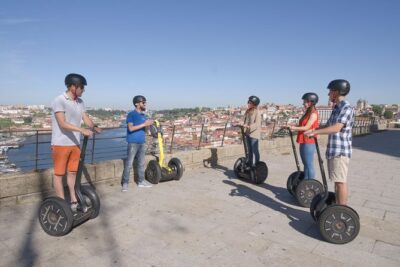
 ★ 4.9City Highlights Guided Segway TourFrom $76515 reviews
 ★ 5.03-Hour Old Town & Riverside Bike Tour – Guided ExperienceFrom $47481 reviews
 ★ 4.9Highlights in 3 Hours E-Bike TourFrom $57448 reviews
 ★ 5.02-Hour City Highlights Segway Tour – Guided ExperienceFrom $78331 reviews
 ★ 4.6Riverside Panoramic E-Bike TourFrom $51312 reviews
 ★ 4.83-Hour Bike TourFrom $57260 reviews
Browse the lists this tour appears in