
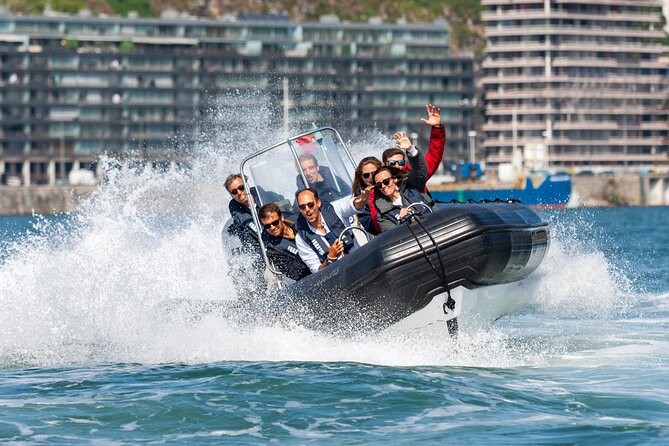
Reviewed · SIX BRIDGES RIVER CRUISES
Porto 6 bridges Speedboat Tour along the Douro
Porto’s Douro River route gets way more fun when you see it from a speedboat. You’ll love how fast this tour moves while still pointing out major landmarks from the water, including Port wine and rabelo boat history near Gaia. The ride also has that great “in-the-thick-of-it” feel—wind, speed, and views that change every minute.
My only caution: it’s short, so you’re mostly there for the scenery from the boat, not for long stops on land. And because you’re moving quickly on open water, you might get a little wet if conditions are breezy or choppy.
In This Review
- Key points worth knowing
- Speed + history: why this 6-bridge Douro tour works
- Getting on board at Douro Marina (and what the group feels like)
- Safety, jackets, and the reality of getting a little wet
- The 45-minute run: Porto’s bridges, Gaia’s port wine, and river-to-sea views
- Stop 1: Douro River views (Wine Caves, Ouro Street, Clerics Church)
- Stop 2: Douro Marina (the modern harbor hub)
- Stop 3: Centro Interpretativo do Patrimonio da Afurada
- Stop 4: Ponte da Arrabida (the big reinforced concrete arch)
- Stop 5: Museu do Carro Electrico (Porto’s tram transport story)
- Stop 6: Igreja da Confraria das Almas do Corpo Santo de Massarelos
- Stop 7: Alfândega Porto Congress Centre (New Customs Building)
- Stop 8: Passeio das Virtudes (vertical park terraces)
- Stop 9: Torre dos Clérigos (the tower with 225 steps)
- Stop 10: Cais de Gaia (waterfront, port wine, and cellars)
- Stop 11: Barcos rabelos (traditional port transport vessels)
- Stop 12: Ribeira (UNESCO medieval riverside)
- Stop 13: Paço Episcopal (bishop’s residence above the cathedral)
- Stop 14: Dom Luís I Bridge (the main icon connection)
- Stop 15: Miradouro Serra do Pilar (circular monastery view)
- Stop 16: Jardins do Palácio de Cristal (Crystal Palace gardens)
- Stop 17: Reserva Natural Estuário do Douro (birds and the suspended walkway)
- Stop 18: Jardim do Passeio Alegre (Atlantic-meets-river garden)
- What makes the “6 bridges” idea more than a gimmick
- Best use of this tour: pair it with walking and wine-cellar time
- Who this Porto Douro speedboat suits best (and who might want a different option)
- Practical tips so you enjoy it more
- So, should you book Porto 6 Bridges?
- FAQ
- How long is the Porto 6 Bridges speedboat tour?
- Where do I meet for the tour?
- Is the tour offered in English?
- What are the age limits and group size?
- Does the boat cruise out to sea?
- Is a life vest provided?
- Can I cancel for a full refund?
- What happens if the weather is poor?
Key points worth knowing
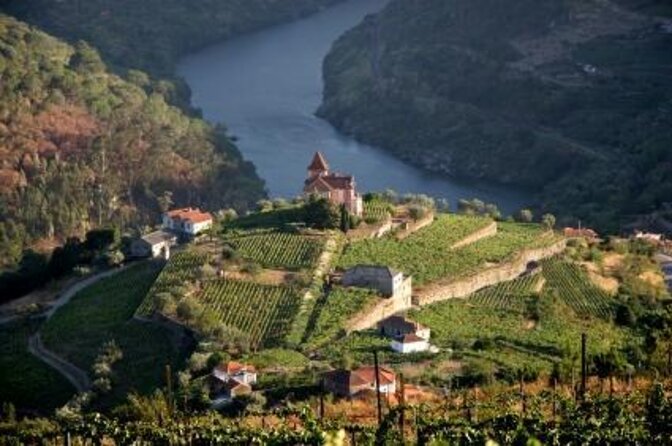
- Douro Marina meets iconic viewpoints right away, so you start sightseeing fast.
- Small boats and limited capacity (up to 38 total, about 10 per boat) keep it from feeling packed.
- Life vests are part of the plan, so you can focus on the fun without worrying.
- If conditions allow, you go out toward the sea, which adds a dramatic finish.
- A lot of Porto and Gaia highlights pass by quickly, making this great for a tight schedule.
Other ways to ride the river past the six bridges
- Complete Douro Valley Wine Tour with Lunch, Wine Tastings and River Cruise★ 5.0 · 12,920 reviews
- Porto: 6 Bridges Douro River Cruise★ 4.3 · 6,472 reviews
- Porto: Guided Tour by Tuk-Tuk & Optional Douro River Cruise★ 4.5 · 5,980 reviews
- Authentic Small Group Douro Wine Tour with Lunch & River Cruise★ 5.0 · 4,775 reviews
Speed + history: why this 6-bridge Douro tour works
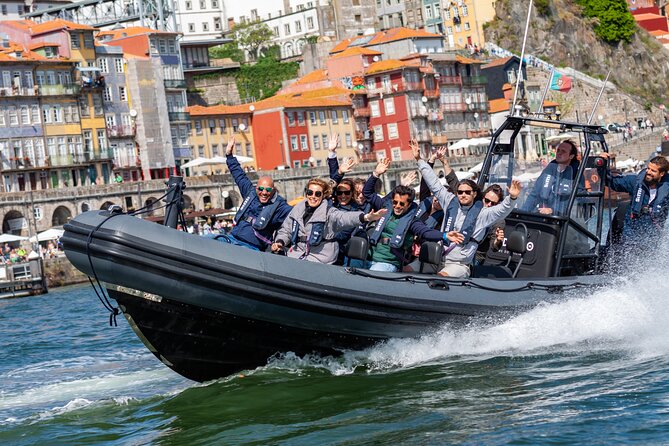
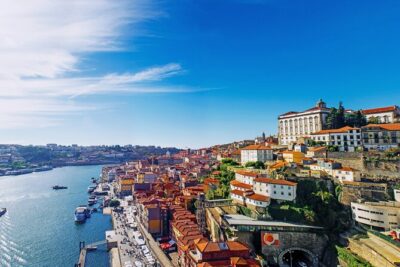
This is one of those tours that feels like value on day one of your trip. You get speedboat thrills, but the real payoff is perspective. From the water, Porto and Vila Nova de Gaia don’t look like postcards. They look like places with scale—bridges spanning the river, hills dropping toward the docks, and the shoreline unfolding in layers.
And the route is built for quick orientation. In about 45 minutes, you’ll see the river side of Porto and the port-fueled industrial and wine areas across the water. It’s the kind of ride that helps you later when you choose where to walk, where to eat, and which viewpoints to prioritize.
Getting on board at Douro Marina (and what the group feels like)
You’ll meet at BBDouro at Douro Marina (R. da Praia, Vila Nova de Gaia). It’s an easy start point, and it’s also near public transportation, which matters if you’re juggling timing.
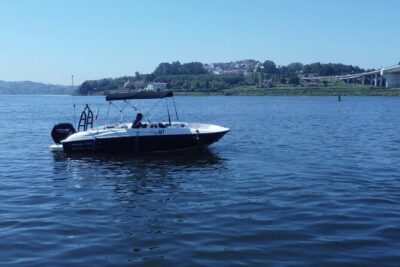
Capacity is capped: the tour notes a maximum of 38 travelers, and it also mentions three boats with up to 10 people per boat. That smaller boat size changes the vibe. You still feel like you’re in a group, but it’s not that cramped, elbows-everywhere feeling that can drain the fun.
The tour runs in English and uses a mobile ticket. So you’ll want your phone ready at check-in, not buried in your bag like it’s a rare artifact.
Safety, jackets, and the reality of getting a little wet
This tour is fast, and the emphasis on safety is real: you’ll wear a life vest. That keeps things calm in your head even when the boat is pulling quick lines across the river.
Now for the practical part: speedboats can spray water. A few passengers have noted they got a little wet, and the crew may have jackets available in case the wind makes you chilly. Even if you don’t end up using one, it’s smart to dress like you might get damp—quick-dry layer, sunglasses, and something you don’t mind brushing off afterward.
The 45-minute run: Porto’s bridges, Gaia’s port wine, and river-to-sea views
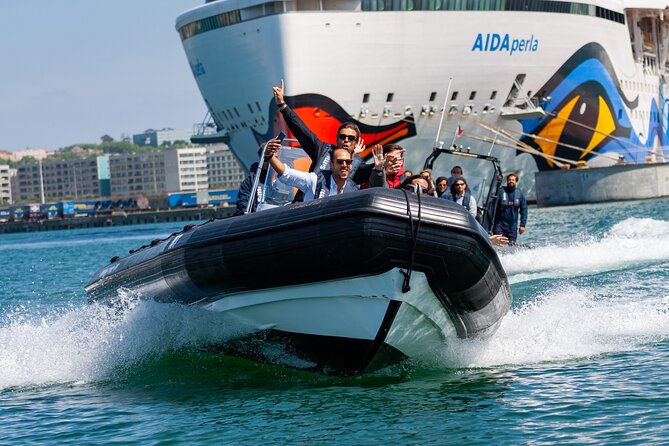
The pace is brisk. You’re not doing long museum visits or long walks. Instead, each “stop” is really a highlighted sighting while you cruise—brief, focused, and meant to help you recognize places later.
Stop 1: Douro River views (Wine Caves, Ouro Street, Clerics Church)
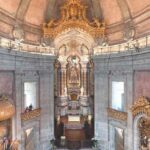
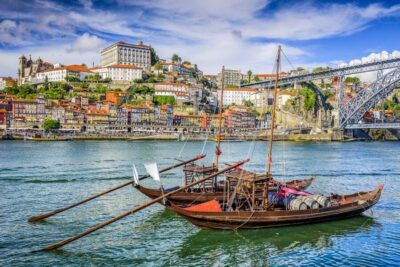
Right away, the boat sets you up for Porto’s big signatures. You’ll get views tied to the Wine Caves, the Ouro Street area, and the Clérigos Church zone. You’ll also see Rabelo boats, the traditional vessels used to move port wine barrels from upriver down to Gaia before road transport became the norm.
This is where the river starts to feel like the main character. You’re not just looking at buildings; you’re seeing how the river shaped the city.
Stop 2: Douro Marina (the modern harbor hub)
Then it’s over to Douro Marina, opened to the public in February 2012. The details here matter because they explain what you’re looking at: lots of floating infrastructure, plus spaces for boat repair/maintenance and water-sports activity.
For you, this means the tour doesn’t only show old Porto. It also shows the port-energy that still runs today.
Stop 3: Centro Interpretativo do Patrimonio da Afurada
Afurada sits near the mouth of the Douro. The focus here is the fishing roots—historically the main economic activity.
From the water, you’re likely to understand Afurada as a working edge of the river, not just another viewpoint.
Stop 4: Ponte da Arrabida (the big reinforced concrete arch)
Now you’ll pass the Arrábida Bridge, a major road link between Porto and Vila Nova de Gaia. It was inaugurated in 1963, and at the time it was described as having the largest reinforced concrete arch of any bridge in the world.
Also note the pedestrian angle: lifts were installed to make crossing easier, but they stopped working in the mid-1990s. That’s useful context if you’re comparing bridges by what they were built to serve.
Stop 5: Museu do Carro Electrico (Porto’s tram transport story)
You’ll also see the Tram Museum area from the water: it preserves electric cars and rail public transport history. It’s housed in a former thermoelectric plant built in 1915 for powering tram vehicles.
Even without going inside, the setting adds meaning: Porto’s transport history is literally tied to how power moved through the city.
Stop 6: Igreja da Confraria das Almas do Corpo Santo de Massarelos
This church built in 1776 has a strong facade presence, including tiled exterior surfaces and architectural divisions framed by pilasters. From the boat, you’ll catch the outline and facade rhythm even if you don’t get close enough to study the details.
If you like architecture, this kind of pass-by is a good “map” for later walking.
Stop 7: Alfândega Porto Congress Centre (New Customs Building)
The Alfândega Porto Congress Centre is the former New Customs Building, designed by Jean Colson. The building style is a contrast to older riverside structures—iron construction plus stone and other materials, reflecting Porto’s commercial momentum on the Douro.
From the water, you feel the logic: this area was meant for trade at the river’s edge. It still reads as a “gateway” building.
Stop 8: Passeio das Virtudes (vertical park terraces)
The Virtudes Municipal Park is described as vertical, built in terraces down a slope. That design is basically a gift for boat riders: you get the feeling of layers and depth as the view drops toward the water.
This is also a place you might want later on foot because it’s built around viewpoints of Alfândega, the Douro River, and Gaia.
Stop 9: Torre dos Clérigos (the tower with 225 steps)
The Clérigos Tower (completed 1763) is more than a landmark—it historically served as an orientation point for boats and even as a strategic position in military conflicts. The tower visit includes 225 steps, ending with panoramic city views.
From the river, the tower stands out because it’s tall and purposeful. You’ll see why it’s been useful long before cameras existed.
Stop 10: Cais de Gaia (waterfront, port wine, and cellars)
Across the river, you’ll see the Gaia waterfront’s role as a shipyard and trading post since the 18th century. It’s also famous for Port Wine history: rabelo boats would anchor here, then barrels would be unloaded to age in cellars.
A big practical note: this area is where you’ll find many port wine cellars, and a lot of them offer guided tours and tastings. The boat view gives you the layout; walking the quay later tells you the rest.
Stop 11: Barcos rabelos (traditional port transport vessels)
This is the rabelo story in more direct form. These boats historically carried barrels from the Douro region to Gaia. Because dams weren’t built at the time, the river could be treacherous in narrow stretches, making the sailing job skilled and risky.
If you care about why the wine is part of the landscape, this is the most direct “how it worked” stop.
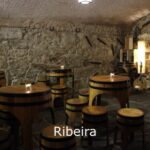
Stop 12: Ribeira (UNESCO medieval riverside)
The Ribeira area is described as one of Porto’s oldest and most typical places, part of a UNESCO World Heritage site of medieval origin. It’s tied to commerce and movement thanks to the river.
From the boat, you’ll see the density and the riverside pull. If you later want a walk that feels like the heart of Porto, Ribeira is the place to aim for.
Stop 13: Paço Episcopal (bishop’s residence above the cathedral)
This former bishop’s residence sits adjacent to the Cathedral and dominates the landscape from an elevated position. It’s classified as a national monument since 1910.
From the water, it reads as a “higher-ground anchor” for the old center.
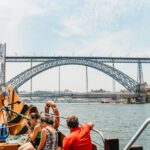
Stop 14: Dom Luís I Bridge (the main icon connection)
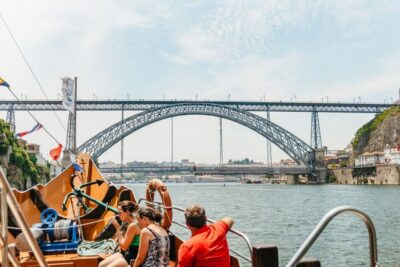
This bridge is the main link between Porto and Gaia. It’s metal, about 395 meters long, and it has two decks—upper and lower—connecting different parts of each city.
Completed in 1888, it’s still one of Porto’s emblematic points. You’ll likely feel it as a spine in the middle of the route—one of the reasons this tour earns its 6-bridge name.
Stop 15: Miradouro Serra do Pilar (circular monastery view)
You’ll pass by Serra do Pilar Monastery, a stern 17th-century church that’s UNESCO-listed since 1996. It has a circular floor plan and a hemispherical vault, plus a cloister with a circular layout supported by Ionic columns.
This stop matters because it explains why boat views don’t just show buildings. They show how Porto defended itself and positioned power—this site was converted into a fortress status during conflicts and later became an artillery barracks.
Stop 16: Jardins do Palácio de Cristal (Crystal Palace gardens)
These gardens connect to the Palácio de Cristal project started in 1861 and inaugurated in 1865. The original palace was demolished in 1951 for a sports pavilion (now Super Bock Arena), but garden elements remain from the earlier design.
From the water, these gardens help you picture Porto as an inland city with royal-style public spaces. You’re not just seeing stone and bridges. You’re seeing planned leisure land nearby.
Stop 17: Reserva Natural Estuário do Douro (birds and the suspended walkway)
This nature reserve covers 66.35 hectares on the south bank near the river mouth, including areas like Cabedelo and São Paio Bay. The highlight is birds—protected in a migratory corridor called the East Atlantic Route.
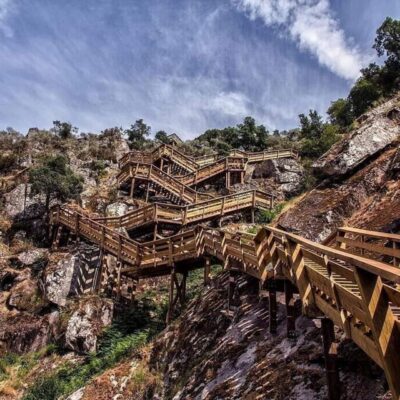
The tour data notes a free suspended walkway, but you likely won’t be doing it from the boat. Still, it’s valuable context: the Douro estuary isn’t only scenic. It’s active habitat.
Stop 18: Jardim do Passeio Alegre (Atlantic-meets-river garden)
Finally, you’ll reach Passeio Alegre Garden, designed in the late 19th century and noted as a Public Interest Property. It’s rich in flora and famous for the shade and views where the Douro meets the Atlantic.
This is the kind of ending that makes the whole ride feel cinematic, especially if the day is clear.
What makes the “6 bridges” idea more than a gimmick
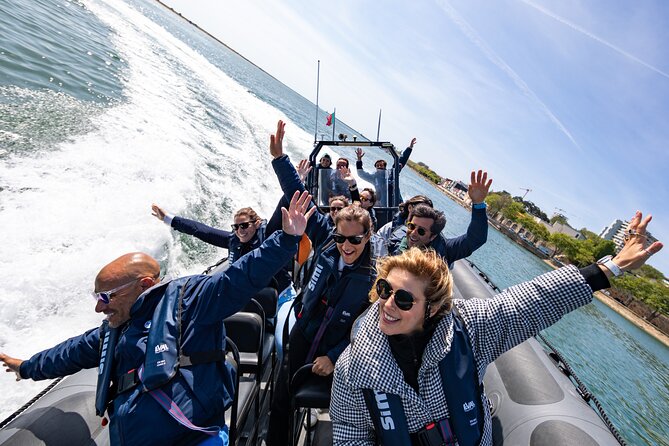
The tour name promises six bridges, and Porto truly leans on river connections. While the route highlights Arrábida and Dom Luís I, the bridge context matters because Porto’s bridge lineup includes the D. Maria Pia (mentioned as an older crossing), plus São João, Freixo, and Infante. So even when you’re focused on one big icon, you’re also seeing the bigger story: Porto solved a transportation problem by stacking engineering feats over the Douro.
From a reader’s perspective, that’s useful. When you later look at photos or walk near any of these bridges, you’ll remember how the river framed them from below.
Best use of this tour: pair it with walking and wine-cellar time
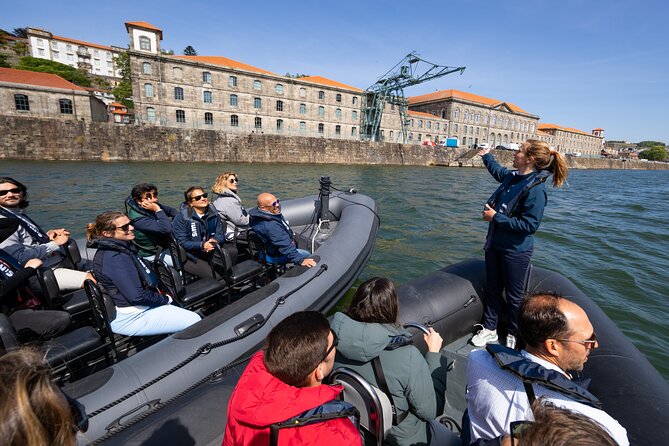
If you’re only in Porto a short time, this speedboat tour is a strong first move. It tells you where things are. It also gives you a sense of what you want to slow down for.
Here’s a smart pairing:
- Do the boat to get orientation and river-to-sea viewpoints.
- Then plan a walk where landmarks match what you saw—especially along the Ribeira and near Clérigos if that tower caught your eye.
- For Port wine, remember you’re seeing the Gaia quay and cellar area from the water. If tastings are your goal, that’s where you’ll want to spend time on land afterward.
Who this Porto Douro speedboat suits best (and who might want a different option)
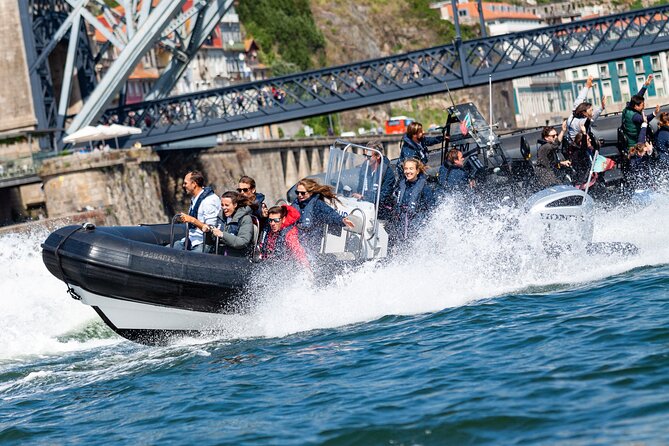
You’ll likely love this if you:
- Want big views in a short time.
- Enjoy speed but still want safety structure (life vests).
- Want an easy, English-friendly overview of Porto and Gaia’s river icons.
You might choose something else if you:
- Prefer a slow-paced tour with long on-foot time at each stop.
- Get uncomfortable with spray or wind on fast water.
Also, it lists a minimum age of 10, and it says most travelers can participate. So it’s a family-friendly option for older kids, as long as everyone’s comfortable on open water for about 45 minutes.
Practical tips so you enjoy it more
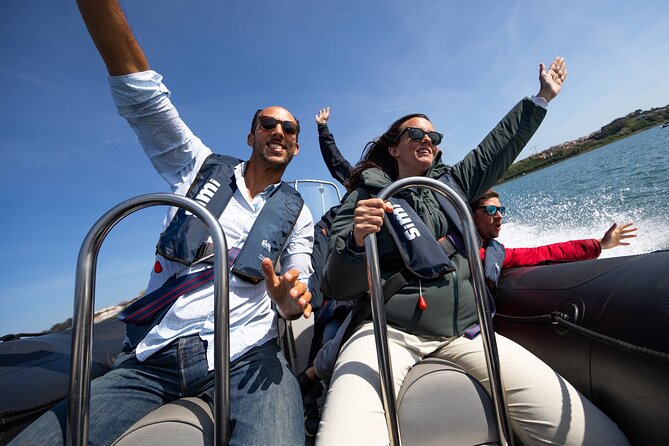
- Dress like it’s breezy. Even calm days can feel colder on a moving boat.
- Bring sunglasses and quick-dry layers. The boat is fast, and water spray can happen.
- If jackets might help you, ask the crew. Some departures include crew support like extra layers when conditions call for it.
- Plan your schedule loosely afterward. This tour ends back at the meeting point, and you’ll probably want a coffee or a sheltered rest before heading out again.
So, should you book Porto 6 Bridges?
My take: book it if your priority is views with energy and you want Porto and Gaia’s main sights in one tight package. It’s great value because you get a fast orientation plus a real “how the river works” feel, especially around rabelo boat and Port wine history.
Skip it only if you hate moving-water conditions or you’d rather spend the same time on land with longer indoor stops. Otherwise, this is one of the more fun ways to understand Porto’s geography—bridges above, river in the middle, and the sea pull at the end.
FAQ
How long is the Porto 6 Bridges speedboat tour?
It runs for about 45 minutes.
Where do I meet for the tour?
You meet at BBDouro at Douro Marina, R. da Praia, 4400-554 Vila Nova de Gaia, Portugal. The tour ends back at the meeting point.
Is the tour offered in English?
Yes, the tour is offered in English.
What are the age limits and group size?
The minimum age is 10 years old. The tour has a maximum of 38 travelers, and it notes that up to 10 people can participate per boat, with three boats.
Does the boat cruise out to sea?
If conditions are right, the cruise can continue out to sea.
Is a life vest provided?
Yes. You’ll wear a life vest for safety during the tour.
Can I cancel for a full refund?
Yes. There is free cancellation up to 24 hours in advance for a full refund.
What happens if the weather is poor?
This experience requires good weather. If it’s canceled due to poor weather, you’ll be offered a different date or a full refund.
More Tours in Porto

More Tour Reviews in Porto
Back on the River, Bridge by Bridge

Fresh in the Porto notebook
Six Bridges River Cruises, compared.
 ★ 5.0Complete Douro Valley Wine Tour with Lunch, Wine Tastings and River CruiseFrom $10112,920 reviews
 ★ 4.2Six Bridges CruiseFrom $2111,680 reviews
 ★ 4.36 Bridges Douro River CruiseFrom $236,472 reviews
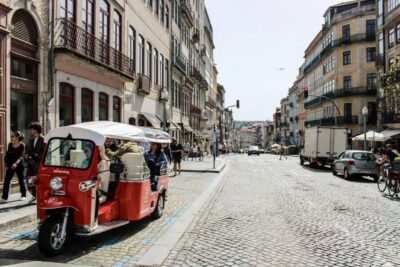 ★ 4.5Guided Tour by Tuk-Tuk & Optional Douro River CruiseFrom $205,980 reviews
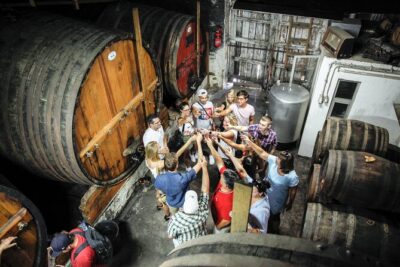 ★ 5.0Authentic Small Group Douro Wine Tour with Lunch & River CruiseFrom $1334,775 reviews
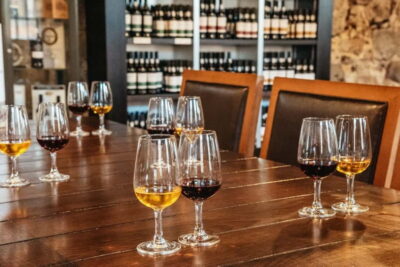 ★ 4.2Bridges Cruise & Sunset & Port Wine Cellar OptionFrom $214,180 reviews
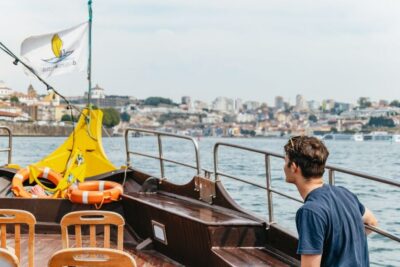 ★ 4.3River Douro 6 Bridges CruiseFrom $174,168 reviews
 ★ 5.0Douro Valley Tour: 2 Vineyard Visits, River Cruise, Winery LunchFrom $1013,542 reviews
Browse the lists this tour appears in