
The Douro does the talking, and this tour uses the river and bridges as your open-air classroom. I like that it mixes big-photo moments with small, specific stops like the Church of São Francisco and the Port wine cellars area in Vila Nova de Gaia, so you’re not just sitting on a boat.
Two things I especially like: the six-bridge route that keeps changing your angles, and the guide help—Afonso gets singled out as impeccable. One thing to consider: this is a good-weather experience, so if the sky doesn’t cooperate, the schedule can shift.
In This Review
- Quick hits before you go
- Porto 6 Bridge Boat Tour: why the route works so well
- Getting there at Water Line Douro (and what to expect)
- The Douro River start: gold in the name, drama in the water
- Under Porto’s oldest bridge: architecture you only notice from below
- The iconic 19th-century bridge (built 1881) in full working mode
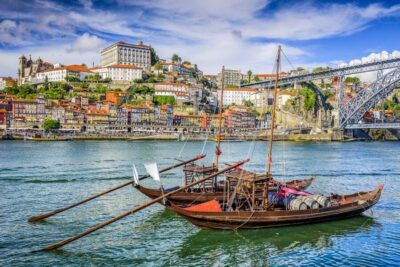
- Historic Porto from the water: São Francisco and Dom Luís I Bridge
- Vila Nova de Gaia: Port wine cellars area and the photo stop
- The old customs building turned cultural venue
- The 19th-century glass palace and its gardens
- The 1963 arch bridge and the run toward Foz do Douro
- Price and logistics: is $42.06 a good deal?
- Who should book this tour (and who might skip)
- Should you book the Porto 6 Bridge Boat Tour with wine tasting?
- FAQ
- How long is the Porto 6 Bridge Boat Tour & Wine Tasting Experience?
- Is the tour offered in English?
- Where does the tour start?
- Does the tour end back at the meeting point?
- What ticket type do I need?
- How big is the group?
- Is wine tasting included?
- What happens if the weather is poor?
- Can I cancel for a full refund?
- Is the tour suitable for most travelers?
Quick hits before you go
- Six bridges, one continuous flow: you get repeated skyline-and-engineering views without constant walking.
- Afonso on the mic: excellent service is part of the story here.
- Port wine cellars area stop in Gaia: quick, scenic time to soak up the Port culture vibe.
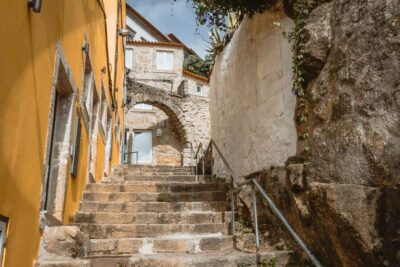
- Historic Porto from the water: medieval lanes, plus major sights like São Francisco and Dom Luís I Bridge.
- Small group (max 14): more breathing room on a 2-hour outing.
More Porto days out worth booking
- From Porto: Douro Valley w/ Boat Tour, Wine Tasting & Lunch★ 4.7 · 19,061 reviews
- Douro Valley Small-Group Tour with Wine Tasting, Lunch and Boat★ 5.0 · 3,642 reviews
- Porto: Cálem Cellar Tour, Fado Show & Wine Tasting★ 4.4 · 3,530 reviews
- Porto: Cockburn’s Port Lodge Tour and Tasting★ 4.8 · 3,360 reviews
Porto 6 Bridge Boat Tour: why the route works so well
There’s a reason Porto feels dramatic from the river. The city stacks up along the Douro and the bridges turn the whole shoreline into a moving picture frame. This tour leans into that. You’re not racing between viewpoints. You’re traveling along the water and letting the architecture come to you.
The “six bridges” idea matters because each crossing changes the view direction. You see the river widen, pinch, and curve. You also get repeated glimpses of Porto and Vila Nova de Gaia from angles most visitors only catch from one street corner. That makes the 2-hour format feel longer in the good way.
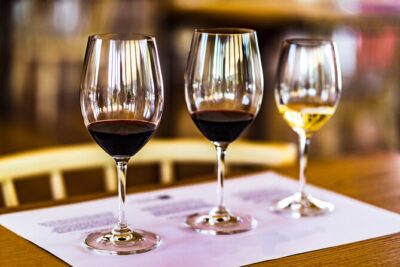
And yes, there’s a wine-tasting angle tied to the Port wine cellars area in Gaia. Even if you’re not chasing a serious tasting session, the stop gives you context: Porto’s wine reputation isn’t just marketing. It’s built around the river route that made transport and storage possible.
One more smart point: English is offered, and the group size stays small (up to 14). That combo usually means you’ll spend more time enjoying the views and less time guessing what’s going on.
Getting there at Water Line Douro (and what to expect)
The meeting point is Water Line Douro at Water Line Douro, DouroR. da Praia, 4400-554 Vila Nova de Gaia. It’s a convenient base because it’s near public transportation, so you can plan without a complicated taxi puzzle.
The tour ends back at the same meeting point. That’s helpful in Porto, where getting back “somewhere central” can turn into a mini project. Here, you’ll keep your time and energy for the rest of your day—maybe a stroll after, or a late dinner when the light softens.
You’ll use a mobile ticket, so plan to have your phone battery. In older European ports and riverside areas, signal can be patchy. I like having a screenshot ready, just in case.
Timing note: it runs about 2 hours. That’s long enough to feel like a real experience, but short enough that you can pair it with a walking loop in Porto or a quick evening plan in Gaia.
The Douro River start: gold in the name, drama in the water
Your ride begins on the Douro River—its name connected to gold in Latin—and it’s a perfect opener. The river does what it always does around here: it shapes how people live, build, and trade.
From the water, you’ll quickly understand why Porto grew the way it did. Waterfront building sits close to the river. Hills and bridges compress and stretch the view. And the light changes fast because the river surface keeps reflecting sky.
This part of the trip is also where you’ll get your first “orientation” payoff. You’ll see how the bridges line up against the city. You’ll start to recognize landmarks you might otherwise only notice from a map or a single photo spot. That matters, because the rest of the day’s viewpoints make more sense once your brain knows the river’s layout.
If you’re sensitive to wind, bring a light layer. Rivers can feel cooler than you’d expect, especially when the boat is moving.
Under Porto’s oldest bridge: architecture you only notice from below
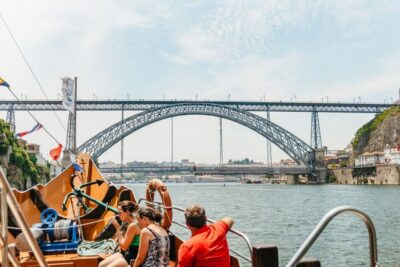
Soon you pass under the oldest bridge in Porto, and that’s a gift. From ground level, you tend to look at a bridge. From the water, you get to read it.
What you’re watching for is structure: how the supports meet the river, how openings and lines create patterns, and how the bridge’s engineering fits into the older Porto skyline. This stop is framed as a moment to discover architectural details and history as you go beneath it.
The “beneath it” angle is also practical. You don’t need to find the perfect street corner or angle with a crowd. The boat does the positioning for you. If you’ve ever felt like bridge photos always happen to other people, this helps fix that.
Potential drawback here: the viewpoint depends on how the boat seats you. If you want maximum sightlines, arrive early on tour day so you can pick a spot with less obstruction.
More Porto days out worth booking



The iconic 19th-century bridge (built 1881) in full working mode
Next comes one of Porto’s biggest icons: a bridge built in 1881, and still in use today. This is where the tour shifts from “pretty river moment” to “engineering you can feel.”
Still operating means you’re seeing a bridge as part of daily life, not a museum piece. You’ll notice how design choices hold up over time, and how the bridge sits as a connector between neighborhoods instead of just a monument.
You’ll likely get a clearer sense of how Porto and Gaia relate to each other. Bridges here aren’t only routes. They’re visual anchors. And because the boat keeps moving, you don’t just get one look—you get evolving ones.
If you’re traveling with someone who doesn’t care about wine or church facades, this segment is often the hook that keeps them interested. It’s built for people who like structures, not just scenery.
Historic Porto from the water: São Francisco and Dom Luís I Bridge
After the bridge engineering, the tour pivots toward Porto’s historic district. This is the part where the vibe becomes more “old town” than “transport corridor.”
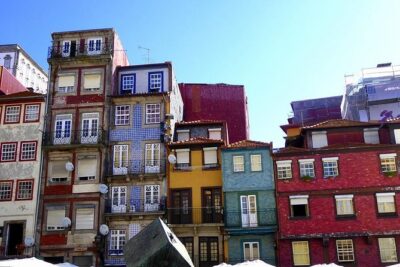
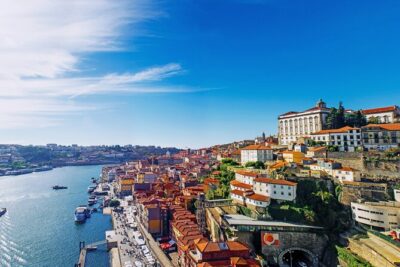
You’ll pass through the historic area known for medieval architecture and narrow streets. Two standout references here are the Church of São Francisco and the Dom Luís I Bridge. Even without stepping onto cobblestones, the river views let you appreciate how dense and compact the old center is.
Why this matters for you: when you see a church from water level, it’s easier to connect it to the street network around it. It’s not floating in a vacuum. It’s part of a web of buildings that crowds in toward the waterfront.
The Dom Luís I Bridge is also a smart anchor point. Once you’ve seen it from the boat, you’ll recognize it again later—whether you’re walking near it or looking at it across the river.
If you’re hoping for a lot of time on foot in Porto’s narrow lanes, don’t expect that from this format. This is mainly a boat experience with historic visuals, not a full walking tour. You’ll get highlights, then the boat keeps rolling.
Vila Nova de Gaia: Port wine cellars area and the photo stop
On the Gaia side, the tour moves into the riverside zone famous for Port wine cellars. This is where you get a quick stop designed for both atmosphere and photos, with panoramic views you can frame across the water.
This is also the point where the wine-tasting concept makes practical sense. The Port industry isn’t separate from the city’s geography. It’s built around storage, transport, and access to the Douro and its connection to the Atlantic.
How to use this stop well:
- Treat it like a context break. Even if you’re not a wine expert, you’ll understand why cellars matter here.
- Take your photos now, because later light can change how the colors pop on both riverbanks.
What I’d watch for as a potential drawback: if you’re expecting a long, sit-down tasting with extensive explanations, the time is likely brief. The itinerary emphasizes the scenery and the cellars area as a stop, and then the tour continues.
The old customs building turned cultural venue
One of the most interesting stops on the list is a historic riverside building once used for customs, now a cultural venue with neoclassical architecture. It hosts exhibitions and events that celebrate Porto’s heritage.
This is more than an architectural photo. It’s about the river’s role as a trade gate. Customs buildings tell a story about movement—goods coming in, goods leaving, and a city’s economy tied to the waterline.
Neoclassical design can look “serious” from afar, but the river setting gives it a calmer mood than you’d get in a more central square. If you like architecture and want a break from bridge-and-water repetition, this is one of the better tempo changes.
You won’t get hours inside from what’s described, so think of it as a heritage stop that adds meaning, not a museum marathon.
The 19th-century glass palace and its gardens
After the customs stop, you’ll spend time with a beautiful 19th-century glass palace surrounded by gardens. The goal here is a more peaceful, slower view—panoramic windows over the Douro and Porto, plus a chance to stretch your legs.
This is valuable because it breaks the pattern. Two hours on a moving boat can be fun, but it can also feel like you’re always looking forward. The gardens give your eyes and body a reset.
If you’re the type who likes to understand a place by its small contrasts—industrial trade heritage, major bridges, then a calmer garden view—this stop does that job well.
Bring a light layer even in warmer months if you’re sensitive to wind. Glass-and-garden areas can feel airy, especially near water.
The 1963 arch bridge and the run toward Foz do Douro
As the tour moves toward the end, you cross another big visual moment: an impressive arch bridge completed in 1963, connecting Porto and Vila Nova de Gaia. An arch bridge like this changes the way the river frame looks—more sweeping, more open, and often great for photos.
Then comes the finale: where the Douro River meets the Atlantic Ocean. The tour is timed so you can enjoy ocean views and a peaceful vibe in Foz do Douro, Porto’s seaside neighborhood.
That finish matters. Many Porto sightseeing days end in crowds or close-quarters streets. Here, the setting shifts to water, air, and space. Even if you’ve been staring at bridges all day, the ocean view gives your brain a fresh baseline.
If you want the best light, keep an eye on the sky. Sunset would be ideal in general, but the route itself is described as especially beautiful at sunset—so if you have flexibility, schedule it for later in the day.
Price and logistics: is $42.06 a good deal?
At $42.06 per person for about 2 hours, this tour lands in the middle of what you’d expect for a small-group Porto experience that includes a boat ride and a Port wine-tasting element.
Here’s why it can feel like good value:
- Small group size (max 14): less jostling, easier viewing.
- Multiple landmarks without walking fatigue: you cover a lot of visual territory quickly.
- Bridge engineering + historic Porto + Gaia wine culture: you’re not paying for just one theme.
- English offered: no language guessing games.
One practical thing: it’s commonly booked about 59 days in advance. That suggests demand around specific dates and times. If you’re traveling in peak season or you have tight plans, booking earlier usually saves you from having to settle for an inconvenient slot.
The other logistics advantage is simplicity: mobile ticket, near public transport, and it returns to the start. That’s the kind of travel friction you want to minimize when you’re already dealing with Porto’s hills and stairs.
Who should book this tour (and who might skip)
This fits best if you want a Porto experience that’s visually packed but not exhausting. You’ll like it if you:
- enjoy bridges and architecture as much as landmarks,
- want historic Porto context without committing to a full walking day,
- like the idea of a Port wine-tasting element, but also want river views as the main event,
- prefer a small group.
You might choose something else if you:
- want a long, detailed wine experience with lots of seated time (this sounds more like a scenic pairing with tasting),
- need fully sheltered viewing in bad weather (the experience requires good weather),
- hate being on a boat for any reason.
Should you book the Porto 6 Bridge Boat Tour with wine tasting?
If you’re on the fence, I’d book it if your ideal Porto day looks like: water first, bridges second, then history and wine culture in Gaia. The combination is logical, and it’s designed for short attention shifts—big skyline, then specific landmark focus, then a calm garden pause.
The biggest reason to feel confident is the service quality. Afonso comes through as a standout, and the overall rating is strong. Add in the small group size, and this feels like a well-run way to see more of the Douro without spending your whole day hopping around.
If the weather looks iffy, keep flexible—because good weather is part of the deal here. When conditions are right, this is the kind of Porto experience you remember as a series of angles, not just one photo spot.
FAQ
How long is the Porto 6 Bridge Boat Tour & Wine Tasting Experience?
It runs for about 2 hours.
Is the tour offered in English?
Yes, it’s offered in English.
Where does the tour start?
The tour starts at Water Line Douro, DouroR. da Praia, 4400-554 Vila Nova de Gaia, Portugal.
Does the tour end back at the meeting point?
Yes, it ends back at the meeting point.
What ticket type do I need?
You’ll use a mobile ticket.
How big is the group?
The maximum group size is 14 travelers.
Is wine tasting included?
Yes, it’s part of the wine-tasting experience, with a stop in the Port wine cellars area in Vila Nova de Gaia.
What happens if the weather is poor?
This experience requires good weather. If it’s canceled due to poor weather, you’ll be offered a different date or a full refund.
Can I cancel for a full refund?
Yes. You can cancel up to 24 hours in advance for a full refund.
Is the tour suitable for most travelers?
Most travelers can participate.
More Food & Drink in Porto


More Tours in Porto
More Tour Reviews in Porto
Fresh in the Porto notebook

Cruises & Boat Tours, compared.
 ★ 4.7From Porto: Douro Valley w/ Boat Tour, Wine Tasting & LunchFrom $8219,061 reviews
 ★ 5.0Complete Douro Valley Wine Tour with Lunch, Wine Tastings and River CruiseFrom $10112,920 reviews
 ★ 4.2Six Bridges CruiseFrom $2111,680 reviews
 ★ 4.7Douro Valley with Winery Lunch, Tastings & CruiseFrom $997,002 reviews
 ★ 4.36 Bridges Douro River CruiseFrom $236,472 reviews
 ★ 4.5Guided Tour by Tuk-Tuk & Optional Douro River CruiseFrom $205,980 reviews
 ★ 4.9From Porto: 2 Wine Regions, Farm-to-Table Lunch & BoatFrom $945,724 reviews
 ★ 5.0Douro Valley: Historical Sites, Wine Experience, Lunch & CruiseFrom $1075,133 reviews
Browse the lists this tour appears in