
Braga feels huge in just three hours. I really like how this tour mixes inside-the-monuments storytelling with practical street-level walking, and I also love the mid-tour pastry and Vinho Verde tastings that keep the energy up. One thing to consider: you’ll be on foot for the full route, so comfortable shoes and water matter.
What makes it click is the way the guide ties buildings to Braga’s devotion and civic power. You’ll get explanations of architectural eras like Romanesque, Gothic, and Baroque, plus a look at sacred art collections, carved details, and centuries-old relics you’d likely miss if you only popped in for quick photos. A second consideration: the exact flow of photo stops and sightseeing stretches through the historic center, so plan for a steady pace rather than a stop-and-stay-awhile rhythm.
The logistics are straightforward. Your guide meets you at Santa Maria de Braga Cathedral holding a white umbrella, and the tour includes an express security check to help you get into key spots faster. Languages include English, Portuguese, and Spanish, and the route is listed as wheelchair accessible (still, expect cobblestones).
In This Review
- Key highlights you’ll actually feel during the walk
- Starting at the Cathedral: how Braga’s devotion shapes everything
- The guided walk through the historical center (and why it’s worth staying on the route)
- Coimbras Chapel and House: when the tasting fits the story
- Archbishop Palace and the civic side of Braga
- Santa Barbara Garden photo stop: a breather with a view
- The local bakery and food tasting: comfort food meets culture
- Porta Nova and finishing at Praça do Artesão: a strong visual wrap-up
- Price and value: does $59 make sense for what you get?
- Timing, pace, and what to pack so you enjoy the full route
- Who this tour is best for
- Should you book the Braga Experience with guided tastings?
- FAQ
- FAQ
- Where does the tour start?
- How long is the Braga Experience guided tour?
- What’s included in the price?
- What tastings can I expect?
- What languages is the tour offered in?
- Is the tour wheelchair accessible?
- What should I bring?
Key highlights you’ll actually feel during the walk
- Santa Maria de Braga Cathedral guided visit with clear explanations across Romanesque, Gothic, and Baroque details
- Coimbras Chapel and House plus a wine tasting stop as part of the monument time
- Porta Nova and the Old Town gateway experience at the end, so you finish with a strong visual anchor
- Santa Barbara Garden photo stop to balance church time with open-air views
- Local bakery food tasting mid-route, timed to refresh you before more monuments
- Small-group feel and pacing help, including slower timing for participants with minor mobility needs
Two cities in a day, Braga's shrines and Guimaraes' castle
- Braga: Tuk Tuk City Tour★ 4.8 · 156 reviews
- Braga: Private & Flexible Walking Tour in Historic Center★ 4.7 · 50 reviews
- From Porto: Wonders of Braga & Guimaraes Private Day Trip★ 4.3 · 46 reviews
- Viana do Castelo Horseback Riding Tour with Transport from Porto / Braga★ 5.0 · 44 reviews
Starting at the Cathedral: how Braga’s devotion shapes everything
Your tour begins at Santa Maria de Braga Cathedral, and that choice is smart. Braga is one of Portugal’s most religiously minded cities, and the cathedral sets the tone for how you’ll read the rest of the Old Town. Instead of treating the churches like backdrops, you learn what they represent and why they were built the way they were.
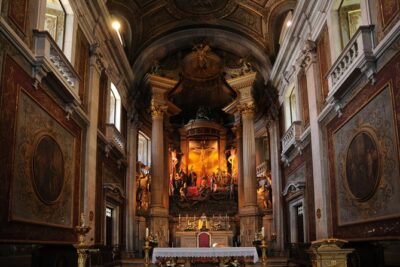
When you step inside for the guided visit, the focus isn’t just on big views from the nave. You’re pointed toward architectural features and the layering of different eras. Expect commentary that connects Romanesque forms, Gothic structure, and Baroque flair, so you can actually see how styles evolve over time rather than memorizing a list afterward. You’ll also hear about sacred art collections, intricate carvings, and centuries-old relics—exactly the kind of details that disappear if you go in solo with your phone as your guide.
The practical win here: you’ll come out with a mental map of what you saw. Even if you later visit another church on your own, you’ll recognize the “why” behind the design.
The guided walk through the historical center (and why it’s worth staying on the route)
After the cathedral, you continue through the Centro histórico de Braga, moving from monument to monument and learning how the city’s religious and civic life overlap. Braga’s historical center can feel like a jumble of stone streets and church facades at first. A guided route helps you connect the dots fast.
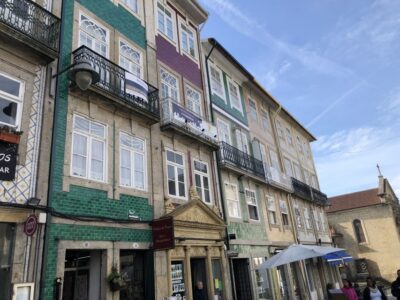
Along the way, the tour is built around both the architecture and the street scene. You’ll pass local shops and cafes, and you’ll get a sense of how everyday life sits right next to centuries-old stonework. This matters because Braga is not just a museum town. You’re walking through the same kind of spaces locals use to buy bread, talk, and pause for coffee, even if your reasons for stopping are different.
There’s also a deliberate rhythm: guided periods inside key places, then walking and photo stops to reset your eyes. One moment you’re looking closely at carvings and relics; the next you’re stepping outside to breathe and frame the city from a better angle. That keeps the tour from turning into one long “church, church, church” loop.
Coimbras Chapel and House: when the tasting fits the story
A major highlight is the stop at Coimbras Chapel and House, where you’ll get a guided visit and then a wine tasting. This is a good example of why the tastings work here: they’re not random food-service moments. They’re placed as a break inside the cultural storyline, so you feel the transition between sacred spaces and local flavors.
If you care about history, the guided portion is the point. The tour explains what you’re seeing inside the chapel, then the tasting gives your senses something to do right after the details. That pairing helps memory stick. You’re not just thinking about wine or pastries; you’re connecting them to the same city culture that shaped the monuments.
Also, the tasting is a nice way to pace the group. Even on a warm day, a short refresh can turn the second half of the walk from “I’m still walking” into “okay, I’m ready for the next stop.”
Archbishop Palace and the civic side of Braga
Braga isn’t only about churches. The city also has major civic power, and the tour brings that in through stops like the Archbishop Palace area. You get to see imposing buildings that once housed influential figures, and you hear the stories tied to Braga’s role in shaping the region’s political and cultural landscape.
What I like about including civic architecture is that it balances your understanding. It’s easy to assume that religious buildings were the only drivers of art and money. By showing how palaces and official spaces worked alongside chapels and cathedrals, you understand the full ecosystem of the city.
In practical terms, palace stops also give you a change of scenery. After the more intimate feel of chapel interiors, these larger facades and elegant interiors can feel like a reset, even before you step back outside again.
More Braga days out worth booking


Santa Barbara Garden photo stop: a breather with a view
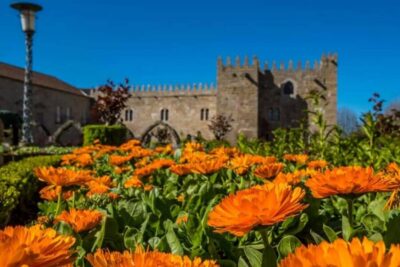
At Santa Barbara Garden, you get a photo stop. This is exactly the kind of break that keeps you from getting mentally overloaded by the monument time. Gardens do something simple but effective: they give your eyes a place to rest, and they remind you Braga sits in a real setting, not just stone walls and doors.
You won’t spend the day in a scenic viewpoint park, but you will get a short window to take photos and reorient yourself. It also helps if you like timing your shots—standing there after you’ve been moving for a while often makes the city look more coherent.
The local bakery and food tasting: comfort food meets culture
Mid-route, you’ll stop at a local bakery for a food tasting. This matters because it’s not only about getting calories. The tour uses this stop to put local flavors in your path while you’re still in the historic center.
Food tastings also solve a common walking-tour problem: people get hungry, buy something overpriced later, and then rush through the next monument. Here, the tasting helps keep your energy steady so the second half of the route feels manageable.
You’ll also likely notice how Portugal’s bread-and-pastry culture fits daily life. You’re not just tasting a dessert; you’re seeing how a city feeds visitors and residents alike.
Porta Nova and finishing at Praça do Artesão: a strong visual wrap-up
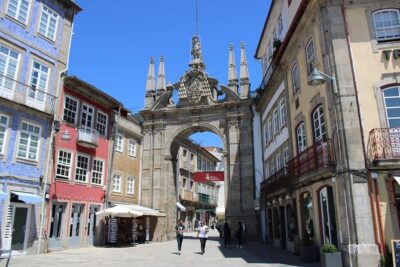
By the time you reach Arco da Porta Nova, you’re finishing with an iconic gateway. Porta Nova is the symbolic entrance into the Old Town, and placing it near the end of the route gives it extra meaning. You get to look back on what you’ve seen and realize you’ve been walking through the city’s story from center outward.
Then you finish at Praça do Artesão. That ending works well because it lands you in a place built for lingering—artisans, shops, and the kind of public square energy where you can slow down after the walking.
If you want a simple self-guided plan after the tour, this is a great jump-off moment. You’ll already understand what you’re looking at, so the city feels less confusing right away.
Price and value: does $59 make sense for what you get?
At $59 per person for a 3-hour guided experience, this tour sits in the practical middle. The value comes from two things that often cost extra when you book separately: guided access to monuments and tastings.
You’re paying for:
- A guided walking tour of Braga’s historical center
- Guided visits connected to the cathedral and other chapel/monument stops
- Traditional pastries and drinks during tasting moments
- An express security check to help reduce friction at key entry points
If you tried to DIY this, you could absolutely see the sights. But you’d miss the architectural connections (Romanesque-to-Gothic-to-Baroque explanations), and you’d likely spend time figuring out what’s worth entering versus just walking past. The guide helps you prioritize and understand, which is what makes a paid tour feel worthwhile.
Also, the duration is short enough that you’re not stuck for half a day. Three hours is a sweet spot in a historic center: long enough for real stories and tastings, short enough to still have energy for dinner afterward.
Timing, pace, and what to pack so you enjoy the full route
You’ll want to treat the 3-hour plan like a single continuous outing. Wear comfortable shoes, because the historic center is the kind of place where you’ll want your feet to feel supported. Bring sunscreen and water, especially since you’ll be outside at multiple points and then back inside for guided visits.
One more practical point: the tour is live and runs in English, Portuguese, or Spanish. If you prefer questions, this format is good because the guide is designed to respond and keep the group moving without making you feel like a question slows everything down.
And based on real experiences shared by people who joined, the guide can adjust pace when needed. That’s not something you should assume for every tour operator, so it’s a real plus here.
Who this tour is best for
This works especially well if:
- You want a guided route that explains what you’re seeing in churches, not just where they are
- You like mixing monument time with tastings so your afternoon doesn’t drag
- You’re short on time in Braga but still want cathedral-level detail
It might be less ideal if:
- You hate walking on city streets and prefer a “sit down for most of the day” plan
- You want fully free roaming with no structure at all
Should you book the Braga Experience with guided tastings?
If you’re spending limited time in Braga, I think this is an easy yes. The big win is the combination of guided monument visits and tastings placed at the right moments, with Porta Nova and the garden providing visual balance. The guide-led explanations turn the cathedral and chapels into something you understand, not just something you photograph.
Book it if you like learning while you walk and you’ll appreciate seeing both the religious and civic side of the city. Skip it only if you want a totally unstructured afternoon or you’re not up for steady walking.
FAQ
FAQ
Where does the tour start?
The meeting point is in front of the entrance to Santa Maria de Braga Cathedral, where your guide waits holding a white umbrella.
How long is the Braga Experience guided tour?
It lasts 3 hours.
What’s included in the price?
The price includes a guided tour of Braga’s historical center, guided visits related to Braga Cathedral, exploration of local chapels and modern streets, and traditional pastries and drinks.
What tastings can I expect?
The tour includes traditional pastries and drinks, including a wine tasting at Coimbras Chapel and House, plus a local bakery food tasting.
What languages is the tour offered in?
The live guide speaks English, Portuguese, and Spanish.
Is the tour wheelchair accessible?
Yes, the activity is listed as wheelchair accessible.
What should I bring?
Bring comfortable shoes, sunscreen, and water.
More Tours in Braga


More Tour Reviews in Braga

Day Trips to Braga and Guimaraes
Fresh in the Braga notebook

Braga & Guimarães Day Trips, compared.
 ★ 4.6From Porto: Braga and Guimarães Full-Day TripFrom $593,951 reviews
 ★ 4.5Best of Braga and Guimaraes Day Trip from PortoFrom $712,552 reviews
 ★ 4.8Guimarães & Braga Tour with Entry Tickets and LunchFrom $123602 reviews
 ★ 4.8From Porto: Braga & Guimarães with Lunch Small Group TourFrom $146545 reviews
 ★ 5.0Braga & Guimarães Small Group Tour: Lunch & All Tickets IncludedFrom $145517 reviews
 ★ 4.7From Porto: Viana do Castelo, Braga and Guimarães Day TourFrom $51475 reviews
 ★ 5.0Guimaraes & Braga Small Group Tour with Lunch and TicketsFrom $127408 reviews
 ★ 4.5Day Trip Braga and Guimarães from PortoFrom $71237 reviews
Browse the lists this tour appears in